

Last updated: October 2021
The Institute of Landschaft and Freiraum together with Grün Stadt Zürich and ETH Zürich is developing a project on how plant biodiversity in the city of Zurich can be maintained through urban ecological design. In collaboration with the University of Lausanne, they will assess fragmentation effects on the species, functional and genetic diversity of wildflower patches, and, more specifically, on the population viability, evolutionary potential and connectivity of selected model species. These results will feed directly into the biodiversity programme at Zurich’s office of parks and open spaces (Grün Stadt Zürich). (Ref 1)

Promoting Wildflower Biodiversity (2017)
Photographer: Kevin Vega, retrieved 08/17/2018
Overview
Nature-based solution
- Grey infrastructure featuring greens
- Alley or street trees and other street vegetation
- Institutional green space
- Parks and urban forests
- Pocket parks/neighbourhood green spaces
- Green corridors and green belts
Key challenges
- Green space, habitats and biodiversity (SDG 15)
- Habitat and biodiversity conservation
- Green space creation and/or management
Focus
Maintenance and management of urban nature, Ecological restoration of ecosystems, Protection of natural ecosystems, Monitoring and maintenance of habitats and/or biodiversity
Project objectives
(a) To increase and preserve the plant species throughout the Zurich city; (b) maintain biodiversity; (c) develop more green areas in Zurich; (d) create a comprehensive monitoring system of plant biodiversity in Zurich; (e) a detailed genetic connectivity map of Zurich's flora; (f) and novel planning instruments. (Ref 1)
Implementation activities
The activities the project is undertaking are: Plating of new trees around the city, maintenance of the current trees, improving monitoring programmes, development of novel urban free space / green space planning instrument as a basis for integrated biodiversity promotion strategies, and arranging community involvement by Citizen Science/outreach program. (Interview with Prof. Kuffer). Also, investigations on whether the populations of wild plants in the city of Zurich are viable in the long term and whether gene flow takes place between the different populations. In addition, success reviews of specific support measures (such as sowing wild plants) are carried out as a basis for long-term monitoring. For this, the researchers use methods of vegetation science, plant ecology and nature conservation genetics. (Ref 1)
Biodiversity conservation or restoration-focused activities
Biodiversity conservation:
- Protect and enhance urban habitats
- Preserve and strengthen existing habitats and ecosystems
- Preserve and strengthen habitat connectivity
- Reduce negative impacts and avoid the alteration/damage of ecosystem
- Protect species
- Undertake specific measures to protect species
- Means for conservation governance
- Biodiversity offsets
Main beneficiaries
- Researchers/University
- Citizens or community groups
Governance
Management set-up
- Co-governance with government and non-government actors
Type of initiating organisation
- Researchers/university
Participatory approaches/ community involvement
- Citizen science
- Other
Details on the roles of the organisations involved in the project
Joint implementation by Grün Stadt Zürich, the city authority and ETH Zürich, the university. (Ref 1)
Project implemented in response to ...
... an EU policy or strategy?
Unknown
(No: Interview with Prof. Kuffer)
... a national policy or strategy?
Unknown
(No: Interview with Prof. Kuffer)
... a local policy or strategy?
Unknown
(It is directly integrated with a local (city administration) biodiversity management plan. (Interview with Prof. Kuffer))
Financing
Total cost
Unknown
Source(s) of funding
- Private Foundation/Trust
Type of funding
- Donations
Non-financial contribution
Type of non-financial contribution
- Provision of labour
- Provision of expertise
Who provided the non-financial contribution?
- Other
Impacts and Monitoring
Environmental impacts
- Green space and habitat
- Increased conservation or restoration of ecosystems
- Increase in protected green space areas
- Increased protection of threatened species
- Improved prevention or control of invasive alien species
Economic impacts
- Unknown
Socio-cultural impacts
- Education
- Increased support for education and scientific research
- Increased knowledge of locals about local nature
- Increased awareness of NBS and their benefits
Type of reported impacts
Expected impacts
Presence of formal monitoring system
Yes
Presence of indicators used in reporting
Yes
Presence of monitoring/ evaluation reports
Yes
Availability of a web-based monitoring tool
No evidence in public records
References
1. Maintaining Plant Biodiversity in Cities. Case studies. Open Space and Gardens. Institute for Landschaft and Freiraum (ILF). URL: Source link. Accessed on 4th August, 2020.
2. Discussion (question and answer) with the project team leader Prof. Kuffer.
2. Discussion (question and answer) with the project team leader Prof. Kuffer.
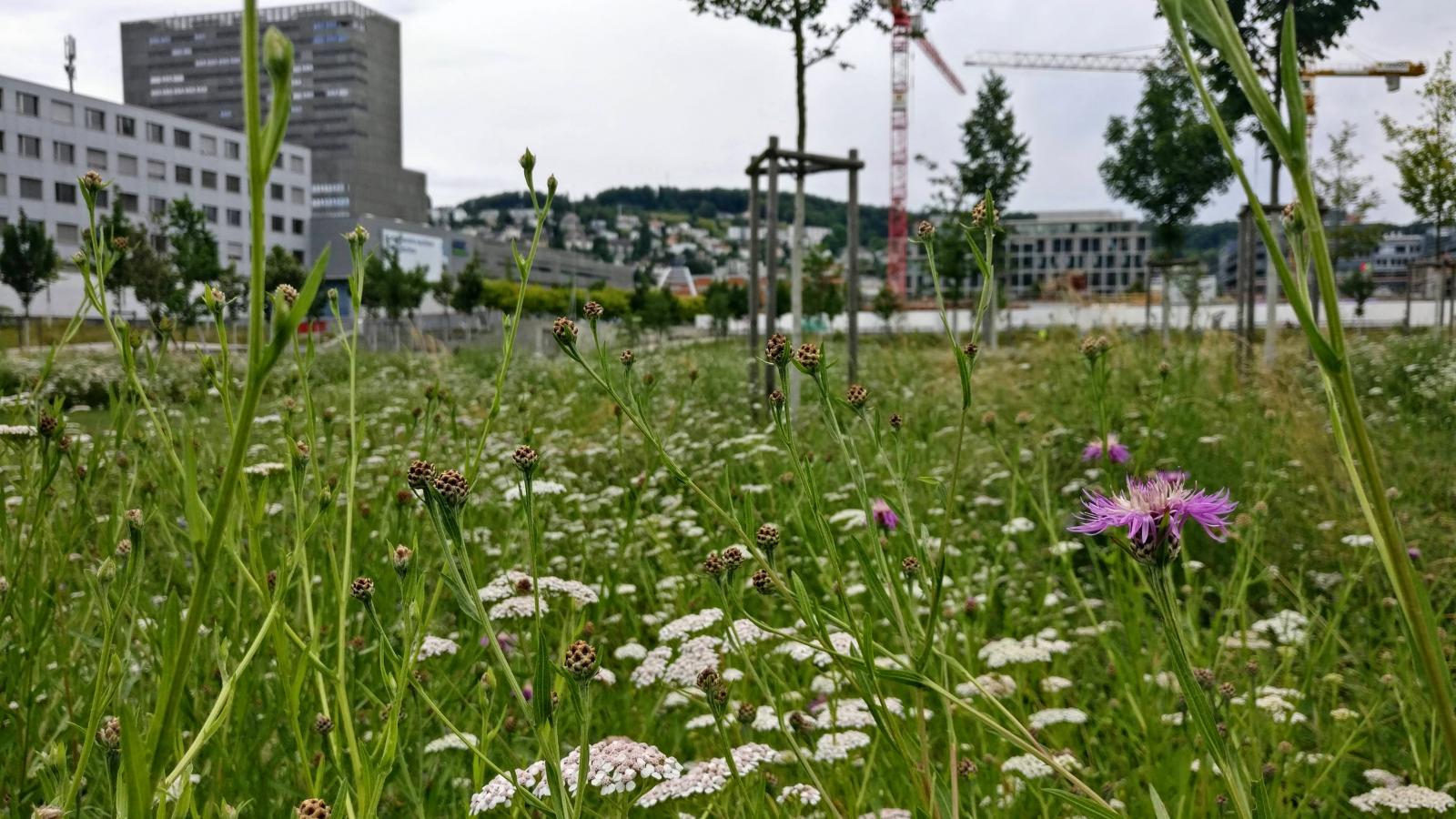
Promoting Wildflower Biodiversity (2018)
Photographer: Kevin Vega, retrieved 08/17/2018