

Last updated: October 2021
A project of 200 plots for an urban orchard on-site at Parque de las Aguas was created, where individual citizens, social groups, and companies can rent the lots to cultivate their own produce. The orchards hold educational programming for patrons and visitors as well. (Ref. 1,2,4)
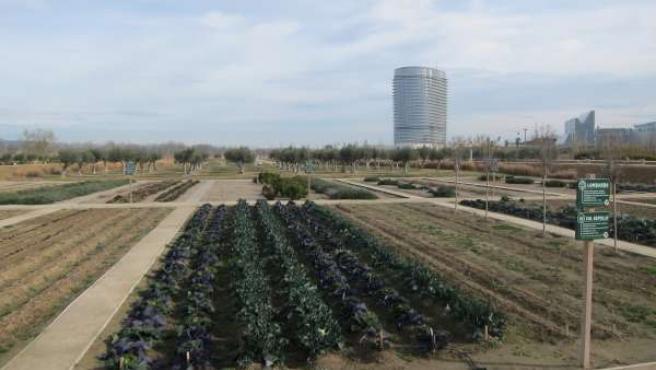
Source: Ref. 2
Overview
Nature-based solution
- Parks and urban forests
- Pocket parks/neighbourhood green spaces
- Community gardens and allotments
- Allotments
- Horticulture
Key challenges
- Green space, habitats and biodiversity (SDG 15)
- Green space creation and/or management
- Environmental quality
- Soil quality improvement
- Waste management
- Social justice, cohesion and equity (SDG 10)
- Environmental education
- Social justice and equity
- Social cohesion
- Social interaction
- Health and well-being (SDG 3)
- Enabling opportunities for physical activity
- Creation of opportunities for recreation
- Economic development and employment (SDG 8)
- Economic development: agriculture
- Cultural heritage and cultural diversity
- Preservation of natural heritage
- Preservation of historic traditions
- Sustainable consumption and production (SDG 12)
- Sustainable consumption
- Sustainable production
Focus
Creation of new green areas, Knowledge creation and awareness raising, Other
Project objectives
This NBS is designed to meet the following objectives:
- Prepare the parcels for agricultural uses (Ref. 1)
- Manage the plots for urban rental orchards and units (Ref. 1)
- Promote the sale of products and services related to the urban gardens (Ref. 1)
- Disseminate knowledge of and stimulate agricultural practices (Ref. 1)
- Encourage citizens to access new forms of leisure and consumption that are more sustainable (Ref. 2)
- Preserve the agricultural heritage of the city (Ref. 2)
Implementation activities
Development of 200 parcels (30 m2 each) (Ref. 2)
Implementation of courses, workshops and horticultural training of all kinds (Ref. 1)
Promotion of outdoor activities for healthy leisure, generational and social exchange, organic farming, education in demanding consumption and local products (Ref. 2)
Total area of 9 446 m2; Total area of the orchards: 6.230 m2; Paths and common areas 2.404 m2; Service buildings 150 m2'Snack bar 250 m2; Barbecue area 285 m2; Area for reservations 127 m2 (Ref. 1)
Flattening of hills into terraces; drainage and preparation of soil for cultivation; substitution of soil in areas not apt for cultivation; installation of a localized watering system; clearing of paths and services for access; Installation of a security fence around the plots; installation of surveillance system; construction of office space, toilets, storage for tools and a snack store; organization of a waste collection system that separates solids from non-solids, organics from non-organics. (Ref. 1)
Main beneficiaries
- Local government/Municipality
- Non-government organisation/Civil Society
- Private sector/Corporate/Company
- Citizens or community groups
- Marginalized groups: People with functional diversities, Other
- Food producers and cultivators (i.e. farmers, gardeners)
- Other
Governance
Management set-up
- Government-led
Type of initiating organisation
- Local government/municipality
Participatory approaches/ community involvement
- Crowd-sourcing/Crowd-funding/Participatory budget
- Dissemination of information and education
Details on the roles of the organisations involved in the project
Municipal government, lead organizer of the project (Ref. 1)
ZGZ@Desarrollo Expo S.A, planning organization for the Zaragoza Expo to which the construction of the park is tied to (Ref. 1)
Plantae is the private company that won the bid for the assignment and management of the orchards. (Ref. 2)
EU funding support for Huerta LIFE programme/ AgroEco Cities network, which promotes urban orchards and agroeco practices in peri-urban areas of Zaragoza (Ref. 6,7)
Project implemented in response to ...
... an EU policy or strategy?
Unknown
... a national policy or strategy?
Unknown
... a local policy or strategy?
Yes
(Zaragoza Expo 2008 Plan as plan for spatial planning of the larger park and the use of its space (ref1)
Huertas Life Plan incorporates these orchards into the city's green belt of community gardens around its periphery. (ref 6))
Financing
Total cost
€100,000 - €500,000
Source(s) of funding
- EU funds
- Public local authority budget
- Other
Type of funding
- Earmarked public budget
- Direct funding (grants, subsidies, or self-financed projects by private entities)
- Membership or entrance fees
Non-financial contribution
Unknown
Impacts and Monitoring
Environmental impacts
- Environmental quality
- Improved soil quality
- Water management and blue areas
- Increased protection against flooding
- Green space and habitat
- Increased green space area
Economic impacts
- Increase in agricultural production (for profit or not)
- Generation of income from NBS
Socio-cultural impacts
- Social justice and cohesion
- Improved social cohesion
- Improved access to urban green space
- Increased visibility and opportunity for marginalised groups or indigenous peoples
- Increased opportunities for social interaction
- Increased involvement of locals in the management of green spaces
- Increased access to healthy/affordable food
- Increased sustainability of agriculture practices
- Health and wellbeing
- Gain in activities for recreation and exercise
- Cultural heritage and sense of place
- Protection of natural heritage
- Education
- Increased knowledge of locals about local nature
- Increased awareness of NBS and their benefits
Type of reported impacts
Achieved impacts
Presence of formal monitoring system
Unknown
Presence of indicators used in reporting
No evidence in public records
Presence of monitoring/ evaluation reports
No evidence in public records
Availability of a web-based monitoring tool
No evidence in public records
References
1. Ayuntamiento de Zaragoza. (2012). Parque del Agua "Luis Buñuel" Zaragoza. [Document provided].
2. Europa Press. (2013). El 90% de los huertos urbanos del Parque del Agua estan ocupados y cultvados. Available at: Source link [Accessed: 9 September 2020].
3. Hortals. (n.d.). Huertos Ciudadanos. [Not available in 2020].
4. Rillo, A. (2014). Los huertos del Parque del Agua ya tiene una tienda y un aula. El Periodico de Aragon. Available at: Source link [Accessed: 9 September 2020].
5. European Commission. (n.d.). Life Programme. Available at: Source link [Accessed: 9 September 2020].
6. Ayuntamiento de Zaragoza. (2017). HUERTAS LIFE KM0. Available at: Source link [Accessed: 9 September 2020].
7. Ayuntamiento de Zaragoza. (2017). Proyecto Huertas Life: Layman's report. Available at: Source link [Accessed: 9 September 2020].
8. Hortals. (n.d.). Hortals. Huertos Ecologicos Urbanos. Facebook page. Available at: Source link [Accessed: 9 September 2020].
2. Europa Press. (2013). El 90% de los huertos urbanos del Parque del Agua estan ocupados y cultvados. Available at: Source link [Accessed: 9 September 2020].
3. Hortals. (n.d.). Huertos Ciudadanos. [Not available in 2020].
4. Rillo, A. (2014). Los huertos del Parque del Agua ya tiene una tienda y un aula. El Periodico de Aragon. Available at: Source link [Accessed: 9 September 2020].
5. European Commission. (n.d.). Life Programme. Available at: Source link [Accessed: 9 September 2020].
6. Ayuntamiento de Zaragoza. (2017). HUERTAS LIFE KM0. Available at: Source link [Accessed: 9 September 2020].
7. Ayuntamiento de Zaragoza. (2017). Proyecto Huertas Life: Layman's report. Available at: Source link [Accessed: 9 September 2020].
8. Hortals. (n.d.). Hortals. Huertos Ecologicos Urbanos. Facebook page. Available at: Source link [Accessed: 9 September 2020].
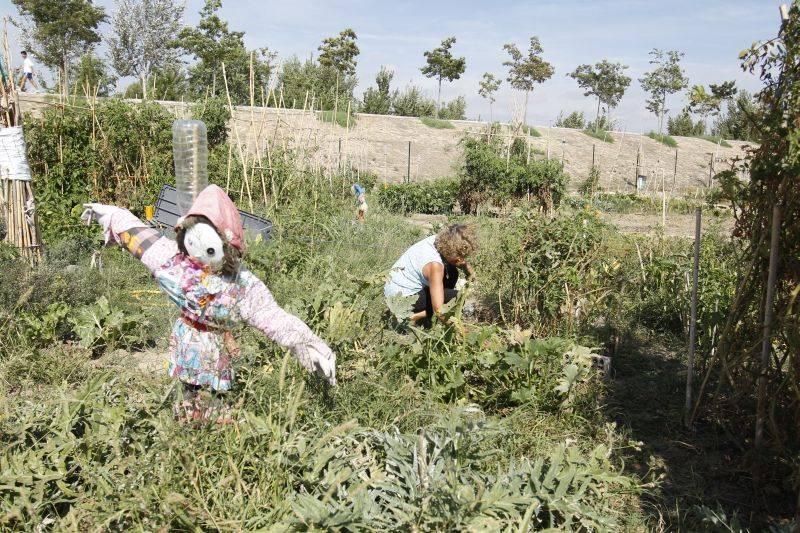
Source: Ref. 4, Chus Marchador