

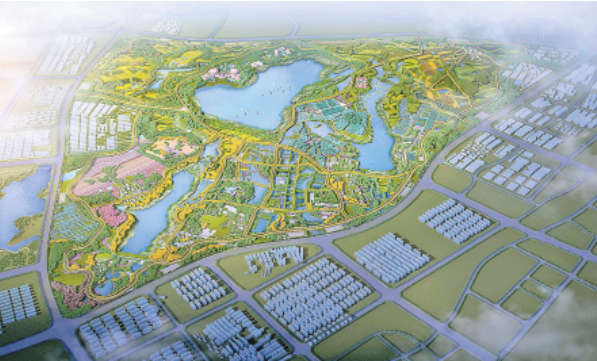
The municipal government of the Yiwu city in China has launched the Green Lungs of the City Project (GLCP) in 2019. The overarching goal was to build a green lung, which will create more green spaces for residents in Yiwu, mitigate environmental pressures and improve the city's resilience to climate change. Under the project, a green corridor was created to reconnect the roads, rivers, ponds and lakes where different tree species were planted. Additionally, wetlands were constructed and restored to improve resilience against climate change disasters. The project is still in the ongoing phase, and a forest-wetland ecological park is under development in the city's central area. The GLCP aims to use different types of NBS elements to promote sustainable urban development and to provide multiple ecosystem services to the citizens in a highly urbanised area. [1]
Overview
Nature-based solution
- Blue infrastructure
- Lakes/ponds
- In-land wetlands, peatlands, swamps, and moors
- Community gardens and allotments
- Allotments
- Green areas for water management
- Swales and filter strips
- Parks and urban forests
- Large urban parks or forests
- Botanical gardens
Key challenges
- Climate action for adaptation, resilience and mitigation (SDG 13)
- Climate change adaptation
- Green space, habitats and biodiversity (SDG 15)
- Habitat and biodiversity conservation
- Green space creation and/or management
- Water management (SDG 6)
- Flood protection
- Stormwater and rainfall management and storage
- Improvements to water quality
- Health and well-being (SDG 3)
- Creation of opportunities for recreation
Focus
Project objectives
Implementation activities
Climate-focused activities
Climate change adaptation:
- Increase or improve urban vegetation cover to help reduce outdoor temperature
- Create or improve outdoor spaces to help people escape from urban heat
- Restore wetlands and/or coastal ecosystems to dissipate the effects of flooding and/or storms
Biodiversity conservation or restoration-focused activities
Biodiversity conservation:
- Protect and enhance urban habitats
- Create new habitats
- Preserve and strengthen habitat connectivity
- Protect species
- Undertake specific measures to protect species
- Undertake specific measures to protect native species
- Means for conservation governance
- Biodiversity offsets
- Raise public awareness
- Public engagement
- Create and use scientific knowledge for conservation
Main beneficiaries
- Local government/Municipality
- Non-government organisation/Civil Society
- Citizens or community groups
- Food producers and cultivators (i.e. farmers, gardeners)
Governance
Management set-up
- Co-governance with government and non-government actors
Type of initiating organisation
- Regional government
- Local government/municipality
- Public sector institution
- Non-government organisation/civil society
- Citizens or community group
- Researchers/university
- Private foundation/trust
- Social enterprise
Participatory approaches/ community involvement
- Dissemination of information and education
- Consultation (e.g. workshop, surveys, community meetings, town halls)
- Co-management/Joint management
Details on the roles of the organisations involved in the project
Project implemented in response to ...
Financing
Total cost
Source(s) of funding
- Public local authority budget
- Public regional budget
- Corporate investment
- Private Foundation/Trust
Type of funding
- Direct funding (grants, subsidies, or self-financed projects by private entities)
- Donations
Non-financial contribution
Impacts and Monitoring
Environmental impacts
- Environmental quality
- Improved air quality
- Water management and blue areas
- Improved water quality
- Improved stormwater management
- Green space and habitat
- Promotion of naturalistic styles of landscape design for urban development
- Increased green space area
- Increased conservation or restoration of ecosystems
- Increased ecological connectivity across regeneration sites and scales
- Reduced biodiversity loss
Economic impacts
- Increase of green jobs (e.g. paid employment positions)
- Reduce financial cost for urban management
- Increase in agricultural production (for profit or not)
Socio-cultural impacts
- Social justice and cohesion
- Increased opportunities for social interaction
- Health and wellbeing
- Gain in activities for recreation and exercise
- Cultural heritage and sense of place
- Improvement in people’s connection to nature
- Education
- Increased awareness of NBS and their benefits
Type of reported impacts
Presence of formal monitoring system
Presence of indicators used in reporting
Presence of monitoring/ evaluation reports
Availability of a web-based monitoring tool
References
2. NetworkNature (n.d.). Green Lungs of The City - Forest and Wetlands Park, Yiwu - Zhejiang Province, China. URL: Source link. Accessed on 25th March, 2022.
3. City of Yiwu. (2022). Yiwu City Made Concerted Efforts to Strive for National Forest City. URL: Source link. Accessed on 4th April, 2022.
4. Yiwu Natural Resources and Planning Bureau. URL: Source link. Accessed on 4th April, 2022.
5. City of Yiwu (2022). Summary of Yiwu's Work in Ten Aspects. URL: Source link. Accessed on 4th April, 2022.