

Last updated: June 2024
“The Went Water Vole Project, a two year project working with local people and landowners throughout the River Went catchment to secure the future survival for one of the most significant water vole populations in West Yorkshire. Work also involves carry out habitat restoration and creation schemes across the area to link up isolated water vole colonies and encourage the re-population of some of their old ranges.” (Ref. 1)
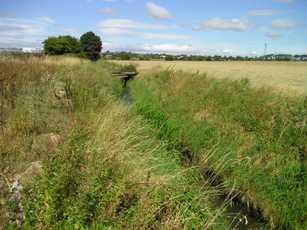
Good water vole habitat web (Ref. 1)
Good water vole habitat web (Ref. 1)
Overview
Nature-based solution
- Blue infrastructure
- Rivers/streams/canals/estuaries
- In-land wetlands, peatlands, swamps, and moors
Key challenges
- Green space, habitats and biodiversity (SDG 15)
- Habitat and biodiversity restoration
- Habitat and biodiversity conservation
Focus
Management and improved protection of rivers and other blue areas, Monitoring and maintenance of habitats and/or biodiversity
Project objectives
“The project aims to secure and expand the population of water voles through improved management of water courses and the restoration of habitats. Engagement with land owners and opportunities for community involvement and training form a significant part of this project.” (Ref. 2)
Also, “the work we carry out for water vole conservation will also benefit other wildlife, from amphibians like newts and frogs to insects and farmland birds. The project has wider benefits too... for example installing new way marking on sites across Featherstone to coincide with the publication of a new walks leaflet, as well as spreading the word about rivers and wetlands to as many local school children as possible”. (Ref. 1)
Implementation activities
“The project aims to secure and expand the population of water voles through improved management of water courses and the restoration of habitats. Engagement with land owners and opportunities for community involvement and training form a significant part of this project.” (Ref. 2)
Also, “the work we carry out for water vole conservation will also benefit other wildlife, from amphibians like newts and frogs to insects and farmland birds. The project has wider benefits too... for example installing new way marking on sites across Featherstone to coincide with the publication of a new walks leaflet, as well as spreading the word about rivers and wetlands to as many local school children as possible”. (Ref. 1)
Biodiversity conservation or restoration-focused activities
Biodiversity conservation:
- Protect and enhance urban habitats
- Preserve and strengthen existing habitats and ecosystems
- Preserve and strengthen habitat connectivity
- Protect species
- Undertake specific measures to protect species
- Undertake specific measures to protect native species
- Undertake specific measures to protect endangered species
- Undertake specific measures to protect valued species
- Means for conservation governance
- Raise public awareness
- Public engagement
- Create and use scientific knowledge for conservation
- Capacity building
Biodiversity restoration:
- Rehabilitate and restore damaged or destroyed ecosystems
- Restore species (native, endangered, or unspecified)
- Restore native species
- Restore endangered species
- Restore ecological connectivity
- Public engagement
Main beneficiaries
- Local government/Municipality
- Citizens or community groups
- Young people and children
- Other
Governance
Management set-up
- Led by non-government actors
Type of initiating organisation
- Private foundation/trust
Participatory approaches/ community involvement
- Taskforce groups
- Dissemination of information and education
- Consultation (e.g. workshop, surveys, community meetings, town halls)
Details on the roles of the organisations involved in the project
The Wild Went Water Vole project is run by the Yorkshire Wildlife Trust. (Ref. 1, 2) Funding to the project was provided from the Heritage Lottery Fund and the Environment Agency. (Ref. 1)
Project implemented in response to ...
... an EU policy or strategy?
Unknown
... a national policy or strategy?
Yes
(UK Biodiversity Action Plan (BAP).
"National Status: Water Voles are listed on the IUCN Red List of Threatened Species" (from the local Biodiversity Action Plan). (Ref. 3) )
... a local policy or strategy?
Yes
(Wakefield’s local Biodiversity Action Plan. (Ref. 3) )
Financing
Total cost
Unknown
Source(s) of funding
- Public national budget
Type of funding
- Direct funding (grants, subsidies, or self-financed projects by private entities)
Non-financial contribution
Type of non-financial contribution
- Provision of labour
- Other
Who provided the non-financial contribution?
- Citizens (e.g. volunteering)
- Private sector (businesses, financial institution)
Impacts and Monitoring
Environmental impacts
- Climate change
- Strengthened capacity to address climate hazards/natural disasters
- Water management and blue areas
- Enhanced protection and restoration of freshwater ecosystems
- Green space and habitat
- Increased conservation or restoration of ecosystems
- Increased ecological connectivity across regeneration sites and scales
- Reduced biodiversity loss
- Increased number of species present
- Increased protection of threatened species
Economic impacts
- Other
Socio-cultural impacts
- Social justice and cohesion
- Improved social cohesion
- Cultural heritage and sense of place
- Improvement in people’s connection to nature
- Education
- Increased support for education and scientific research
- Increased knowledge of locals about local nature
Type of reported impacts
Expected impacts, Achieved impacts
Presence of formal monitoring system
Unknown
Presence of indicators used in reporting
No evidence in public records
Presence of monitoring/ evaluation reports
No evidence in public records
Availability of a web-based monitoring tool
No evidence in public records
References
Ref. 1. Yorkshire Wildlife Trust (n.d.) Looking Back: Wild Went Water Voles Project. West Yorkshire. Information obtained: 2017-07-12. [Website not available in 2020]
Ref. 2. Wakefield Council (2010) Wakefield Green Infrastructure Plan. Source: Source link [Accessed 29 September 2020]
Ref. 3. Wakefield Council (n.d.) Wakefield Local Biodiversity Action Plan. Wakefield District Biodiversity Group. Source: Source link [Accessed 29 September 2020]
Ref. 4. The Wildlife Trusts (n.d.) The Wildlife Trusts’ water vole projects. Yorkshire Wildlife Trust. Information obtained: 2017-07-12. [Website not available in 2020]
Ref. 5. Yokshire Wildlife Trust (n.d.) Heritage Lottery Fund. Source: Source link [Accessed 29 September 2020]
Ref. 2. Wakefield Council (2010) Wakefield Green Infrastructure Plan. Source: Source link [Accessed 29 September 2020]
Ref. 3. Wakefield Council (n.d.) Wakefield Local Biodiversity Action Plan. Wakefield District Biodiversity Group. Source: Source link [Accessed 29 September 2020]
Ref. 4. The Wildlife Trusts (n.d.) The Wildlife Trusts’ water vole projects. Yorkshire Wildlife Trust. Information obtained: 2017-07-12. [Website not available in 2020]
Ref. 5. Yokshire Wildlife Trust (n.d.) Heritage Lottery Fund. Source: Source link [Accessed 29 September 2020]