

Last updated: October 2021
The project aimed to improve the Owler Beck riverbody catchment in Wakefield. Data collected by the Environment Agency revealed that the Owler Beck catchment is struggling to achieve the 'good ecological status' needed in order to meet the European Water Framework Directive. This is likely due to years of alterations that have removed the diversity of the environments and left the watercourse silty. The project aimed to address these issues by working on the priority sites along the river. A multi-phased scheme had been designed to relieve these pressures and deliver benefits for both people and wildlife across the catchment. (Ref. 1) The project is completed as of 2019 with 200m of river reach length covered in the catchment area. (Ref 7)
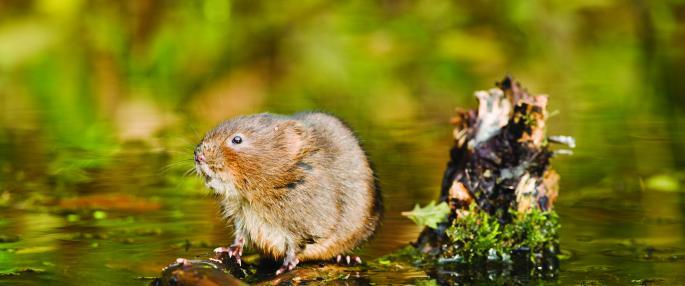
Water Vole Owler Beck restoration Elliott Neep Ref. 1
Overview
Nature-based solution
- Grey infrastructure featuring greens
- Blue infrastructure
- Riverbank/Lakeside greens
- Rivers/streams/canals/estuaries
Key challenges
- Water management (SDG 6)
- Improvements to water quality
- Green space, habitats and biodiversity (SDG 15)
- Habitat and biodiversity restoration
- Habitat and biodiversity conservation
- Environmental quality
- Waste management
- Inclusive and effective governance (SDG 16)
- Inclusive governance
Focus
Ecological restoration of ecosystems, Monitoring and maintenance of habitats and/or biodiversity, Management and improved protection of rivers and other blue areas
Project objectives
The overall aim is to improve the Owler Beck river body catchment in Wakefield. The project aims to benefit "both people and wildlife across the catchment". (Ref. 1)
Years of alterations that have removed the diversity of the environments and left the watercourse silty. The project aimed to address these issues by working on the priority sites along the river. (Ref 1)
Implementation activities
"The projects will address issues by working on the priority sites along the river. Sites will be improved by adding diversity to the water courses, removing invasive species and reintroducing native plants. This will create new habitats for numerous species, including water voles." (Ref. 1)
“A key part of these projects will involve engaging with local community groups, with local volunteers being offered training in river monitoring and practical conservation. It is hoped the project will raise awareness of issues facing the river and inspire local communities to take action, developing a sense of ownership and long term sustainability measures.” (Ref. 1)
Alec Boyd, Yorkshire Wildlife Trust Project Assistant said: “Many animals including fish and aquatic insects have difficultly surviving in water that is too silty as they lay their eggs on clean gravels. By stabilising the banks with new plants we can help reduce the amount of pollution reaching the water which will help these aquatic creatures survive.” (Ref 8)
Biodiversity conservation or restoration-focused activities
Biodiversity conservation:
- Protect and enhance urban habitats
- Preserve and strengthen existing habitats and ecosystems
- Preserve and strengthen habitat connectivity
- Reduce negative impacts and avoid the alteration/damage of ecosystem
- Protect species
- Undertake specific measures to protect species
- Undertake specific measures to protect native species
- Undertake specific measures to protect valued species
- Means for conservation governance
- Raise public awareness
Biodiversity restoration:
- Restore species (native, endangered, or unspecified)
- Restore native species
- Restore valued species
- Clear and control invasive alien species
- Restore ecological connectivity
Main beneficiaries
- National-level government
- Local government/Municipality
- Citizens or community groups
- Other
Governance
Management set-up
- Led by non-government actors
Type of initiating organisation
- Private sector/corporate actor/company
Participatory approaches/ community involvement
- Dissemination of information and education
- Consultation (e.g. workshop, surveys, community meetings, town halls)
- Co-management/Joint management
Details on the roles of the organisations involved in the project
The project is run by the Yorkshire Wildlife Trust. (Ref. 1-3) ; Funding from e.g. The Veolia Environmental Trust. (Ref. 1)
Project implemented in response to ...
... an EU policy or strategy?
Yes
(The European Water Framework Directive. (Ref. 1) )
... a national policy or strategy?
Yes
( "Environment Agency revealed that the Owler Beck catchment is struggling to achieve the 'good ecological status' needed in order to meet the European Water Framework Directive." (Ref. 1) )
... a local policy or strategy?
Unknown
Financing
Total cost
€50,000 - €100,000
Source(s) of funding
- Private Foundation/Trust
- Other
Type of funding
- Direct funding (grants, subsidies, or self-financed projects by private entities)
- Tax exemption
- Other
Non-financial contribution
Type of non-financial contribution
- Provision of labour
Who provided the non-financial contribution?
- Citizens (e.g. volunteering)
Impacts and Monitoring
Environmental impacts
- Water management and blue areas
- Improved water quality
- Enhanced protection and restoration of freshwater ecosystems
- Green space and habitat
- Increased conservation or restoration of ecosystems
- Increased conversion of degraded land or soil
- Reduced biodiversity loss
- Increased number of species present
- Increased protection of threatened species
- Improved prevention or control of invasive alien species
- Increased ecological connectivity across regeneration sites and scales
- Other
Economic impacts
- Unknown
Socio-cultural impacts
- Cultural heritage and sense of place
- Improvement in people’s connection to nature
- Increased appreciation for natural spaces
- Education
- Increased knowledge of locals about local nature
- Increased awareness of NBS and their benefits
- Other
Type of reported impacts
Expected impacts, Achieved impacts
Presence of formal monitoring system
Unknown
Presence of indicators used in reporting
No evidence in public records
Presence of monitoring/ evaluation reports
No evidence in public records
Availability of a web-based monitoring tool
Yes
References
Ref. 1. Yorkshire Wildlife Trust (2017) Work begins on Owler Beck! News. Information obtained: 20174-07-13. [Website not available in 2020]
Ref. 2. Wakefield District Local Group (2016) News. RSPB local group e-letter. Information obtained: 20174-07-13. Source: Source link [Accessed 30 September 2020]
Ref. 3. Yorkshire Wildlife Trust (2016) Vital funding for Owler Beck restoration. News. Information obtained: 20174-07-13. [Website not available in 2020]
Ref. 4. Wakefield Council (2010) Wakefield green infrastructure plan. Source: Source link [Accessed 30 September 2020]
Ref. 5. Wakefield Council (n.d.) Wakefield local biodiversity action plan. Source:Source link [Accessed 30 September 2020]
Ref. 6. Environment Agency (2017) Owler Beck from Source to River Calder. Catchment Data Explorer. Source: Source link [Accessed 30 September 2020]
Ref. 7. The River Restoration Center (2019) Owler Beck. Source: Source link [Accessed 30 September 2020]
Ref. 8. The Yorkshire Wildlife Trust (2018). Progress on the Owler Beck restoration project. Source: Source link [Accessed 30 September 2020]
Ref. 2. Wakefield District Local Group (2016) News. RSPB local group e-letter. Information obtained: 20174-07-13. Source: Source link [Accessed 30 September 2020]
Ref. 3. Yorkshire Wildlife Trust (2016) Vital funding for Owler Beck restoration. News. Information obtained: 20174-07-13. [Website not available in 2020]
Ref. 4. Wakefield Council (2010) Wakefield green infrastructure plan. Source: Source link [Accessed 30 September 2020]
Ref. 5. Wakefield Council (n.d.) Wakefield local biodiversity action plan. Source:Source link [Accessed 30 September 2020]
Ref. 6. Environment Agency (2017) Owler Beck from Source to River Calder. Catchment Data Explorer. Source: Source link [Accessed 30 September 2020]
Ref. 7. The River Restoration Center (2019) Owler Beck. Source: Source link [Accessed 30 September 2020]
Ref. 8. The Yorkshire Wildlife Trust (2018). Progress on the Owler Beck restoration project. Source: Source link [Accessed 30 September 2020]