

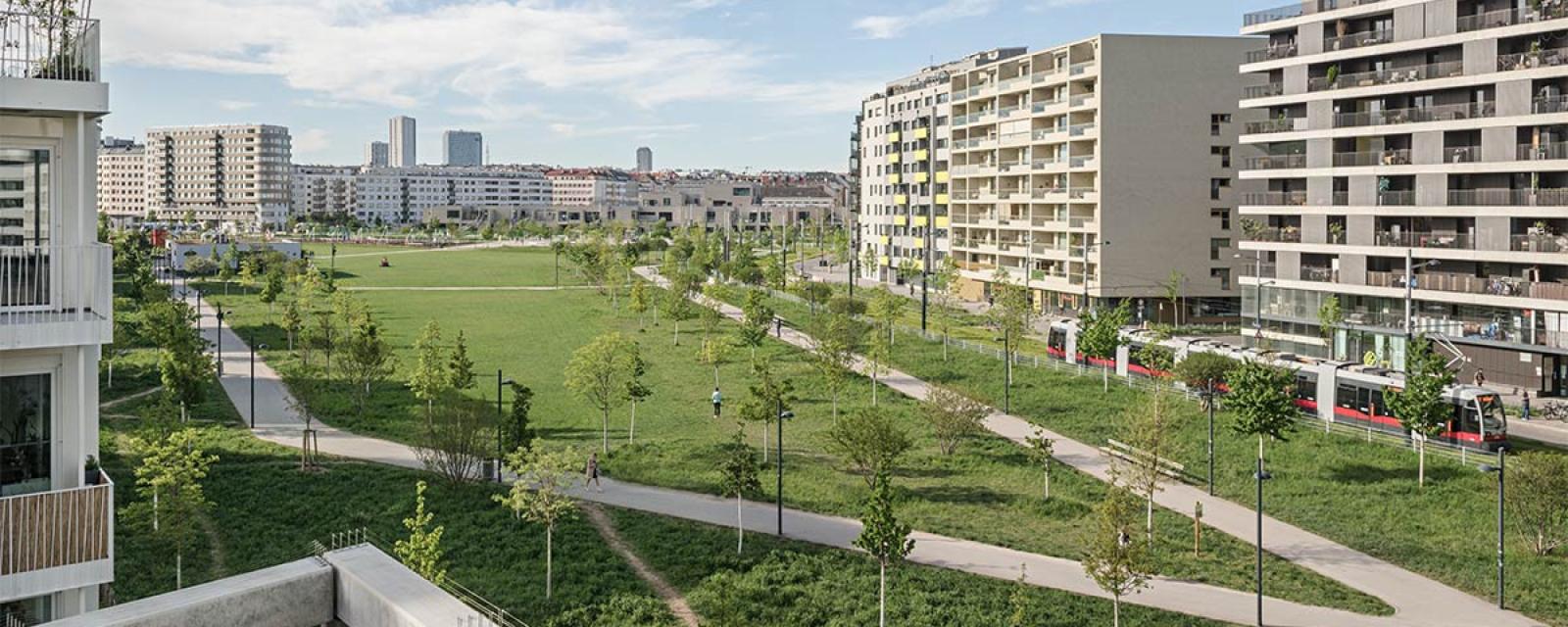
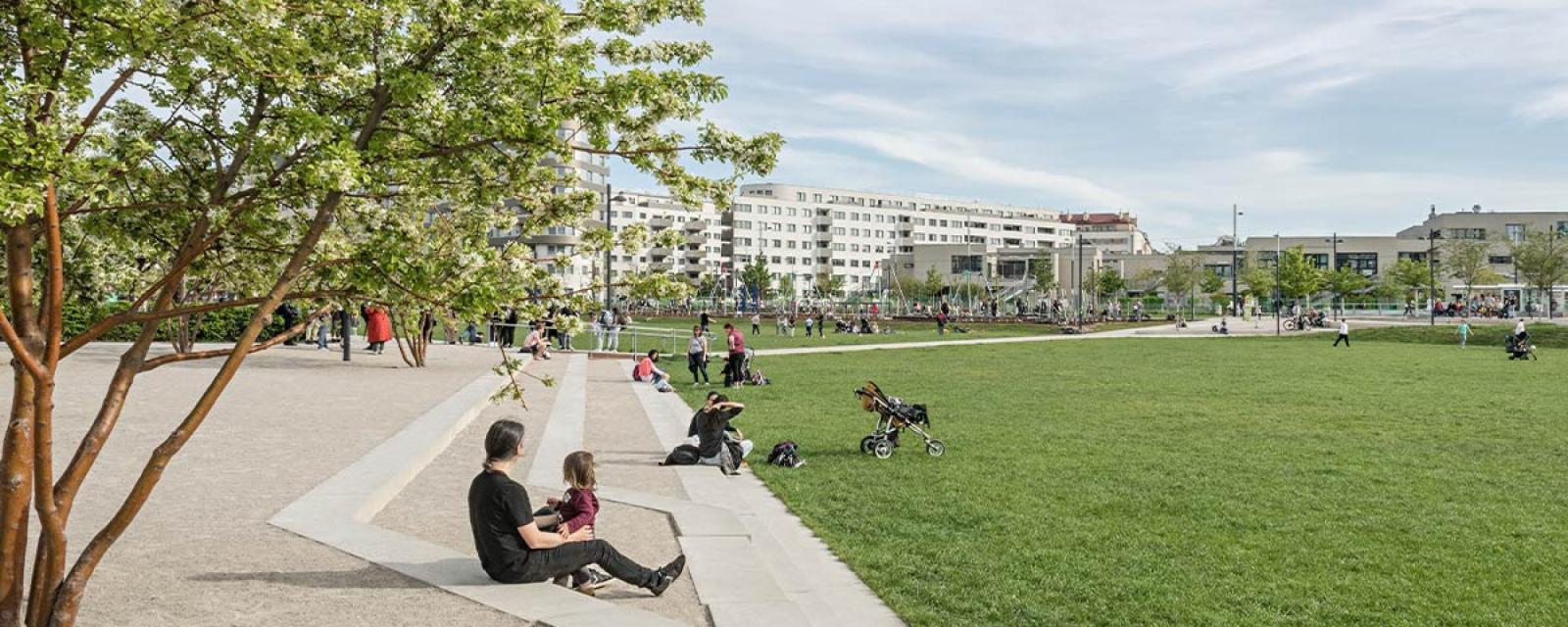
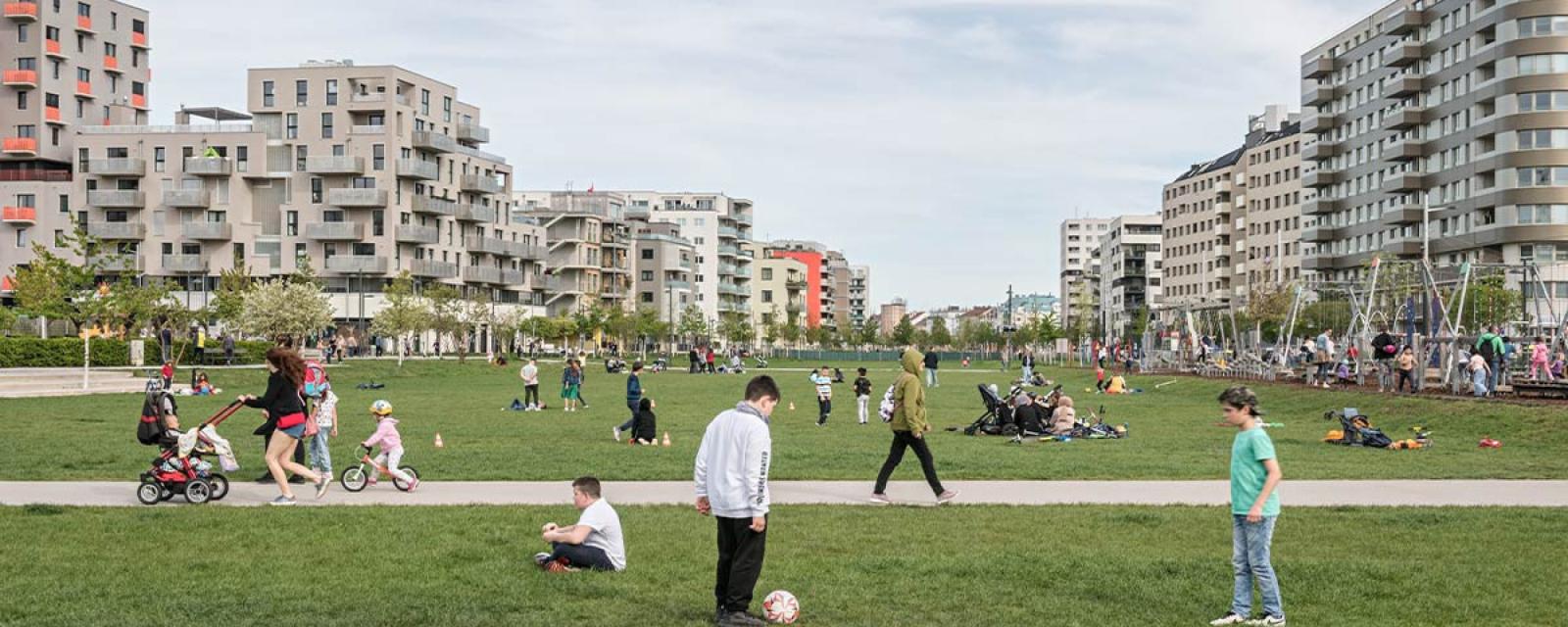
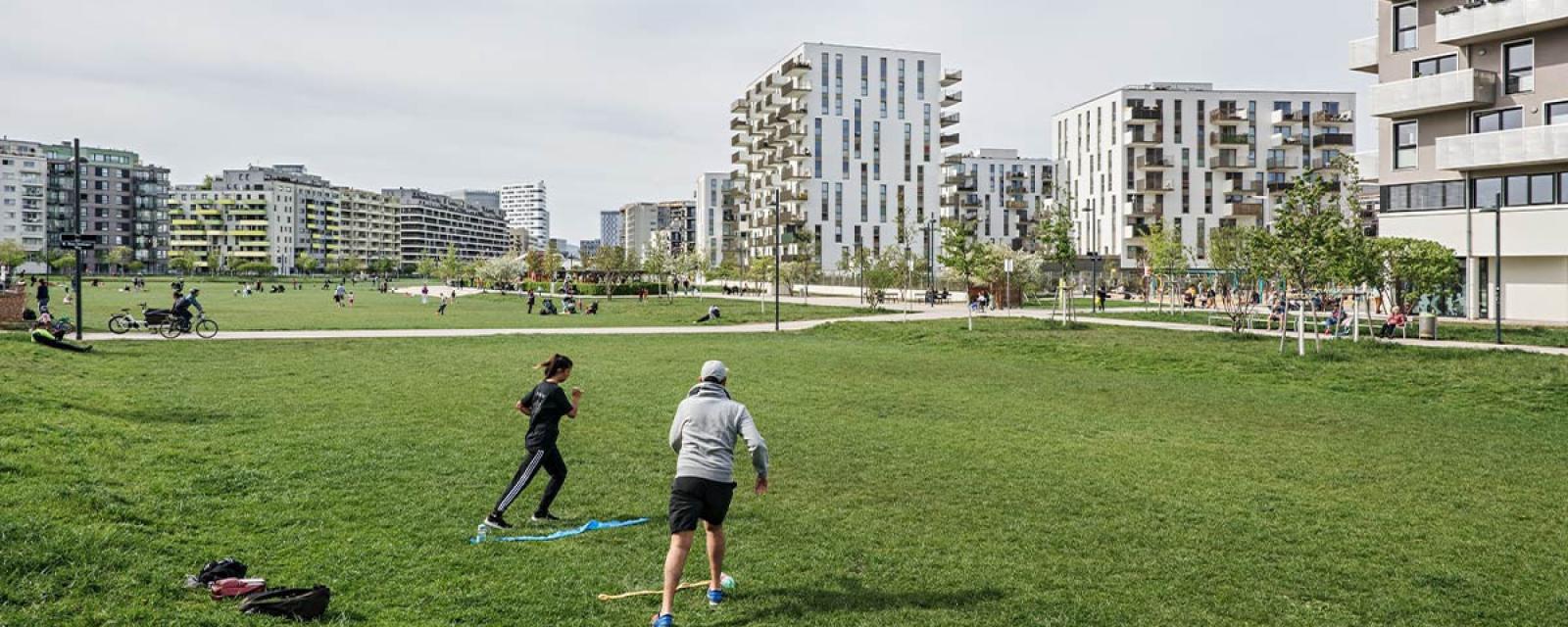
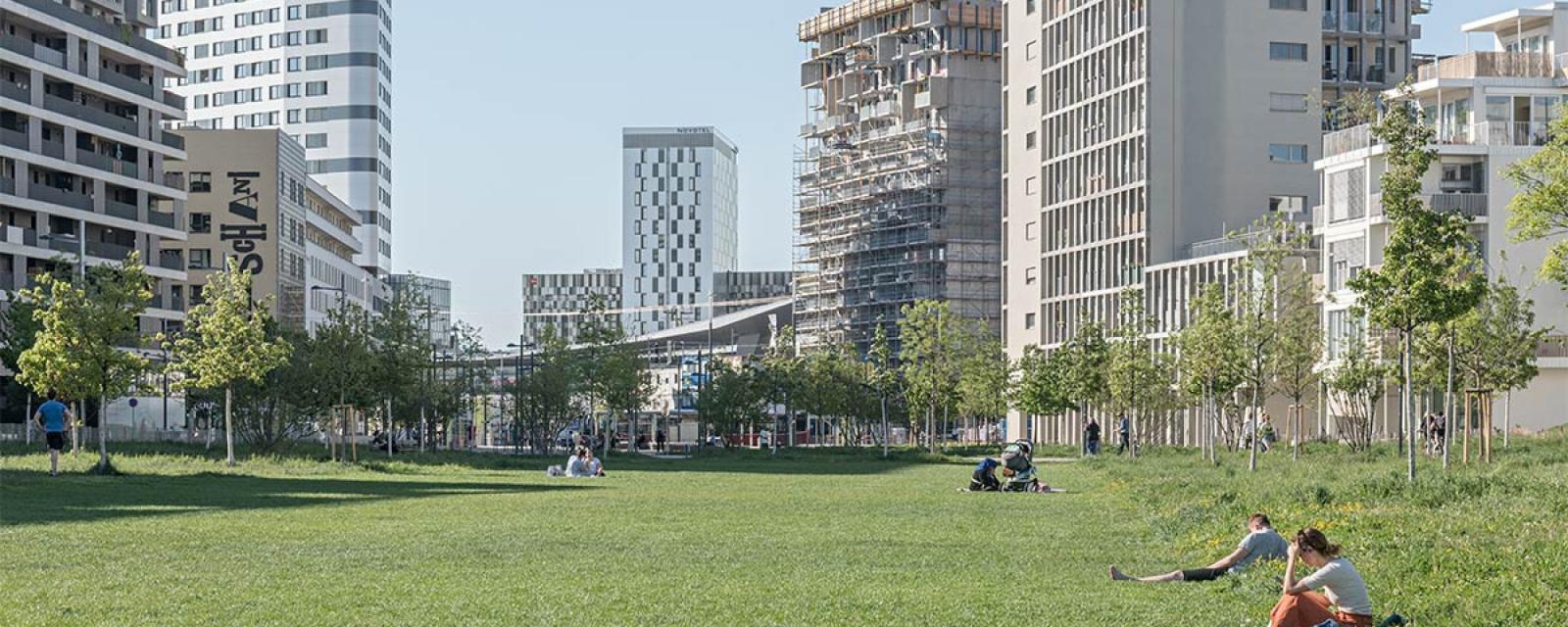
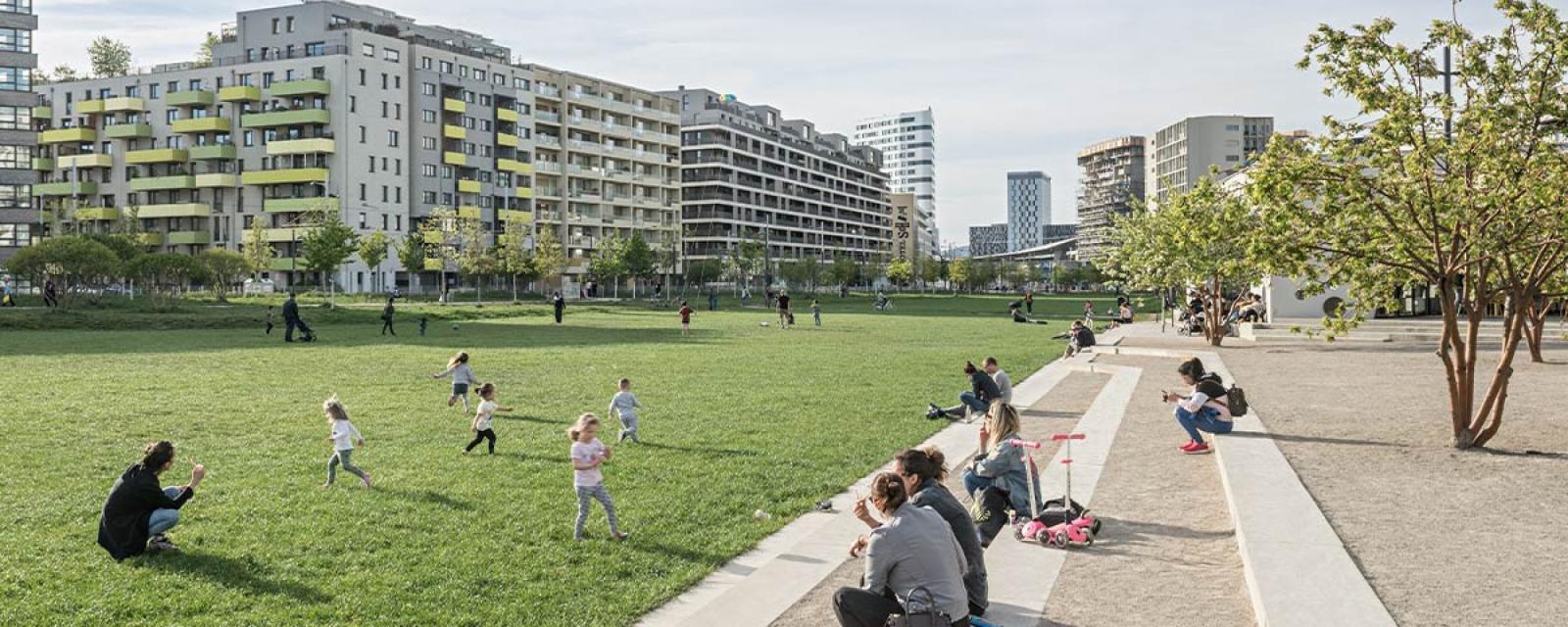
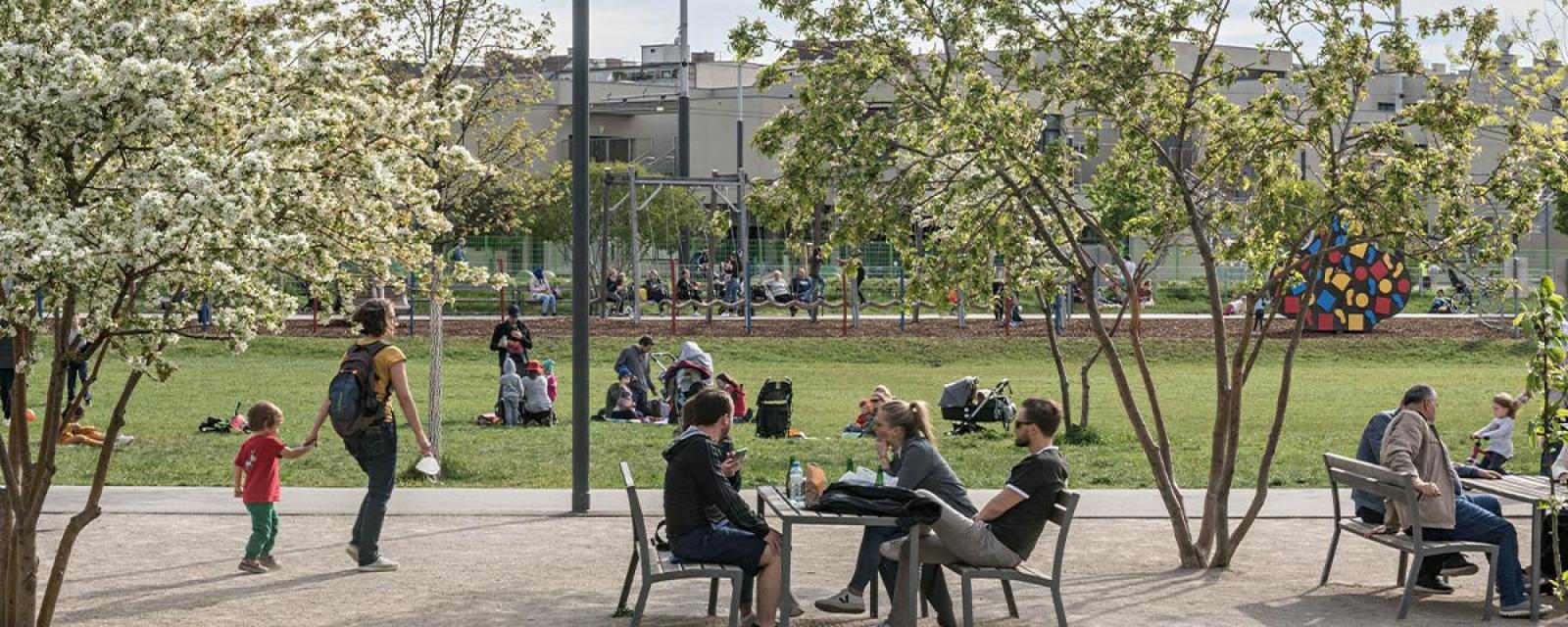
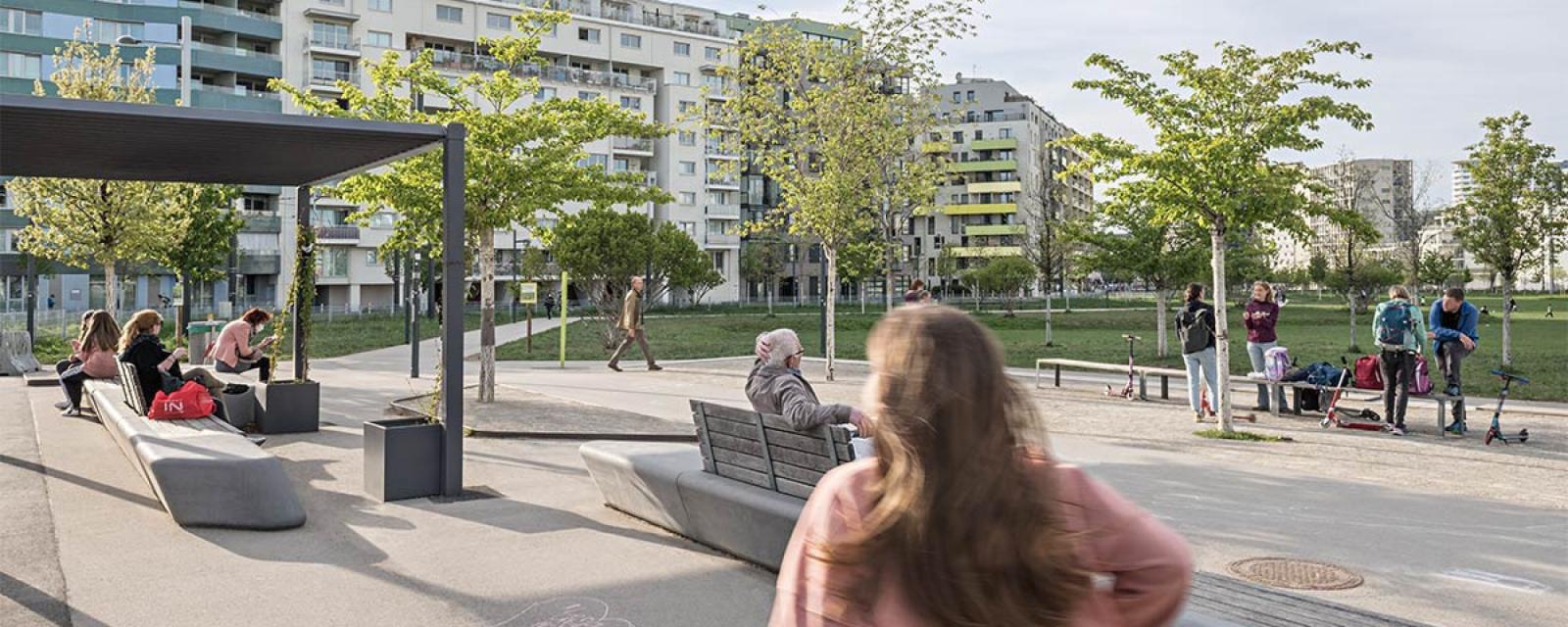
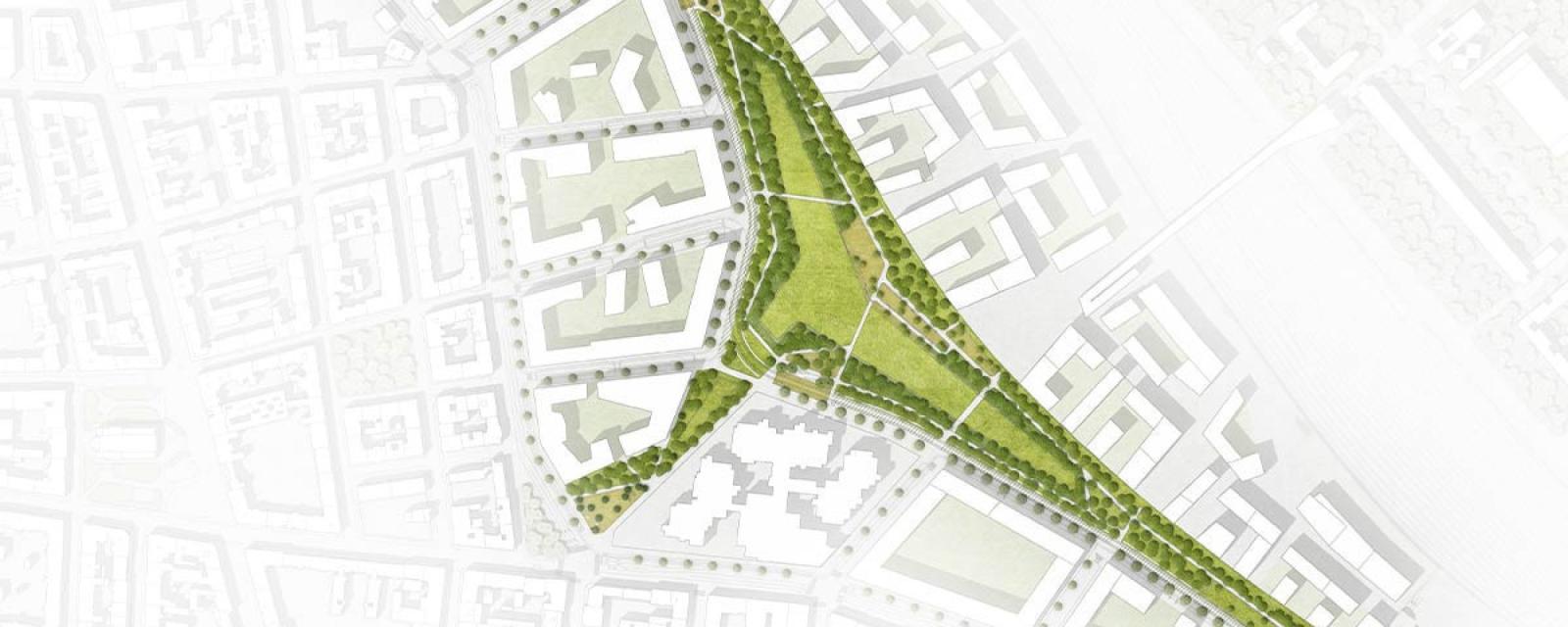
The Helmut Zilk Park, named after the late Mayor of Vienna, is located in the heart of the city, near the central train station. Surrounded by newly constructed residential and office buildings, the park serves as a vital green space, offering a variety of amenities. From playgrounds and sports fields to a community garden and cafés, it provides a space for social interaction and recreation. The park is characterized by large open meadows, which function as rainwater seepage areas, and features over 500 trees along its pathways., as well as community gardens. Flower groves enhance the park’s visual appeal while also providing habitats for local wildlife. The natural edges of the park create a diverse urban biotope that supports various plant and animal species. Grass and meadow communities have been carefully planned to enhance biodiversity and provide wet, humid habitats that help infiltrate rainwater from the surrounding paved areas. Already in its first year, the park has become home to insects, small animals, and even larger species like rabbits and snakes, contributing to its rich ecosystem. The park was developed by the local municipality of Vienna on a site that was once part of the city's railway track system. It is the largest park the city has created in the past 40 years, designed to serve as a recreational area for both local residents and travelers using the nearby train station. This project is part of a broader urban development initiative around the former Southern Railway station, led by Austria’s Federal Railways Company (ÖBB) and the City of Vienna. The plans included residential housing, office spaces, social infrastructure, and the creation of the Helmut Zilk Park. Spanning approximately 70,000 square meters, the park stands as the largest public green space created in Vienna in four decades. The central area of the park features a large lawn, perfect for picnics, ball games, and recreational activities. (Ref. 1, 2, 3, 8)
Overview
Nature-based solution
- Community gardens and allotments
- Community gardens
- Green areas for water management
- Sustainable urban drainage systems
- Other
- Parks and urban forests
- Pocket parks/neighbourhood green spaces
Key challenges
- Climate action for adaptation, resilience and mitigation (SDG 13)
- Climate change adaptation
- Green space, habitats and biodiversity (SDG 15)
- Green space creation and/or management
- Habitat and biodiversity restoration
- Regeneration, land-use and urban development
- Conversion of former industrial areas
- Water management (SDG 6)
- Stormwater and rainfall management and storage
- Health and well-being (SDG 3)
- Creation of opportunities for recreation
- Enabling opportunities for physical activity
- Social justice, cohesion and equity (SDG 10)
- Social interaction
- Sustainable consumption and production (SDG 12)
- Sustainable production
Principal problems in Functional Urban Area (FUA)
- Climate-Related Hazards
- Urban flooding (stormwater)
- Environmental Degradation
- Biodiversity loss
- Health, Well-being and Social cohesion
- Inadequate access to recreational opportunities
Key priorities
Focus
Project objectives
Implementation activities
Climate-focused activities
Climate change adaptation:
- Implement sustainable urban drainage schemes to manage stormwater
Biodiversity conservation or restoration-focused activities
Biodiversity restoration:
- Rehabilitate and restore damaged or destroyed ecosystems
- Restore species (native, endangered, or unspecified)
Main beneficiaries
- Citizens or community groups
Governance
Management set-up
- Government-led
Type of initiating organisation
- Local government/municipality
- Private sector/corporate actor/company
Participatory approaches/ community involvement
- Co-planning (e.g. stakeholder workshops, focus groups, participatory mapping)
- Joint implementation (e.g. tree planting)
Details on the roles of the organisations involved in the project
Project implemented in response to ...
Type of enablers
Financing
Total cost
Source(s) of funding
- Public local authority budget
Type of funding
- Earmarked public budget
Non-financial contribution
- Provision of land
- Public authorities (e.g. land, utility services)
Impacts and Monitoring
Environmental impacts
- Water management and blue areas
- Improved stormwater management
- Expected improved stormwater management
- Green space and habitat
- Increased green space area
- Achieved increased green space area
- Increased number of species present
- Achieved increased number of species present
Economic impacts
- Unknown
Socio-cultural impacts
- Health and wellbeing
- Gain in activities for recreation and exercise
- Achieved gain in activities for recreation and exercise
Type of reported impacts
Presence of formal monitoring system
Presence of indicators used in reporting
Presence of monitoring/ evaluation reports
Availability of a web-based monitoring tool
Potential risks of implementation and trade-offs
References
 Information about this nature-based solution was collected as part of the Naturescapes project funded by the European Union under Grant Agreement No 101084341.