

Last updated: October 2021
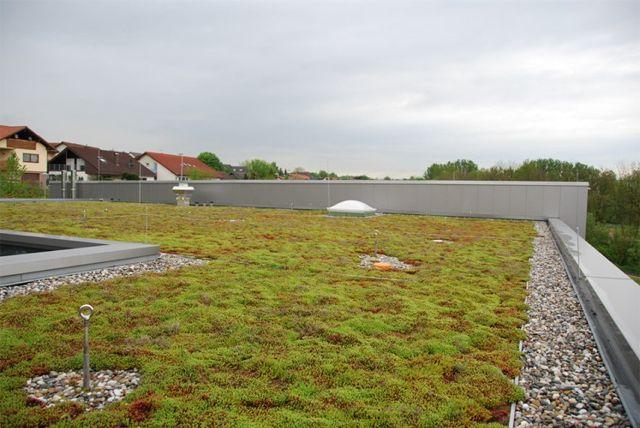
The campus of the Venice-Mestre Hospital (Ospedale dell’Angelo Mestre, Angel Hospital), considered the most technologically advanced health facility in Italy is a general care hospital. A Landscape Garden surrounds the hospital complex, containing woods, lakes, hills and an area called “the meadow,” a large roof garden linking the hospital block. The buildings are connected by abundant gardens offering pleasant views to patients. The hospital includes various roof gardens, as extensive green areas that offer water protection, storage of water as well as proper drainage and required ventilation of the green. The hospital includes green roofs, gardens, green driveways and green terraces. (ref. 1 and 3)

Greenroof
https://www.greenroofs.com/2018/09/10/featured-project-venice-mestre-hospital-ospedale-dellangelo-mestre-angel-hospital/
Overview
Nature-based solution
- Nature on buildings (external)
- Green roofs
- Balcony greens
- Other
- Parks and urban forests
- Pocket parks/neighbourhood green spaces
- Blue infrastructure
- Lakes/ponds
- Nature in buildings (indoor)
- Atriums/Courtyards
- Green areas for water management
- Sustainable urban drainage systems
Key challenges
- Water management (SDG 6)
- Stormwater and rainfall management and storage
- Green space, habitats and biodiversity (SDG 15)
- Green space creation and/or management
- Regeneration, land-use and urban development
- Promote natural styles of landscape design for urban development
- Health and well-being (SDG 3)
- Improving mental health
- Creation of opportunities for recreation
Focus
Creation of new green areas, Creation of semi-natural blue areas, Management and improved protection of rivers and other blue areas
Project objectives
The overall objective was the strategic design of the landscape as a green element that surrounds, incorporates and crosses the new hospital structure so that it becomes an integral part of the interior spaces as well. Other objectives were to; 1. build an area that should help allay the fears of the incoming patients and contribute to their recovery in their convalescing period, 2. create new green areas, 3. provide green recreation areas and 4. to create a system for rainwater collection and other kinds of water management (ref. 1 and 3).
Implementation activities
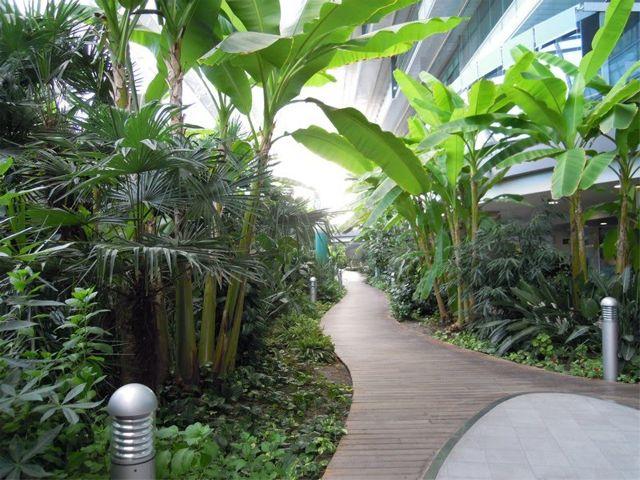
Creation of extensive green roofs, green terraces and balconies, green driveways and landscape garden as the hospital surrounding garden. "Its grand entrance hall, a glassed space more than 660 feet (200 mt) in length, 85 feet (26 mt) in width, and 90 feet (30 mt) in height, is a veritable winter garden, with trees, flowers, and aromatic plants welcoming all patients and their visitors." "The reverse ziggurat section of the building ensures that half of its patients have a direct view of the winter garden, while the other half has a personal view to the plants growing outside their windows in deep earth and plant-covered terraced containers. The vision guiding this design was that the building should help allay the fears of the incoming patients and contribute to their recovery in their convalescing period." (ref. 1, 4)
Main beneficiaries
- Public sector institution (e.g. school or hospital)
- Other
Governance
Management set-up
- Led by non-government actors
Type of initiating organisation
- Public sector institution
- Private sector/corporate actor/company
Participatory approaches/ community involvement
- Unknown
Details on the roles of the organisations involved in the project
Developers: Astaldi. Design: Emilio Ambasz & Associates. Architect:Emilio Ambasz Hon. Faia, Emilio Ambasz & Associates. (ref.1)
Project implemented in response to ...
... an EU policy or strategy?
Unknown
... a national policy or strategy?
Unknown
... a local policy or strategy?
Unknown
Financing
Total cost
€500,000 - €2,000,000
Source(s) of funding
- Private Foundation/Trust
Type of funding
- Direct funding (grants, subsidies, or self-financed projects by private entities)
Non-financial contribution
Unknown
Impacts and Monitoring
Environmental impacts
- Water management and blue areas
- Improved stormwater management
- Green space and habitat
- Promotion of naturalistic styles of landscape design for urban development
- Increased green space area
- Increased number of species present
Economic impacts
- Unknown
Socio-cultural impacts
- Health and wellbeing
- Improved mental health
- Gain in activities for recreation and exercise
- Cultural heritage and sense of place
- Increased appreciation for natural spaces
Type of reported impacts
Achieved impacts
Presence of formal monitoring system
Unknown
Presence of indicators used in reporting
No evidence in public records
Presence of monitoring/ evaluation reports
No evidence in public records
Availability of a web-based monitoring tool
No evidence in public records
References
Ref. 1. Green Roofs. com (2018) VENICE-MESTRE HOSPITAL (OSPEDALE DELL’ANGELO MESTRE – ANGEL HOSPITAL). Available at: Source link. Accessed on 1st October, 2020.
Ref. 2. ULSS3 SERENISSIMA (2018) OSPEDALE DELL'ANGELO MESTRE. Available at: Source link. Acessed on 1st October, 2020.
Ref. 3. Venice-Mestre Hospital (Ospedale dell’Angelo Mestre – Angel Hospital) Featured Project 9/10/18 video from Source link on the greenroofsTV channel on YouTube.
Ref. 4. Emilio Ambasz & Associates (2008) VENICE-MESTRE (ITALY): OSPEDALE DELL'ANGELO. Available at: Source link. Accessed on 1st October, 2020.
Ref. 2. ULSS3 SERENISSIMA (2018) OSPEDALE DELL'ANGELO MESTRE. Available at: Source link. Acessed on 1st October, 2020.
Ref. 3. Venice-Mestre Hospital (Ospedale dell’Angelo Mestre – Angel Hospital) Featured Project 9/10/18 video from Source link on the greenroofsTV channel on YouTube.
Ref. 4. Emilio Ambasz & Associates (2008) VENICE-MESTRE (ITALY): OSPEDALE DELL'ANGELO. Available at: Source link. Accessed on 1st October, 2020.
Greenroof
https://www.greenroofs.com/2018/09/10/featured-project-venice-mestre-hospital-ospedale-dellangelo-mestre-angel-hospital/
Greenroof
https://www.greenroofs.com/2018/09/10/featured-project-venice-mestre-hospital-ospedale-dellangelo-mestre-angel-hospital/