

Last updated: October 2021
LIFE VIMINE is a project that aimed to define and apply a new type of integrated approach to the management of the territory, based on the erosion protection of the most indigenous barns and marshes in the Laguna of Venice. These unique habitats are rapidly disappearing due to natural processes and human impacts of varying nature. The project has contributed to repair and protect salt marshes borders as soon as erosion starts, build micro soil bioengineering works that are able to absorb wave energy, reduce erosion, promote sedimentation with a low effort and cost and improve coastal resilience and protection (1).
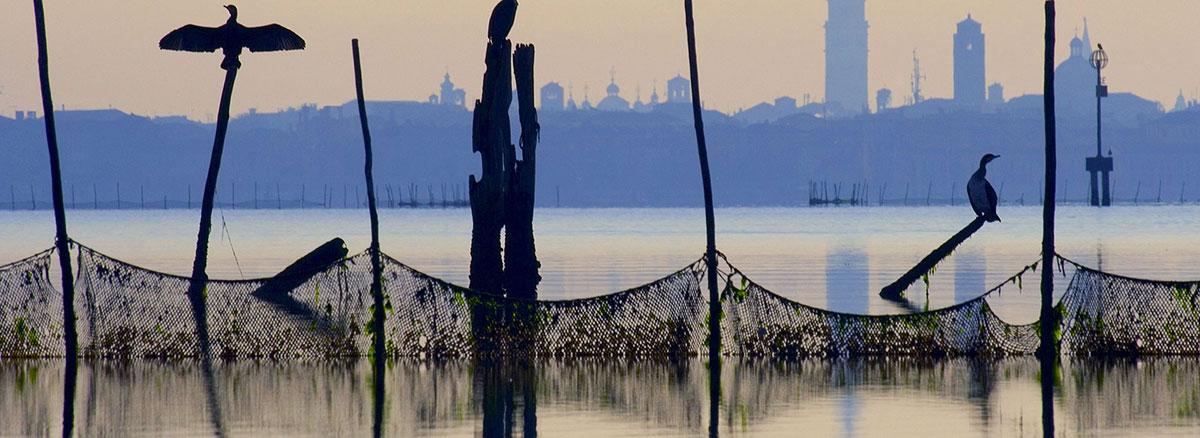
Life Vimine Project
http://www.lifevimine.eu/en/index.php
Overview
Nature-based solution
- Blue infrastructure
- Coastal wetland, mangroves and salt marshes
- Other
Key challenges
- Coastal resilience and marine protection (SDG 14)
- Coastal protection / hazard mitigation
- Marine and coastal biodiversity protection
- Marine and coastal research and/or education
- Green space, habitats and biodiversity (SDG 15)
- Habitat and biodiversity restoration
- Habitat and biodiversity conservation
- Green space creation and/or management
- Environmental quality
- Waste management
- Economic development and employment (SDG 8)
- Employment/job creation
Focus
Ecological restoration of ecosystems, Protection of natural ecosystems, Management and improved protection of rivers and other blue areas
Project objectives
"In order to effectively deal with erosion dynamics, the project aims to protect the salt marsh system through a prevention perspective."
- Direct and indirect protection from erosion of salt marshes, mudflats and lagoon bottoms.
- Direct and indirect protection of Natura 2000 habitats in the Northern Venice Lagoon, including priority habitats or habitats hosting priority species.
- Restoration of salt marsh areas.
- Promotion of an integrated approach to landscape management.
- Waste removal from salt marshes and from the project area.
- Creation of a wide network of private and public stakeholders including tourism-related stakeholders.
- Education and divulgation activities.
- Creation of “green” jobs involving local communities (1).
Implementation activities
The project focused on accomplishing results by applying small, low environmental impact engineering interventions, that will play a key role together with the planning, monitoring and maintenance phases. The heart of the project is the involvement of local communities and stakeholders. Thanks to their linkage with the territory and to the knowledge of its dynamics, they provided a long-term future to the project and its optics. The demonstration project experienced the effectiveness of this approach in the North Lagoon, in the Burano, Mazzorbo, Torcello and Palude Lakes. The regular identification and repair of the small, numerous eroded spots on salt marsh boundaries were carried out to stop erosion before it becomes irreversible, using low-impact soil bioengineering works (e.g. nature-based solutions such as fascines) and manual labour. This cost-effective method will be merged with participatory processes to involve stakeholders in conservation works, increase environmental awareness and promote sustainable local economic activities based on salt marsh services. Eventually, the demand for salt marsh conservation will emerge naturally from local communities given the key benefits that they will derive from salt marsh services and from conservation activities (e.g. employment), thus also addressing the socio-economic drivers of erosion. (1 and 7)
Biodiversity conservation or restoration-focused activities
Biodiversity conservation:
- Protect and enhance urban habitats
- Promote environmentally-sound development in and around protected areas
- Reduce negative impacts and avoid the alteration/damage of ecosystem
- Protect species
- Undertake specific measures to protect species
- Means for conservation governance
- Manage biological resources for conservation and sustainable use
- Public engagement
- Create and use scientific knowledge for conservation
Biodiversity restoration:
- Rehabilitate and restore damaged or destroyed ecosystems
- Public engagement
Main beneficiaries
- Local government/Municipality
- Private sector/Corporate/Company
- Citizens or community groups
- Young people and children
Governance
Management set-up
- Co-governance with government and non-government actors
Type of initiating organisation
- Researchers/university
Participatory approaches/ community involvement
- Co-planning (e.g. stakeholder workshops, focus groups, participatory mapping)
- Taskforce groups
- Dissemination of information and education
- Consultation (e.g. workshop, surveys, community meetings, town halls)
Details on the roles of the organisations involved in the project
- Università di Padova - LASA: coordinator
- Agenda 21 consulting l.t.d. (A21IT): Associated beneficiary, promotion and coordination the participatory activities.
- The land Reclamation Consortium: partner.
- AttivaMente: will be involved in public awareness and dissemination of results activities.
- City of Venice is responsible for the action E: “Public awareness and dissemination of results” and its sub actions: E1 Communication plan and website; E2 Publications for project dissemination and information boards; E3 Layman’s report; E4 Divulgation and dissemination; E5 Dissemination among lagoon institutions.
- The Foundation for Sustainable Development (FSD): leader Azione D2.
- Provveditorato; former Venice Water Authority – MAV): will be in charge of administrative procedures.
- SELC: Project Partner (1).
Project implemented in response to ...
... an EU policy or strategy?
Yes
("The LIFE programme will contribute to sustainable development and to the achievement of the objectives and targets of the Europe 2020 Strategy, the 7th Union Environmental Action Programme and other relevant EU environment and climate strategies and plans... The Birds and Habitats Directives (Upper Lagoon of Venice, SCI code IT3250031; Lagoon of Venice, SPA code IT3250046)." (1). )
... a national policy or strategy?
Unknown
... a local policy or strategy?
Yes
(The Lagoon is protected under the Special Law of State no. 171/73 and it was later designated as an area to be protected for landscaping and as a Regional Natural Park area by the Veneto Region through the Regional Coordination Territorial Plan (still in force) and the Area Plan of Laguna and Venetian Area (1).)
Financing
Total cost
€2,000,000 - €4,000,000
Source(s) of funding
- EU funds
- Public regional budget
Type of funding
- Earmarked public budget
- Direct funding (grants, subsidies, or self-financed projects by private entities)
Non-financial contribution
Unknown
Impacts and Monitoring
Environmental impacts
- Climate change
- Reduced emissions
- Enhanced carbon sequestration
- Environmental quality
- Improved waste management
- Water management and blue areas
- Enhanced protection and restoration of coastal and marine ecosystems
- Green space and habitat
- Increased number of protection areas
- Increased green space area
- Increased conservation or restoration of ecosystems
- Increase in protected green space areas
- Increased conversion of degraded land or soil
Economic impacts
- Increase of green jobs (e.g. paid employment positions)
- More sustainable tourism
Socio-cultural impacts
- Education
- Increased support for education and scientific research
- Increased awareness of NBS and their benefits
Type of reported impacts
Achieved impacts
Presence of formal monitoring system
Yes
Presence of indicators used in reporting
Yes
Presence of monitoring/ evaluation reports
Yes
Availability of a web-based monitoring tool
Yes
References
1. Life Vimine (2018) The Project Life Vimine. [NBS Official Website] Available at: Source link. Accessed on 10th October, 2020.
2. Città di Venezia (2018) Life Vimine: European project for the protection of salt marshes. Municipality of Venezia. Available at: Source link. Accessed on 10th October, 2020.
3. C40 Cities (2018) Saltmarshes Restoration in the Venice Lagoon Addresses Land Erosion. Available at: Source link. Accessed on 10th October, 2020.
4. Città di Venezia (2018) Protezione della Laguna di Venezia. Available at: Source link. Accessed on 10th October, 2020.
5. Life Vimine (2019) Publications and Documents - Latest entries. Available at: Source link. Accessed on 10th October, 2020.
6. Wikipedia (2020) Venetian Lagoon Wikipedia Page. Available at: Source link. Accessed on 10th October, 2020.
7. Source link (no date) EU case study page. LIFE VIMINE - An integrated approach to the sustainable conservation of intertidal salt marshes in the lagoon of Venice. Available at: Source link. Accessed on 10th October, 2020.
2. Città di Venezia (2018) Life Vimine: European project for the protection of salt marshes. Municipality of Venezia. Available at: Source link. Accessed on 10th October, 2020.
3. C40 Cities (2018) Saltmarshes Restoration in the Venice Lagoon Addresses Land Erosion. Available at: Source link. Accessed on 10th October, 2020.
4. Città di Venezia (2018) Protezione della Laguna di Venezia. Available at: Source link. Accessed on 10th October, 2020.
5. Life Vimine (2019) Publications and Documents - Latest entries. Available at: Source link. Accessed on 10th October, 2020.
6. Wikipedia (2020) Venetian Lagoon Wikipedia Page. Available at: Source link. Accessed on 10th October, 2020.
7. Source link (no date) EU case study page. LIFE VIMINE - An integrated approach to the sustainable conservation of intertidal salt marshes in the lagoon of Venice. Available at: Source link. Accessed on 10th October, 2020.

Atlante della Laguna
http://www.atlantedellalaguna.it/?q=node/208