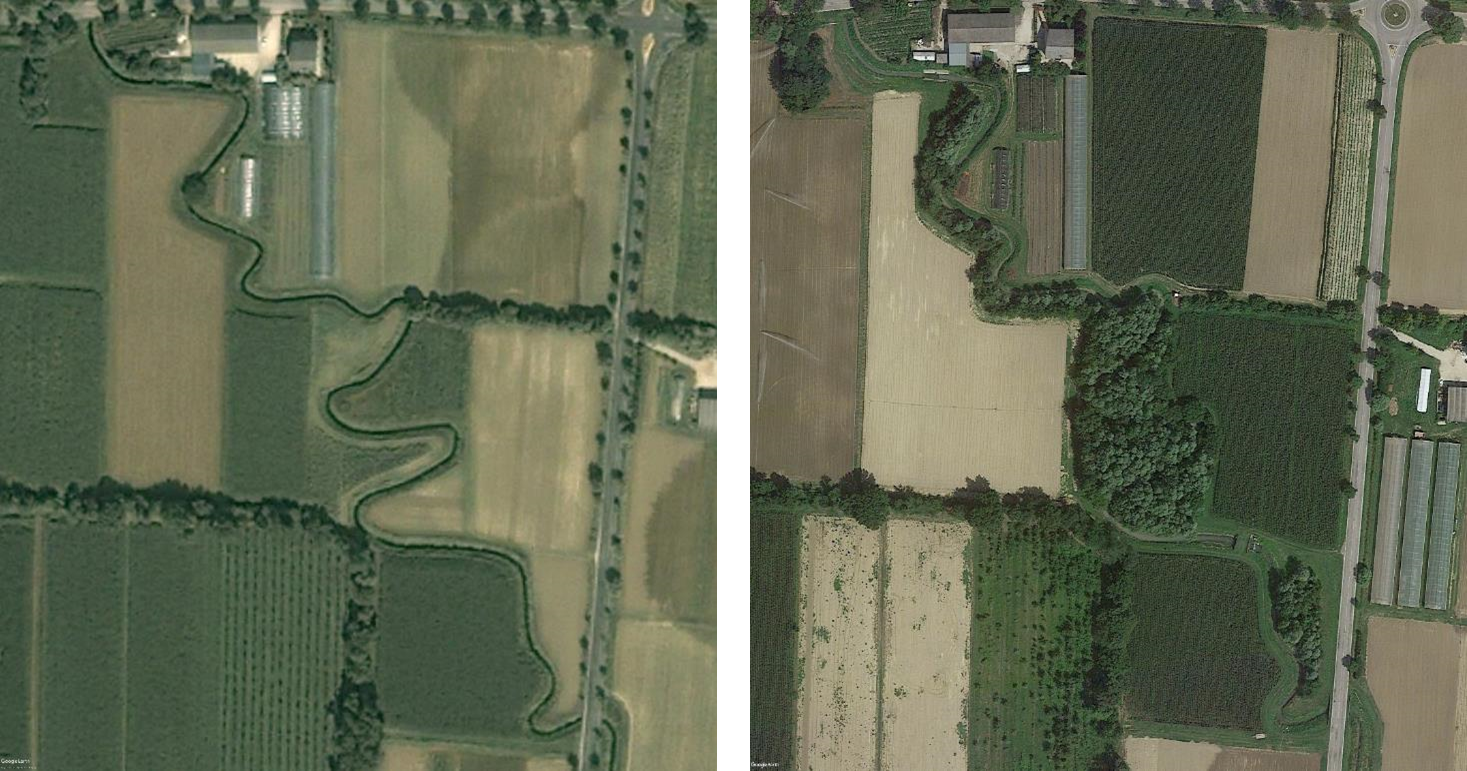
The Venice Lagoon is characterised by intensive agriculture and by a web of drainage channels discharging into the rivers. The Veneto Region, through the “Plan for diffuse pollution prevention and restoration of water in the draining basins of the Venice Lagoon” financed measures of re-calibration of riverbeds aimed at the renaturation of the hydraulic web, to increase the time of permanence of water and phytodepuration processes in the draining basin. This case study, in particular, includes measures on the drainage channels discharging into the Dese river, one of the main water bodies of the Venice Lagoon basin. In particular, it aimed at re-structuring the effluents of the mid-course of the Dese river (Rio S. Martino, Rio S. Ambrogio and Scolo Desolino). (1).

Overview
Nature-based solution
- Blue infrastructure
- Rivers/streams/canals/estuaries
- Other
Key challenges
- Climate action for adaptation, resilience and mitigation (SDG 13)
- Climate change adaptation
- Water management (SDG 6)
- Flood protection
- Improvements to water quality
- Coastal resilience and marine protection (SDG 14)
- Coastal protection / hazard mitigation
- Marine and coastal research and/or education
- Green space, habitats and biodiversity (SDG 15)
- Habitat and biodiversity conservation
Focus
Project objectives
Implementation activities
Climate-focused activities
Climate change adaptation:
- Protect coastal and freshwater ecosystems to prevent coastal erosion and pollution
- Restore wetlands and/or coastal ecosystems to dissipate the effects of flooding and/or storms
- Renaturalization of rivers and other water bodies
Biodiversity conservation or restoration-focused activities
Biodiversity conservation:
- Protect and enhance urban habitats
- Preserve and strengthen existing habitats and ecosystems
- Promote environmentally-sound development in and around protected areas
- Preserve and strengthen habitat connectivity
- Protect species
- Undertake specific measures to protect species
- Means for conservation governance
- Biodiversity offsets
Main beneficiaries
- Citizens or community groups
Governance
Management set-up
- Co-governance with government and non-government actors
Type of initiating organisation
- Regional government
Participatory approaches/ community involvement
- Dissemination of information and education
Details on the roles of the organisations involved in the project
Project implemented in response to ...
Financing
Total cost
Source(s) of funding
- Public regional budget
Type of funding
- Earmarked public budget
Non-financial contribution
- Provision of land
- Public authorities (e.g. land, utility services)
Impacts and Monitoring
Environmental impacts
- Climate change
- Strengthened capacity to address climate hazards/natural disasters
- Water management and blue areas
- Improved water quality
- Increased protection against flooding
- Enhanced protection and restoration of coastal and marine ecosystems
- Enhanced protection and restoration of freshwater ecosystems
- Green space and habitat
- Increased number of protection areas
- Increased conservation or restoration of ecosystems
- Reduced biodiversity loss
- Increased number of species present
Economic impacts
- Reduce financial cost for urban management
Socio-cultural impacts
- Safety
- Increased perception of safety
- Health and wellbeing
- Gain in activities for recreation and exercise
- Cultural heritage and sense of place
- Protection of natural heritage
- Increased appreciation for natural spaces
- Education
- Increased knowledge of locals about local nature
- Increased awareness of NBS and their benefits
Type of reported impacts
Presence of formal monitoring system
Presence of indicators used in reporting
Presence of monitoring/ evaluation reports
Availability of a web-based monitoring tool
References
2. Natural Water Retention Measures (NWRM) (2015) Restructuring the effluent web, Italy: Publication. Available at: Source link. Accessed on 1st October, 2020