

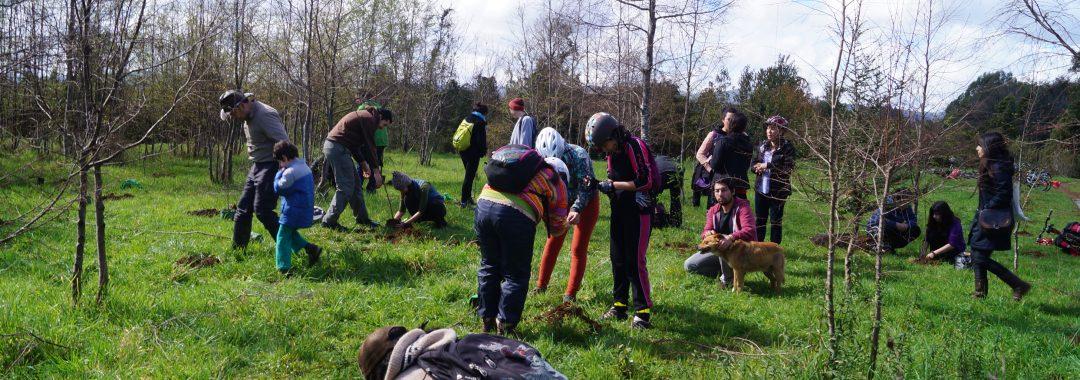
One of Valdivia's (in South Chile) southern peripheral neighbourhoods reaches the river of Angachilla which in time led to the creation of an urban wetland, a beautiful and large urban nature reserve of the city of Valdivia. The city of Valdivia is inserted in an extensive network of rivers and coastal wetlands, which penetrate the city through estuaries, hualves and meadows. The Angachilla estuary wetland is one of the most important, connecting the southern sector of the city with the Valdivia River estuary. These urban wetlands provide important ecosystem functions that directly benefit citizens. Since 2007, the residents of Villa Claro de Luna (neighbourhood) together with various social organisations have worked on the recovery of the Angachilla Wetland, a natural space of great ecological and social value located in the city of Valdivia. Actions included carrying out cleaning, restoration and environmental education activities to recover a place that, abandoned and without any protection from the authorities, was converted into a clandestine garbage dump. (1,2,3)
Overview
Nature-based solution
- Blue infrastructure
- Rivers/streams/canals/estuaries
- Deltas
- In-land wetlands, peatlands, swamps, and moors
- Parks and urban forests
- Large urban parks or forests
Key challenges
- Climate action for adaptation, resilience and mitigation (SDG 13)
- Climate change adaptation
- Environmental quality
- Air quality improvement
- Waste management
- Green space, habitats and biodiversity (SDG 15)
- Habitat and biodiversity restoration
- Water management (SDG 6)
- Flood protection
- Improvements to water quality
- Inclusive and effective governance (SDG 16)
- Inclusive governance
- Combatting crime and corruption
Focus
Project objectives
Implementation activities
Climate-focused activities
Climate change adaptation:
- Increase or improve urban vegetation cover to help reduce outdoor temperature
- Create or improve outdoor spaces to help people escape from urban heat
- Restore wetlands and/or coastal ecosystems to dissipate the effects of flooding and/or storms
Biodiversity conservation or restoration-focused activities
Biodiversity restoration:
- Rehabilitate and restore damaged or destroyed ecosystems
- Restore species (native, endangered, or unspecified)
- Restore ecological connectivity
- Public engagement
Main beneficiaries
- Non-government organisation/Civil Society
- Citizens or community groups
- Young people and children
- Marginalized groups: Socio-economically disadvantaged populations (e.g. low-income households, unemployed)
Governance
Management set-up
- Led by non-government actors
Type of initiating organisation
- District/neighbourhood association
- Citizens or community group
Participatory approaches/ community involvement
- Co-planning (e.g. stakeholder workshops, focus groups, participatory mapping)
- Crowd-sourcing/Crowd-funding/Participatory budget
- Dissemination of information and education
- Joint implementation (e.g. tree planting)
- Co-management/Joint management
- Citizen oversight (e.g. boards, advisory)
Details on the roles of the organisations involved in the project
Project implemented in response to ...
Financing
Total cost
Source(s) of funding
- Public national budget
- Funds provided by non-governmental organization (NGO)
- Crowdfunding
Type of funding
- Unknown
Non-financial contribution
- Provision of land
- Provision of goods
- Provision of labour
- Provision of expertise
- Provision of other services
- Citizens (e.g. volunteering)
- Other
Impacts and Monitoring
Environmental impacts
- Environmental quality
- Improved soil quality
- Water management and blue areas
- Increased protection against flooding
- Enhanced protection and restoration of freshwater ecosystems
- Green space and habitat
- Increased green space area
- Increase in protected green space areas
- Increased number of protection areas
- Increased conversion of degraded land or soil
- Reduced biodiversity loss
- Increased protection of threatened species
- Restoration of derelict areas
Economic impacts
- Unknown
Socio-cultural impacts
- Social justice and cohesion
- Increased involvement of locals in the management of green spaces
- Cultural heritage and sense of place
- Increased appreciation for natural spaces
- Education
- Increased knowledge of locals about local nature
Type of reported impacts
Presence of formal monitoring system
Presence of indicators used in reporting
Presence of monitoring/ evaluation reports
Availability of a web-based monitoring tool
References
2. Fredy Vargas Barría (2018), Una Pequeña Historia del Humedal Angachilla, available at Source link (accessed 12-10-2021)
3. Ministerio del Medio Ambiente (2014), En Valdivia continúan las acciones de restauración del Humedal Angachilla, available at Source link (accessed 12-10-2021)
4. Diario Universidad Austral de Chile, (2013) Restaurarán el humedal Angachilla de Valdivia, available at Source link (accessed 12-10-2021)
5. Ministerio del Medio Ambiente (no date), Restauración, available at Source link (accessed 12-10-2021)
6. Ministerio del Medio Ambiente, (2020), Un paso mas para declarar el Santuario, conforman Corporación Humedales de Angachilla, available at Source link (accessed 12-10-2021)
7. Municipalidad de Valdivia (2015), Plan de ación, available at Source link (accessed 12-10-2021)
8. Carolina Jara Vergara Denise de Solminihac O. Mario Maturana Arévalo María Ema Hermosilla H. Alberto Tacón Clavaín Mauro E. González Ursula Fernández Vöckt José Núñez Navarro (2014), Flora y Fauna de la Selva Valdiviana en la ciudad de Valdivia, available at Source link (accessed 12-10-2021)

