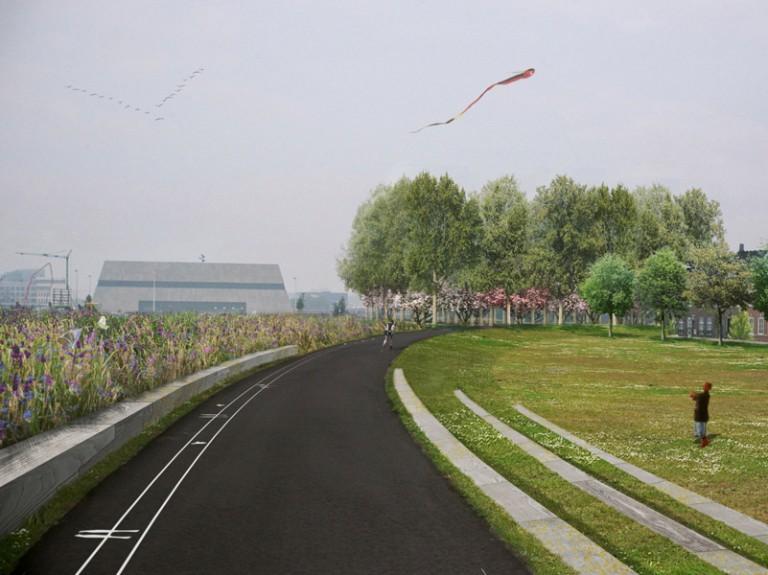
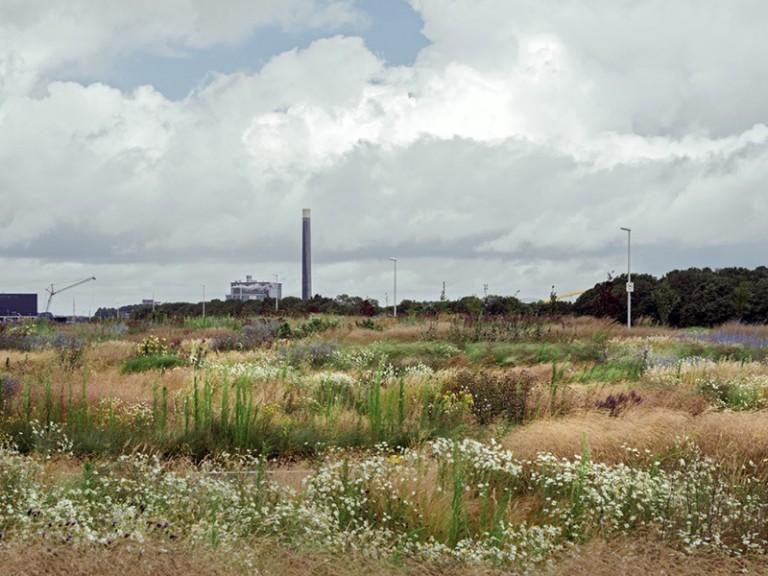
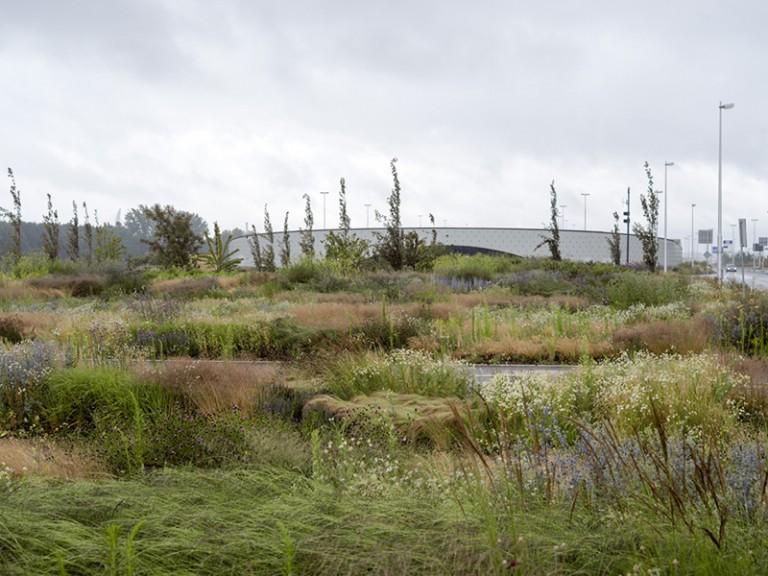
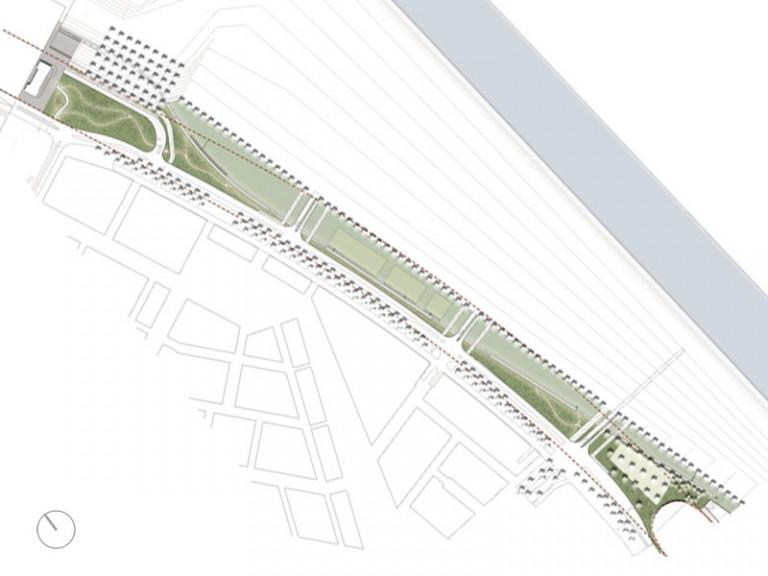
The Willem Alexander Park is the first roof park of Utrecht and is built on a highway tunnel (the A2 highway) and includes meeting areas, sports and activities and a community garden that contributes to social cohesion. It also allows for cultural development by creating spaces for art and culture and includes a sustainable drainage system (ref. 1, 2). In addition, the Willem Alexanderpark is the first park in which almost two hectares consists of prairie plantings (ref. 2). The park is intersected by the roads between the City road and Leeuwenstein-North. Each segment between the roads has its own thematic program, appropriate to the size and location in the urban context. The themes are: – connect & meet – art & culture – sports & games – nature & education – food & drinks (ref. 4)
Overview
Nature-based solution
- Parks and urban forests
- Large urban parks or forests
- Green corridors and green belts
- Green areas for water management
- Sustainable urban drainage systems
Key challenges
- Water management (SDG 6)
- Stormwater and rainfall management and storage
- Green space, habitats and biodiversity (SDG 15)
- Habitat and biodiversity conservation
- Green space creation and/or management
- Environmental quality
- Air quality improvement
- Soil quality improvement
- Health and well-being (SDG 3)
- Enabling opportunities for physical activity
- Improving physical health
- Creation of opportunities for recreation
Focus
Project objectives
Implementation activities
Biodiversity conservation or restoration-focused activities
Biodiversity conservation:
- Protect and enhance urban habitats
- Preserve and strengthen existing habitats and ecosystems
- Create new habitats
- Protect species
- Undertake specific measures to protect species
- Undertake specific measures to protect native species
- Undertake specific measures to protect valued species
- Means for conservation governance
- Public engagement
Main beneficiaries
- Public sector institution (e.g. school or hospital)
- Citizens or community groups
Governance
Management set-up
- Government-led
Type of initiating organisation
- Local government/municipality
Participatory approaches/ community involvement
- Co-management/Joint management
Details on the roles of the organisations involved in the project
Project implemented in response to ...
Financing
Total cost
Source(s) of funding
- Public local authority budget
Type of funding
- Earmarked public budget
Non-financial contribution
Impacts and Monitoring
Environmental impacts
- Environmental quality
- Improved waste management
- Improved protection against strong wind
- Improved soil quality
- Water management and blue areas
- Improved stormwater management
- Green space and habitat
- Increased green space area
- Increased number of species present
- Enhanced support of pollination
Economic impacts
- Unknown
Socio-cultural impacts
- Social justice and cohesion
- Improved social cohesion
- Improved access to urban green space
- Increased opportunities for social interaction
- Increased access to healthy/affordable food
- Increased sustainability of agriculture practices
- Health and wellbeing
- Gain in activities for recreation and exercise
Type of reported impacts
Presence of formal monitoring system
Presence of indicators used in reporting
Presence of monitoring/ evaluation reports
Availability of a web-based monitoring tool
References
2. Gemeente Utrecht. (2014). Beheerplan Willem Alexanderpark. Utrecht: Municipality of Utrecht. [pdf] Available at: Source link (Accessed 28 July 2020)
3. Gemeente Utrecht (2007). Groenstructuurplan Utrecht. Utrecht: Municipality of Utrecht. [pdf] Available at: Source link (Accessed 28 July 2020)
4. Willian Alexander Park. (2010-2012). DS. Available at: Source link (Accessed 28 July 2020)
5. World Landscape Architect (2015) Willem Alexander Park | Utrecht, The Netherlands | Team DS. Avaialble at: Source link (Accessed 30 November 2020)