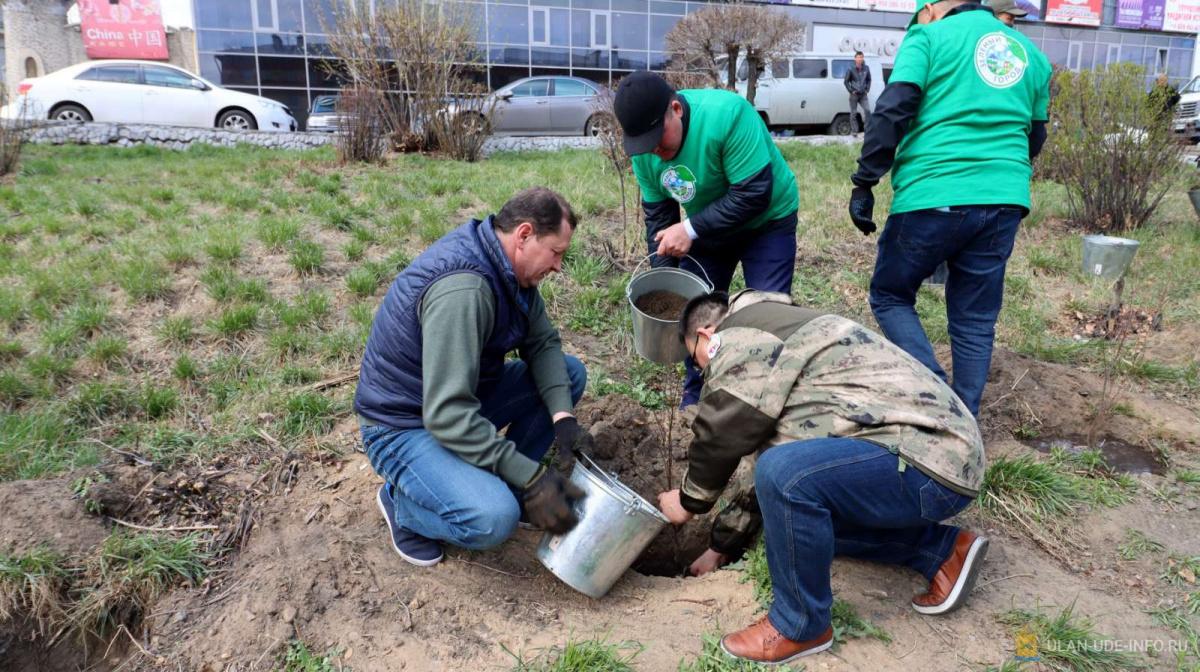
In 2019, in the city of Ulan-Ude, the most comprehensive and large-scale action "Green City" was launched [2,3,4,5,12], with the goal of creating an efficient and sustainable greening system in Ulan-Ude [1,7]. Nowadays, according to the city's norms, there are two times fewer green spaces per resident than is customary [7]. According to this program, by 2024, the provision of the population with public green spaces should be 10 sq. m per person [1,8]. Within the framework of the project, effective technologies for greening are already being introduced, and all green spaces growing in the city are being monitored [3,5,6]. Planting of green spaces is carried out under the guidance of the Scientific and Technical Council for the Integrated Greening of the City, which includes Buryat scientists and specialists from the City Administration [2].
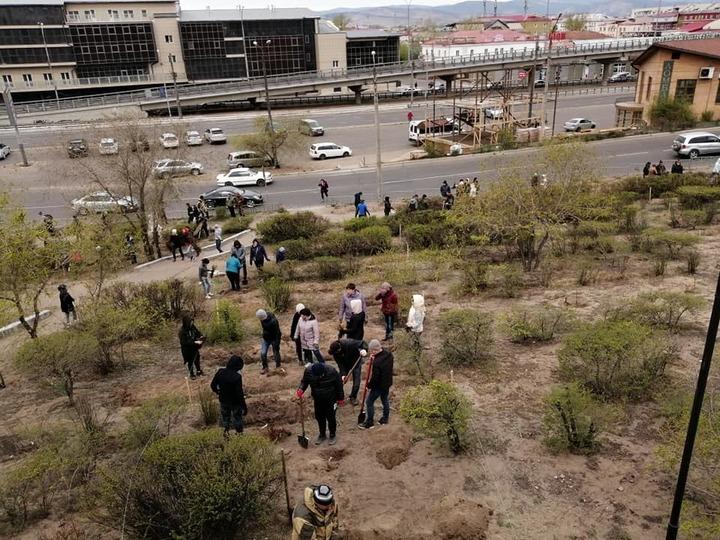
Overview
Nature-based solution
- Grey infrastructure featuring greens
- Alley or street trees and other street vegetation
- Railroad bank and track greens
- Green playgrounds and school grounds
- Parks and urban forests
- Large urban parks or forests
- Pocket parks/neighbourhood green spaces
- Community gardens and allotments
- Community gardens
Key challenges
- Climate action for adaptation, resilience and mitigation (SDG 13)
- Climate change adaptation
- Climate change mitigation
- Green space, habitats and biodiversity (SDG 15)
- Habitat and biodiversity restoration
- Green space creation and/or management
- Environmental quality
- Air quality improvement
- Noise reduction
- Regeneration, land-use and urban development
- Promote natural styles of landscape design for urban development
Focus
Project objectives
Implementation activities
Climate-focused activities
Climate change adaptation:
- Increase or improve urban vegetation cover to help reduce outdoor temperature
- Create or improve outdoor spaces to help people escape from urban heat
Climate change mitigation:
- Increase green urban nature for carbon storage (wetlands, tree cover)
- Implement sustainable forest management measures to increase carbon sinks/ improve carbon storage
Biodiversity conservation or restoration-focused activities
Biodiversity restoration:
- Rehabilitate and restore damaged or destroyed ecosystems
- Restore species (native, endangered, or unspecified)
- Public engagement
Main beneficiaries
- Local government/Municipality
- Public sector institution (e.g. school or hospital)
- Citizens or community groups
- Young people and children
Governance
Management set-up
- Government-led
Type of initiating organisation
- Local government/municipality
Participatory approaches/ community involvement
- Co-planning (e.g. stakeholder workshops, focus groups, participatory mapping)
- Taskforce groups
- Consultation (e.g. workshop, surveys, community meetings, town halls)
- Joint implementation (e.g. tree planting)
- Co-management/Joint management
Details on the roles of the organisations involved in the project
Project implemented in response to ...
Financing
Total cost
Source(s) of funding
- Public local authority budget
Type of funding
- Earmarked public budget
Non-financial contribution
Impacts and Monitoring
Environmental impacts
- Environmental quality
- Improved air quality
- Reduced noise exposure
- Improved protection against strong wind
- Green space and habitat
- Increased green space area
- Increased conservation or restoration of ecosystems
- Increased number of species present
Economic impacts
- Unknown
Socio-cultural impacts
- Social justice and cohesion
- Increased involvement of locals in the management of green spaces
- Health and wellbeing
- Improved physical health
- Education
- Increased support for education and scientific research
- Increased knowledge of locals about local nature
Type of reported impacts
Presence of formal monitoring system
Presence of indicators used in reporting
Presence of monitoring/ evaluation reports
Availability of a web-based monitoring tool
References
2. Information Policy Department, Administration of Ulan-Ude city (2021). The fifth season of landscaping under the "Green City" program has started in the capital of Buryatia. Accessed on October 17, 2021, Source link
3. Information agency Vostok Teleinform (2020). Green Ulan-Ude continues to be landscaped. Accessed on October 17, 2021, Source link
4. MK in Buryatia (2019). The Green City project was launched in Ulan-Ude today. Accessed on October 17, 2021, Source link
5. Information agency Number One (2020). The Mayor of Ulan-Ude recognized the efficient lawn hydroseeding technology. Accessed on October 17, 2021, Source link
6. Information agency Russia Buryatia (2021). Planting of lawns by hydroseeding method started in Ulan-Ude. Accessed on October 17, 2021, Source link
7. Presidential Grants Fund (2019). Green City project. Accessed on October 17, 2021, Source link
8. Information agency Russia Buryatia (2021). Large-scale landscaping is underway in Ulan-Ude as part of the "Green City" program. Accessed on October 17, 2021, Source link
9. Information agency BMK (n.d.) In Ulan-Ude, lawns will be sown on an area of more than 10 thousand m2. Accessed on October 17, 2021, Source link
10. Information agency New Buryatia (2021). "Green carpets" are being planted in Ulan-Ude. Accessed on October 17, 2021, Source link
11. Information Policy Department, Administration of Ulan-Ude city (2021). Spring tree planting in Ulan-Ude has been completed as part of the "Green City" project. Accessed on October 17, 2021, Source link
12. Information Policy Department, Administration of Ulan-Ude city (n.d.). Interactive map "Green City". Accessed on October 17, 2021, Source link
13. BezFormata (2019). Planting of trees and shrubs continues in Ulan-Ude. Accessed on October 17, 2021, Source link
14. BezFormata (2019). Ulan-Ude has developed an interactive map of the "Green City" project. Accessed on October 17, 2021, Source link