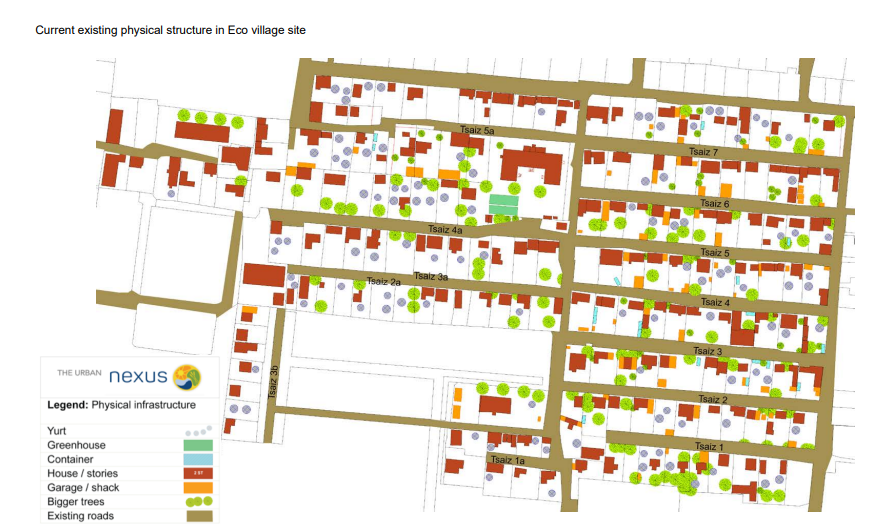
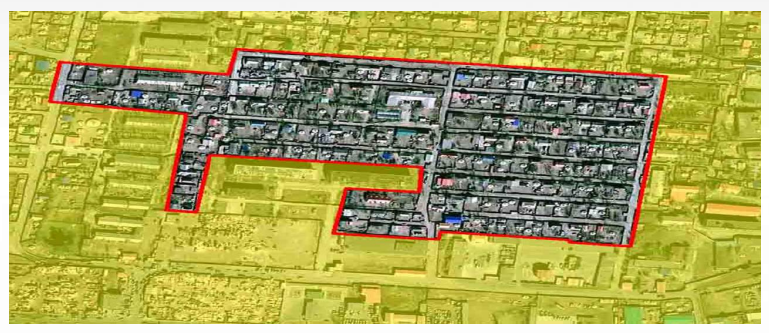
Eco-district creation in Ulaanbaatar comes under the Ulaanbaatar Green Affordable Housing and Resilient Urban Renewal Project (AHURP). The planned development areas are hotspots of greenhouse emissions and air pollution, mainly due to the widespread use of coal for heating and cooking. The project will transform the highly climate-vulnerable and polluting "ger" areas (traditional Mongolian tents) into zones that are low-carbon emitting, climate-resilient and affordable. This will be done through low-cost urban infrastructure, public facilities, and social housing units. The project's five phases will deliver about 20 eco-districts or sub-projects, with each covering an average of 5 ha. The project is a large-scale demonstration initiative that will leverage private sector investment to deliver affordable and green housing stock, and redevelop "ger" areas into urban areas that are resilient to climate change, contribute to decreased air and soil pollution, and will provide a liveable urban environment to "ger" area residents. It will also establish policies, mechanisms, and standards for sustainable affordable housing and green urban redevelopment. [1, 2, 3]

Overview
Nature-based solution
- Grey infrastructure featuring greens
- Alley or street trees and other street vegetation
- House gardens
- Green playgrounds and school grounds
- Parks and urban forests
- Pocket parks/neighbourhood green spaces
- Green areas for water management
- Sustainable urban drainage systems
Key challenges
- Climate action for adaptation, resilience and mitigation (SDG 13)
- Climate change adaptation
- Climate change mitigation
- Water management (SDG 6)
- Stormwater and rainfall management and storage
- Green space, habitats and biodiversity (SDG 15)
- Habitat and biodiversity restoration
- Green space creation and/or management
- Environmental quality
- Soil quality improvement
- Air quality improvement
Focus
Project objectives
Implementation activities
Climate-focused activities
Climate change adaptation:
- Implement measures that prevent/manage desertification, soil erosion and landslides
- Implement solutions to capture/store water to increase its availability and prevent shortages from droughts
- Increase or improve urban vegetation cover to help reduce outdoor temperature
- Create or improve outdoor spaces to help people escape from urban heat
- Implement sustainable urban drainage infrastructure (e.g. to make space for water)
Climate change mitigation:
- Increase green urban nature for carbon storage (wetlands, tree cover)
- Invest in public transport/bicycle infrastructure as a means to prevent car use
- Raise public awareness of behaviours, lifestyle and cultural changes with mitigation potential
Biodiversity conservation or restoration-focused activities
Biodiversity restoration:
- Rehabilitate and restore damaged or destroyed ecosystems
- Restore species (native, endangered, or unspecified)
- Public engagement
Main beneficiaries
- Citizens or community groups
- Marginalized groups: Socio-economically disadvantaged populations (e.g. low-income households, unemployed)
Governance
Management set-up
- Government-led
Type of initiating organisation
- Local government/municipality
Participatory approaches/ community involvement
- Dissemination of information and education
Details on the roles of the organisations involved in the project
Project implemented in response to ...
Financing
Total cost
Source(s) of funding
- Public regional budget
- Multilateral funds/international funding
- Private equity funds
- Other
Type of funding
- Direct funding (grants, subsidies, or self-financed projects by private entities)
- Loan
- Equity funding (investment in shares)
- Asset-backed funding (e.g., leasing)
Non-financial contribution
Impacts and Monitoring
Environmental impacts
- Climate change
- Lowered local temperature
- Strengthened capacity to address climate hazards/natural disasters
- Environmental quality
- Improved air quality
- Improved soil quality
- Water management and blue areas
- Increased protection against flooding
- Improved stormwater management
- Green space and habitat
- Promotion of naturalistic styles of landscape design for urban development
- Increased green space area
Economic impacts
- Stimulate development in deprived areas
- Reduce financial cost for urban management
- Increased market share for green economies
Socio-cultural impacts
- Safety
- Improved community safety to climate-related hazards
- Social justice and cohesion
- Fair distribution of social, environmental and economic benefits of the NBS project
- Improved access to urban green space
- Health and wellbeing
- Gain in activities for recreation and exercise
- Education
- Increased support for education and scientific research
Type of reported impacts
Presence of formal monitoring system
Presence of indicators used in reporting
Presence of monitoring/ evaluation reports
Availability of a web-based monitoring tool
References
2. ADB (2018). FP077: Ulaanbaatar Green Affordable Housing and Resilient Urban Renewal
Project (AHURP). Funding Proposal. URL: Source link. Accessed on 29th October, 2021.
3. ADB (n.d.) Mongolia: Ulaanbaatar Green Affordable Housing and Resilient Urban Renewal Sector Project. URL: Source link. Accessed on 29th October, 2021.
4. Secheresse (2018) Ulaanbaatar Green Affordable Housing and Resilient Urban Renewal Project (AHURP). URL: Source link. Accessed on 29th October, 2021.
5. UNESCAP (n.d.) ULAANBAATAR CITY GER DISTRICT’S DEVELOPMANT. URL: Source link. Accessed on 29th October, 2021.
6. UNESCAP (2018). Eco-Village Project in Khoroo 19, Bayanzurkh District, Ulaanbaatar/Mongolia: Preliminary Study. URL: Source link. Accessed on 29th October, 2021.