

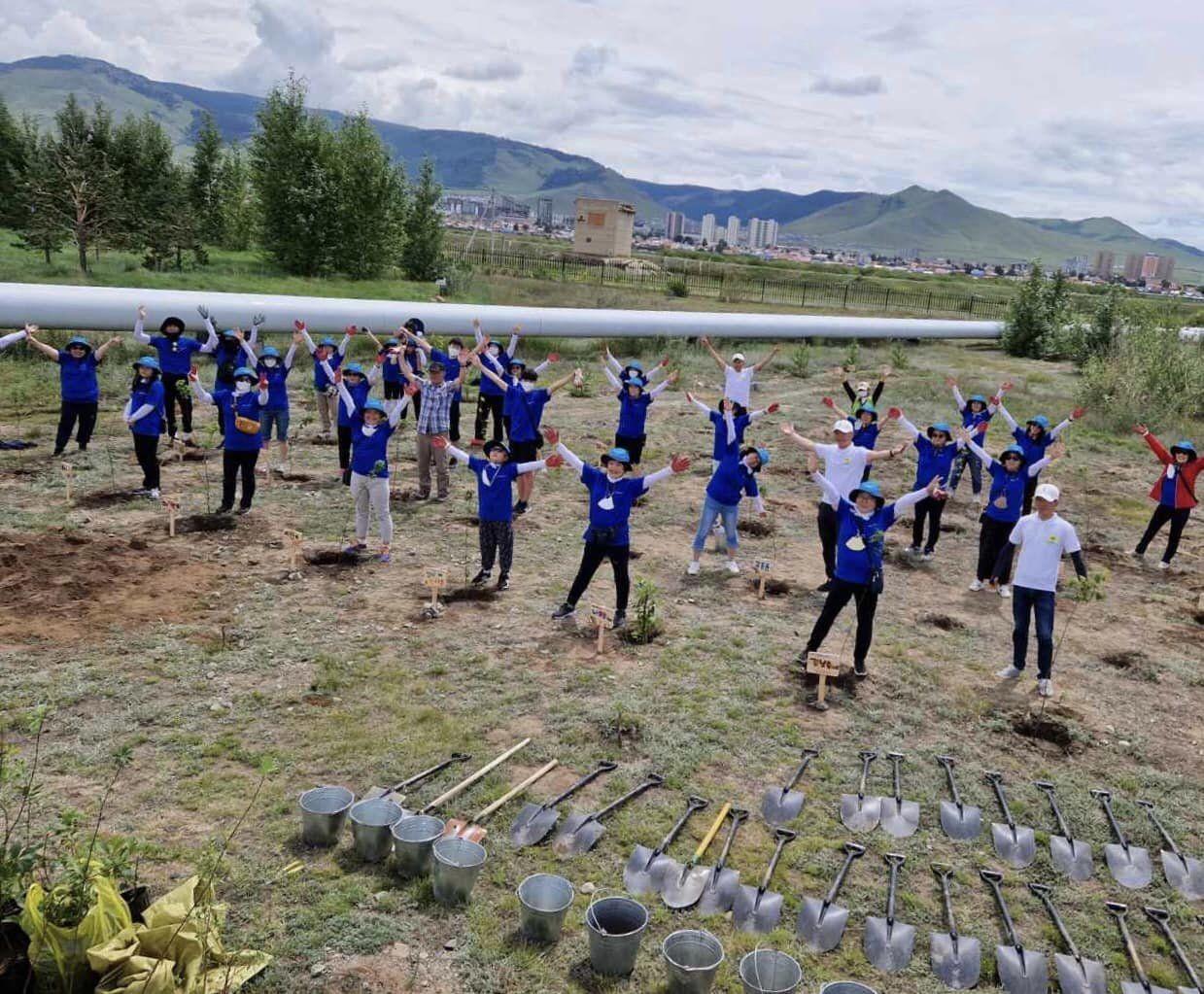
Bayangol park is located in the Bayangol district of Ulaanbaatar along the Tuul riverside. The "Bayangol Agropark" was originally established in 2014 under the administration of the Assembly of Citizens' Representatives of Bayangol District. Later, in 2021, it was renamed "Bayangol Park", and the park activities were expanded. The 50-hectare area along the Tuul river basin is expected to develop into an eco-park where people can enjoy their free time in a safe and welcoming atmosphere. Since its opening, over 16000 trees have been planted in this park as part of the nationwide "One billion trees" movement, which aims to lessen the impact of climate change, decrease desertification, protect forests and water resources, and increase employment. As the second-largest park in the capital city, the park also provides opportunities for sports and culture. (Ref. 1, 2, 4)
Overview
Nature-based solution
- Blue infrastructure
- Lakes/ponds
- Rivers/streams/canals/estuaries
- Community gardens and allotments
- Horticulture
- Grey infrastructure featuring greens
- Riverbank/Lakeside greens
- Green playgrounds and school grounds
- Parks and urban forests
- Large urban parks or forests
Key challenges
- Climate action for adaptation, resilience and mitigation (SDG 13)
- Climate change mitigation
- Environmental quality
- Air quality improvement
- Noise reduction
- Green space, habitats and biodiversity (SDG 15)
- Habitat and biodiversity conservation
- Green space creation and/or management
- Regeneration, land-use and urban development
- Promote natural styles of landscape design for urban development
- Water management (SDG 6)
- Improvements to water quality
- Health and well-being (SDG 3)
- Enabling opportunities for physical activity
- Creation of opportunities for recreation
- Social justice, cohesion and equity (SDG 10)
- Environmental education
- Economic development and employment (SDG 8)
- Economic development: agriculture
- Employment/job creation
- Sustainable consumption and production (SDG 12)
- Sustainable production
Focus
Project objectives
Implementation activities
Biodiversity conservation or restoration-focused activities
Biodiversity conservation:
- Means for conservation governance
- Raise public awareness
Main beneficiaries
- National-level government
- Local government/Municipality
- Citizens or community groups
- Food producers and cultivators (i.e. farmers, gardeners)
- Young people and children
Governance
Management set-up
- Government-led
Type of initiating organisation
- National government
- Local government/municipality
Participatory approaches/ community involvement
- Joint implementation (e.g. tree planting)
Details on the roles of the organisations involved in the project
Project implemented in response to ...
Financing
Total cost
Source(s) of funding
- Public local authority budget
- Multilateral funds/international funding
Type of funding
- Earmarked public budget
- Direct funding (grants, subsidies, or self-financed projects by private entities)
Non-financial contribution
Impacts and Monitoring
Environmental impacts
- Green space and habitat
- Increased green space area
- Increased number of species present
Economic impacts
- Increase of green jobs (e.g. paid employment positions)
- Increase in agricultural production (for profit or not)
- Generation of income from NBS
Socio-cultural impacts
- Social justice and cohesion
- Improved access to urban green space
- Increased visibility and opportunity for marginalised groups or indigenous peoples
- Increased access to healthy/affordable food
- Health and wellbeing
- Gain in activities for recreation and exercise
- Cultural heritage and sense of place
- Improvement in people’s connection to nature
- Increased appreciation for natural spaces
- Education
- Increased support for education and scientific research
- Increased awareness of NBS and their benefits
Type of reported impacts
Presence of formal monitoring system
Presence of indicators used in reporting
Presence of monitoring/ evaluation reports
Availability of a web-based monitoring tool
References
2. "Bayangol Park" FB page, available at Source link (Accessed 27-01-2023)
3. "Bayangol Park", introduction video, available at Source link (Accessed 27-01-2023)
4. Gogo Mongolia news (2021-10-04), “Billion Trees planting begins in Agropark of Bayangol district", available at Source link (Accessed 29-01-2023)
5. "The Department of Urban Planning and Development is an implementing agency of the Metropolitan Governor" official website, "Concept of the general development plan of Ulaanbaatar until 2040", available at Source link (Accessed 05-02-2023)
6. Report on Bayangol Park for 2021–2022 (Accessed 17-02-2023)
7. Information provided by the park management, 2023-03-13


