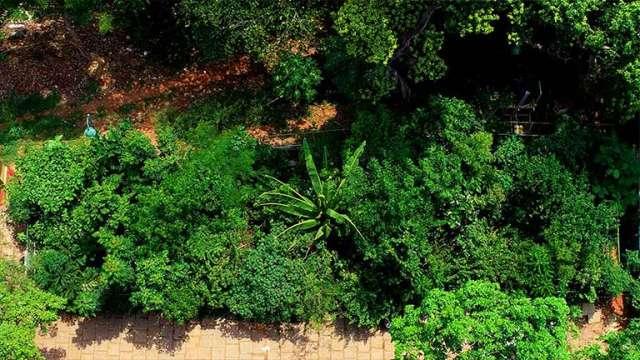
This project is Kerala's first Miyawaki model urban forest developed on the premises of Kanakakkunnu Palace of Trivandrum city (1, 2). The project was initiated by the Kerala Tourism department and implemented with the help of Nature’s Green Guardian Foundation and Invis Multimedia (which also sponsored the initiative) (3). A multi-layered forest creation is targeted through the Miyawaki method, a method developed by Dr Akira Miyawaki, a Japanese botanist. The method involves growing native plant species in close proximity to each other (3). Such urban forests are planted with the objective of creating a self-sustaining ecosystem that helps in a greater quantity of carbon dioxide absorption and purification of air (1). The project provides a wilderness experience to urban dwellers who frequent this tourism hot spot for relaxation and recreation (1, 3). After the success of this first forest project in Trivandrum, Kerala, in 2020 the Kerala Tourism launched a project to create more Miyawaki micro forests at 22 tourism spots in 12 districts across the state (Ref. 5).

Overview
Nature-based solution
- Parks and urban forests
- Pocket parks/neighbourhood green spaces
Key challenges
- Environmental quality
- Soil quality improvement
- Air quality improvement
- Green space, habitats and biodiversity (SDG 15)
- Habitat and biodiversity restoration
- Green space creation and/or management
- Regeneration, land-use and urban development
- Promote natural styles of landscape design for urban development
- Health and well-being (SDG 3)
- Improving mental health
- Creation of opportunities for recreation
- Economic development and employment (SDG 8)
- Tourism support
Focus
Project objectives
Implementation activities
Biodiversity conservation or restoration-focused activities
Biodiversity restoration:
- Rehabilitate and restore damaged or destroyed ecosystems
- Restore species (native, endangered, or unspecified)
- Restore native species
- Restore valued species
Main beneficiaries
- Local government/Municipality
- Citizens or community groups
Governance
Management set-up
- Co-governance with government and non-government actors
Type of initiating organisation
- Local government/municipality
Participatory approaches/ community involvement
- Unknown
Details on the roles of the organisations involved in the project
Project implemented in response to ...
Financing
Total cost
Source(s) of funding
- Public local authority budget
- Corporate investment
- Private Foundation/Trust
Type of funding
- Earmarked public budget
- Direct funding (grants, subsidies, or self-financed projects by private entities)
Non-financial contribution
Impacts and Monitoring
Environmental impacts
- Climate change
- Enhanced carbon sequestration
- Environmental quality
- Improved air quality
- Improved soil quality
- Green space and habitat
- Increased green space area
- Reduced biodiversity loss
- Increased number of species present
- Increased protection of threatened species
- Enhanced support of pollination
Economic impacts
- Reduce financial cost for urban management
Socio-cultural impacts
- Health and wellbeing
- Gain in activities for recreation and exercise
Type of reported impacts
Presence of formal monitoring system
Presence of indicators used in reporting
Presence of monitoring/ evaluation reports
Availability of a web-based monitoring tool
References
(2) The Source link (2019). Miyawaki forest in Thiruvananthapuram turns one. 31 December, viewed on 29 January 2023, Source link
(3) Kerala Tourism. (2019). Green Cover for Mother Earth in Miyawaki Way. 304. Kerala Tourism Newsletter. accessed on 29 January 2023, Source link
(4) Times of India. (2019). Capital set to get its 1st Miyawaki forest. 4 January, viewed on 29 January 2023, Source link
(5) Kerala Tourism (2020) Kerala Tourism launches the Miyawaki Forest Project in 22 spots across the State. Viewed on 21 February 2023, Source link