

Last updated: October 2021
The Pasteur clinic in Toulouse installed a 500m² vegetable garden on the roof of its building in 2014. Maintained by clinic employees and various associations, the garden makes it possible to develop a friendly atmosphere and learn gardening while promoting biodiversity (Ref. 2). The garden grows produce including green beans, tomatoes, basil, strawberries and raspberries, (Ref. 3) and contains flowers such as nasturtiums, Cosmos, tagettes and edible chrysanthemums (Ref. 4).
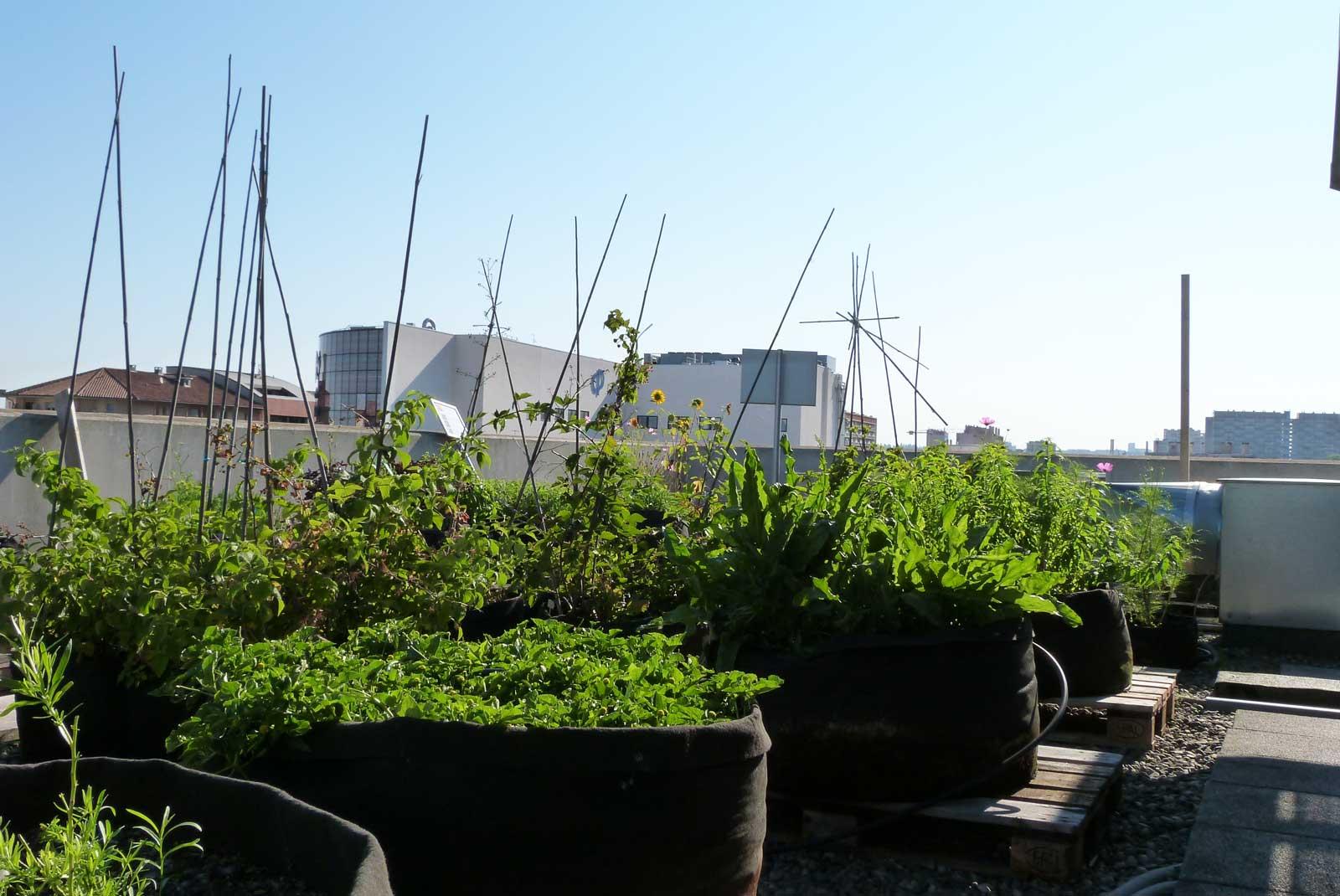
Vegetable Garden at the Roof of the Pasteur Clinic
Photographer: Alexandre Belin (Macadam Gardens), retrieved 08/13/2018
Overview
Nature-based solution
- Nature on buildings (external)
- Green roofs
- Community gardens and allotments
- Community gardens
Key challenges
- Green space, habitats and biodiversity (SDG 15)
- Habitat and biodiversity restoration
- Habitat and biodiversity conservation
- Green space creation and/or management
- Social justice, cohesion and equity (SDG 10)
- Environmental education
- Social justice and equity
- Environmental and climate justice
- Health and well-being (SDG 3)
- Enabling opportunities for physical activity
- Improving mental health
- Creation of opportunities for recreation
- Economic development and employment (SDG 8)
- Economic development: agriculture
- Employment/job creation
- Cultural heritage and cultural diversity
- Preservation of natural heritage
- Preservation of historic traditions
- Sustainable consumption and production (SDG 12)
- Sustainable consumption
- Sustainable production
Focus
Creation of new green areas, Other
Project objectives
The Vegetable Roof Garden project aims to provide patients and staff therapeutic relief and the means for wellbeing (Ref. 4, 5). It also aims to support raising the awareness of the loss of biodiversity, (Ref. 3) provide food for sustainable consumption with the reduction of external food costs as part of the circular economy, (Ref. 9, 13) and inspire eco-conscious citizens with regular gardening lessons (Ref. 11, 16). "...the goal is not to become self-sufficient. "We want to invent, create a link between the team and the patients. The majority of them very quickly joined the project," says Olivier Collet, technical director of the clinic. "It is also a support for raising awareness of the loss of biodiversity, through old species, around forty varieties of tomatoes and edible flowers..." (Ref. 3).
Implementation activities
The team of Macadam Gardens began the project by re-purposing the unused surfaces and unoccupied terrace of the clinic (Ref. 4). The project began merely focused on restoration, but after three months of works soon caught the attention of patients that wanted to participate in the design and maintenance of it (Ref. 16). The project thus began creating the urban farm, that took a total of 3 weeks (Ref. 12). During this time 4 tons of earth and geotextile plants with ultra-light potting soil were distributed in four irrigation areas (Ref. 12). The plants are now cultivated by disabled workers, employees of the clinic and also by patients (Ref. 1).
-"In all, 150 planters filled with 36,000 liters of ultralight potting soil made up of 50% textile material recycled by an Ariege company house flat beans, tomatoes, zucchini, strawberries, raspberries and a whole collection of aromatic plants" (Ref. 18).
-The Pasteur Clinic project will benefit from a partnership with a local agricultural engineering school to study the vegetable garden in an urban environment, notably on the issue of insect biodiversity and, alongside a sociologist, also research on the impact of the garden on the relationships within the clinic (Ref. 4) The company Nommée Jeune Entreprise Innovante is also said to have worked to measure the environmental impact of this garden in 2015 (Ref. 12).
Biodiversity conservation or restoration-focused activities
Biodiversity conservation:
- Protect species
- Undertake specific measures to protect species
- Undertake specific measures to protect native species
- Undertake specific measures to protect endangered species
- Undertake specific measures to protect valued species
- Take measures for ex situ conservation
- Means for conservation governance
- Manage biological resources for conservation and sustainable use
- Raise public awareness
- Public engagement
- Create and use scientific knowledge for conservation
- Capacity building
Biodiversity restoration:
- Restore species (native, endangered, or unspecified)
- Restore native species
Main beneficiaries
- Public sector institution (e.g. school or hospital)
- Citizens or community groups
- Marginalized groups: People with functional diversities
- Other
Governance
Management set-up
- Led by non-government actors
Type of initiating organisation
- Public sector institution
Participatory approaches/ community involvement
- Joint implementation (e.g. tree planting)
- Other
Details on the roles of the organisations involved in the project
The project was guided by the start-up Macadam Gardens specializing in urban agriculture (Ref. 1). Workers and staff assist in the maintenance of the garden on a voluntary basis, while workers of the ESAT of Nailloux (Establishments and services of assistance by labor) lended help to the personnel for the purposes of construction and labour (Ref. 4). The garden is partially maintained by patients (Ref. 12). The Pasteur Clinic project will benefit from a partnership with a local agricultural engineering school to study the vegetable garden in an urban environment, notably on the issue of insect biodiversity and, alongside a sociologist, also research on the impact of the garden on the relationships within the clinic (Ref. 4) The company Nommée Jeune Entreprise Innovante is also said to have worked to measure the environmental impact of this garden in 2015 (Ref. 12).
Project implemented in response to ...
... an EU policy or strategy?
Unknown
... a national policy or strategy?
Unknown
... a local policy or strategy?
Unknown
Financing
Total cost
€10,000 - €50,000
Source(s) of funding
- Other
Type of funding
- Direct funding (grants, subsidies, or self-financed projects by private entities)
Non-financial contribution
Type of non-financial contribution
- Provision of labour
- Other
Who provided the non-financial contribution?
- Citizens (e.g. volunteering)
- Private sector (businesses, financial institution)
Impacts and Monitoring
Environmental impacts
- Environmental quality
- Improved waste management
- Green space and habitat
- Increased green space area
- Reduced biodiversity loss
- Increased number of species present
- Other
Economic impacts
- Reduce financial cost for urban management
- Increase in agricultural production (for profit or not)
- Increased market share for green economies
Socio-cultural impacts
- Social justice and cohesion
- Improved social cohesion
- Improved access to urban green space
- Increased visibility and opportunity for marginalised groups or indigenous peoples
- Increased opportunities for social interaction
- Increased involvement of locals in the management of green spaces
- Increased access to healthy/affordable food
- Increased sustainability of agriculture practices
- Health and wellbeing
- Improved physical health
- Gain in activities for recreation and exercise
- Cultural heritage and sense of place
- Improvement in people’s connection to nature
- Protection of natural heritage
- Increased sense of place identity, memory and belonging
- Increased awareness of flora and fauna as culturally and historically meaningful
- Education
- Increased support for education and scientific research
- Increased knowledge of locals about local nature
- Other
Type of reported impacts
Achieved impacts
Presence of formal monitoring system
Unknown
Presence of indicators used in reporting
No evidence in public records
Presence of monitoring/ evaluation reports
No evidence in public records
Availability of a web-based monitoring tool
No evidence in public records
References
1. Martin, Marie. (2014). Toulouse : un potager sur le toit de la clinique Pasteur. Available at: Source link (Accessed: September 21, 2020).
2. Q. De Sauw. (2016). Un potager thérapeutique sur le toit de la clinique Pasteur. Available at:Source link (Accessed: September 21, 2020). 3. Le service METRONEWS. (2014). LA CLINIQUE PASTEUR INAUGURE UN GRAND POTAGER SUR SON TOIT. Available at:Source link (Accessed: September 21, 2020).
4. [no author]. (2014). A Toulouse, un jardin sur le toit de la clinique. Available at:Source link (Accessed: September 21, 2020).
5. [no author]. (2016). Reconversion dans les jardins thérapeutiques. Available at:Source link (Accessed: September 21, 2020).
6. Q. De Sauw. (2016). Un potager thérapeutique sur le toit de la clinique Pasteur. Available at:Source link (Accessed: September 21, 2020).
7. Clinique Pasteur. (2015). Visitez le jardin potager de la Clinique. Available at: Source link (Accessed: September 21, 2020).
8. Clinique Pasteur. (2014). Un jardin potager sur le toit de l'Atrium. Available at: Source link (Accessed: September 21, 2020).
9. Magazine Goodplanet Info. (2016). La solution est dans l’assiette : un potager pour la clinique Pasteur de Toulouse. Available at: Source link (Accessed: September 21, 2020).
10. SPH. (2016). IXes Trophées de l'hospitalisation privée. Available at: Source link (Accessed: September 21, 2020).
11. Puig, Axel. (2017). Cultiver la santé sur un toit perché. Available at: Source link (Accessed: September 21, 2020).
12. Lesage, Nelly. (2016). Macadam Gardens, la start-up toulousaine qui fait pousser les légumes sur les toits des entreprises. Available at: Source link (Accessed: September 21, 2020).
13. Aguer, Anne and Desauw, Quentin. (2016). Un jardin potager sur le toit de la clinique Pasteur à Toulouse. Available at: Source link (Accessed: September 21, 2020).
14. Bories, Olivier. (2015). L’agriculture en ville. Available at: Source link (Accessed: September 21, 2020).
15. Clinique Pasteur. [no date]. Témoignage de la clinique Pasteur: Quand la restauration fait partie des soins… (Document attached).
16. Martos, Sophie. (2014). Plus qu’un simple projet de restauration: Un potager sur le toit de la clinique Pasteur à Toulouse. Thursday, October 2, 2014 - No. 9353. LE QUOTIDIEN DU MÉDECIN. (Document attached).
17. Macadam Gardens. [no date]. POTAGERS D’ENTREPRISES. Available at: Source link (Website not available in 2020).
18. B.dv. (2014). Un jardin suspendu à la clinique Pasteur. Source link (Accessed: September 21, 2020).
2. Q. De Sauw. (2016). Un potager thérapeutique sur le toit de la clinique Pasteur. Available at:Source link (Accessed: September 21, 2020). 3. Le service METRONEWS. (2014). LA CLINIQUE PASTEUR INAUGURE UN GRAND POTAGER SUR SON TOIT. Available at:Source link (Accessed: September 21, 2020).
4. [no author]. (2014). A Toulouse, un jardin sur le toit de la clinique. Available at:Source link (Accessed: September 21, 2020).
5. [no author]. (2016). Reconversion dans les jardins thérapeutiques. Available at:Source link (Accessed: September 21, 2020).
6. Q. De Sauw. (2016). Un potager thérapeutique sur le toit de la clinique Pasteur. Available at:Source link (Accessed: September 21, 2020).
7. Clinique Pasteur. (2015). Visitez le jardin potager de la Clinique. Available at: Source link (Accessed: September 21, 2020).
8. Clinique Pasteur. (2014). Un jardin potager sur le toit de l'Atrium. Available at: Source link (Accessed: September 21, 2020).
9. Magazine Goodplanet Info. (2016). La solution est dans l’assiette : un potager pour la clinique Pasteur de Toulouse. Available at: Source link (Accessed: September 21, 2020).
10. SPH. (2016). IXes Trophées de l'hospitalisation privée. Available at: Source link (Accessed: September 21, 2020).
11. Puig, Axel. (2017). Cultiver la santé sur un toit perché. Available at: Source link (Accessed: September 21, 2020).
12. Lesage, Nelly. (2016). Macadam Gardens, la start-up toulousaine qui fait pousser les légumes sur les toits des entreprises. Available at: Source link (Accessed: September 21, 2020).
13. Aguer, Anne and Desauw, Quentin. (2016). Un jardin potager sur le toit de la clinique Pasteur à Toulouse. Available at: Source link (Accessed: September 21, 2020).
14. Bories, Olivier. (2015). L’agriculture en ville. Available at: Source link (Accessed: September 21, 2020).
15. Clinique Pasteur. [no date]. Témoignage de la clinique Pasteur: Quand la restauration fait partie des soins… (Document attached).
16. Martos, Sophie. (2014). Plus qu’un simple projet de restauration: Un potager sur le toit de la clinique Pasteur à Toulouse. Thursday, October 2, 2014 - No. 9353. LE QUOTIDIEN DU MÉDECIN. (Document attached).
17. Macadam Gardens. [no date]. POTAGERS D’ENTREPRISES. Available at: Source link (Website not available in 2020).
18. B.dv. (2014). Un jardin suspendu à la clinique Pasteur. Source link (Accessed: September 21, 2020).
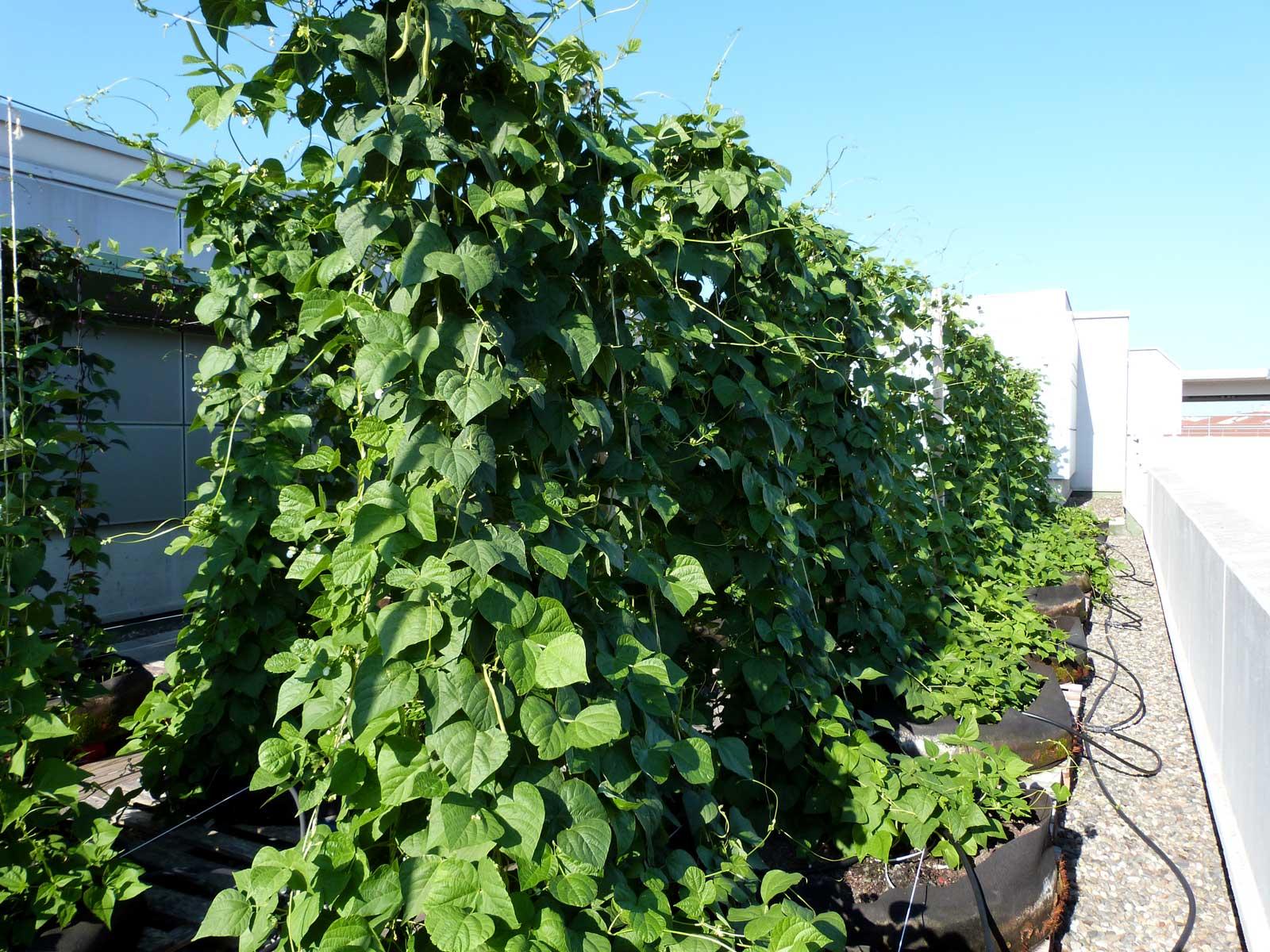
Vegetable Garden at the Roof of the Pasteur Clinic
Photographer: Alexandre Belin (Macadam Gardens), retrieved 08/13/2018
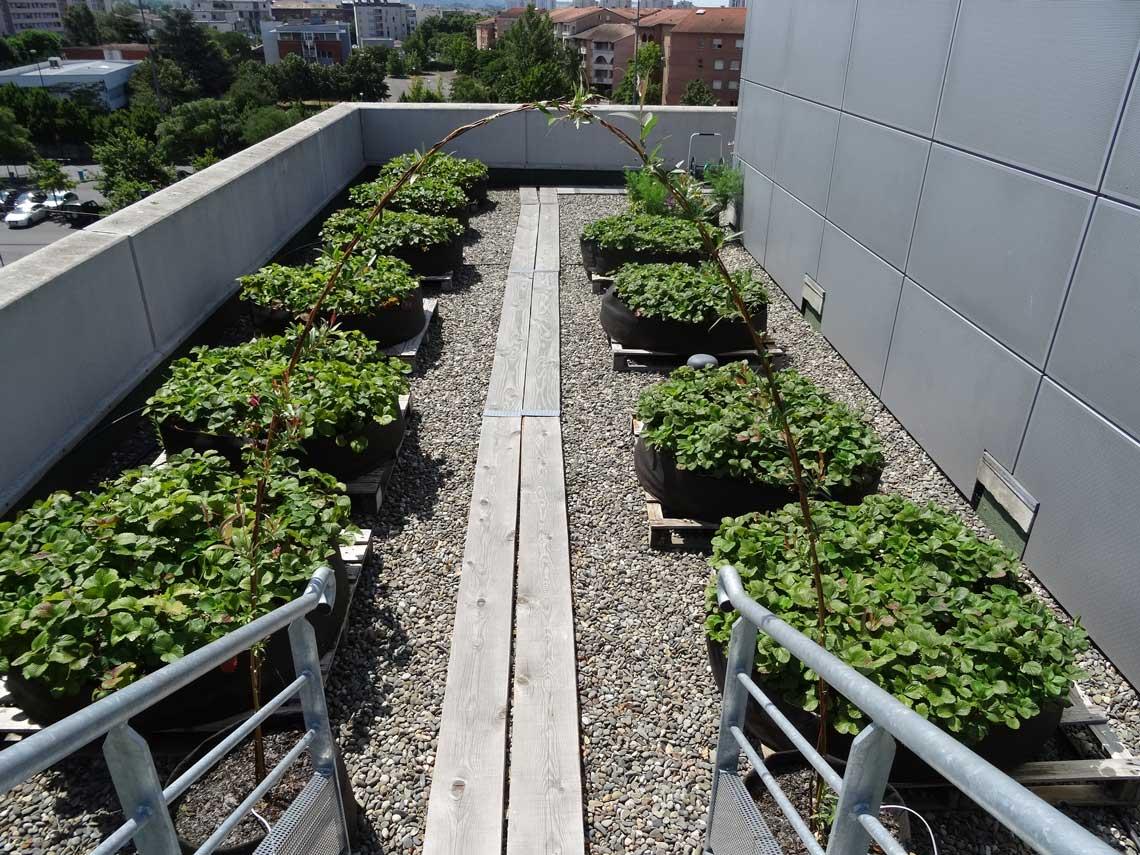
Vegetable Garden at the Roof of the Pasteur Clinic
Photographer: Alexandre Belin (Macadam Gardens), retrieved 08/13/2018