

Last updated: October 2021
Numerous developments have been carried out at the National Veterinary School of Toulouse's (ENVT) green campus to make the site more conducive to the maintenance and development of biodiversity as result of the school's "VERT VET" (GREEN VET) club (Ref. 2). The green changes began as a result of the school's 2008 sustainable development policy (Ref. 1). Among its many functions and activities, the policy helped raise awareness, clean ponds, and a well, construct a vegetable garden and make beehives and bird nest boxes in the campus's two classified forests (Ref. 3).
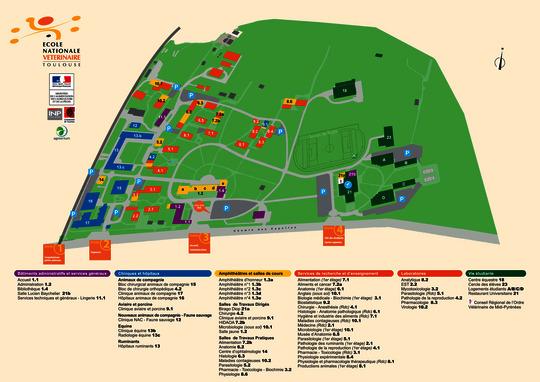
https://www.humanite-biodiversite.fr/article/un-campus-vert-dans-la-ville-rose
Overview
Nature-based solution
- Parks and urban forests
- Large urban parks or forests
- Community gardens and allotments
- Community gardens
- Other
- Blue infrastructure
- Lakes/ponds
- Green areas for water management
- Rain gardens
Key challenges
- Climate action for adaptation, resilience and mitigation (SDG 13)
- Climate change mitigation
- Water management (SDG 6)
- Stormwater and rainfall management and storage
- Improvements to water quality
- Green space, habitats and biodiversity (SDG 15)
- Habitat and biodiversity restoration
- Habitat and biodiversity conservation
- Green space creation and/or management
- Environmental quality
- Waste management
- Regeneration, land-use and urban development
- Promote natural styles of landscape design for urban development
- Social justice, cohesion and equity (SDG 10)
- Environmental education
- Social justice and equity
- Environmental and climate justice
- Health and well-being (SDG 3)
- Enabling opportunities for physical activity
- Economic development and employment (SDG 8)
- Economic development: agriculture
- Sustainable consumption and production (SDG 12)
- Sustainable consumption
- Sustainable production
Focus
Maintenance and management of urban nature, Other
Project objectives
Through the Green Campus at the National Vetenary School of Toulouse project, the club VERT VET planted vegetation (e.g. flowers, hedges, and trees) to improve the campus's green spaces. Volunteers at ENVT also aimed to (Ref. 4):
- construct and maintain campus' vegetable garden to provide the campus with a means of sustainable consumption,
- rehabilitate a nearby well in order to employ means of water management that would sustain a campus garden,
- improve habitats and biodiversity through cleaning 3 pools sheltering turtles, fish and aquatic plants,
- promote beekeeping practices and facilities (i.e. the self-financing beekeeping club "Bee api" was established through its honey sales and bee-related products),
- install avian facilities and promoted practices by installing campus nesting boxes
- request ENVT apply for its campus to enter the Ligue pour la Protection des Oiseaux (League for the Protection of Birds) (LPO), (Ref. 4)
- provide new pedagogy on environmental issues (Ref. 1, 5).
Implementation activities
The school's 2008 sustainable development policy created an on-campus culture of sustainability through numerous activities focused on sustainable development (Ref. 1, 2). These include:
- new bird nest boxes by the ornithological club making the campus a refuge zone of the LPO,
- a new "hive-school" installing beekeeping habitats and promoting their awareness (self-financed through sale of honey and honey products), (Ref. 1, 2)
- creation of an ecological mural (Ref. 1, 2)
- collective exploitation of organic vegetable plots with a watering system with rainwater recovery (Ref. 1, 2)
- a botanical project planting trees (Ref. 1, 2)
- the rehabilitation of three ponds to promote aquatic biodiversity, (Ref. 3)
- general planting of vegetation (e.g. flowers, hedges, and trees) (Ref. 3).
- a new curriculum for 1st year students on sustainable development (Ref. 3)
- creating green recreational spaces (Ref. 3).
- reusable eco-friendly products (e.g. student bar ecocups) sold on-site (Ref. 3)
- sheep are used for lawn mowing in some spaces. (Ref. 1, 5)
-"More than 400 bicycle parks have been set up within the ENVT enclosure. Before, students used to take the car to go from one end of the campus to the other, now they get around by bike" (Ref. 5).
-There is a continuous action plan: "Composed of fifteen members - agents, technicians and students - this committee meets every quarter and defines the annual action plan" (Ref. 3).
Climate-focused activities
Climate change mitigation:
- Invest in public transport/bicycle infrastructure as a means to prevent car use
- Raise public awareness of behaviours, lifestyle and cultural changes with mitigation potential
Biodiversity conservation or restoration-focused activities
Biodiversity conservation:
- Protect and enhance urban habitats
- Preserve and strengthen existing habitats and ecosystems
- Create new habitats
- Reduce negative impacts and avoid the alteration/damage of ecosystem
- Protect species
- Undertake specific measures to protect species
- Undertake specific measures to protect valued species
- Means for conservation governance
- Manage biological resources for conservation and sustainable use
- Raise public awareness
- Public engagement
- Create and use scientific knowledge for conservation
Biodiversity restoration:
- Rehabilitate and restore damaged or destroyed ecosystems
- Restore species (native, endangered, or unspecified)
- Restore valued species
Main beneficiaries
- Researchers/University
Governance
Management set-up
- Led by non-government actors
Type of initiating organisation
- Researchers/university
Participatory approaches/ community involvement
- Unknown
Details on the roles of the organisations involved in the project
The project was initiated by Augustin Calventus, an environmental health and safety engineer and also project manager of the campus' sustainable development (Ref. 6). ENVT staff worked alongside students towards the establishment of the club VERT VET in the continuing development of biodiversity projects (botanical, aquatic, ornithological and apiculture) on-campus that played a key role in the school's sustainable development policy (Ref. 7). Further projects led to the establishment of further school affliated groups, such as the birding society and Bee api (Ref. 1).
Project implemented in response to ...
... an EU policy or strategy?
No
(According to the application document (1))
... a national policy or strategy?
No
(According to the application document (1))
... a local policy or strategy?
No
(According to the application document (1))
Financing
Total cost
€10,000 - €50,000
Source(s) of funding
- Other
Type of funding
- Direct funding (grants, subsidies, or self-financed projects by private entities)
Non-financial contribution
Type of non-financial contribution
- Provision of labour
Who provided the non-financial contribution?
- Citizens (e.g. volunteering)
Impacts and Monitoring
Environmental impacts
- Climate change
- Reduced emissions
- Environmental quality
- Improved waste management
- Water management and blue areas
- Improved water quality
- Enhanced protection and restoration of freshwater ecosystems
- Green space and habitat
- Increased green space area
- Increased conservation or restoration of ecosystems
- Reduced biodiversity loss
- Increased number of species present
- Enhanced support of pollination
- Increased spread of native/heirloom/open-pollinated seed
Economic impacts
- Reduce financial cost for urban management
- Increase in agricultural production (for profit or not)
- Increased market share for green economies
Socio-cultural impacts
- Social justice and cohesion
- Increased access to healthy/affordable food
- Health and wellbeing
- Gain in activities for recreation and exercise
- Education
- Increased support for education and scientific research
- Other
Type of reported impacts
Achieved impacts
Presence of formal monitoring system
Unknown
Presence of indicators used in reporting
No evidence in public records
Presence of monitoring/ evaluation reports
No evidence in public records
Availability of a web-based monitoring tool
No evidence in public records
References
(1) Calventus, Augustin. (2015). Trophées des campus responsables: Green Gown Awards. (Document attached).
(2) Grolleau, Adeline. (2015). Toulouse: un campus vert en symbiose avec la nature. Available at: Source link (Accessed: September 21, 2020).
(3) de Varax, Aurélie. (2015). L’École nationale vétérinaire de Toulouse, à l’avant-garde des campus verts. Available at: Source link (Accessed: September 21, 2020).
(4) bird Life International. [no date]. France - Ligue pour la Protection des Oiseaux (LPO). Available at: Source link (Accessed: September 21, 2020).
(5) Éducation à l'environnement et au DD. (2015). Un campus vert dans la ville rose. Available at: Source link (Accessed: September 21, 2020).
(6) Lacombe, Benjamin. (2015). La faune et la flore sont à leur aise sur le campus de l'école vétérinaire. Available at: Source link (Accessed: September 21, 2020).
(7) Trophées des campus responsables. [no date]. École Nationale Vétérinaire de Toulouse: Projet : Un campus Vert dans la ville Rose. Available at: Source link (Accessed: September 21, 2020).
(2) Grolleau, Adeline. (2015). Toulouse: un campus vert en symbiose avec la nature. Available at: Source link (Accessed: September 21, 2020).
(3) de Varax, Aurélie. (2015). L’École nationale vétérinaire de Toulouse, à l’avant-garde des campus verts. Available at: Source link (Accessed: September 21, 2020).
(4) bird Life International. [no date]. France - Ligue pour la Protection des Oiseaux (LPO). Available at: Source link (Accessed: September 21, 2020).
(5) Éducation à l'environnement et au DD. (2015). Un campus vert dans la ville rose. Available at: Source link (Accessed: September 21, 2020).
(6) Lacombe, Benjamin. (2015). La faune et la flore sont à leur aise sur le campus de l'école vétérinaire. Available at: Source link (Accessed: September 21, 2020).
(7) Trophées des campus responsables. [no date]. École Nationale Vétérinaire de Toulouse: Projet : Un campus Vert dans la ville Rose. Available at: Source link (Accessed: September 21, 2020).

https://www.touleco-green.fr/L-Ecole-nationale-veterinaire-de-Toulouse-a-l-avant-garde-des,17170