

Last updated: October 2021
The Grand Park Garonne urban project aims to rehabilitate and develop the banks of the river Garonne that runs 32 kilometers through the city. From 2015, several development projects was planned to be carried out for a total of 28.7 million euros across 3 areas: the Garonne downstream, Toulouse center and the city's "green lung" Island of Ramier (Ref. 1, 4). Within these are 12 sites that consist of 40 pilot projects for operations. Among these are projects focused on protecting and restoring natural habitats and species in order to create a citywide green corridor (Ref. 8).
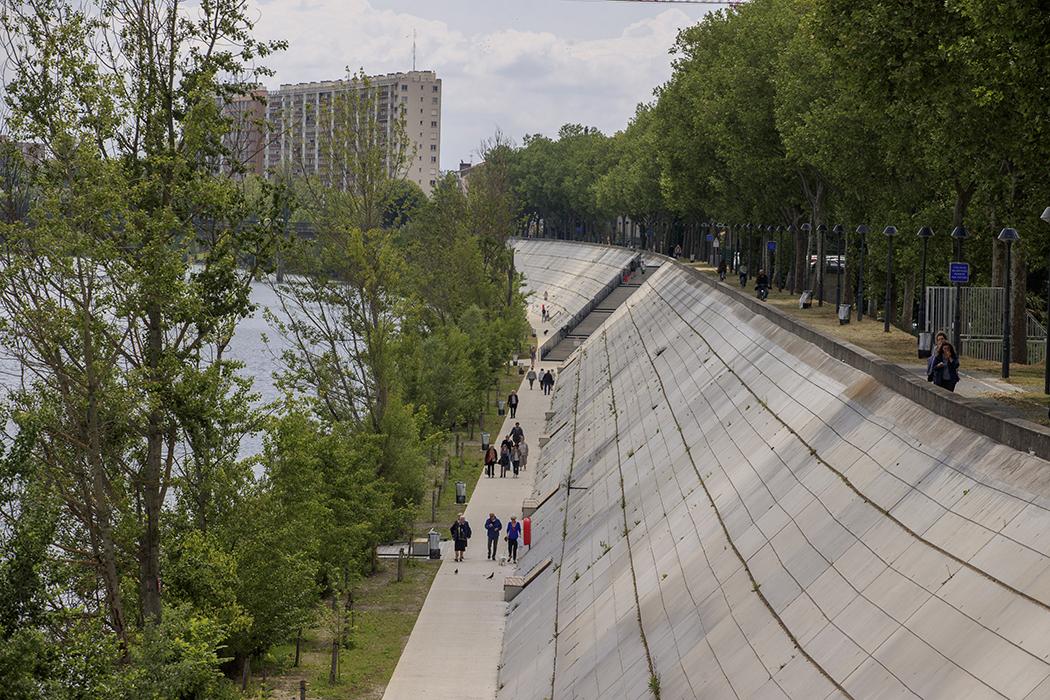
https://www.toulouse-metropole.fr/-/grand-parc-garonne?redirect=%2Fprojets%2Fgrand-parc-garonne
Overview
Nature-based solution
- Grey infrastructure featuring greens
- Alley or street trees and other street vegetation
- Blue infrastructure
- Riverbank/Lakeside greens
- Parks and urban forests
- Green corridors and green belts
- Community gardens and allotments
- Community gardens
- Rivers/streams/canals/estuaries
Key challenges
- Climate action for adaptation, resilience and mitigation (SDG 13)
- Climate change adaptation
- Climate change mitigation
- Water management (SDG 6)
- Flood protection
- Green space, habitats and biodiversity (SDG 15)
- Habitat and biodiversity restoration
- Habitat and biodiversity conservation
- Green space creation and/or management
- Environmental quality
- Air quality improvement
- Waste management
- Health and well-being (SDG 3)
- Enabling opportunities for physical activity
- Creation of opportunities for recreation
- Cultural heritage and cultural diversity
- Preservation of natural heritage
- Protection of historic and cultural landscape/infrastructure
Focus
Maintenance and management of urban nature, Management and improved protection of rivers and other blue areas
Project objectives
Grand Park Garonne is part of the The Territorial Energy Climate Plan to reduce greenhouse gas emissions in the metropolitan area, adapt to climate change and offer a more sustainable future (Ref. 16).
Part of the project's ambitions is to reinforce Toulouse's ecological corridor by preserving and enhancing the natural and built fluvial heritage of the city. This includes the preservation of restoring natural habitats and species, creating green spaces, planting of trees, enhance its downriver wetlands, and vegetable farming/peri-urban agriculture (Ref. 4, 8, 9, 10, 12). "Four objectives: develop pedestrian and cyclist routes; enhance the natural heritage; strengthen water-related uses develop new spaces of culture and conviviality" (Ref. 1).
Implementation activities
The project began in 2010, (Ref. 2) where Toulouse Métropole appointed TER to guide the project. The quays of Toulouse constituted the first major projects (Ref. 5).The development at the Island of Ramier has been delayed as Toulouse Métropole struggled to generate sufficient finances to begin the project; (Ref. 6) Toulouse Métropole have since launched a dialogue to attract further investment into projects surrounding this area (Ref. 13, 14).
- Vegetation has been reinforced to allow the development of biodiversity and to restore a natural quality to the route. 428 trees and shrubs of local and specific species of the Garonne riparian forest were planted: 58 smooth elms, 54 glutinous alders, 68 white willows, 65 southern ash trees, 60 pedunculate oaks, 113 vanier willows (Ref. 1).
-Furniture has been installed all along the path: 43 benches with wooden seats, promoting contemplation on the river (simple benches, sunbathing against the dike, sitting-standing), 26 baskets for the cleanliness of the site (Ref. 1)
As of October 14, 2020, "With sports facilities, gardens and walking trails, the northern tip of Île du Ramier is gradually coming to life" (Ref. 17). "Two indoor tennis courts and ancillary sports facilities were demolished on the northern tip of Île du Ramier (Pointe de l'Emulation nautique). A new shared sports hall (tennis, kayaking, water skiing) was built on the islet of Banlève, on the site of a former car park. A new pedestrian/cycle bridge has been created to directly link Avenue du Grand Ramier to the banks of the northern tip. Plantations and newly vegetated areas have been created (39 tall trees, 100 baliveaux to reinforce the riparian forest, increase of 4,400 m² of vegetated areas). New uses will be integrated into public spaces: landscaped and educational vegetable garden, bowling alley, belvederes to enhance the views of the river" (Ref. 17). "The Saget dike wall of Cours Dillon has also been restored. The structure extends from Pont Saint-Michel to Pont-Neuf. It protects the city from the floods of the Garonne" (Ref. 1).
Climate-focused activities
Climate change adaptation:
- Restore wetlands and/or coastal ecosystems to dissipate the effects of flooding and/or storms
- Renaturalization of rivers and other water bodies
Climate change mitigation:
- Invest in public transport/bicycle infrastructure as a means to prevent car use
Biodiversity conservation or restoration-focused activities
Biodiversity conservation:
- Protect and enhance urban habitats
- Preserve and strengthen existing habitats and ecosystems
- Promote environmentally-sound development in and around protected areas
- Preserve and strengthen habitat connectivity
- Protect species
- Undertake specific measures to protect species
Biodiversity restoration:
- Rehabilitate and restore damaged or destroyed ecosystems
- Restore species (native, endangered, or unspecified)
Main beneficiaries
- Citizens or community groups
Governance
Management set-up
- Co-governance with government and non-government actors
Type of initiating organisation
- Local government/municipality
Participatory approaches/ community involvement
- Unknown
Details on the roles of the organisations involved in the project
Toulouse Métropole initiated the project and generated the necessary budget from private actors in order to meet the scale of the grand project's operations. The project concerns 7 municipalities: of the Metropolis Toulouse, Blagnac, Beauzelle, Fenouillet, Seilh, Gagnac-sur-Garonne and Saint-Jory (Ref. 2, 3). The TER agency directs the team that works at the request of Toulouse Métropole on the Grand Parc Garonne project (Ref. 4).
Project implemented in response to ...
... an EU policy or strategy?
Unknown
... a national policy or strategy?
Unknown
... a local policy or strategy?
Yes
(Grand Park Garonne is part of the The Territorial Energy Climate Plan to reduce greenhouse gas emissions in the metropolitan area, adapt to climate change and offer a more sustainable future (Ref. 16).)
Financing
Total cost
More than €4,000,000
Source(s) of funding
- Public local authority budget
- Corporate investment
Type of funding
- Earmarked public budget
- Direct funding (grants, subsidies, or self-financed projects by private entities)
Non-financial contribution
Unknown
Impacts and Monitoring
Environmental impacts
- Climate change
- Reduced emissions
- Water management and blue areas
- Increased protection against flooding
- Enhanced protection and restoration of freshwater ecosystems
- Green space and habitat
- Increased green space area
- Reduced biodiversity loss
- Increased ecological connectivity across regeneration sites and scales
Economic impacts
- Attraction of business and investment
Socio-cultural impacts
- Social justice and cohesion
- Improved social cohesion
- Improved access to urban green space
- Increased opportunities for social interaction
- Increased access to healthy/affordable food
- Health and wellbeing
- Gain in activities for recreation and exercise
- Cultural heritage and sense of place
- Protection of natural heritage
- Protection of historic and cultural landscape / infrastructure
- Education
- Increased support for education and scientific research
Type of reported impacts
Expected impacts, Achieved impacts
Presence of formal monitoring system
Unknown
Presence of indicators used in reporting
No evidence in public records
Presence of monitoring/ evaluation reports
No evidence in public records
Availability of a web-based monitoring tool
No evidence in public records
References
(1) Toulouse Metropole. [no date]. GRANDS PROJETS: GRAND PARC GARONNE. Available at: Source link (Accessed: October 14, 2020).
(2) Recueilli par S.R. (2015). Henri Bava : «La Garonne, une chance inouïe». Available at:Source link (Accessed: October 14, 2020).
(3) Roux, Sylvie. (2015). Grand Parc Garonne : ça démarre enfin. Available at: Source link (Accessed: October 14, 2020).
(4) Emery, Dossier Philippe. (2012). Découvrez le projet de Grand Parc Garonne, le futur Central Park toulousain. Available at: Source link (Accessed: October 14, 2020).
(5) Belet,Thomas. (2012). C'est parti pour le Grand Parc Garonne. Available at: Source link (Accessed: October 14, 2020).
(6) Ph. E. (2015). Quel projet sur l'île du Ramier? Available at: Source link (Accessed: October 14, 2020).
(7) Habiter Toulouse. [no date]. Le Grand Parc Garonne à Toulouse. Available at: Source link (Accessed: October 14, 2020).
(8) Van de Kreek, Cécile and Etienne, Marie Adeline. (2012). Grand Parc Garonne: Plan guide. (Document attached).
(9) Wanaverbecq, Christiane. (2015). Le projet de Grand parc Garonne à Toulouse entre en phase opérationnelle. Available at: Source link (Accessed: October 14, 2020).
(10) Déléaz, Thibaut. (2016). Grand Parc Garonne : « Réconcilier les Toulousains avec leur fleuve ». Available at: Source link (Accessed: October 14, 2020).
(11) ANAÏS C. (2017). [ ENVIRONNEMENT ] LE PROJET GRAND PARC GARONNE REND LE FLEUVE AUX TOULOUSAINS. Available at: Source link (Accessed: October 14, 2020).
(12) Saint-Sernin, David. (2016). Toulouse. C’est le projet pour le port Viguerie dont la rénovation va débuter à l’automne 2016. Available at: Source link (Accessed: October 14, 2020).
(13) Toulouse Metropole. [no date]. ÎLE DU RAMIER : IMAGINONS L'ÎLE DE DEMAIN. Available at: Source link (Accessed: October 14, 2020).
(14) Dupont,Bénédicte. (2017). Toulouse lance la concertation autour du futur "Central Park" sur l'île du Ramier. Available at: Source link (Accessed: October 14, 2020).
(15) Solecki, William. Gaffin, Stuart. Rosenzweig, Cynthia. Goldberg, Richard. Parshall, Lily. Lynn, Barry. Cox,Jennifer. and Hodges, Sara. (2006). Mitigating New York City's heat island with urban forestry, living roofs, and light surfaces. Columbia University, New York, NY. (Document attached).
(16) EUROPAN14. [no date]. Toulouse metropolis: entering the productive metropolis. (Document attached).
(17) La Journal Toulousain (2020). "À Toulouse, le Grand parc Garonne sur l’île du Ramier prend vie". Available at: Source link (Accessed: October 14, 2020).
(2) Recueilli par S.R. (2015). Henri Bava : «La Garonne, une chance inouïe». Available at:Source link (Accessed: October 14, 2020).
(3) Roux, Sylvie. (2015). Grand Parc Garonne : ça démarre enfin. Available at: Source link (Accessed: October 14, 2020).
(4) Emery, Dossier Philippe. (2012). Découvrez le projet de Grand Parc Garonne, le futur Central Park toulousain. Available at: Source link (Accessed: October 14, 2020).
(5) Belet,Thomas. (2012). C'est parti pour le Grand Parc Garonne. Available at: Source link (Accessed: October 14, 2020).
(6) Ph. E. (2015). Quel projet sur l'île du Ramier? Available at: Source link (Accessed: October 14, 2020).
(7) Habiter Toulouse. [no date]. Le Grand Parc Garonne à Toulouse. Available at: Source link (Accessed: October 14, 2020).
(8) Van de Kreek, Cécile and Etienne, Marie Adeline. (2012). Grand Parc Garonne: Plan guide. (Document attached).
(9) Wanaverbecq, Christiane. (2015). Le projet de Grand parc Garonne à Toulouse entre en phase opérationnelle. Available at: Source link (Accessed: October 14, 2020).
(10) Déléaz, Thibaut. (2016). Grand Parc Garonne : « Réconcilier les Toulousains avec leur fleuve ». Available at: Source link (Accessed: October 14, 2020).
(11) ANAÏS C. (2017). [ ENVIRONNEMENT ] LE PROJET GRAND PARC GARONNE REND LE FLEUVE AUX TOULOUSAINS. Available at: Source link (Accessed: October 14, 2020).
(12) Saint-Sernin, David. (2016). Toulouse. C’est le projet pour le port Viguerie dont la rénovation va débuter à l’automne 2016. Available at: Source link (Accessed: October 14, 2020).
(13) Toulouse Metropole. [no date]. ÎLE DU RAMIER : IMAGINONS L'ÎLE DE DEMAIN. Available at: Source link (Accessed: October 14, 2020).
(14) Dupont,Bénédicte. (2017). Toulouse lance la concertation autour du futur "Central Park" sur l'île du Ramier. Available at: Source link (Accessed: October 14, 2020).
(15) Solecki, William. Gaffin, Stuart. Rosenzweig, Cynthia. Goldberg, Richard. Parshall, Lily. Lynn, Barry. Cox,Jennifer. and Hodges, Sara. (2006). Mitigating New York City's heat island with urban forestry, living roofs, and light surfaces. Columbia University, New York, NY. (Document attached).
(16) EUROPAN14. [no date]. Toulouse metropolis: entering the productive metropolis. (Document attached).
(17) La Journal Toulousain (2020). "À Toulouse, le Grand parc Garonne sur l’île du Ramier prend vie". Available at: Source link (Accessed: October 14, 2020).