

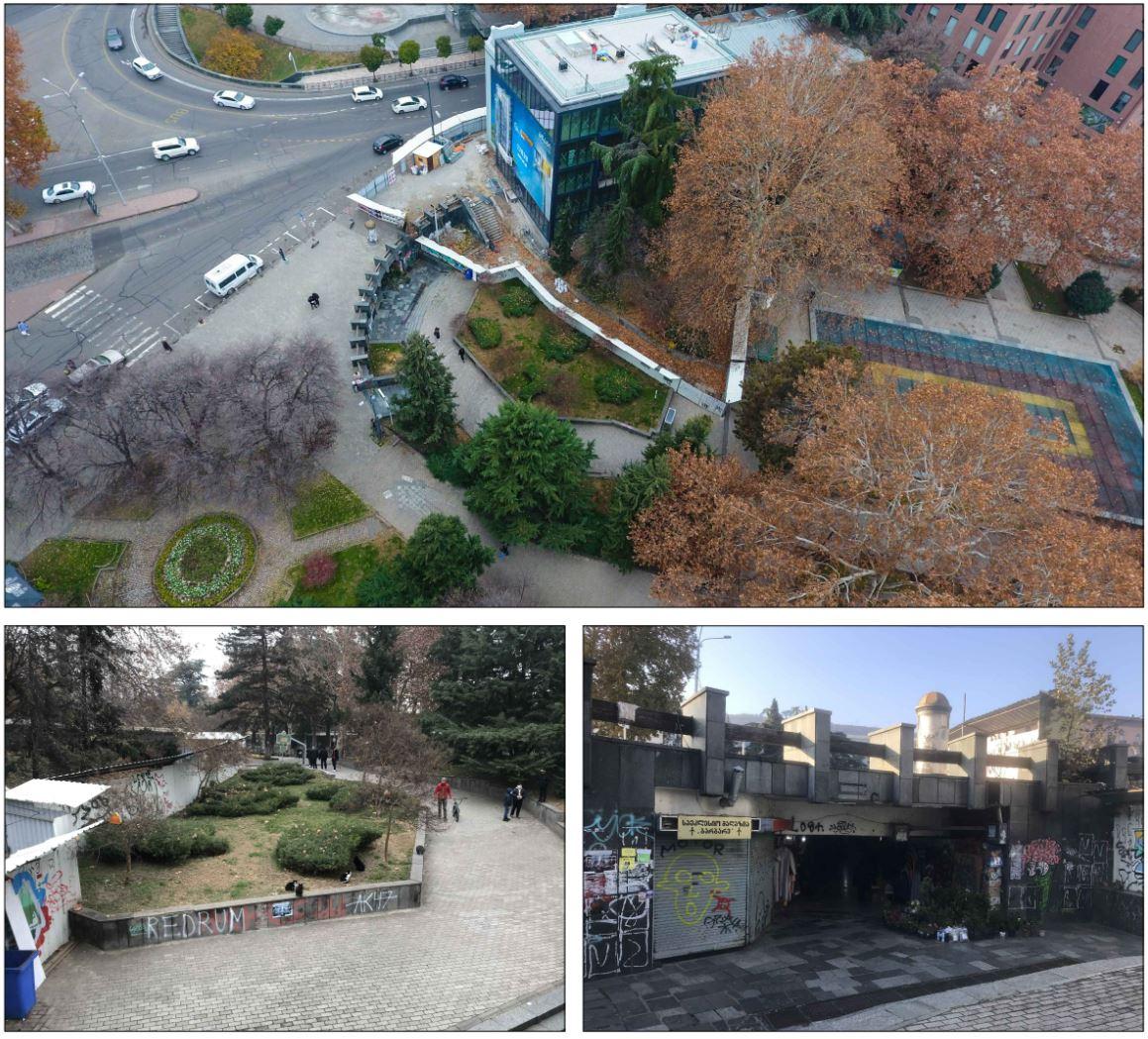
The Vera Park is a significant site in the city of Tbilisi, created in the mid-20th century. Located centrally, it is not only frequently visited by tourists but also used as a recreational area for the surrounding residents and workers (Ref. 1,2). The park is recognized as an immovable cultural heritage site, emphasizing its historical significance (Ref. 1). However, its condition had become quite desolate, necessitating extensive rehabilitation while preserving its original features (Ref. 2). Importantly, the project is carried out between the city of Tbilisi and the Asian Development Bank under the Livable Cities Investment Program (LCIP) to improve urban and tourism infrastructure (Ref. 1,2). As such, the project was developed through co-participatory planning, engaging citizens who have shown significant interest in the site’s development and will further serve as a precedent case for co-participatory planning in the future (Ref. 4,2).

Overview
Nature-based solution
- Parks and urban forests
- Large urban parks or forests
Key challenges
- Green space, habitats and biodiversity (SDG 15)
- Green space creation and/or management
- Water management (SDG 6)
- Stormwater and rainfall management and storage
- Cultural heritage and cultural diversity
- Protection of historic and cultural landscape/infrastructure
- Health and well-being (SDG 3)
- Creation of opportunities for recreation
- Enabling opportunities for physical activity
- Inclusive and effective governance (SDG 16)
- Inclusive governance
- Economic development and employment (SDG 8)
- Tourism support
Principal problems in Functional Urban Area (FUA)
- Health, Well-being and Social cohesion
- Inadequate access to recreational opportunities
- Other
Key priorities
Focus
Project objectives
Implementation activities
Main beneficiaries
- Citizens or community groups
- Young people and children
- Marginalized groups: Children, young people or youth groups , People with functional diversities
- Other
Governance
Management set-up
- Co-governance with government and non-government actors
Type of initiating organisation
- Local government/municipality
- Financial institution
Participatory approaches/ community involvement
- Co-planning (e.g. stakeholder workshops, focus groups, participatory mapping)
- Consultation (e.g. workshop, surveys, community meetings, town halls)
Details on the roles of the organisations involved in the project
Project implemented in response to ...
Type of enablers
Financing
Total cost
Source(s) of funding
- Multilateral funds/international funding
- Other funding sources are unclear
Type of funding
- Direct funding (grants, subsidies, or self-financed projects by private entities)
Non-financial contribution
Impacts and Monitoring
Environmental impacts
- Water management and blue areas
- Improved stormwater management
- Expected improved stormwater management
- Green space and habitat
- Reduced biodiversity loss
- Expected reduced biodiversity loss
Economic impacts
- More sustainable tourism
- Expected more sustainable tourism
Socio-cultural impacts
- Social justice and cohesion
- Improved access to urban green space
- Expected improved access to urban green space
- Increased opportunities for social interaction
- Expected increased opportunities for social interaction
- Health and wellbeing
- Gain in activities for recreation and exercise
- Expected gain in activities for recreation and exercise
- Cultural heritage and sense of place
- Protection of historic and cultural landscape / infrastructure
- Expected protection of historic and cultural landscape / infrastructure
Type of reported impacts
Presence of formal monitoring system
Presence of indicators used in reporting
Presence of monitoring/ evaluation reports
Availability of a web-based monitoring tool
Potential risks of implementation and trade-offs
References
 Information about this nature-based solution was collected as part of the Naturescapes project funded by the European Union under Grant Agreement No 101084341.