Last updated: October 2021
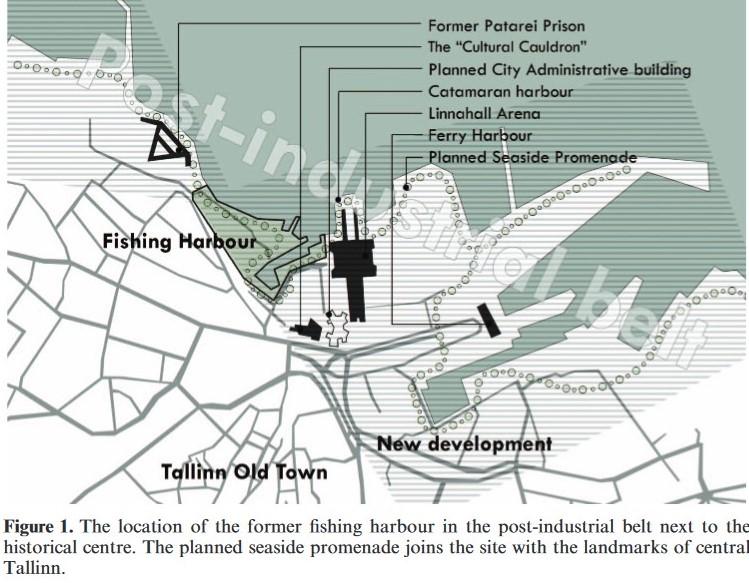
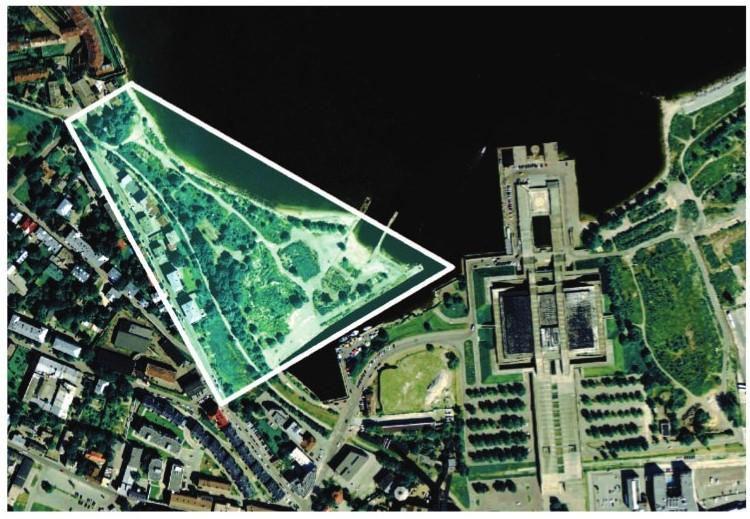
The abandoned fishing harbour in Tallinn is a derelict, privately owned but publicly used open space approximately 5 hectares in size and known as the former fishing harbour (Kalasadam). It is part of the old industrial waterfront belt waiting to be regenerated in the future. It is a piece of ‘urban wilderness’ (Ref. 1). The site is a green open space with high recreational values. Inserting a few pieces of equipment and taming the urban wilderness very slightly seems to lead to a significantly increased number of users than before these developments (Ref 2). A research study has been done to determine whether an urban derelict site could be regarded as only empty and meaningless (ref 1 and 2)
Overview
Nature-based solution
- Intentionally unmanaged areas
- Abandoned spaces with growth of wilderness or greens
Key challenges
- Regeneration, land-use and urban development
- Promote natural styles of landscape design for urban development
- Cultural heritage and cultural diversity
- Protection of historic and cultural landscape/infrastructure
Focus
Maintenance and management of urban nature, Transformation of previously derelict areas
Project objectives
This derelict site of Tallinn's fishing harbour case demonstrates how the place holds an important position as a:
- representative of the country’s specific heritage,
- complement for the city’s open spaces, a piece of urban wilderness,
- diverse public space supplement for the neighbourhood and many opportunities (ref 1)
Implementation activities
- Formerly closed and controlled, the site was re-opened for public use at the beginning of the 1990s after the re-establishment of Estonia’s independence. At present the site lies in reserve, as the currently proposed redevelopment plans have not succeeded in satisfying all the various interest groups–the proposals for the detailed plan have been rejected–so it remains derelict (ref. 2)
- The study site has a varied shoreline: at the former harbour itself the concrete piers are used daily by anglers, the slipway is handy for water-scooter or boat owners while the sandy side of the shore is used for swimming. People come to the site to sit on the stones and chunks of old concrete and enjoy the view over the Gulf of Tallinn. Children enjoy playing with the pebbles while their parents use the opportunity to sunbathe in privacy, although they are in the centre of the city, or to sit in the shade of the spontaneous vegetation. The first lessons in bicycle riding may be given there, as well as activities ranging from kite flying to target shooting with an air rifle.
Biodiversity conservation or restoration-focused activities
Biodiversity conservation:
- Protect and enhance urban habitats
- Preserve and strengthen existing habitats and ecosystems
- Reduce negative impacts and avoid the alteration/damage of ecosystem
- Means for conservation governance
- Public engagement
Main beneficiaries
- Citizens or community groups
- Marginalized groups: Elderly people
- Young people and children
Governance
Management set-up
- Led by non-government actors
Type of initiating organisation
- Researchers/university
Participatory approaches/ community involvement
- Unknown
Details on the roles of the organisations involved in the project
A research study has been done to determine whether an urban derelict site could be regarded as only empty and meaningless (ref 1 and 2) - by researchers at Estonian University of Life Sciences published as Blank Space: Exploring the Sublime Qualities of Urban Wilderness at the Former Fishing Harbour in Tallinn, Estonia (ref 1) the role of researchers (as stated in their paper, ref 1, abstract) was to "present and discuss ways of analyzing both positive and negative aspects of dereliction in a post-Soviet context" in the context of Tallinn's urban wilderness. This is presented differently in paper/ ref 2 (p.121), the researchers aimed to demonstrate the vitality and richness of urban derelict spaces and to explore the role of physical design interventions in enriching such a space and the effect these changes have on the behavior of green space users.
Project implemented in response to ...
... an EU policy or strategy?
Unknown
... a national policy or strategy?
Unknown
... a local policy or strategy?
Unknown
Financing
Total cost
Unknown
Source(s) of funding
- Unknown
Type of funding
- Unknown
Non-financial contribution
Unknown
Impacts and Monitoring
Environmental impacts
- Green space and habitat
- Increased green space area
Economic impacts
- Unknown
Socio-cultural impacts
- Social justice and cohesion
- Improved access to urban green space
- Increased opportunities for social interaction
- Health and wellbeing
- Gain in activities for recreation and exercise
- Cultural heritage and sense of place
- Promotion of cultural diversity
- Improvement in people’s connection to nature
Type of reported impacts
Expected impacts, Achieved impacts
Presence of formal monitoring system
Unknown
Presence of indicators used in reporting
No evidence in public records
Presence of monitoring/ evaluation reports
Yes
Availability of a web-based monitoring tool
No evidence in public records
References
1. Unt A., Travlou, P. and Bell S. (2014). Blank Space: Exploring the Sublime Qualities of Urban Wilderness at the Former Fishing Harbour in Tallinn, Estonia. Landscape Research. 39:3, 267-286. Available at: Source link (Accessed: 19 July 2020)
2. Unt, A. L., and Bell, S. (2014). The impact of small-scale design interventions on the behaviour patterns of the users of an urban wasteland. Urban forestry & urban greening, 13(1), 121-135. Available at: Source link (Accessed: 19 July 2020)
3. Martinez, F. (2017). This Place has Potential: Trash, culture, and urban regeneration in Tallinn, Estonia. 42(3):1-22. Available at: Source link (Accessed: 19 July 2020).
2. Unt, A. L., and Bell, S. (2014). The impact of small-scale design interventions on the behaviour patterns of the users of an urban wasteland. Urban forestry & urban greening, 13(1), 121-135. Available at: Source link (Accessed: 19 July 2020)
3. Martinez, F. (2017). This Place has Potential: Trash, culture, and urban regeneration in Tallinn, Estonia. 42(3):1-22. Available at: Source link (Accessed: 19 July 2020).