

Last updated: April 2022
Paljassaare peninsula hosts the Paljassaare special conservation area and is partly a nature reserve and partly used to accommodate a wastewater treatment facility (ref 3). The leftovers from the treatment facility, processes of urbanisation and cyanobacteria blooms from the Baltic sea are largely influencing the fragile ecosystem of the peninsula through eutrophication. By this, the different cycles and ecosystems (both natural and urban) got more and more intertwined. ‘Perpetuum Mobile’ project aims to rebalance the urban metabolism of Tallinn city with the ecological processes on the Paljassaare peninsula through natural de-eutrophication of the area (ref 4).
Overview
Nature-based solution
- Blue infrastructure
- Coastlines
- Coastal wetland, mangroves and salt marshes
Key challenges
- Coastal resilience and marine protection (SDG 14)
- Marine and coastal biodiversity protection
- Green space, habitats and biodiversity (SDG 15)
- Habitat and biodiversity restoration
- Green space creation and/or management
- Water management (SDG 6)
- Improvements to water quality
- Sustainable consumption and production (SDG 12)
- Sustainable consumption
- Sustainable production
Focus
Coastal landscape management or protection, Ecological restoration of ecosystems, Protection of natural ecosystems, Monitoring and maintenance of habitats and/or biodiversity
Project objectives
1. Opening up the closed-in marshland
2. Eutrophication of the marshland will be put to a halt and ecological values will be preserved
3. Suur-Paljasaare will become an isolated bird reserve, an ornithological park on a pan-European scale
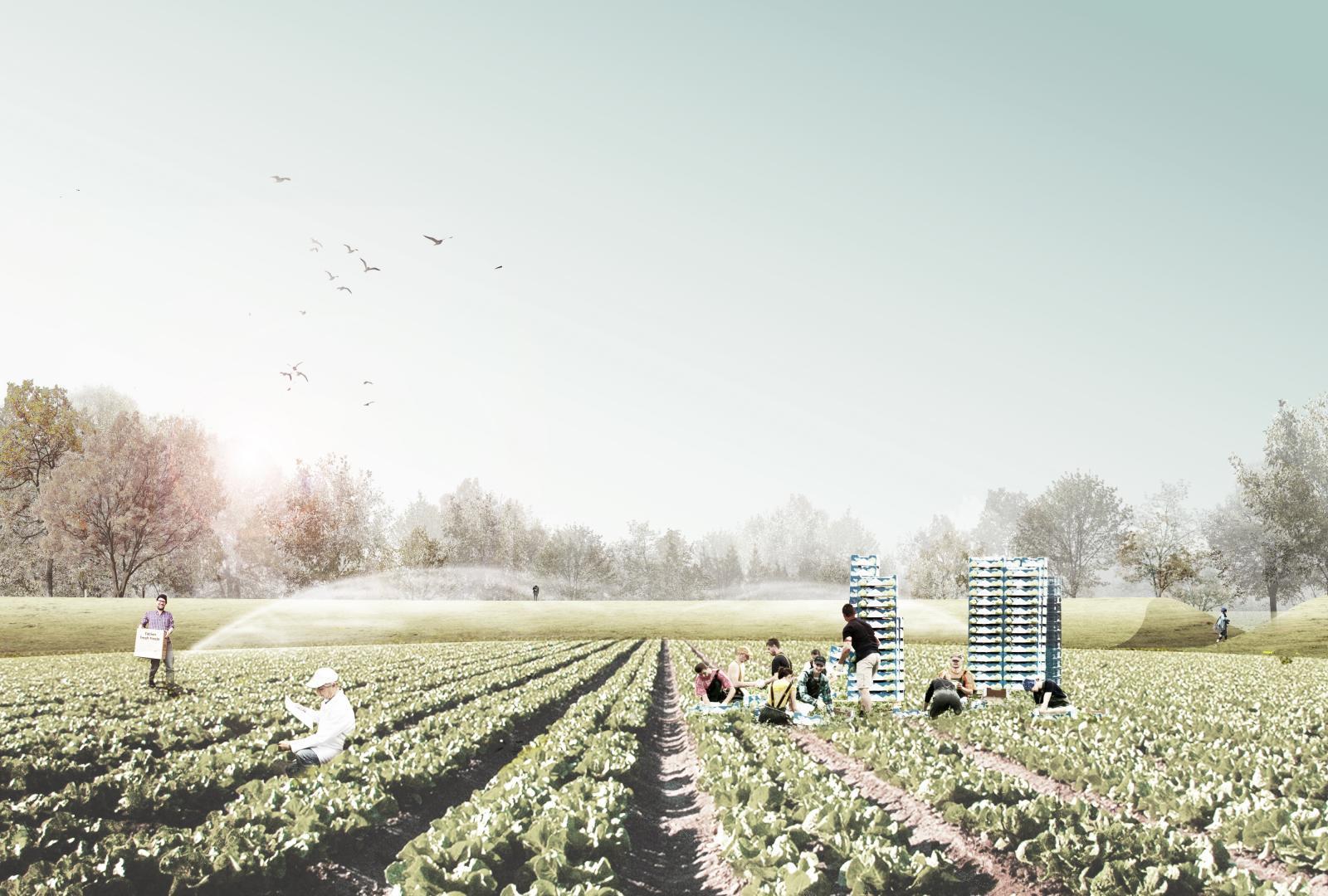
4. Väike-Paljassaare will be transformed into a productive bio-educational island with recreational functions
5. The island is intended to function as a landscape machine that over time will de-eutrophicate the area
6. The leftovers from the wastewater treatment facility are used to fertilise tree and crop plantations on the island
7. The output of the plantations is used to feed and green the city of Tallinn and give a new range of spatial and functional experiences
8. A huge bio-digester is to be implemented: This facility transforms the cyanobacteria blooms (algea) from the Baltic sea to bio-gas for the city.
(ref. 4)
Implementation activities
1. Opening up the closed-in marshland. 2. Eutrophication of the marshland will be put to a halt and ecological values will be preserved. 3. Suur-Paljasaare will become an isolated bird reserve, an ornithological park on a pan-European scale. 4. Väike-Paljassaare will be transformed into a productive bio-educational island with recreational functions. 6. The leftovers from the wastewater treatment facility are used to fertilise tree and crop plantations on the island. 7. The output of the plantations is used to feed and green the city of Tallinn and give a new range of spatial and functional experiences. 8. A huge bio-digester is to be implemented (ref. 4)
Biodiversity conservation or restoration-focused activities
Biodiversity conservation:
- Means for conservation governance
- Manage biological resources for conservation and sustainable use
Biodiversity restoration:
- Rehabilitate and restore damaged or destroyed ecosystems
- Restore species (native, endangered, or unspecified)
- Restore valued species
- Clear and control invasive alien species
Main beneficiaries
- Citizens or community groups
Governance
Management set-up
- Led by non-government actors
Type of initiating organisation
- Private sector/corporate actor/company
Participatory approaches/ community involvement
- Other
Details on the roles of the organisations involved in the project
A project envisioned by private architects and urban designers for a city-level competition (ref. 1, 3). Tallinn Architecture Biennale Vision Competition “Re-metabolizing Paljassaare” invited architects, scientists and artists from across the world to define a new urbanity for the unique Paljassaare Peninsula in Tallinn (ref. 3)
Project implemented in response to ...
... an EU policy or strategy?
Unknown
... a national policy or strategy?
Unknown
... a local policy or strategy?
Unknown
Financing
Total cost
Unknown
Source(s) of funding
- Unknown
Type of funding
- Unknown
Non-financial contribution
Unknown
Impacts and Monitoring
Environmental impacts
- Water management and blue areas
- Improved water quality
- Green space and habitat
- Increased green space area
- Reduced biodiversity loss
- Increased number of species present
Economic impacts
- Unknown
Socio-cultural impacts
- Health and wellbeing
- Gain in activities for recreation and exercise
- Education
- Increased support for education and scientific research
- Increased knowledge of locals about local nature
Type of reported impacts
Expected impacts
Presence of formal monitoring system
Unknown
Presence of indicators used in reporting
No evidence in public records
Presence of monitoring/ evaluation reports
No evidence in public records
Availability of a web-based monitoring tool
No evidence in public records
References
1. Nohnik. (n.d.) Complete project overview NOHNIK. Available at: Source link (Accessed: 20 July 2020)
2. Tallinn City Council. (n.d.) Nature and biodiversity. Available at: Source link (Accessed: 20 July 2020)
3. Tallinn Architecture Biennale. (2017). TAB 2017 Vision Competition “Re-metabolizing Paljassaare” won by proposal titled ICAP. Available at: http://2017.Source link (Accessed: 20 July 2020)
4. Perpetuum Mobile (Paljassaare - Tallinn, Estonia). (2017). Youtube Video. Available at: Source link (Accessed: 20 July 2020)
2. Tallinn City Council. (n.d.) Nature and biodiversity. Available at: Source link (Accessed: 20 July 2020)
3. Tallinn Architecture Biennale. (2017). TAB 2017 Vision Competition “Re-metabolizing Paljassaare” won by proposal titled ICAP. Available at: http://2017.Source link (Accessed: 20 July 2020)
4. Perpetuum Mobile (Paljassaare - Tallinn, Estonia). (2017). Youtube Video. Available at: Source link (Accessed: 20 July 2020)

