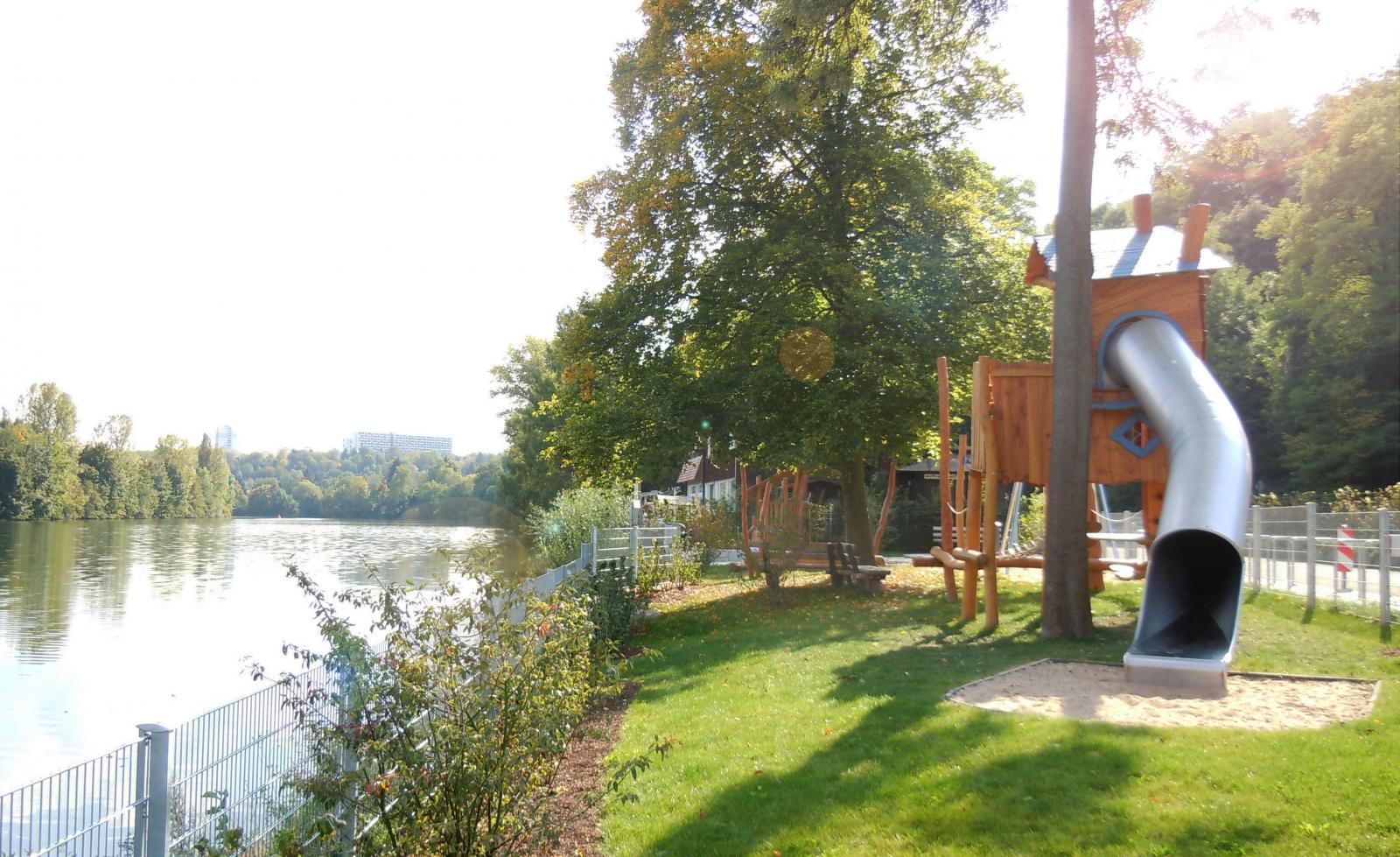
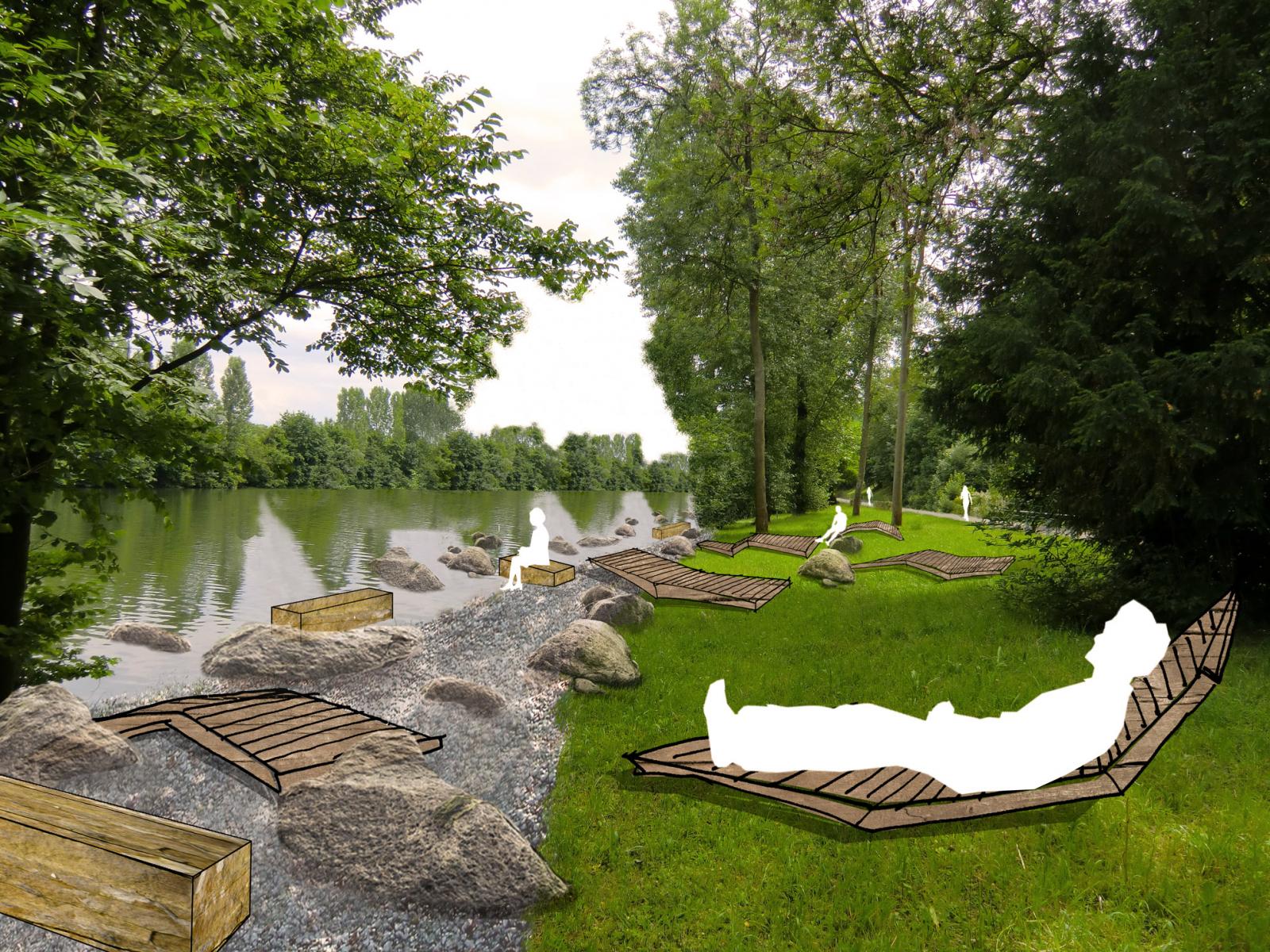
On November 5, 2019, the Committee for Urban Development and Technology passed the building decision for the riverside park Austraße - Neckarterrassen. To the north of Münster, the Neckar has cut deeply into the shell limestone and describes a wide arc on the Prallufer. There is little space between the cliff and the river - that is what makes this place so special. This is where the Austraße riverside park is being built with the elements Freienstein water playground (element 1), Neckarterrassen and Tapach-Link (element 2) as well as Austraße, Neckarufer and Neckarstrand (element 3). The first component has already been implemented: children will find their favorite spot on the Freienstein water playground south of the Max-Eyth-Steg. Students from the Elise von König School in Münster contributed their ideas as part of a child participation program. With the second component and its sub-projects “Tapach-Link” and “Neckarterrassen”, there are beautiful prospects for Münster: Those who have overcome the relay to the Neckarterrassen can rest in the shade and let their eyes wander up and down the Neckar. The third component of the Austraße riverside park - in addition to the Freienstein water playground, Neckarterrassen and Tapach-Link - focuses on the banks: podiums and platforms are planned on the river to linger while the freighters transport their goods on the water. Insects, small crabs and small fish find optimal living conditions on the renatured bank zones with stones and diverse flora. (1, 7).
Overview
Nature-based solution
- Grey infrastructure featuring greens
- Green playgrounds and school grounds
- Parks and urban forests
- Pocket parks/neighbourhood green spaces
- Blue infrastructure
- Rivers/streams/canals/estuaries
- Green areas for water management
- Rain gardens
- Other
Key challenges
- Water management (SDG 6)
- Flood protection
- Stormwater and rainfall management and storage
- Improvements to water quality
- Green space, habitats and biodiversity (SDG 15)
- Habitat and biodiversity restoration
- Green space creation and/or management
- Environmental quality
- Air quality improvement
- Regeneration, land-use and urban development
- Conversion of former industrial areas
- Promote natural styles of landscape design for urban development
- Health and well-being (SDG 3)
- Enabling opportunities for physical activity
- Creation of opportunities for recreation
- Economic development and employment (SDG 8)
- Tourism support
Focus
Project objectives
Implementation activities
Biodiversity conservation or restoration-focused activities
Biodiversity restoration:
- Rehabilitate and restore damaged or destroyed ecosystems
- Restore species (native, endangered, or unspecified)
Main beneficiaries
- Citizens or community groups
- Marginalized groups: Elderly people, People with functional diversities
Governance
Management set-up
- Government-led
Type of initiating organisation
- Regional government
- Local government/municipality
Participatory approaches/ community involvement
- Unknown
Details on the roles of the organisations involved in the project
Project implemented in response to ...
Financing
Total cost
Source(s) of funding
- Public regional budget
- Public local authority budget
Type of funding
- Earmarked public budget
- Direct funding (grants, subsidies, or self-financed projects by private entities)
Non-financial contribution
Impacts and Monitoring
Environmental impacts
- Environmental quality
- Improved air quality
- Water management and blue areas
- Improved water quality
- Increased protection against flooding
- Green space and habitat
- Increased green space area
- Increased conservation or restoration of ecosystems
- Increased number of species present
Economic impacts
- More sustainable tourism
- Reduce financial cost for urban management
- Generation of income from NBS
Socio-cultural impacts
- Social justice and cohesion
- Improved access to urban green space
- Health and wellbeing
- Improved mental health
- Gain in activities for recreation and exercise
- Cultural heritage and sense of place
- Improvement in people’s connection to nature
- Increased appreciation for natural spaces
Type of reported impacts
Presence of formal monitoring system
Presence of indicators used in reporting
Presence of monitoring/ evaluation reports
Availability of a web-based monitoring tool
References
2. Buergerhaushalt-Stuttgart. (2013). Renaturierung des Neckarufers in Münster. Available at: Source link. Accessed on 15th September, 2020.
3. Uferpark Austraße Map (2015) Available at: Source link. Accessed on 15th September, 2020.
4. STADTPLANUNGSTUTTGART (2013) Amt für Stadtplanung und Stadterneuerung I
Landeshauptstadt Stuttgart I. Available at: Source link. Accessed on 15th September, 2020.
5. Oppla Case Study. (2017). Region Landscape Park Program. Available at: Source link. Accessed on 15th September, 2020.
6. Linsenmann. G. (2014) Uferpark in MünsterNeckar-Glück mit Glücksspirale. Available at: Source link. Accessed on 15th September, 2020.
7. Stuttgart-meine-stadt (no date) ADVENTURE AREA NECKAR - UFERPARK AUSTRASS. Available at: Source link. Available at: Accessed on 15th September, 2020.