

Last updated: October 2021
The project is focused on cultivating bazaars for climate-safe and labour-intensive cultivation and is located in an underground space under a shopping and community centre in Högdalen, a southern suburb of Stockholm. This underground cargo space at the shopping centre has been converted to a high-technology farming space that can be active all year-round. The goal is to create a small-scale industry and provide local job opportunities (Ref. 5, 6, 7).
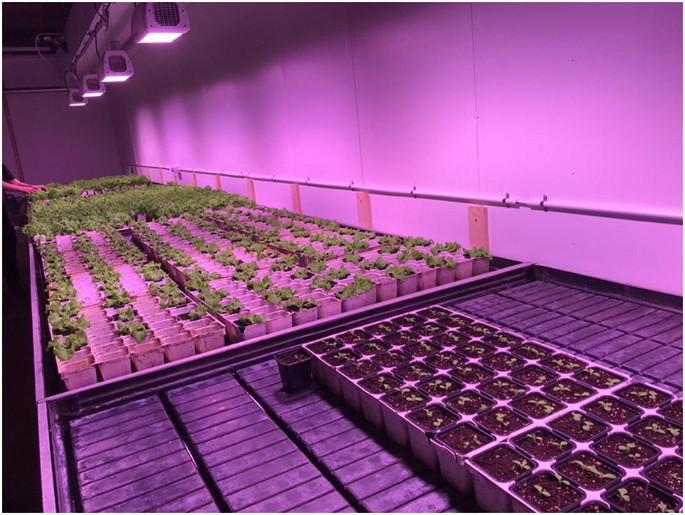
https://link.springer.com/article/10.1007/s12571-020-01045-8#citeas
Overview
Nature-based solution
- Community gardens and allotments
- Other
Key challenges
- Green space, habitats and biodiversity (SDG 15)
- Green space creation and/or management
- Economic development and employment (SDG 8)
- Employment/job creation
Focus
Creation of new green areas
Project objectives
The project aims to support green spaces, local gardens, improve recycling, a green path will be drawn from the centre to Forum Högdalen (in the business area) to Högodalstoppar. The aim is also to create sustainable jobs for the unemployed and to improve integration of the business area/and the centre (Ref. 2, 5).
Implementation activities
As a first step, built a fence of old pallets and other waste material has been built (with the aim of keep hares and deer at a distance). The next step is to fill the surface with pallet racks and e.g. soil, and start the urban farming. (Ref. 1)
A user-agreement has in 2015 been concluded between the (urban) farmers and the City of Stockholm. The first cultivation will house around 20 urban farmers. Each of the 20 urban farmers will have a surface of two pallets, as well as a common cultivation area. The Park Management Årsta-Vantör (sv. Parkförvaltningen Årsta-Vantör) will support the project with efforts such as contributing with soil, pallets, and a 1-cubic water tank. (Ref. 1)
The aim of the indoor farm in terms of labour was to create jobs in the transition between publicly funded support measures and real jobs in semi-industrial plants. “It’s not the farm in itself but the activities that are created around the farm” (Ref. 5)
Main beneficiaries
- Researchers/University
- Citizens or community groups
- Marginalized groups: Socio-economically disadvantaged populations (e.g. low-income households, unemployed)
Governance
Management set-up
- Co-governance with government and non-government actors
Type of initiating organisation
- Private sector/corporate actor/company
Participatory approaches/ community involvement
- Co-planning (e.g. stakeholder workshops, focus groups, participatory mapping)
Details on the roles of the organisations involved in the project
Cleantech Högdalen, Park Administration Årsta-Vantör (Parkförvaltningen Årsta-Vantör), New Rågsved Folketshus Association and residents in Högdalen start a new urban cultivation (supported by the city of Stockholm). Also, there was a dialogue with the residents, who showed a great interest in starting up urban farming. (Ref. 1)
The flows of local resources and circular economies are to be tested by researchers from LKTH Industrial Ecology (Industriell Ekologi). (Ref. 2)
Project implemented in response to ...
... an EU policy or strategy?
Unknown
... a national policy or strategy?
Unknown
... a local policy or strategy?
Unknown
Financing
Total cost
€100,000 - €500,000
Source(s) of funding
- Public national budget
- Corporate investment
- Other
Type of funding
- Direct funding (grants, subsidies, or self-financed projects by private entities)
Non-financial contribution
Unknown
Impacts and Monitoring
Environmental impacts
- Green space and habitat
- Increased green space area
Economic impacts
- Increase of green jobs (e.g. paid employment positions)
Socio-cultural impacts
- Unknown
Type of reported impacts
Achieved impacts
Presence of formal monitoring system
Unknown
Presence of indicators used in reporting
No evidence in public records
Presence of monitoring/ evaluation reports
No evidence in public records
Availability of a web-based monitoring tool
No
References
Ref. 1. Cleantech Högdalen (2015) Första stadsodlingen i Högdalen har startat! Stockholm, The Capital of Scandinavia. Information obtained: 2017-06-09. Source: Source link [Website not available in 2020]
Ref. 2. Cleantech Högdalen (n.d.) Miljöteknik och gröna projekt. Stockholm, The Capital of Scandinavia. Information obtained: 2017-06-09. Source: Source link [Accessed on 24 August 2020]
Ref. 3. Cleantech Högdalen (2017) Odlande stadsbasarer får stöd av Vinnova. Stockholm, The Capital of Scandinavia. Information obtained: 2017-06-09. Source: Source link [Website not available in 2020]
Ref. 4. Vinnova (2017) Från slit och släng till återanvändning av byggmaterial i industriell skala. Pressmeddelande. Information obtained: 2017-06-09. Source: Source link [Accessed on 24 August 2020]
Ref 5. Milestad, R., Carlsson-Kanyama, A. & Schaffer, C. (2020) The Högdalen urban farm: a real case assessment of sustainability attributes. Food Security. Source: Source link [Accessed on 24 August 2020]
Ref. 6. Odlandestadsbasarer (n.d.) Odlande stadsbasarer får stöd av Vinnova. Odlande stadsbasarer: hållbar arbetsintensiv urban odling. Source: Source link [Accessed on 24 August 2020]
Ref. 7. Citycon (n.d.) Hi-Tech Underground Farming. Source: Source link [Accessed on 24 August 2020]
Ref. 2. Cleantech Högdalen (n.d.) Miljöteknik och gröna projekt. Stockholm, The Capital of Scandinavia. Information obtained: 2017-06-09. Source: Source link [Accessed on 24 August 2020]
Ref. 3. Cleantech Högdalen (2017) Odlande stadsbasarer får stöd av Vinnova. Stockholm, The Capital of Scandinavia. Information obtained: 2017-06-09. Source: Source link [Website not available in 2020]
Ref. 4. Vinnova (2017) Från slit och släng till återanvändning av byggmaterial i industriell skala. Pressmeddelande. Information obtained: 2017-06-09. Source: Source link [Accessed on 24 August 2020]
Ref 5. Milestad, R., Carlsson-Kanyama, A. & Schaffer, C. (2020) The Högdalen urban farm: a real case assessment of sustainability attributes. Food Security. Source: Source link [Accessed on 24 August 2020]
Ref. 6. Odlandestadsbasarer (n.d.) Odlande stadsbasarer får stöd av Vinnova. Odlande stadsbasarer: hållbar arbetsintensiv urban odling. Source: Source link [Accessed on 24 August 2020]
Ref. 7. Citycon (n.d.) Hi-Tech Underground Farming. Source: Source link [Accessed on 24 August 2020]
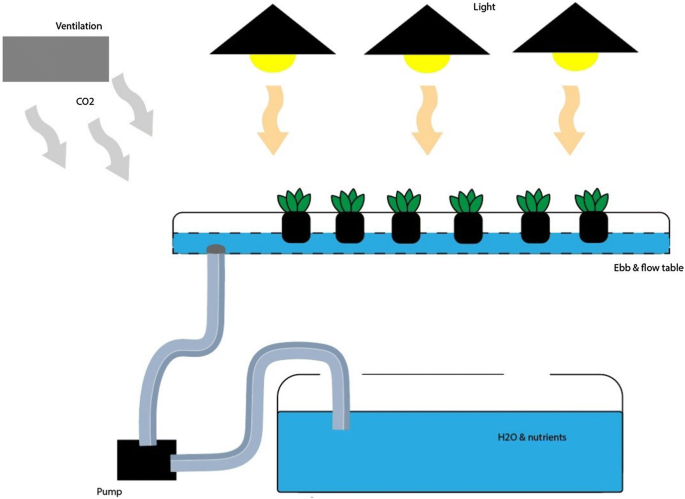
https://link.springer.com/article/10.1007/s12571-020-01045-8#citeas