

Last updated: October 2021
Creation of a green roof with ecological biodiversity, a place for informal meetings and recreational purposes. Is part of the Sveavägen 44 project in central Stockholm, where office space is converted into a modern and flexible meeting place with the environment and sustainability in focus. (Ref 1, 2, 3)
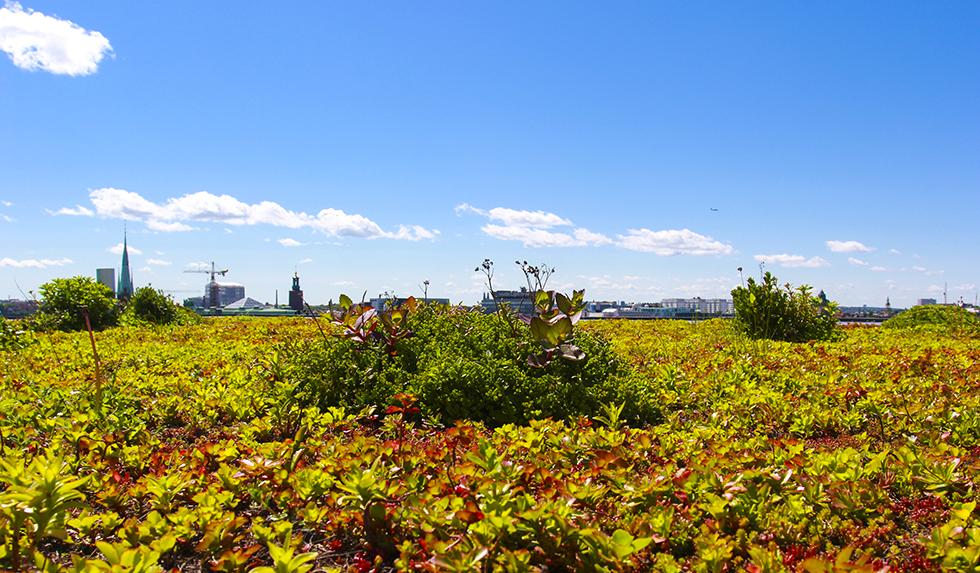
Urban Green (2015). #1 Sveavägen 44. Taklandskap. (Ref. 1)
Overview
Nature-based solution
- Nature on buildings (external)
- Green roofs
Key challenges
- Green space, habitats and biodiversity (SDG 15)
- Habitat and biodiversity conservation
- Green space creation and/or management
- Social justice, cohesion and equity (SDG 10)
- Social justice and equity
- Social interaction
- Health and well-being (SDG 3)
- Creation of opportunities for recreation
Focus
Creation of new green areas
Project objectives
The goals were to create a roof park with great ecological biodiversity (including both plants and insects). The goal was also to create a park with a natural biotope that would take care of itself (with little need for maintenance). Furthermore, the park is to be used for recreational purposes, with space for walks and meetings. (Ref. 2, 5)
"Additionally, Roofscape Sveavägen aims to convert the office space into a modern meeting place integrated with the environment. It serves also as a place for recreational activities with spaces for walks. The rooftop spread the message of health and well-being, social justice, cohesion and equity. " (Ref. 9)
Implementation activities
Over 70 different species are included from three suitable natural habitats that were chosen for the roof landscape, including e.g. shrubland (sv. Krattskog). (Ref. 6, 1)
"The plants come from typically wind-swept, dry and exposed locations in the landscape; steep slopes in the mountains; the Outer Archipelago or barren dry meadows on Gotland. The only care over the year is a mowing in the late summer after the seed spread. No watering except the natural rain...Roofscape Sveavägen is a place of diversification (including both plant communities and insects) in order to create a natural biotope that would take care of itself." (Ref. 9)
A walking trail has been created as well as places for people to sit (for recreational purposes), the transparent wood structures (sv. träribbverk) which have been placed are used for the purpose of creating space, protecting from wind and also protecting certain parts of the nature in the park and the small birds and bumblebees that live there. (Ref 1)
Biodiversity conservation or restoration-focused activities
Biodiversity conservation:
- Protect and enhance urban habitats
- Preserve and strengthen existing habitats and ecosystems
- Create new habitats
Main beneficiaries
- Private sector/Corporate/Company
- Citizens or community groups
Governance
Management set-up
- Led by non-government actors
Type of initiating organisation
- Private sector/corporate actor/company
Participatory approaches/ community involvement
- Unknown
Details on the roles of the organisations involved in the project
Non-government actors: The project developer was the company Diligentia, the builders/developers were the company Skanska. The project originator was a landscape architect, constructors for the project were URBAN GREEN. (Ref 1)
Project implemented in response to ...
... an EU policy or strategy?
Unknown
... a national policy or strategy?
Unknown
... a local policy or strategy?
Unknown
Financing
Total cost
Unknown
Source(s) of funding
- Corporate investment
Type of funding
- Unknown
Non-financial contribution
Unknown
Impacts and Monitoring
Environmental impacts
- Green space and habitat
- Promotion of naturalistic styles of landscape design for urban development
- Increased green space area
- Increased number of species present
Economic impacts
- Unknown
Socio-cultural impacts
- Social justice and cohesion
- Increased opportunities for social interaction
- Health and wellbeing
- Gain in activities for recreation and exercise
Type of reported impacts
Achieved impacts
Presence of formal monitoring system
Yes
Presence of indicators used in reporting
No evidence in public records
Presence of monitoring/ evaluation reports
Yes
Availability of a web-based monitoring tool
No evidence in public records
References
Ref. 1. Urban Green (2015). #1 Sveavägen 44. Taklandskap. Information obtained: 2017-06-06. Source: Source link [Accessed on 17.8.2020]
Ref. 2. Skandia Fastigheter (n.d.) Takpark med ekologisk mångfald. Sveavägen 44 - Framtidens kontor. Information obtained: 2017-06-06. Source: Source link [Accessed on 17.8.2020]
Ref. 3. Skanska (n.d.) Sveavägen 44 - Från 40-talsfastighet till framtidskontor. Om projektet. Information obtained: 2017-06-06. Source: Source link [Accessed on 17.8.2020]
Ref. 4. Skandia fastigheter (2014) Diligentia återinviger Sveavägen 44 – en hållbar kontorsfastighet med takpark mitt i Stockholm city. Pressmeddelande. Information obtained: 2017-06-06. Source: Source link [Accessed on 17.8.2020]
Ref. 5. Fastighetssverige (2013) Så här blir Diligentias takpark. Bygg/Arkitektur. Information obtained: 2017-06-06. Source: Source link [Accessed on 17.8.2020]
Ref. 6. Paju, J. (2015) Taklandskapet - Ett naturligt förhållningssätt till arkitektur. Uppsala. Source: Source link [Accessed on 17.8.2020]
Ref. 7. Skandia (n.d.) Prisbelönat hållbarhetsarbete. Hållbarhet. Skandia fastigheter. Information obtained: 2017-06-06. Source: Source link [Accessed on 17.8.2020]
Ref. 8. Skanska (2011) Review of 2011 EUR version. Information obtained: 2017-06-08. Source: Source link [Accessed on 17.8.2020]
Ref. 9. Urban Green Train (2020) ROOFSCAPE SVEAVÄGEN. URL: Source link [Accessed on 17.8.2020]
Ref. 2. Skandia Fastigheter (n.d.) Takpark med ekologisk mångfald. Sveavägen 44 - Framtidens kontor. Information obtained: 2017-06-06. Source: Source link [Accessed on 17.8.2020]
Ref. 3. Skanska (n.d.) Sveavägen 44 - Från 40-talsfastighet till framtidskontor. Om projektet. Information obtained: 2017-06-06. Source: Source link [Accessed on 17.8.2020]
Ref. 4. Skandia fastigheter (2014) Diligentia återinviger Sveavägen 44 – en hållbar kontorsfastighet med takpark mitt i Stockholm city. Pressmeddelande. Information obtained: 2017-06-06. Source: Source link [Accessed on 17.8.2020]
Ref. 5. Fastighetssverige (2013) Så här blir Diligentias takpark. Bygg/Arkitektur. Information obtained: 2017-06-06. Source: Source link [Accessed on 17.8.2020]
Ref. 6. Paju, J. (2015) Taklandskapet - Ett naturligt förhållningssätt till arkitektur. Uppsala. Source: Source link [Accessed on 17.8.2020]
Ref. 7. Skandia (n.d.) Prisbelönat hållbarhetsarbete. Hållbarhet. Skandia fastigheter. Information obtained: 2017-06-06. Source: Source link [Accessed on 17.8.2020]
Ref. 8. Skanska (2011) Review of 2011 EUR version. Information obtained: 2017-06-08. Source: Source link [Accessed on 17.8.2020]
Ref. 9. Urban Green Train (2020) ROOFSCAPE SVEAVÄGEN. URL: Source link [Accessed on 17.8.2020]

Urban Green (2015). #1 Sveavägen 44. Taklandskap. (Ref. 1)