, Sweden
City population: 1602639
Duration: 2015 – 2017
Implementation status: Completed
Scale: Micro-scale: District/neighbourhood level, Sub-microscale: Street scale (including buildings)
Project area: unknown
Type of area: Unknown
Last updated: October 2021

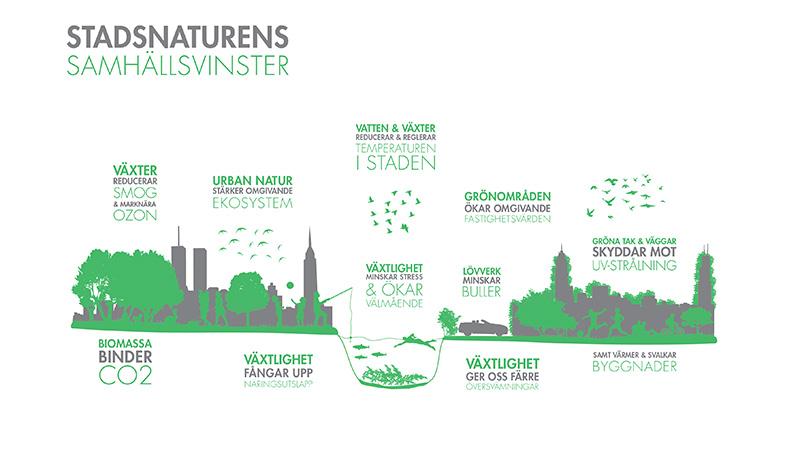
“The purpose of the C/O City project is to highlight the value of nature in the city, create planning documentation and develop concrete solutions that facilitate work with ecosystem services in urban planning.” The three phases of the project were to develop tools and methods, verify and adjust the tools and make them available to key actors. The final phase was to test the tools/methods and evaluate them. (Note: the starting point of the project was the environmental profiling of the Royal Seaport; i.e. Norra Djurgårdsstaden). Now as the project is completed, the results and lessons are continued by a non-profit association. The purpose of the association is to draw attention to and highlight the value of urban ecosystem services and contribute to increased knowledge in the public construction sector. (Ref. 1, 7, 8)
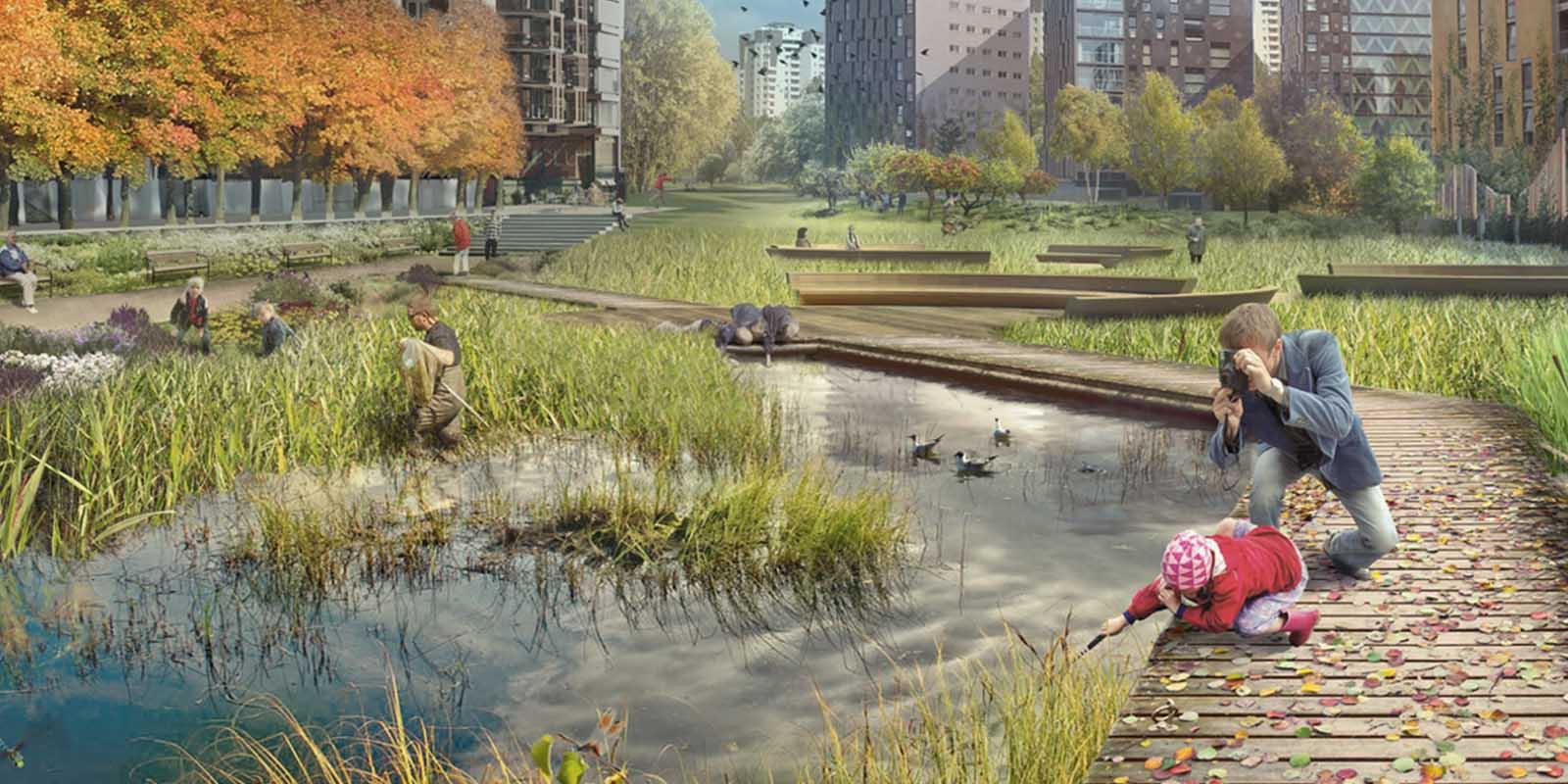
C/O City - how future teen spaces will look like
https://www.hallbarstad.se/cocity/c-o-city-har-blivit-en-medlemsforening/

Overview

Nature-based solution

  • Nature on buildings (external)
  • Green roofs
  • Green walls or facades
  • Parks and urban forests
  • Pocket parks/neighbourhood green spaces

Key challenges

  • Green space, habitats and biodiversity (SDG 15)
  • Green space creation and/or management
  • Regeneration, land-use and urban development
  • Promote natural styles of landscape design for urban development
  • Social justice, cohesion and equity (SDG 10)
  • Environmental education

Focus

Knowledge creation and awareness raising, Strategy, plan or policy development

Project objectives

“The purpose of C/O City is to create tools for assessment, planning and use of ecosystem services in urban development to maximise benefits for society. The project is a response to the challenge “Sustainable, Attractive Cities” within Vinnova’s “Challenge-driven Innovation” programme. The vision was to raise awareness of the potential of ecosystem services to increase the resilience of cities while contributing to world-class sustainable urban development in Sweden. The goals were to make visible and quantify urban ecosystem services, to develop concrete planning and monitoring tools, and to produce data to demonstrate the connections between urban ecosystem services and resilience.” (Ref. 2) Also, the goal of the sub-project "The Biotope Area Factor (for e.g. Norra Djurgården, Stockholm Royal Seaport, was developed to identify ecosystem services and to encourage the strengthening of local ecosystems and creation of climate-adapted courtyards with high social values." (Ref. 2)

Implementation activities

Sub-projects such as The biotope Area Factor (BAF) which has been mentioned, has been developed in line with the requirements formulated in the sustainability programme for the Stockholm Royal Seaport (sv. Norra Djurgårdsstaden). A cooperative pilot study has been done by Stockholm University, KTH Royal Institute of Technology, Stockholm, and the C/O City project (called Pollination Potential in The Stockholm Royal Seaport) which "illustrate importance of taking into account the placement of city blocks with resources for pollinators." Furthermore, the intervention has evaluated various solutions for green roofs and walls to see how they influence moisture protection in the building envelope and energy consumption, through e.g. interviews. Also, developed a method for monitoring ecosystem service functions, (inspired by the Cities Biodiversity Index (CBI)). (Ref. 2) The purpose of the C / O City project is to highlight and make visible the value of nature in the city, create planning documents and develop concrete solutions that make it easier for various societal actors to work with ecosystem services in urban planning. The long-term goal is for ecosystem services to become a natural and integrated part of planning in all community building. The values ​​developed within C / O City will form an important basis for both builders and architects to be able to calculate the benefits and gains from new construction and restoration. The C / O City project has been completed, but the results and lessons are continued by a non-profit association. The purpose of the association is to draw attention to and highlight the value of urban ecosystem services and contribute to increased knowledge in the public construction sector. (Ref 7, 8)

Main beneficiaries

  • Local government/Municipality
  • Other

Governance

Management set-up

  • Co-governance with government and non-government actors

Type of initiating organisation

  • Local government/municipality

Participatory approaches/ community involvement

  • Co-planning (e.g. stakeholder workshops, focus groups, participatory mapping)

Details on the roles of the organisations involved in the project

"The project is a constellation of 13 actors from different organizations and industries in environmental and health issues, planning, architecture, construction, technology and research." (Ref 1) "The city of Stockholm was project owner, with partners e.g. NCC, the city of Malmö, SP Technical Research Institute of Sweden, White Architects, WSP, U&We, Albaeco, Esam and Ekokultur." (Ref. 2, 1) "The C / O City project has been completed, but the results and lessons are continued by a non-profit association." (Ref. 7)

Project implemented in response to ...

... an EU policy or strategy? Yes (The project is a response to the challenge “Sustainable, Attractive Cities” within Vinnova’s “Challenge-driven Innovation” programme. (Ref. 2) The societal challenges which are basis for e.g. the EU's strategy 2020 and European Innovation Union, are also identified by Vinnova (e.g. Vinnova has identified four societal challenges in which Sweden’s prospects for internationally leading innovativeness are considered good. These are: Information society 3.0, Sustainable Attractive Cities, Future Healthcare and Competitive Production.") (Ref. 3) )
... a national policy or strategy? Unknown
... a local policy or strategy? Yes (The sub-project 'The biotope Area Factor (BAF)' has been developed in line with the requirements formulated in the sustainability programme for the Stockholm Royal Seaport (sv. Norra Djurgårdsstaden). (Ref. 2))

Financing

Total cost

More than €4,000,000

Source(s) of funding

  • Public national budget
  • Public local authority budget
  • Corporate investment

Type of funding

  • Direct funding (grants, subsidies, or self-financed projects by private entities)

Non-financial contribution

Type of non-financial contribution
  • Provision of other services
Who provided the non-financial contribution?
  • Other

Impacts and Monitoring

Environmental impacts

  • Climate change
  • Lowered local temperature
  • Environmental quality
  • Reduced noise exposure
  • Water management and blue areas
  • Improved stormwater management
  • Green space and habitat
  • Promotion of naturalistic styles of landscape design for urban development
  • Increased green space area

Economic impacts

  • Unknown

Socio-cultural impacts

  • Unknown

Type of reported impacts

Expected impacts, No impacts reported

Presence of formal monitoring system

Yes

Presence of indicators used in reporting

Yes

Presence of monitoring/ evaluation reports

Yes

Availability of a web-based monitoring tool

Yes

References

C/O City Plans
https://translate.google.com/translate?hl=en&sl=sv&u=https://www.hallbarstad.se/cocity/co-city-skapar-levande-stader/&prev=search&pto=aue