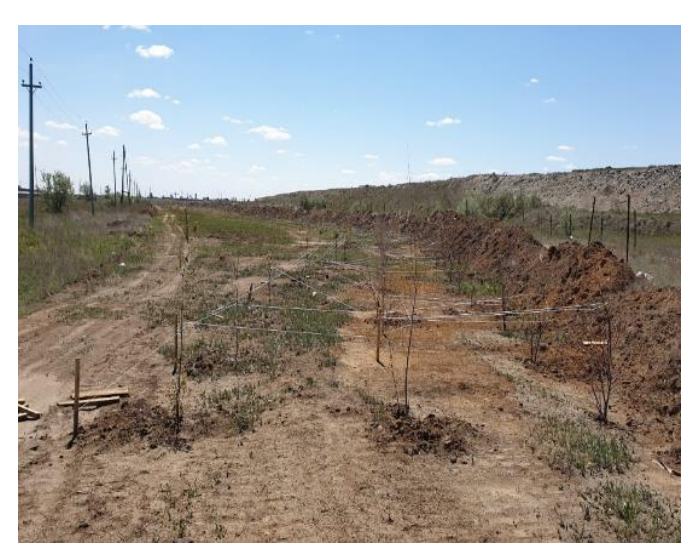
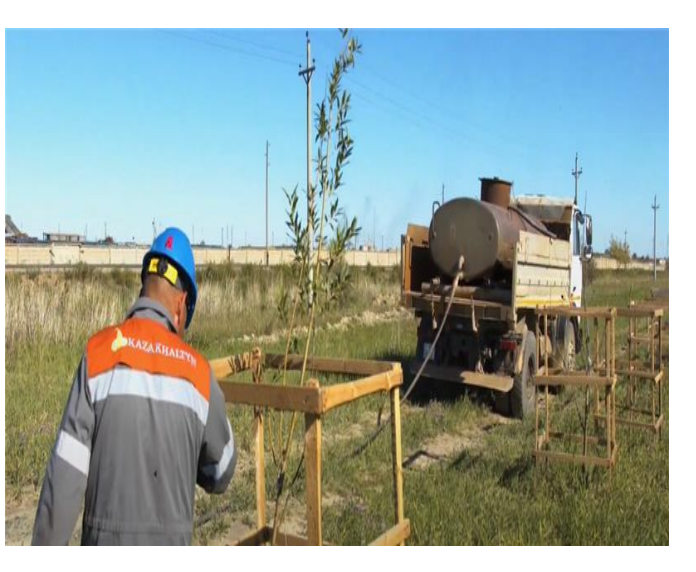
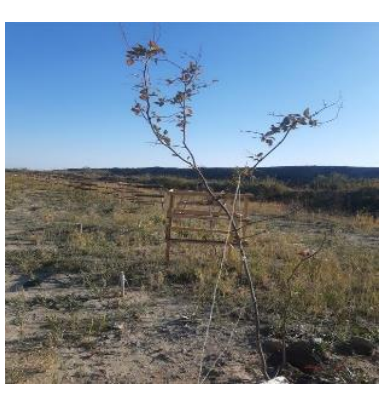
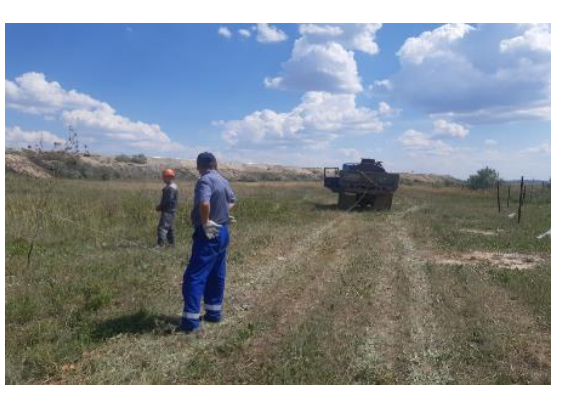
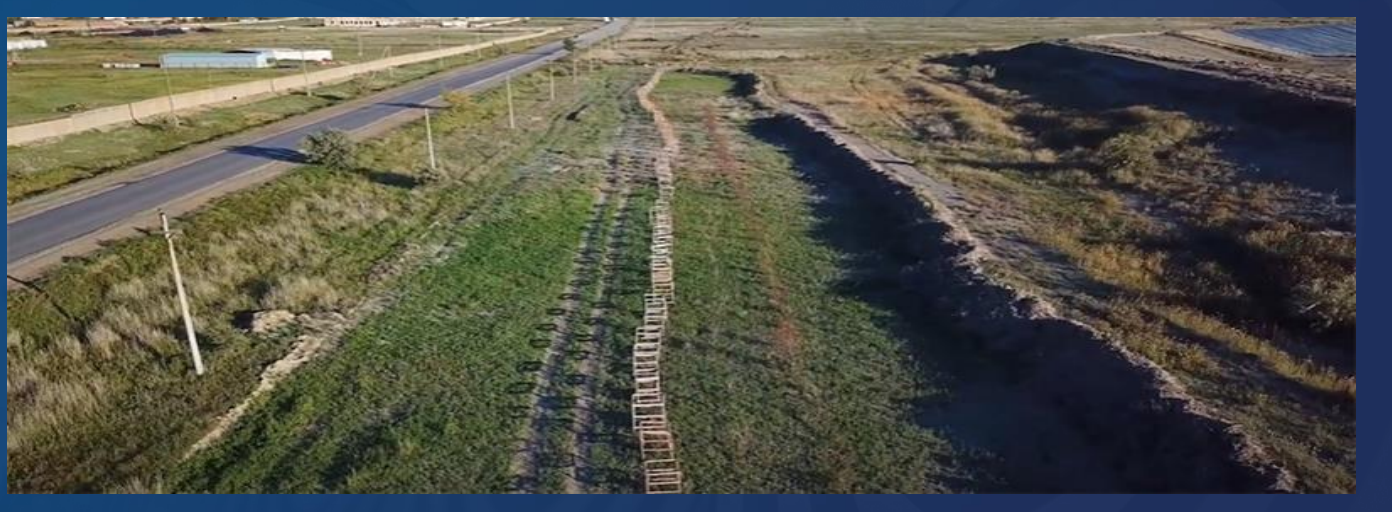
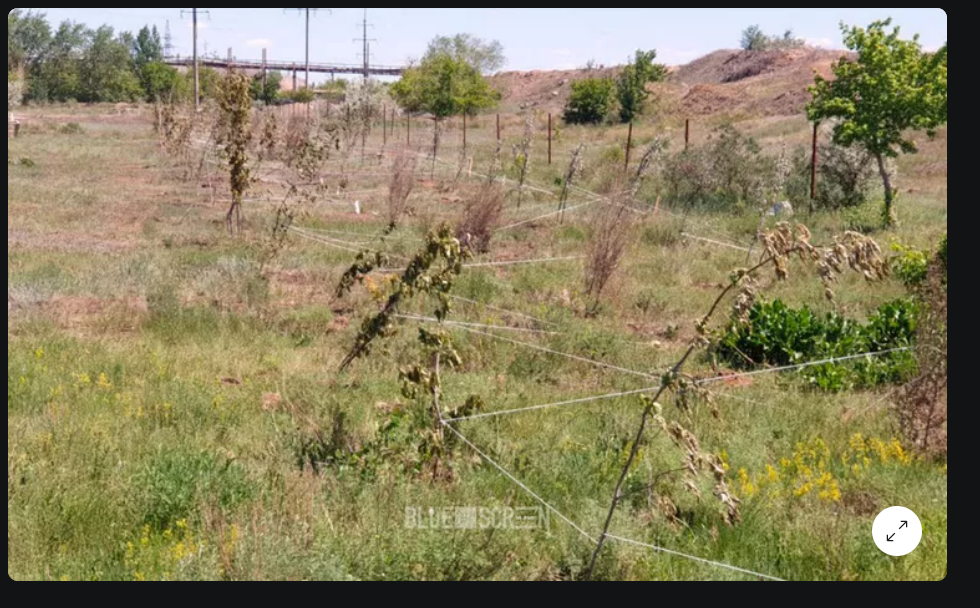
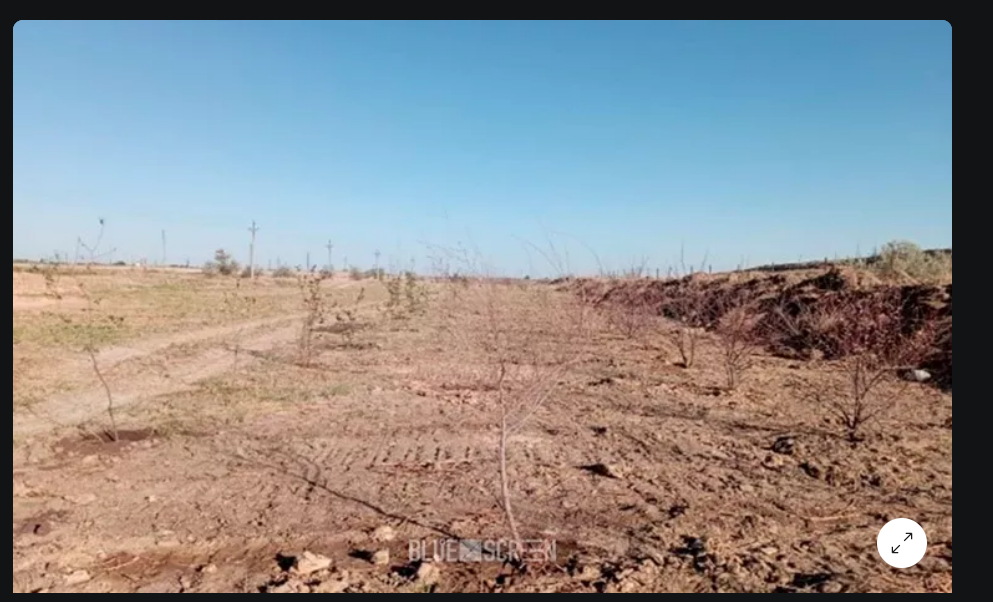
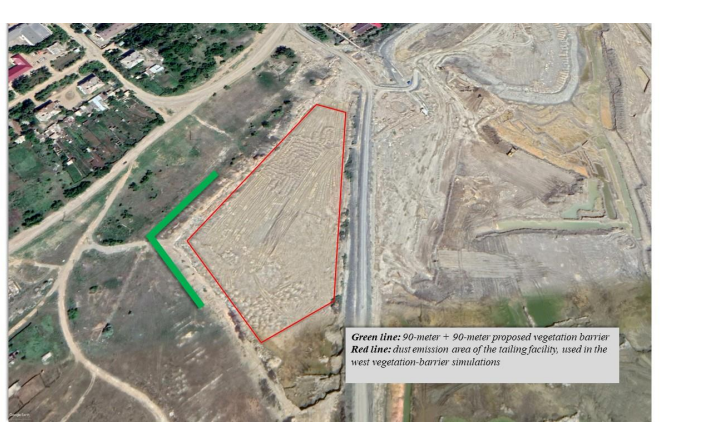
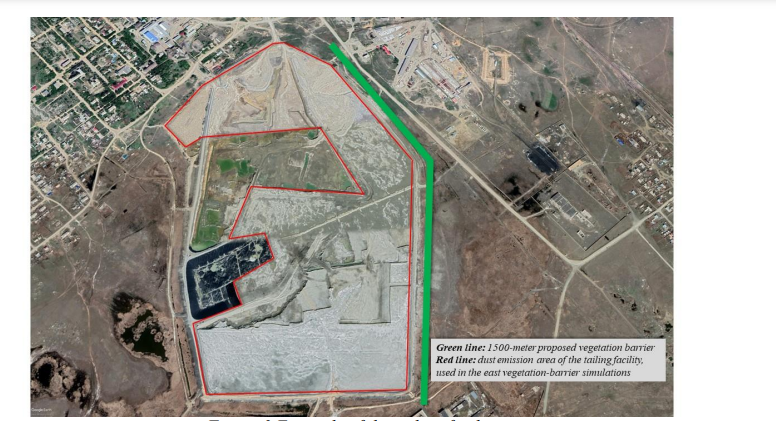
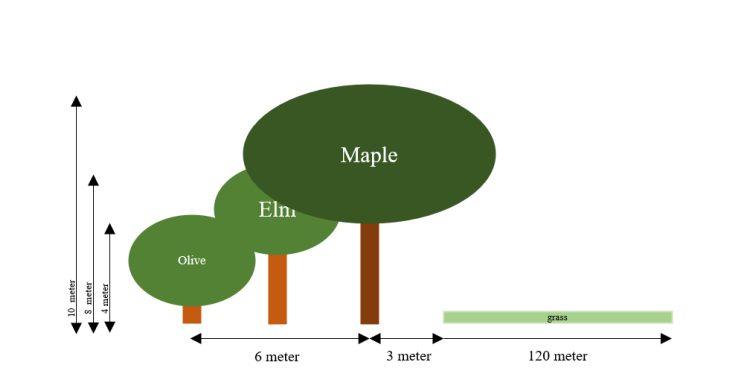
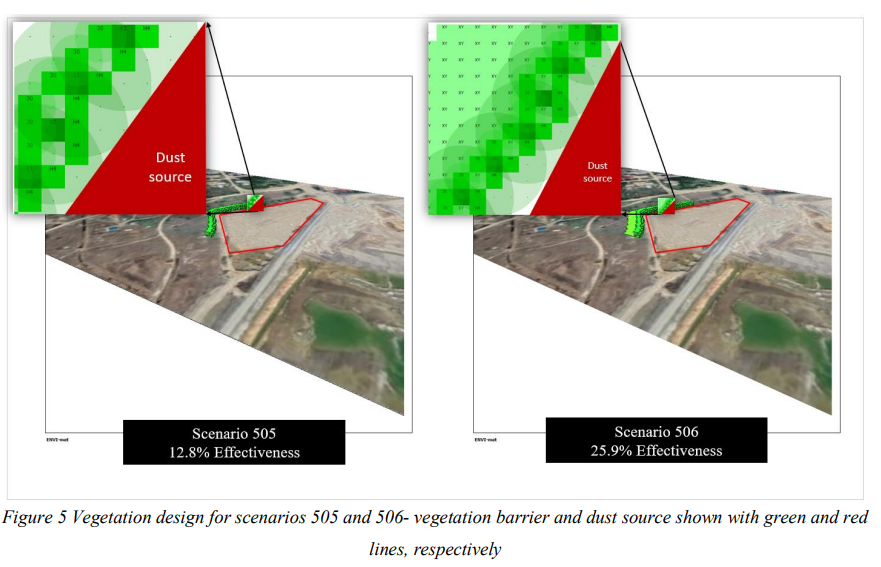
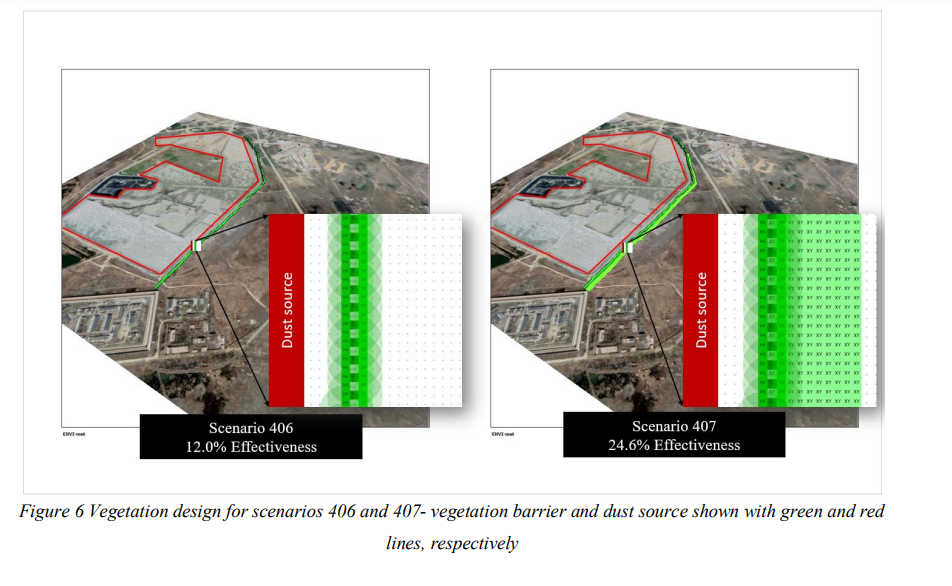
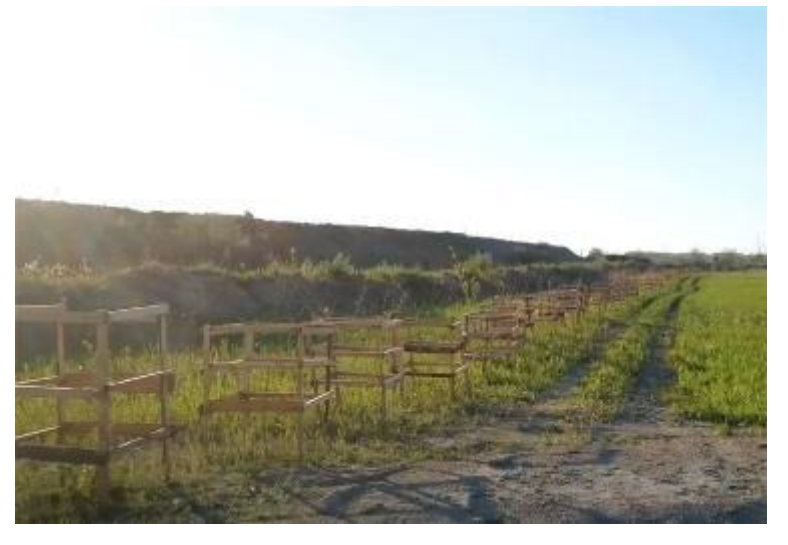
The Sustainable Kazakhstan Research Institute (SKRI) at Narxoz University has developed "phytocapture," an innovative solution to deal with airborne dust. A phytocapture barrier is a chain of green spaces around a plant or mine, precisely calculated in height and width, to capture dust and organic compounds from production. This solution can capture 40% of particulate matter, including fine particulate matter, which otherwise settle in people's lungs, causing pulmonary and cardiovascular diseases. (1,6) To demonstrate the solution's applicability, SKRI proposed a phytobarrier project to AK Altynalmas JSC for the Aksu Goldmine. The Aksu field was founded in 1939, and soon the miners' settlement was formed around it. The formation of the tailings pond is closely connected with the production process, which began in 1951 and until now is produced by feeding through the pulp line the pulp from the gold concentration plant of the mill. The existing measures to reduce the negative impacts of tailing management facilities, such as irrigation of technological roads of the tailing management facility, as well as compliance with the above-ground stockpiles in the sections, do not fully solve this problem (5). To tackle this issue, the proposed phytocapture project utilized 3D computer modelling and digital technology to design a vegetation barrier near the tailing dump on both sides and resulted in the plantation of 1,400 seedlings of elm, silver sucker, and maple at a distance of 1.5 kilometers. The project was implemented at two production sites of the company in 2022 and is also being implemented in other projects. In 2022, the joint project was recognized by the United Nations Economic Commission for Europe (ECE) as a best practice (1,6).
Overview
Nature-based solution
- Parks and urban forests
- Green corridors and green belts
Key challenges
- Environmental quality
- Air quality improvement
- Green space, habitats and biodiversity (SDG 15)
- Green space creation and/or management
- Health and well-being (SDG 3)
- Improving physical health
- Inclusive and effective governance (SDG 16)
- Effective management
Focus
Project objectives
Implementation activities
Main beneficiaries
- Private sector/Corporate/Company
- Researchers/University
- Citizens or community groups
Governance
Management set-up
- Led by non-government actors
Type of initiating organisation
- Researchers/university
- Private sector/corporate actor/company
Participatory approaches/ community involvement
- Unknown
Details on the roles of the organisations involved in the project
Project implemented in response to ...
Financing
Total cost
Source(s) of funding
- Corporate investment
Type of funding
- Direct funding (grants, subsidies, or self-financed projects by private entities)
Non-financial contribution
Impacts and Monitoring
Environmental impacts
- Environmental quality
- Improved air quality
- Green space and habitat
- Increased green space area
- Increased number of species present
Economic impacts
- Unknown
Socio-cultural impacts
- Health and wellbeing
- Improved physical health
- Education
- Increased support for education and scientific research
- Increased awareness of NBS and their benefits
Type of reported impacts
Presence of formal monitoring system
Presence of indicators used in reporting
Presence of monitoring/ evaluation reports
Availability of a web-based monitoring tool
References
2. Blue Screen. (2022). How to plant a tree digitally. Available at: Source link (Accessed: March 5, 2023)
3. DKN World News. (2022). 3D modeling solved the issue of phytocapture of dust - an eco-project in the Akmola region. Available at: Source link (Accessed: March 5, 2023)
4. 716 KZ Informational Portal. (2022). Seedlings were planted in the Akmola region using digital technologies. Available at: https://716.kz/news/18213-Source link (Accessed: March 5, 2023)
5. JSC AK Altynalmas. (2022). 3D Modelling Solved the issue of Phytocapture Dust- An Ecoproject in the Akmola Region. (Youtube). Available at: Source link (Accessed: March 5, 2023)
6. Brendan Duprey. (2022). Phytocature Global Applications. (Youtube). Available at: Source link (Accessed: March 5, 2023)
7. Narxoz University. (2023). Narxoz University: Vegetative barriers can reduce air pollution by as much as 40%. Available at: Source link (Accessed: March 9, 2023)
8. Duprey B. and Sharifi H. (2022) Phyto Capture Modeling Over Kvartsitka Tailing Storage Facility Using Envi-Met Software. Narxoz University, SKRI.