

Last updated: October 2021
Initially the park was created in 1903 as a summer residence for the royal family and had a no-visitor’s policy. For over 40 years the park collected 821 trees, shrub and, grass species from all over the world on less than 100 ha. After the estate was given back to the successors of Tsar Boris III, they partially donated the park to Sofia municipality and in 2013 the park-museum ‘Vrana’ was opened for visitors. Due to its rare species, well-preserved wilderness and historical significance, the park enjoys great interest from tourists as well as scientists as a biodiversity hotspot. (Ref 1)
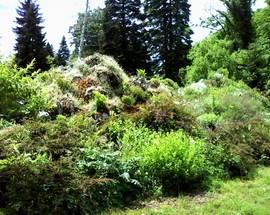
Vrana park rock garden
https://www.inyourpocket.com/sofia/vrana-park-museum_128221v
Overview
Nature-based solution
- Parks and urban forests
- Large urban parks or forests
- Botanical gardens
Key challenges
- Green space, habitats and biodiversity (SDG 15)
- Habitat and biodiversity restoration
- Habitat and biodiversity conservation
- Green space creation and/or management
- Social justice, cohesion and equity (SDG 10)
- Social interaction
- Health and well-being (SDG 3)
- Enabling opportunities for physical activity
- Creation of opportunities for recreation
- Economic development and employment (SDG 8)
- Tourism support
- Employment/job creation
- Cultural heritage and cultural diversity
- Preservation of natural heritage
- Protection of historic and cultural landscape/infrastructure
- Preservation of historic traditions
Focus
Maintenance and management of urban nature, Ecological restoration of ecosystems, Monitoring and maintenance of habitats and/or biodiversity
Project objectives
Goals defined by the NBS intervention were:
- Habitat and cultural preservation
- recreational and educational services
The opening of the park Vrana symbolizes the revitalisation tendency in the park sector in Sofia and a new policy direction of the municipality towards more green, liveable and qualitative public spaces. (Ref 1)
Implementation activities
the park is a protected area and has a count of how many plant species there are within its premises: 821 tree, shrub and grass species on less than 100 ha that provide habitat area for threatened mammals and birds, secures exceptional sites, natural resources, and biodiversity. It is set in the notarial deed itself that the park was given under the condition of opening it to the citizens, but with a regulated access. That is why when it was assigned to Parks and City Gardens in 2013 they came up with the idea of limited open days, defined walking routes, instructions, entry points to the green areas, so the visitors don’t destroy its value. Because, ultimately, the greatest values of the park are its plants and animals. Park’s management also recruits students and graduates in landscape architecture and experts in biology as tourist guides to add an educational value. The guides are able not only to report about the history of the place but also to engage the public in the topic of environment protection in urban areas. Other citizens can get involved through cleaning and tree-planting activities. (Ref 1, 2)
Biodiversity conservation or restoration-focused activities
Biodiversity conservation:
- Protect and enhance urban habitats
- Preserve and strengthen existing habitats and ecosystems
- Promote environmentally-sound development in and around protected areas
- Reduce negative impacts and avoid the alteration/damage of ecosystem
- Protect species
- Undertake specific measures to protect species
- Undertake specific measures to protect endangered species
- Undertake specific measures to protect valued species
- Means for conservation governance
- Manage biological resources for conservation and sustainable use
- Raise public awareness
- Public engagement
- Create and use scientific knowledge for conservation
Biodiversity restoration:
- Rehabilitate and restore damaged or destroyed ecosystems
- Public engagement
Main beneficiaries
- Non-government organisation/Civil Society
- Researchers/University
- Citizens or community groups
- Other
Governance
Management set-up
- Government-led
Type of initiating organisation
- Public sector institution
- Other
Participatory approaches/ community involvement
- Dissemination of information and education
- Joint implementation (e.g. tree planting)
Details on the roles of the organisations involved in the project
The municipal enterprise ‘Parks and City Gardens’ is the management body of the park. It is responsible for the maintenance of all big scale public parks, gardens and green areas in the capital and a certain budget is being assigned to it. The enterprise has the following specific duties: creation and maintenance of lawns, planting, digging and pruning of wood and shrub vegetation, planting and maintenance of flowers, cleaning alleys, playgrounds and green areas. (Ref 1)
Ferdinand Saxe-Coburg-Gotha bought the park and introduced its current design. Since 1908, when Ferdinand became tsar, Vrana is the tsar’s residence to this day. The park was partially donated to the city of Sofia by the decedents of Ferdinand Saxe-Coburg-Gotha in 2011 under the condition that it will be opened to the public (with controlled access). The municipal enterprise ‘Parks and City Gardens’ is responsible for maintaining the park. (Ref 1)
-The park distinguishes itself also by the cooperation with universities aiming not only at enhancing research activities but also providing educational services for its visitors. Some areas of the park have are protected (restricted) and is open exclusively to scientist. Various studies from the Biological and Forestry University of Sofia are planned to be carried out in this area. (Ref 1)
Project implemented in response to ...
... an EU policy or strategy?
Unknown
... a national policy or strategy?
Yes
(The conservation of wildlife is regulated in several legal documents such as the Environmental Protection Act, the Biodiversity Act, the Protected Areas Act, the Hunting and Game Conservation Act, and the Birds and Habitats Directives of the European Union. These form the regulatory framework of the park museum Vrana. (Ref 1))
... a local policy or strategy?
Yes
(After a degradation period in the maintenance of park areas between 1989 and 2010 the city starts investing again in this sector and institutionalized its commitment by introducing the municipal enterprise ‘Parks and urban gardens’ in 2011. (Ref 1) )
Financing
Total cost
Unknown
Source(s) of funding
- Public local authority budget
- Other
Type of funding
- Direct funding (grants, subsidies, or self-financed projects by private entities)
Non-financial contribution
Type of non-financial contribution
- Provision of land
- Provision of labour
Who provided the non-financial contribution?
- Citizens (e.g. volunteering)
- Other
Impacts and Monitoring
Environmental impacts
- Water management and blue areas
- Enhanced protection and restoration of freshwater ecosystems
- Green space and habitat
- Promotion of naturalistic styles of landscape design for urban development
- Increased number of protection areas
- Increased green space area
- Increased conservation or restoration of ecosystems
- Increase in protected green space areas
- Reduced biodiversity loss
- Increased number of species present
- Increased protection of threatened species
Economic impacts
- Unknown
- Increase of green jobs (e.g. paid employment positions)
- More sustainable tourism
- Generation of income from NBS
- Other
Socio-cultural impacts
- Social justice and cohesion
- Improved access to urban green space
- Increased opportunities for social interaction
- Health and wellbeing
- Improved physical health
- Gain in activities for recreation and exercise
- Cultural heritage and sense of place
- Improvement in people’s connection to nature
- Protection of natural heritage
- Protection of historic and cultural landscape / infrastructure
- Increased sense of place identity, memory and belonging
- Increased awareness of flora and fauna as culturally and historically meaningful
- Increased appreciation for natural spaces
- Education
- Increased support for education and scientific research
- Increased knowledge of locals about local nature
- Increased awareness of NBS and their benefits
Type of reported impacts
Achieved impacts
Presence of formal monitoring system
Unknown
Presence of indicators used in reporting
No evidence in public records
Presence of monitoring/ evaluation reports
No evidence in public records
Availability of a web-based monitoring tool
No evidence in public records
References
Ref.1. NATURVATION – Case Study Working Paper Sofia. (2018).
Ref. 2. Парк Врана (2020) официална страница Source: Source link [Accessed on 9th September 2020]
Ref. 3. KNTT (n.d.) Park museum Vrana - Sofia. Source: Source link [Accessed on 9th September 2020]
Ref. 4. In Your Pocket (2020) Vrana Park-Museum. Source: Source link
Ref. 5. Парк Врана (2020) парк-музей „Врана“ се отваря за граждани от 09.05.2020 г. Source: Source link [Accessed on 9th September 2020]
Ref. 2. Парк Врана (2020) официална страница Source: Source link [Accessed on 9th September 2020]
Ref. 3. KNTT (n.d.) Park museum Vrana - Sofia. Source: Source link [Accessed on 9th September 2020]
Ref. 4. In Your Pocket (2020) Vrana Park-Museum. Source: Source link
Ref. 5. Парк Врана (2020) парк-музей „Врана“ се отваря за граждани от 09.05.2020 г. Source: Source link [Accessed on 9th September 2020]
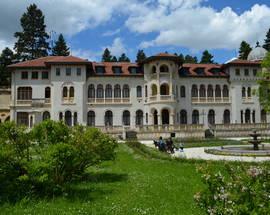
Vrana park palace
https://www.inyourpocket.com/sofia/vrana-park-museum_128221v