

Last updated: October 2021
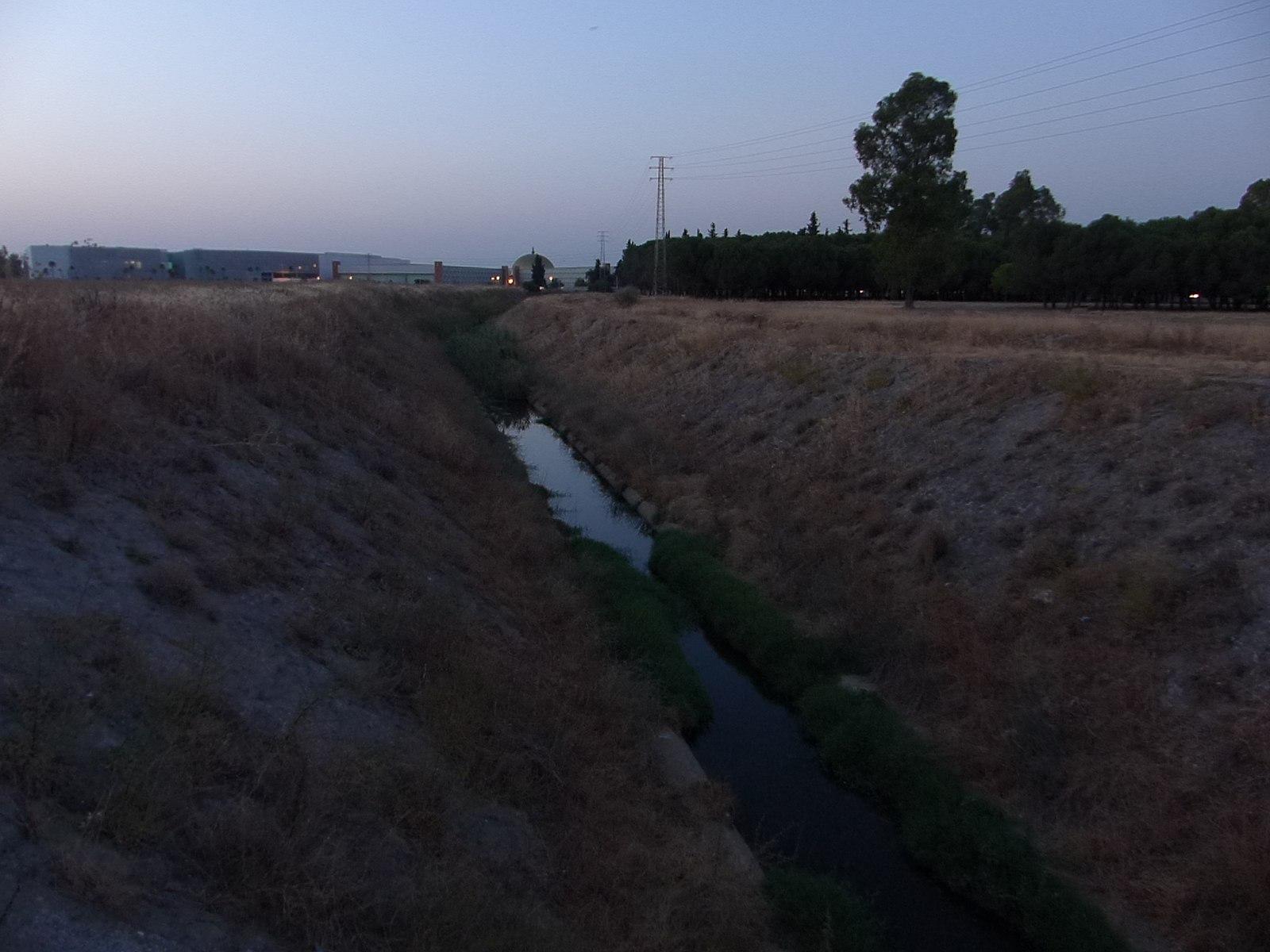
Rehabilitation project of the Ranillas stream and its surrounding area, as part of the larger city project to rehabilitate the waterways connected to the Guadalquivir River. The project included transforming the covered canal into a green corridor connecting the Tamarguillo Park with the Infanta Elena Park. It sought to build pedestrian walkways, leisure spaces, lengthen the bike lanes, increase tree cover, and restructure the covering of the canal. (Ref 1-6)
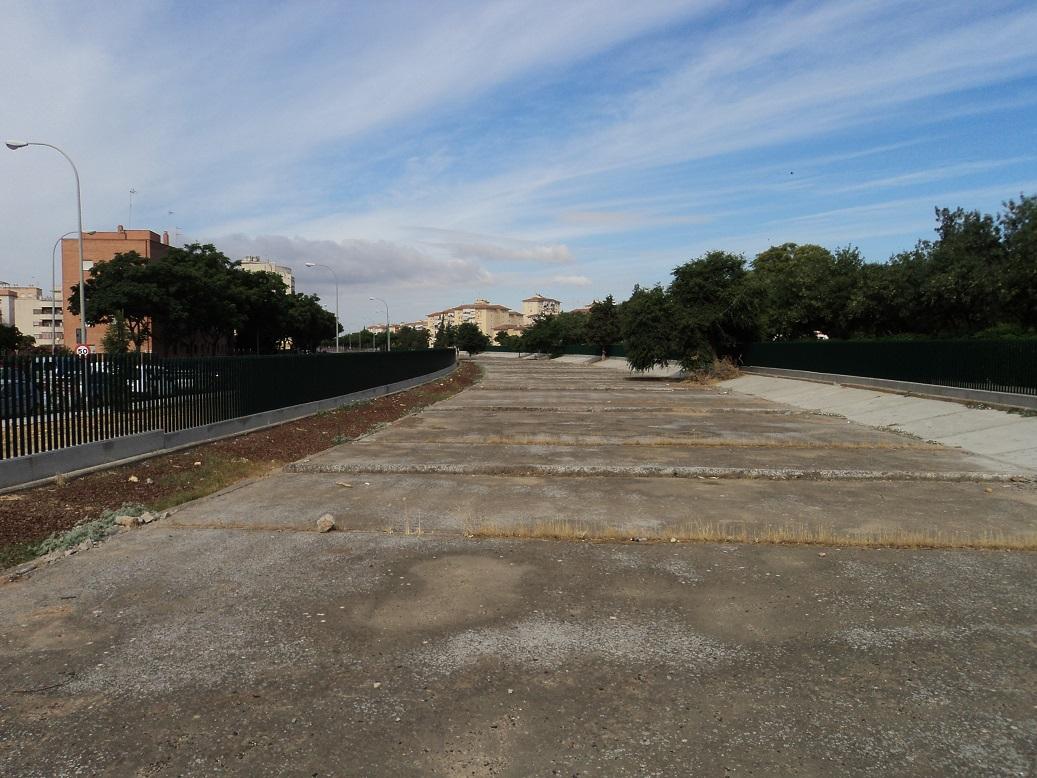
Source: Ref. 5
Overview
Nature-based solution
- Grey infrastructure featuring greens
- Alley or street trees and other street vegetation
- Institutional green space
- Blue infrastructure
- Riverbank/Lakeside greens
- Parks and urban forests
- Green corridors and green belts
- Community gardens and allotments
- Community gardens
- Rivers/streams/canals/estuaries
- Green areas for water management
- Other
Key challenges
- Water management (SDG 6)
- Flood protection
- Stormwater and rainfall management and storage
- Green space, habitats and biodiversity (SDG 15)
- Habitat and biodiversity restoration
- Green space creation and/or management
- Regeneration, land-use and urban development
- Promote natural styles of landscape design for urban development
- Health and well-being (SDG 3)
- Enabling opportunities for physical activity
- Creation of opportunities for recreation
- Sustainable consumption and production (SDG 12)
- Sustainable production
Focus
Creation of new green areas, Management and improved protection of rivers and other blue areas
Project objectives
- Establish a design solution that unites the hydraulogical aspects with the environmental requirements of the stream and its surroundings. (Ref 1)
- Maintain a slow hydrology cycle that adjusts to the uses and activities of the surroundings, as well as the compentency of the stream with the vegetative diversity of the canal. (Ref 1)
- Maximize the use of the ground between the canal covering and the roads. (Ref 1)
- Maintain the vegetation along the canal to reproduce the bio-diversity of the stream. (Ref 1)
- Build a green corridor connecting the Tamarguillo Park with the Infanta Elena Park, planting trees native to the area. (Ref 1)
- Connect the adjacent neighborhoods through the restructuring of the canal cover (pedestrian walkways) (Ref 1)
Implementation activities
Original canal cover built in 1964 (Ref 1)
2013- Proposal for reconstruction published (Ref. 2)
2014- Rehabilitation construction begins (manual clean-up of the area and analysis of the tree types in the zone) (Ref 3)
2015- Construction works concluded (Ref. 3,4)
2 320 meters of rehabilitated green space along the riverside of the Ranillas stream/canal (Ref. 3,4)
100 new pine units and 8,100 square meters of seasonal meadow will be planted, projecting irrigation using sprinklers (Ref 3)
2.5 km construction of a pedestrian way parallel to the canal connecting the Parque del Tamarguillo with the Parque Infanta Elena to create a green corridor between the two. (Ref. 3)
2.5 km extension of the bike-lane network in the city along this green corridor. (Ref. 3,4)
Development of leisure spaces (Ref 3)
Installation of fences (Ref 3)
Replacement of the canal cover with a tubular structure, and restructuring of this cover in 5 places to create pedestrian ways and the 2 squares (1392 m2 total area of pedestrian walkways 18 by 6 meters each, and 2 small squares 18 by 36 meters each, to be added as part of the covering of the canal) (Ref. 3)
Construction of family orchards along the banks (Ref. 2)
Installation of a watering system to support the vegetation (2 water wells each 20 meters deep to supply the drip-watering system) (Ref. 2)
*Noted that the neighborhood demand for this green space has been a process of over 30 years. (Ref 3)
In the end the construction of family orchards and accompanying drip-water system was suppressed. (Ref 5)
Biodiversity conservation or restoration-focused activities
Biodiversity restoration:
- Rehabilitate and restore damaged or destroyed ecosystems
- Restore ecological connectivity
Main beneficiaries
- Local government/Municipality
- Citizens or community groups
Governance
Management set-up
- Government-led
Type of initiating organisation
- Regional government
- Local government/municipality
Participatory approaches/ community involvement
- Unknown
Details on the roles of the organisations involved in the project
Confederación Hidrográfica del Guadalquivir (CHG)- Regional Hydrology Body of the Guadalquivir river – project coordinator (Ref 3)
Ayuntamiento de Sevilla- City Government – project coordinator and provides some funding (Ref. 2, Ref. 3)
80% of funds financed by the ERDF of the European Union (Ref 3)
Project implemented in response to ...
... an EU policy or strategy?
Unknown
... a national policy or strategy?
Yes
(Directiva Marco del Agua of 2000 that stipulates that water ways recuperate a good ecological status (Ref 2))
... a local policy or strategy?
Yes
(- Agreement of Collaboration signed by the Ministry of Agriculture, Nourishment and Environment, the Confederación Hidrográfica del Guadalquivir and the Urban Management of the city of Sevilla- 13 november 2003. (Ref 2)
- Urban Organization Plan of Sevilla, 2006. (Ref 1))
Financing
Total cost
More than €4,000,000
Source(s) of funding
- EU funds
- Public local authority budget
Type of funding
- Earmarked public budget
- Direct funding (grants, subsidies, or self-financed projects by private entities)
Non-financial contribution
Unknown
Impacts and Monitoring
Environmental impacts
- Water management and blue areas
- Enhanced protection and restoration of freshwater ecosystems
- Green space and habitat
- Increased green space area
- Increased number of species present
- Increased spread of native/heirloom/open-pollinated seed
- Increased ecological connectivity across regeneration sites and scales
Economic impacts
- Unknown
Socio-cultural impacts
- Social justice and cohesion
- Improved access to urban green space
- Increased opportunities for social interaction
- Health and wellbeing
- Gain in activities for recreation and exercise
Type of reported impacts
Achieved impacts
Presence of formal monitoring system
Unknown
Presence of indicators used in reporting
No evidence in public records
Presence of monitoring/ evaluation reports
No evidence in public records
Availability of a web-based monitoring tool
No evidence in public records
References
1.Ayuntamiento de Sevilla. (2006). Acuerdo Plenario del Ayuntamiento de Sevilla. [Document provided].
2. Saura Martinez, Juan F. (2013). PROYECTO DE RESTAURACIÓN Y ACONDICIONAMIENTO AMBIENTAL DE ZONAS COLINDANTES CON EL ARROYO RANILLAS. T.M. SEVILLA- CLAVE: SE(DT)-4773. Confederacion Hidrografica del Guadalquivir. [Document provided].
3. Europa Press. (2015a). La restauración ambiental del canal del Ranillas finalizará en otoño. Available at: Source link [Accessed: 30 September 2020].
4. Europa Press. (2015b). Zoido reivindica su “compromiso” con Sevilla Este y Alcosa. Available at: Source link [Accessed: 30 September 2020].
5. Harillo, P. por S. (2015). Sobre la “recuperación ambiental” del arroyo Ranillas. Available at: Source link [Accessed: 30 September 2020].
6. Licon Ingenieria. (2015). Acondicionamiento ambiental Arroyo Ranillas. Available at: Source link [Accessed: 30 September 2020].
2. Saura Martinez, Juan F. (2013). PROYECTO DE RESTAURACIÓN Y ACONDICIONAMIENTO AMBIENTAL DE ZONAS COLINDANTES CON EL ARROYO RANILLAS. T.M. SEVILLA- CLAVE: SE(DT)-4773. Confederacion Hidrografica del Guadalquivir. [Document provided].
3. Europa Press. (2015a). La restauración ambiental del canal del Ranillas finalizará en otoño. Available at: Source link [Accessed: 30 September 2020].
4. Europa Press. (2015b). Zoido reivindica su “compromiso” con Sevilla Este y Alcosa. Available at: Source link [Accessed: 30 September 2020].
5. Harillo, P. por S. (2015). Sobre la “recuperación ambiental” del arroyo Ranillas. Available at: Source link [Accessed: 30 September 2020].
6. Licon Ingenieria. (2015). Acondicionamiento ambiental Arroyo Ranillas. Available at: Source link [Accessed: 30 September 2020].
Source: https://commons.wikimedia.org/wiki/File:Arroyo_Ranilla,_Sevilla_Este,_Sevilla,_Espa%C3%B1a,_2015.JPG