

Last updated: October 2021
This large urban and peri-urban corridor crosses the area of Sevilla and connects the city to neighbouring towns. It is 68 km long, starting at the Bridge of the V Centenario it continues to five end points in the area. (Santiponce, Los Palacios, Dos Hermanas, Parque del Alamillo, Parque de La Corchuela) (Ref 1)
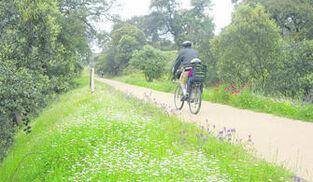
Source: Ref. 2
Overview
Nature-based solution
- Parks and urban forests
- Green corridors and green belts
Key challenges
- Climate action for adaptation, resilience and mitigation (SDG 13)
- Climate change adaptation
- Green space, habitats and biodiversity (SDG 15)
- Green space creation and/or management
- Regeneration, land-use and urban development
- Regulation of built environment
- Promote natural styles of landscape design for urban development
- Health and well-being (SDG 3)
- Enabling opportunities for physical activity
- Creation of opportunities for recreation
- Economic development and employment (SDG 8)
- Tourism support
- Cultural heritage and cultural diversity
- Protection of historic and cultural landscape/infrastructure
Focus
Creation of new green areas, Maintenance and management of urban nature
Project objectives
- To contribute to a network of free/ open spaces set around the metropolitan area of Sevilla, connecting the different settlement areas. (Ref 1)
- To have the paths act as physical and environmental support for the area. (Ref 1)
- To recover the landscapes around the old paths. (Ref 1)
- To stay true to the recreational and touristic use of the non-motorized paths, which has been their historic use as well. (Ref 1)
- To improve the nexus of countryside and city (increase accessibility and connectivity). (Ref 1)
Implementation activities
2000- Plan for the Recovery and Organization of the Pathways of Andalucia published by the Council of Environmental and Territorial Organization, the plan to rehabilitate Andalucia's historic pathways and increase their numbers is presented. (Ref 4)
2004- Start of the Puertas Verdes Program (within the above mentioned 2001 Plan), of which the recovery and expansion of green corridors is a key aspect. (Ref 2)
(The rehabilitation/ construction of the green corridor was done in phases and includes building bike paths throughout the network) (Ref 1,4)
(Plants for reforestation were chosen based on their regional adaptability, and closer to the cities for their aesthetic value). (Ref 4)
2009- Green Corridor of Metropolitan area of Sevilla is announced as having recovered 64km of pathways. (Ref 2)
Climate-focused activities
Climate change mitigation:
- Invest in public transport/bicycle infrastructure as a means to prevent car use
Main beneficiaries
- Local government/Municipality
- Citizens or community groups
Governance
Management set-up
- Government-led
Type of initiating organisation
- Regional government
Participatory approaches/ community involvement
- Unknown
Details on the roles of the organisations involved in the project
Andalucian Government, including Ministry of Environment and Territorial Organization (Regional Government) – leading intervention, invested close to 60 million euros in pathway rehabilitation projects around the province (Ref 2,3)
City of Sevilla – one of the 10 municipalities linked to the 70-km network of roads for non-motorized vehicles (Ref 3)
European Green Network, Western Mediterranean (Rever Med project)- trans regional network connecting the south of Portugal to the North of Italy through non-motorized pathways. (Ref 1)
Project implemented in response to ...
... an EU policy or strategy?
Unknown
... a national policy or strategy?
Unknown
... a local policy or strategy?
Yes
(Plan de Ordenación y Recuperación de Vías Pecuarias - Drovers’ Road Recuperation and Planning Programme (2004) (Ref 2))
Financing
Total cost
€2,000,000 - €4,000,000
Source(s) of funding
- Public regional budget
Type of funding
- Earmarked public budget
Non-financial contribution
Unknown
Impacts and Monitoring
Environmental impacts
- Climate change
- Reduced emissions
- Environmental quality
- Improved air quality
- Green space and habitat
- Increased green space area
- Increased ecological connectivity across regeneration sites and scales
Economic impacts
- More sustainable tourism
Socio-cultural impacts
- Social justice and cohesion
- Improved liveability
- Improved access to urban green space
- Health and wellbeing
- Gain in activities for recreation and exercise
- Cultural heritage and sense of place
- Protection of natural heritage
- Protection of historic and cultural landscape / infrastructure
- Increased awareness of flora and fauna as culturally and historically meaningful
Type of reported impacts
Expected impacts, Achieved impacts
Presence of formal monitoring system
Unknown
Presence of indicators used in reporting
No evidence in public records
Presence of monitoring/ evaluation reports
Yes
Availability of a web-based monitoring tool
No evidence in public records
References
1. Junta de Andalucia Consejeria de medio Ambiente y Ordenacion del Territorio. (n.d). Corredor Verde Metropolitano de Sevilla. Available at: Source link. [Accessed: 1 October 2020].
2. Diario de Sevilla. (2009). Sevilla ha recuperado más de 64 kilómetros de vías pecuarias en 2009. Huelva Información. Available at: Source link [Accessed: 1 October 2020].
3. Europa Press. (2011). M.Junta abre el corredor verde metropolitano más grande de Andalucía con 70 kilómetros. Source link. Available at: Source link [Accessed: 1 October 2020].
4. International Conference on Drovers' Roads and Green Corridors. (2001). Conference Proceedings. 47-48. [Document provided].
5. Consejeria de Medio Ambiente. (2004). Plan de Medio Ambiente de Andalucia (PMA 2004-2010). 56-57. [Document provided].
6. Unknown. (2011). SITUACION DEL CORREDOR VERDE METROPOLITANO -TRAMO II- A 11/12/2011. [Document provided].
2. Diario de Sevilla. (2009). Sevilla ha recuperado más de 64 kilómetros de vías pecuarias en 2009. Huelva Información. Available at: Source link [Accessed: 1 October 2020].
3. Europa Press. (2011). M.Junta abre el corredor verde metropolitano más grande de Andalucía con 70 kilómetros. Source link. Available at: Source link [Accessed: 1 October 2020].
4. International Conference on Drovers' Roads and Green Corridors. (2001). Conference Proceedings. 47-48. [Document provided].
5. Consejeria de Medio Ambiente. (2004). Plan de Medio Ambiente de Andalucia (PMA 2004-2010). 56-57. [Document provided].
6. Unknown. (2011). SITUACION DEL CORREDOR VERDE METROPOLITANO -TRAMO II- A 11/12/2011. [Document provided].
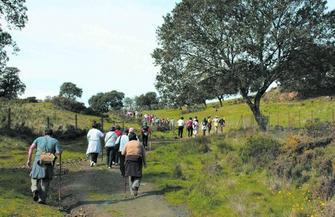
Source: Ref. 2