

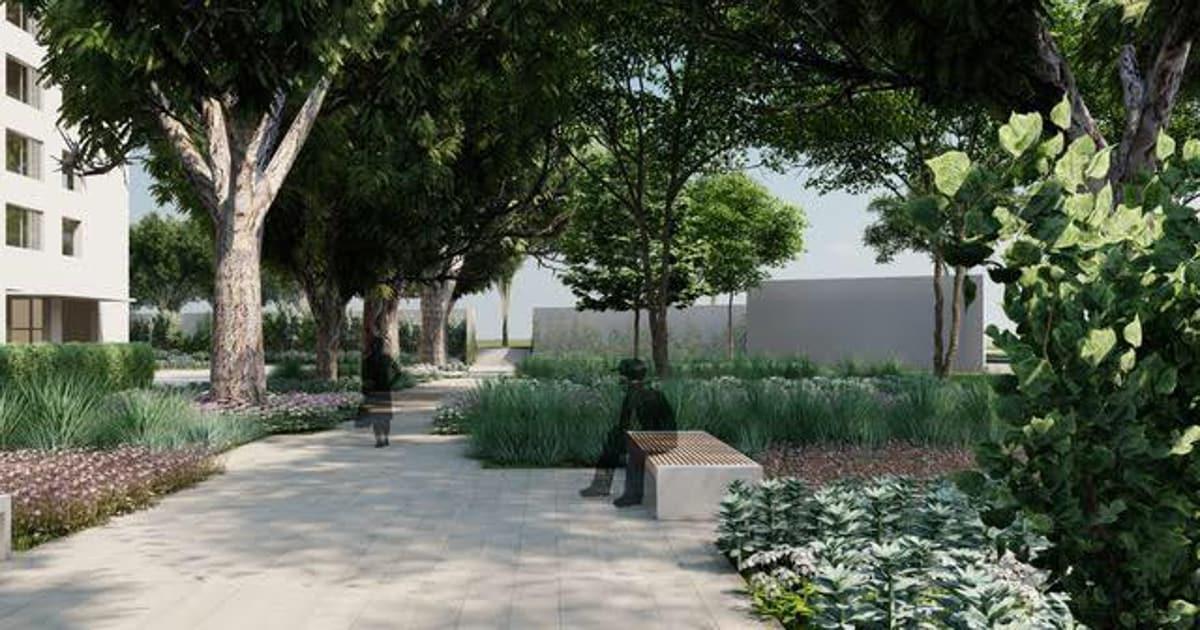
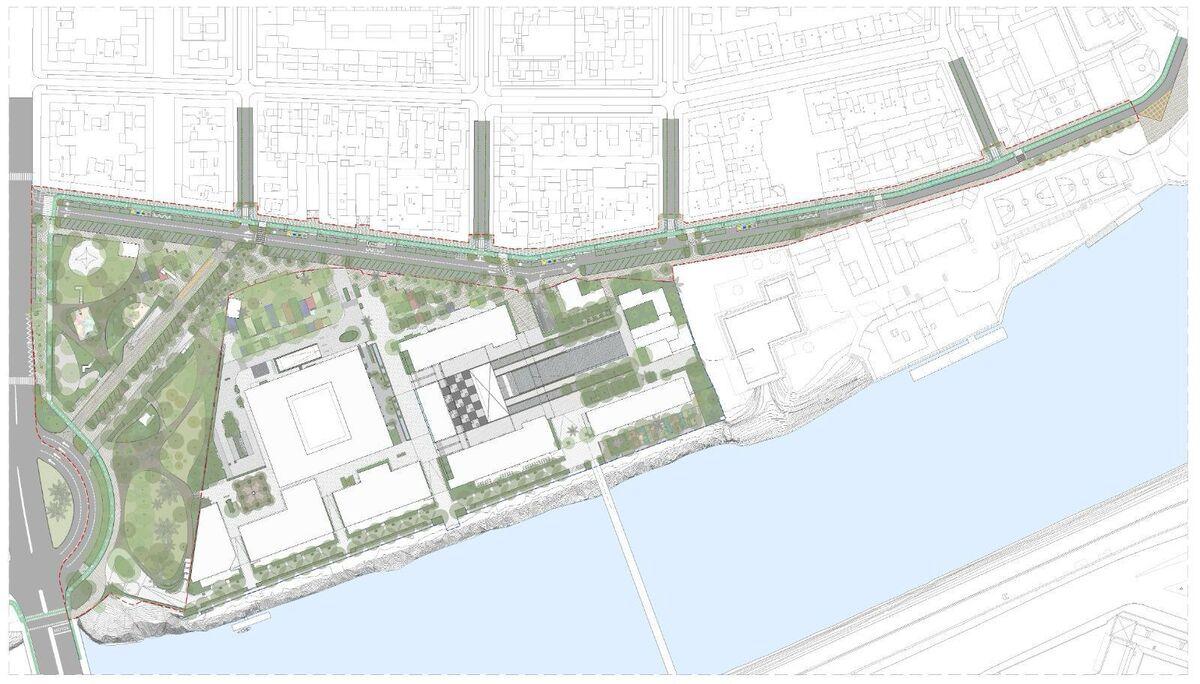
The old Altadis tobacco factory in the Los Remedios neighbourhood of Seville is being transformed into an area with offices, hotels and lots of green space. New green space will connect existing green areas next to the river, resulting in a total of 13 378 m2 of green areas within 3 ha of public space. The park will increase the number of trees in the area by 60 per cent, creating a lot more shaded areas, which are needed during the hot summers [Ref. 1-5]. Additionally, the trees will contribute to carbon sequestration, improve air quality and promote biodiversity [Ref. 5]. The park is meant to become a popular destination for recreation, new entrances and a bridge over the river will connect the surrounding neighbourhoods to the park [Ref. 1-3]. There will be areas for physical activity, dog walking and play for children [Ref. 1, 4]. The project is being carried out by real estate company KKH Property Investment, which owns the land and will invest 250 million EUR in the project as a whole, of which 5 million EUR is designated for green spaces. KKH has made an agreement with the City of Seville to ensure the project has benefits for the area and its citizens, and follows previous plans for the area, which have involved citizen participation [Ref. 3, 6, 9].
Overview
Nature-based solution
- Parks and urban forests
- Pocket parks/neighbourhood green spaces
Key challenges
- Climate action for adaptation, resilience and mitigation (SDG 13)
- Climate change adaptation
- Climate change mitigation
- Environmental quality
- Air quality improvement
- Green space, habitats and biodiversity (SDG 15)
- Green space creation and/or management
- Regeneration, land-use and urban development
- Conversion of former industrial areas
- Cultural heritage and cultural diversity
- Protection of historic and cultural landscape/infrastructure
- Health and well-being (SDG 3)
- Creation of opportunities for recreation
- Enabling opportunities for physical activity
- Economic development and employment (SDG 8)
- Real estate development
Principal problems in Functional Urban Area (FUA)
- Climate-Related Hazards
- Heat stress & Extreme temperatures
- Environmental Degradation
- Biodiversity loss
- Air pollution
- Land use and Socio-economic change
- Unequal availability and access to public green spaces
- Health, Well-being and Social cohesion
- Inadequate access to recreational opportunities
Key priorities
Focus
Project objectives
Implementation activities
Climate-focused activities
Climate change adaptation:
- Increase urban vegetation cover to reduce urban heat island effect
Climate change mitigation:
- Increase the availability of green urban space for carbon storage (street tree cover)
Main beneficiaries
- Local government/Municipality
- Private sector/Corporate/Company
- Citizens or community groups
- Young people and children
Governance
Management set-up
- Led by non-government actors
Type of initiating organisation
- Private sector/corporate actor/company
Participatory approaches/ community involvement
- Co-planning (e.g. stakeholder workshops, focus groups, participatory mapping)
- Consultation (e.g. workshop, surveys, community meetings, town halls)
Details on the roles of the organisations involved in the project
Project implemented in response to ...
Type of enablers
Financing
Total cost
Source(s) of funding
- Corporate investment
Type of funding
- Direct funding (grants, subsidies, or self-financed projects by private entities)
Non-financial contribution
- Provision of land
- Private sector (businesses, financial institution)
Impacts and Monitoring
Environmental impacts
- Climate change
- Lowered local temperature
- Expected lowered local temperature
- Enhanced carbon sequestration
- Expected enhanced carbon sequestration
- Environmental quality
- Improved air quality
- Expected improved air quality
- Green space and habitat
- Increased green space area
- Expected increased green space area
- Increased number of species present
- Expected increased number of species present
Economic impacts
- Unknown
Socio-cultural impacts
- Social justice and cohesion
- Improved access to urban green space
- Expected improved access to urban green space
- Health and wellbeing
- Gain in activities for recreation and exercise
- Expected gain in activities for recreation and exercise
- Reduced risk of heatstroke and/or dehydration
- Expected reduced risk of heatstroke and/or dehydration
- Cultural heritage and sense of place
- Protection of historic and cultural landscape / infrastructure
- Expected protection of historic and cultural landscape / infrastructure
Type of reported impacts
Presence of formal monitoring system
Presence of indicators used in reporting
Presence of monitoring/ evaluation reports
Availability of a web-based monitoring tool
Potential risks of implementation and trade-offs
References
 Information about this nature-based solution was collected as part of the Naturescapes project funded by the European Union under Grant Agreement No 101084341.