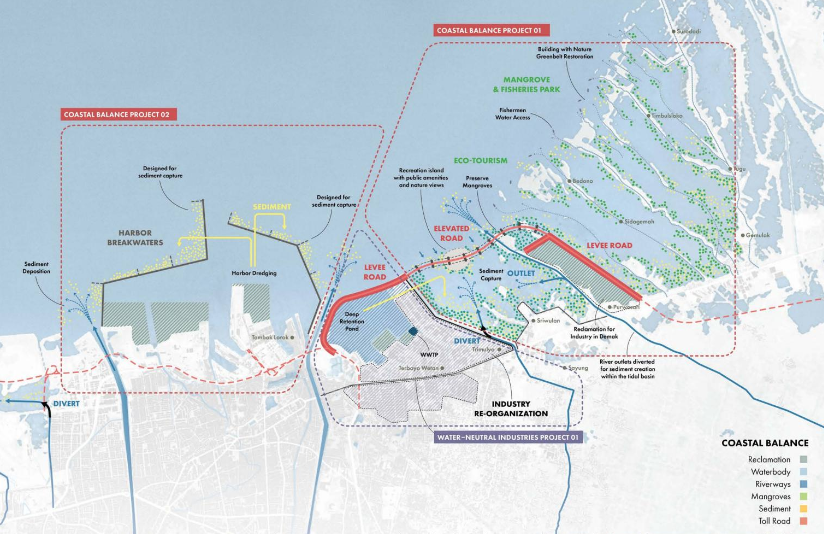
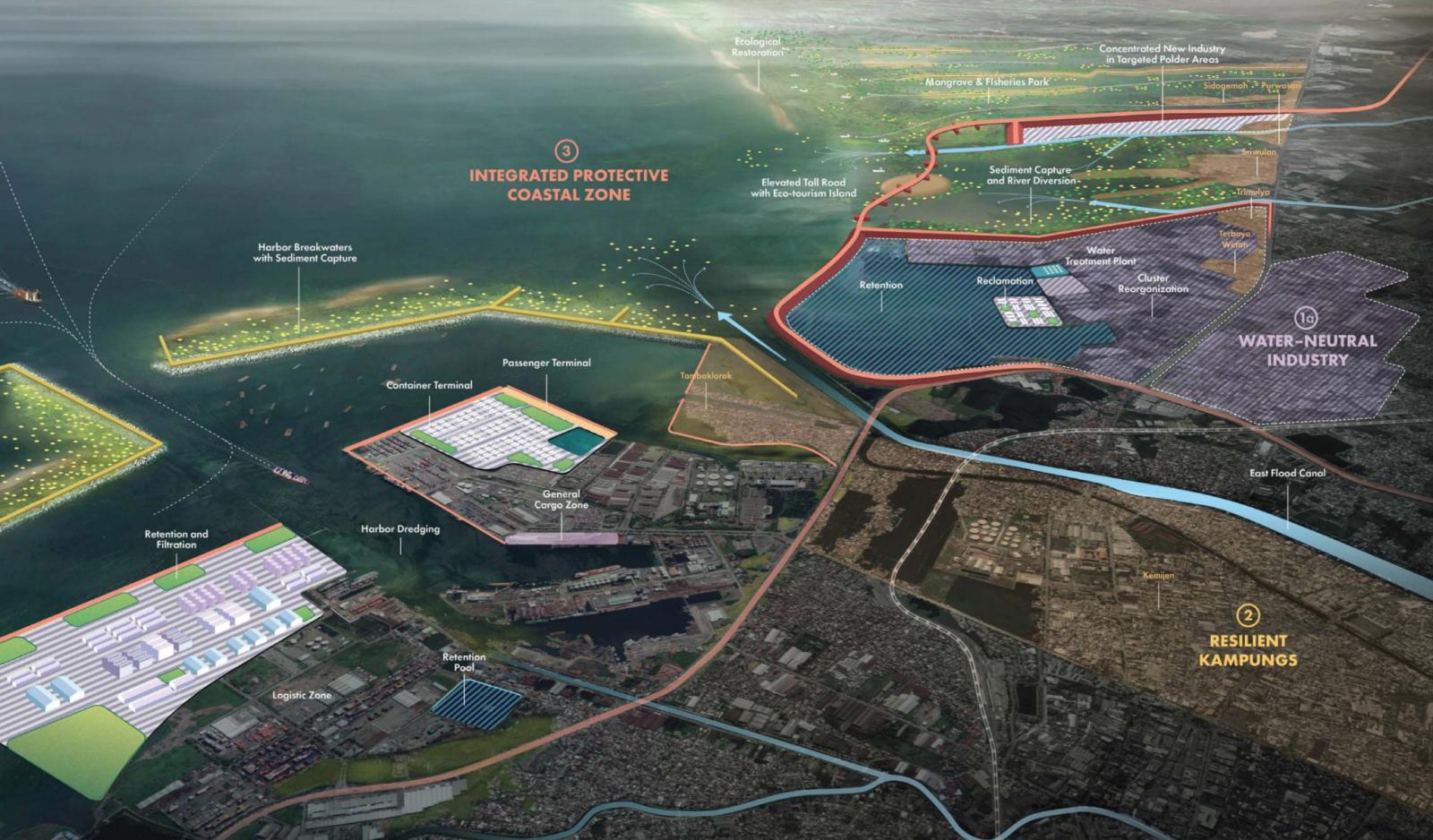
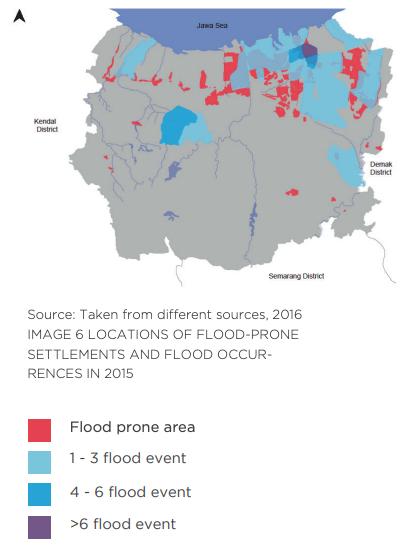
A combination of green and grey coastal infrastructure is being developed off the coast of Semarang, Indonesia in response to the increased risk of coastal flooding as a result of sea-level rise (Ref. 1). Due to its geography as a coastal city, "Semarang deals with various physical challenges...such as tidal flooding, erosion, land subsidence and rising sea levels" (Ref. 1). Tidal flooding is becoming increasingly worse as a result of climate-induced sea-level rise and increasingly extreme weather events (Ref. 1 and 3). Coastal protection which was historically afforded by naturally occurring mangrove systems has been reduced as a result of the mangroves being largely lost to urbanisation, fish farming and other forms of agriculture (Ref. 2). One proposed sub-project of the Integrated Protective Coastal Zone, Coastal Balance Project 01: Coastal Balance Pilot in Genuk/Sayung, will focus on the northeast of Semarang. Using the 'Building with Nature' approach, it will leverage nature-based solutions through the deployment of green infrastructure, primarily focusing on mangrove restoration (Ref. 3). Mangrove restoration is hoped to stabilise the coastline, therein reducing erosion, encouraging sedimentation and increasing resilience against sea-level rise (Ref. 3).
Overview
Nature-based solution
- Blue infrastructure
- Coastlines
- Other
Key challenges
- Climate action for adaptation, resilience and mitigation (SDG 13)
- Climate change adaptation
- Climate change mitigation
- Water management (SDG 6)
- Flood protection
- Coastal resilience and marine protection (SDG 14)
- Coastal protection / hazard mitigation
- Marine and coastal biodiversity protection
- Green space, habitats and biodiversity (SDG 15)
- Habitat and biodiversity restoration
- Inclusive and effective governance (SDG 16)
- Inclusive governance
- Economic development and employment (SDG 8)
- Economic development: agriculture
- Tourism support
- Cultural heritage and cultural diversity
- Protection of historic and cultural landscape/infrastructure
Focus
Project objectives
Implementation activities
Climate-focused activities
Climate change adaptation:
- Protect coastal and freshwater ecosystems to prevent coastal erosion and pollution
- Restore wetlands and/or coastal ecosystems to dissipate the effects of flooding and/or storms
Climate change mitigation:
- Increase green urban nature for carbon storage (wetlands, tree cover)
Biodiversity conservation or restoration-focused activities
Biodiversity restoration:
- Rehabilitate and restore damaged or destroyed ecosystems
- Restore species (native, endangered, or unspecified)
- Restore native species
- Restore valued species
Main beneficiaries
- Local government/Municipality
- Citizens or community groups
- Food producers and cultivators (i.e. farmers, gardeners)
Governance
Management set-up
- Co-governance with government and non-government actors
Type of initiating organisation
- Multilateral organisation
- National government
Participatory approaches/ community involvement
- Co-planning (e.g. stakeholder workshops, focus groups, participatory mapping)
- Consultation (e.g. workshop, surveys, community meetings, town halls)
- Joint implementation (e.g. tree planting)
Details on the roles of the organisations involved in the project
Project implemented in response to ...
Financing
Total cost
Source(s) of funding
- Unknown
Type of funding
- Other
Non-financial contribution
Impacts and Monitoring
Environmental impacts
- Climate change
- Increased protection against sea level rise
- Strengthened capacity to address climate hazards/natural disasters
- Enhanced carbon sequestration
- Environmental quality
- Improved soil quality
- Water management and blue areas
- Increased protection against flooding
- Enhanced protection and restoration of coastal and marine ecosystems
- Green space and habitat
- Increased conservation or restoration of ecosystems
- Reduced biodiversity loss
- Increased number of species present
Economic impacts
- More sustainable tourism
- Increase in agricultural production (for profit or not)
- Generation of income from NBS
Socio-cultural impacts
- Safety
- Improved community safety to climate-related hazards
- Social justice and cohesion
- Increased access to healthy/affordable food
- Cultural heritage and sense of place
- Protection of historic and cultural landscape / infrastructure
Type of reported impacts
Presence of formal monitoring system
Presence of indicators used in reporting
Presence of monitoring/ evaluation reports
Availability of a web-based monitoring tool
References
2. Water as Leverage (2018). City Report: Semarang, Indonesia. Amsterdam: Water as Leverage. Source link [accessed 13/09/2021];
3. Water as Leverage (2019). One Resilient Semarang: Water(shed) as Leverage. Volume II, Concept Design Proposals Final Report. One Architecture and Urbanism. Source link [accessed 13/09/21];
4. Netherlands Enterprise Agency (2019). Water as Leverage for Resilient Cities. Assen: Ministry of Foreign Affairs. Source link [accessed 15/09/21].