

Last updated: November 2021
Once empty paved area between the houses on Marat Street in St. Petersburg now has been turned into a cosy green garden [4, 5, 6]. The project was developed by a group of students and initiated by the Green Petersburg Foundation, Plants for Friends, "Vladimirsky" Municipal District and others [1, 3, 4, 5]. The square landscaping project contributes to the city's adaption to climate change, a need to increase urban green zones, reducing excessive heat and rainfall levels, and the creation of habitat for birds, among others [3]. The square acquired the concept of a harmonious combination of natural motives and the mood of the Russian landscape [4].
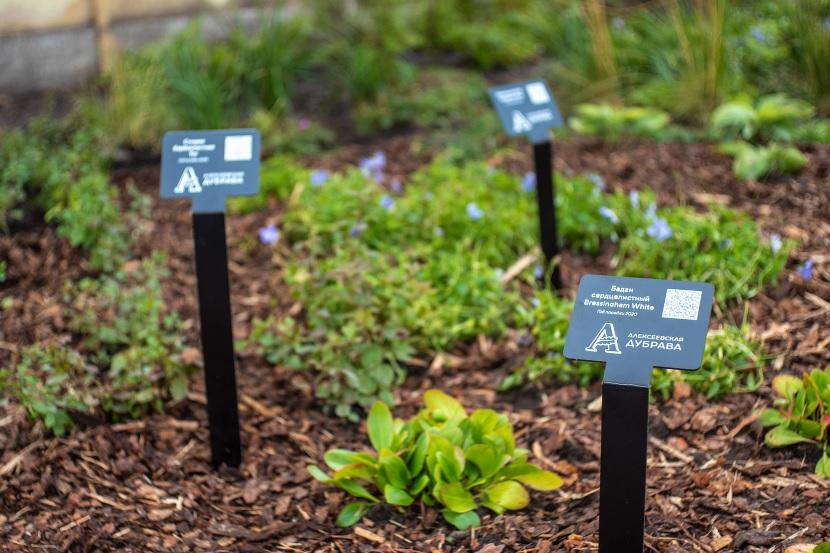
Nameplates of plants with QR codes
https://www.ozelenimvse.ru/page12348043.html
Overview
Nature-based solution
- Parks and urban forests
- Pocket parks/neighbourhood green spaces
Key challenges
- Climate action for adaptation, resilience and mitigation (SDG 13)
- Climate change adaptation
- Green space, habitats and biodiversity (SDG 15)
- Habitat and biodiversity restoration
- Green space creation and/or management
- Environmental quality
- Air quality improvement
- Regeneration, land-use and urban development
- Promote natural styles of landscape design for urban development
Focus
Creation of new green areas, Transformation of previously derelict areas, Knowledge creation and awareness raising
Project objectives
- To contribute to the city's adaption to climate change, by creating new urban green zones that can help in reducing excessive heat and rainfall levels [3];
- To increase the number of green spaces in the central districts of the city of St. Petersburg which can help to reduce air pollution [1, 3];
- Use plants that are resistant to the urban environment, do not require complex maintenance, and are decorative throughout all seasons [4];
- Reconstruction of the square, abandoned after the collapse of the USSR, into an urban recreation area for citizens [5];
- To unite and coordinate the efforts of residents, businesses and the authorities of St. Petersburg in their desire to green the city and make it healthier [3];
- Take all possible steps to create a competent system for the care and protection of plants and animals at the city and municipal levels [3].
- Creation of habitat for birds [3].
Implementation activities
- Through negotiations with the local authorities, a plot of land was selected for the project, which will be available to all citizens, and not only to residents of a separate courtyard [1, 7];
- According to the recommendations of the Alekseevskaya Dubrava plant nursery, a list of plant species was compiled that would best suit the urban environment [1, 2];
- A working group was created, which assessed the number of resources required for the implementation of the project, and also monitored the proper implementation of the project throughout the entire period [4];
- The "Green Petersburg" Foundation has opened a fundraiser for the collection of financial resources for the project [1, 4];
- Residents of nearby houses and initiators of the action decided together where the borders of the territory would lie, approved the layout of plants and their final assortment [4];
- The project was coordinated in the format of online meetings and live meetings of the working group [4].
- On September 5, 2020, a public event was organized, where people were invited for cleaning the territory and planting trees, shrubs and flowers in the park on Marat Street, 25 [1, 2, 4, 5, 6];
- Each variety of plants in the park was signed on the nameplate of the nursery with a QR code by the link of which guests of the park can learn more interesting information about the plant [1, 5];
- The project partners actively promoted the project before, during and after its completion, thereby involving new people in the landscaping of the city of St. Petersburg and increasing awareness of the lack of green spaces in the city [1, 4, 5, 8].
Climate-focused activities
Climate change adaptation:
- Increase or improve urban vegetation cover to help reduce outdoor temperature
- Create or improve outdoor spaces to help people escape from urban heat
Biodiversity conservation or restoration-focused activities
Biodiversity restoration:
- Rehabilitate and restore damaged or destroyed ecosystems
- Restore species (native, endangered, or unspecified)
- Public engagement
Main beneficiaries
- Local government/Municipality
- Private sector/Corporate/Company
- Citizens or community groups
Governance
Management set-up
- Co-governance with government and non-government actors
Type of initiating organisation
- Non-government organisation/civil society
- Private sector/corporate actor/company
Participatory approaches/ community involvement
- Co-planning (e.g. stakeholder workshops, focus groups, participatory mapping)
- Crowd-sourcing/Crowd-funding/Participatory budget
- Dissemination of information and education
- Joint implementation (e.g. tree planting)
- Co-management/Joint management
Details on the roles of the organisations involved in the project
The roles of stakeholders [1, 4, 8]:
- Lead project implementers: "Green Petersburg" fund and "Plants for Friends" shop;
- Project developers: a group of SPbGASU students under the guidance of professor Nadezhda Kerimova;
- Plants providers: Alekseevskaya Dubrava plant nursery and YADRO group of companies;
- Project site approved by: "Vladimirsky" Municipal District authorities;
- Other project partners: "Bushe" cake shop, residents of nearby neighbourhoods, volunteers.
Project implemented in response to ...
... an EU policy or strategy?
No
... a national policy or strategy?
No
... a local policy or strategy?
No
Financing
Total cost
Less than €10,000
Source(s) of funding
- Crowdfunding
Type of funding
- Donations
Non-financial contribution
Type of non-financial contribution
- Provision of land
- Provision of goods
- Provision of labour
- Provision of expertise
Who provided the non-financial contribution?
- Public authorities (e.g. land, utility services)
- Citizens (e.g. volunteering)
- Private sector (businesses, financial institution)
Impacts and Monitoring
Environmental impacts
- Climate change
- Lowered local temperature
- Environmental quality
- Improved air quality
- Green space and habitat
- Promotion of naturalistic styles of landscape design for urban development
- Increased green space area
- Increased conservation or restoration of ecosystems
- Increased number of species present
- Restoration of derelict areas
Economic impacts
- Unknown
Socio-cultural impacts
- Social justice and cohesion
- Improved social cohesion
- Increased involvement of locals in the management of green spaces
- Education
- Increased knowledge of locals about local nature
Type of reported impacts
Expected impacts, Achieved impacts
Presence of formal monitoring system
Unknown
Presence of indicators used in reporting
No evidence in public records
Presence of monitoring/ evaluation reports
No evidence in public records
Availability of a web-based monitoring tool
No evidence in public records
References
1. Green Petersburg Fund (2020). Landscaping of the park on Marat street, 25. Accessed on October 11, 2021, Source link
2. Aliyeva S. (2020). Green Petersburg activists have planted a park on Marat Street. Online magazine Source link. This is how it was. Accessed on October 11, 2021, Source link
3. Green Petersburg Fund (2020). Green St. Petersburg. Accessed on October 11, 2021, Source link
4. Morozova K. (2020). What will be the new green space on Marata Street at the site of a spontaneous parking lot?. Online magazine Source link. Accessed on October 11, 2021, Source link
5. Stream Piter Blog (2021). Landscaping of the park on Marat street, 25. Accessed on October 11, 2021, Source link
6. Yeliseyeva M. (2020). Flowers and trees were planted in an unnamed public garden on Marat Street. Accessed on October 11, 2021, Source link
7. Gladkih D. (2020). The Green Petersburg Fund will beautify the park opposite the Arctic and Antarctic Museum. There will be new plants. Online magazine Source link. Accessed on October 11, 2021, Source link
8. Plants for Friends (n/d). Square on Marat street, 25. Accessed on October 11, 2021, Source link
9. Green Petersburg Fund (n/d). What happened to the city. Accessed on October 11, 2021, Source link.
2. Aliyeva S. (2020). Green Petersburg activists have planted a park on Marat Street. Online magazine Source link. This is how it was. Accessed on October 11, 2021, Source link
3. Green Petersburg Fund (2020). Green St. Petersburg. Accessed on October 11, 2021, Source link
4. Morozova K. (2020). What will be the new green space on Marata Street at the site of a spontaneous parking lot?. Online magazine Source link. Accessed on October 11, 2021, Source link
5. Stream Piter Blog (2021). Landscaping of the park on Marat street, 25. Accessed on October 11, 2021, Source link
6. Yeliseyeva M. (2020). Flowers and trees were planted in an unnamed public garden on Marat Street. Accessed on October 11, 2021, Source link
7. Gladkih D. (2020). The Green Petersburg Fund will beautify the park opposite the Arctic and Antarctic Museum. There will be new plants. Online magazine Source link. Accessed on October 11, 2021, Source link
8. Plants for Friends (n/d). Square on Marat street, 25. Accessed on October 11, 2021, Source link
9. Green Petersburg Fund (n/d). What happened to the city. Accessed on October 11, 2021, Source link.

Public planting event of the square on Marat street
https://www.ozelenimvse.ru/page12348043.html
Information about this nature-based solution was collected as part of the UNA global extension project funded by the British Academy.