

Last updated: October 2021
The Desjoyaux ZAC in the Crêt-de-Roc district, was created in 2005. Since then, this three-and-a-half-hectare site, which is involved in the process of receiving the "eco-district" national label certification since 2015, has metamorphosed (Ref. 1). Some works aim to renew and embellish the public spaces located near the residences of the street and the impasse Desjoyaux to preserve biodiversity in the city center of Saint Etienne and for the well-being of citizens. (Ref. 1, 2 and 3). Community gardens, park, ephemeral gardens, swales and sustainable water filtration system are being developed in this project (Ref. 1, 2 and 3).
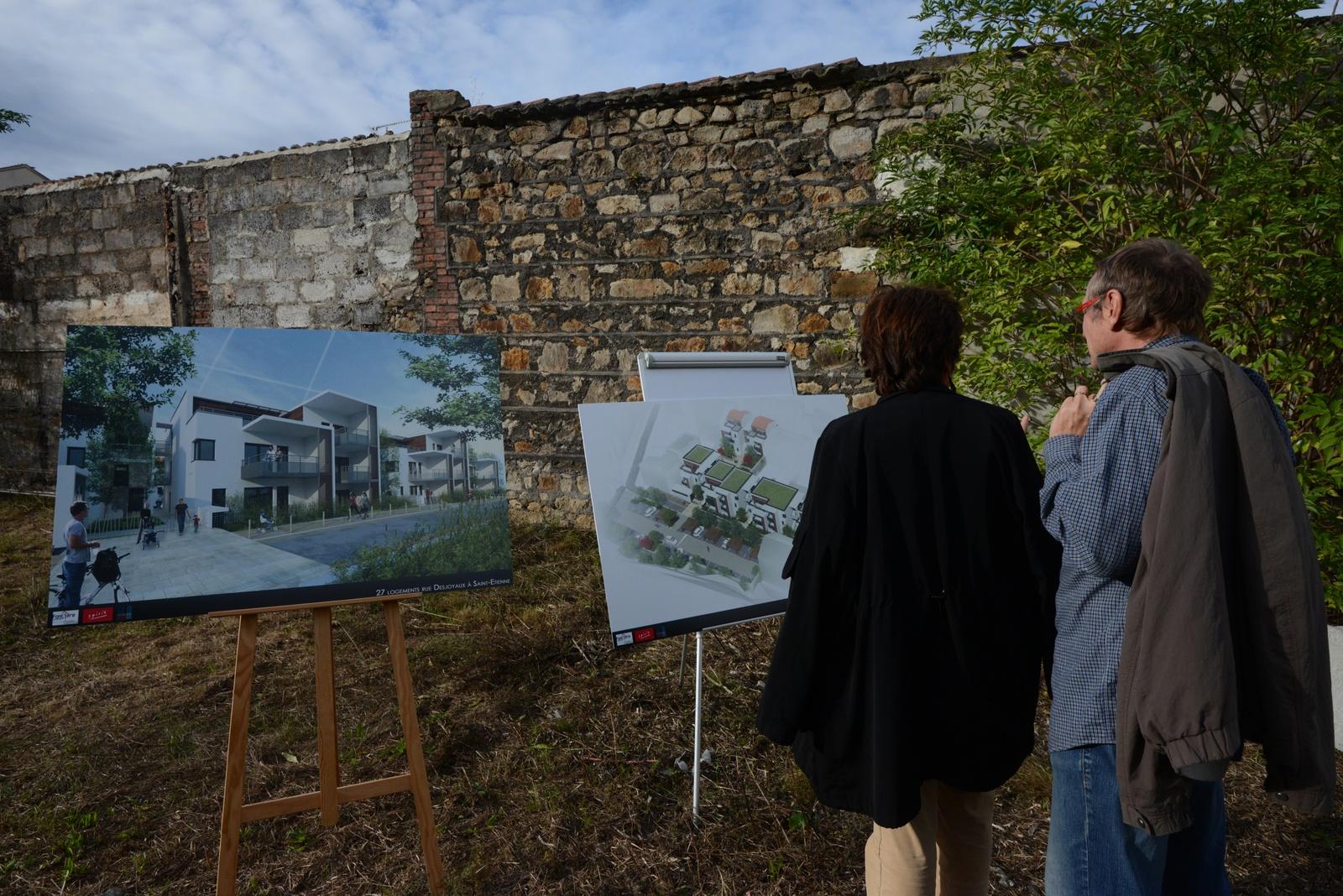
Eco-district Desjoyaux (2014)
Department of Urban Development and Regeneration, City of Saint-Etienne, retrieved 08/15/2018 from Anne Valtat
Overview
Nature-based solution
- Grey infrastructure featuring greens
- Alley or street trees and other street vegetation
- Parks and urban forests
- Pocket parks/neighbourhood green spaces
- Community gardens and allotments
- Community gardens
- Green areas for water management
- Swales and filter strips
- Sustainable urban drainage systems
- Other
Key challenges
- Water management (SDG 6)
- Flood protection
- Stormwater and rainfall management and storage
- Green space, habitats and biodiversity (SDG 15)
- Habitat and biodiversity conservation
- Green space creation and/or management
- Environmental quality
- Soil quality improvement
- Regeneration, land-use and urban development
- Promote natural styles of landscape design for urban development
- Inclusive and effective governance (SDG 16)
- Inclusive governance
- Social justice, cohesion and equity (SDG 10)
- Social cohesion
- Social interaction
- Health and well-being (SDG 3)
- Enabling opportunities for physical activity
- Creation of opportunities for recreation
- Economic development and employment (SDG 8)
- Real estate development
- Cultural heritage and cultural diversity
- Preservation of natural heritage
- Sustainable consumption and production (SDG 12)
- Sustainable consumption
- Sustainable production
Focus
Creation of new green areas, Maintenance and management of urban nature
Project objectives
"Objective of the urban project is to improve the residential qualities of this neighborhood by sustainable action on the habitat and the public spaces." (Ref. 3)
-"Promote the drainage of rainwater" (Ref. 1)
-Preserving biodiversity (Ref. 1)
-Creating social bonds among residents with community gardens (Ref. 2)
-Rain water management goal with swales, porous pavements (Ref. 4)
Implementation activities
-"Creation and landscaping of public spaces to enhance the hill foot" (Ref. 2)
-"Commitment to consultation with the population"(Ref. 2)
-"Roads and sidewalks will be treated largely in porous pavers, so as to facilitate the flow of rainwater" (Ref. 1)
-"Swales will be realized to have the function of preserving biodiversity" (Ref. 1)
-"Management of natural resources and respect of the biodiversity: taking into account the natural heritage, management of rainwater, establishment of adapted plant species" (Ref. 3)
-"Local amenities are supported in sectors awaiting reconstruction with a strong participatory dimension: (community and ephemeral gardens)"
-"The renovation of the existing public spaces has made it possible to improve the living environment of the inhabitants such as the Crêt de Roc uphill which hosts a seasonal balcony garden on the city center. This renovation is based on the valorisation of the existing and the pedestrian paths, the plant biodiversity" (Ref. 3)
-"The landscaping is based on the management of rainwater. Rainwater is collected and drained at the surface: water channeled at the foot of the hill, green roofs, gutters and aerial valleys" (Ref. 9).
-"the project management team set out to implement techniques adapted to the requirements of sustainable development, ensuring cost control: management of rainwater by draining trench, limitation of soil waterproofing (paving stones laid on sand, concrete slabs), enhancement of local resources (know-how, wood, stone, ..) reuse of site materials…." (Ref. 4).
Biodiversity conservation or restoration-focused activities
Biodiversity conservation:
- Protect and enhance urban habitats
- Reduce negative impacts and avoid the alteration/damage of ecosystem
- Protect species
- Undertake specific measures to protect species
- Undertake specific measures to protect valued species
- Means for conservation governance
- Manage biological resources for conservation and sustainable use
- Create and use scientific knowledge for conservation
Main beneficiaries
- Local government/Municipality
- Citizens or community groups
Governance
Management set-up
- Government-led
Type of initiating organisation
- Local government/municipality
Participatory approaches/ community involvement
- Dissemination of information and education
- Consultation (e.g. workshop, surveys, community meetings, town halls)
- Citizen oversight (e.g. boards, advisory)
Details on the roles of the organisations involved in the project
The City of Saint Etienne is the main initiator and the project management is dedicated to the operator of the territorial development of the Loire called "SEDL"(Equipment and Development Company of the Loire). (Ref. 2)
The project was partly financed by the ANRU's subvention (National Agency for Urban Renovation) (Ref. 2)
Project implemented in response to ...
... an EU policy or strategy?
Unknown
... a national policy or strategy?
Yes
(Eco-Quartier (Eco District Label from the Ecology Minister of France). Urban renewal policy managed by the National Urban Renewal Agency (ANRU) (Ref. 10).)
... a local policy or strategy?
Unknown
(-Biodiversity Preservation of the City Climate Plan (Ref. 6)
-The Nature in the City Plan (Ref. 7))
Financing
Total cost
€2,000,000 - €4,000,000
Source(s) of funding
- Public national budget
- Public local authority budget
Type of funding
- Earmarked public budget
Non-financial contribution
Unknown
Impacts and Monitoring
Environmental impacts
- Water management and blue areas
- Increased protection against flooding
- Improved stormwater management
- Green space and habitat
- Increased green space area
- Reduced biodiversity loss
Economic impacts
- Increase of green jobs (e.g. paid employment positions)
- Stimulate development in deprived areas
- Increase in agricultural production (for profit or not)
- Attraction of business and investment
Socio-cultural impacts
- Social justice and cohesion
- Improved social cohesion
- Fair distribution of social, environmental and economic benefits of the NBS project
- Improved liveability
- Improved access to urban green space
- Increased opportunities for social interaction
- Increased involvement of locals in the management of green spaces
- Health and wellbeing
- Improved physical health
- Gain in activities for recreation and exercise
- Cultural heritage and sense of place
- Protection of natural heritage
- Protection of historic and cultural landscape / infrastructure
- Increased sense of place identity, memory and belonging
- Increased appreciation for natural spaces
Type of reported impacts
Achieved impacts
Presence of formal monitoring system
Unknown
Presence of indicators used in reporting
No evidence in public records
Presence of monitoring/ evaluation reports
No evidence in public records
Availability of a web-based monitoring tool
No evidence in public records
References
1. Anon. (2017, February). "L’écoquartier Desjoyaux continue de prendre forme". Available at: Source link (Accessed: September 17, 2020).
2. SEDL (n.d). Eco-Quartier Desjoyaux. Available at: Source link (Website not available in 2020).
3. Saint Etienne (n.d). "Crêt de Roc, une transformation urbaine éco-durable". Available at: Source link (Website not available in 2020).
4. ItinéraireBis (n.d). Zac Desjoyaux - Saint Etienne (Loire). Available at: Source link (Accessed: September 17, 2020).
5. Souweine, Michel (video publication: 2015). "Visite de l'Eco-Quartier du Crêt-de-Roch (ZAC Desjoyaux) à Saint-Etienne". Available at: Source link (Accessed: September 17, 2020).
6. Saint Etienne (2014). Plan Climat Newsletter. Available at: Source link (Website not available in 2020).
7. Saint Etienne (n.d) Nature en Ville Brochure. Available at: Source link (Accessed: September 17, 2020).
8. Saint Etienne (n.d). "Le Plan Local de l'Urbanisme fixe les grandes orientations de développement et d'aménagement". Available at: Source link September 17, 2020).
9. Ministere de la Transition Ecologique (n.d.). "ZAC Desjoyaux - Ecoquartier". Available at: Source link (Accessed: September 17, 2020).
10. NOVIM (n.d.). "ZAC DESJOYAUX". Available at: Source link (Accessed: September 17, 2020).
11. Unknown (2014). "Cret De Roc Ecoquartier Desjoyaux" (Document attached).
2. SEDL (n.d). Eco-Quartier Desjoyaux. Available at: Source link (Website not available in 2020).
3. Saint Etienne (n.d). "Crêt de Roc, une transformation urbaine éco-durable". Available at: Source link (Website not available in 2020).
4. ItinéraireBis (n.d). Zac Desjoyaux - Saint Etienne (Loire). Available at: Source link (Accessed: September 17, 2020).
5. Souweine, Michel (video publication: 2015). "Visite de l'Eco-Quartier du Crêt-de-Roch (ZAC Desjoyaux) à Saint-Etienne". Available at: Source link (Accessed: September 17, 2020).
6. Saint Etienne (2014). Plan Climat Newsletter. Available at: Source link (Website not available in 2020).
7. Saint Etienne (n.d) Nature en Ville Brochure. Available at: Source link (Accessed: September 17, 2020).
8. Saint Etienne (n.d). "Le Plan Local de l'Urbanisme fixe les grandes orientations de développement et d'aménagement". Available at: Source link September 17, 2020).
9. Ministere de la Transition Ecologique (n.d.). "ZAC Desjoyaux - Ecoquartier". Available at: Source link (Accessed: September 17, 2020).
10. NOVIM (n.d.). "ZAC DESJOYAUX". Available at: Source link (Accessed: September 17, 2020).
11. Unknown (2014). "Cret De Roc Ecoquartier Desjoyaux" (Document attached).
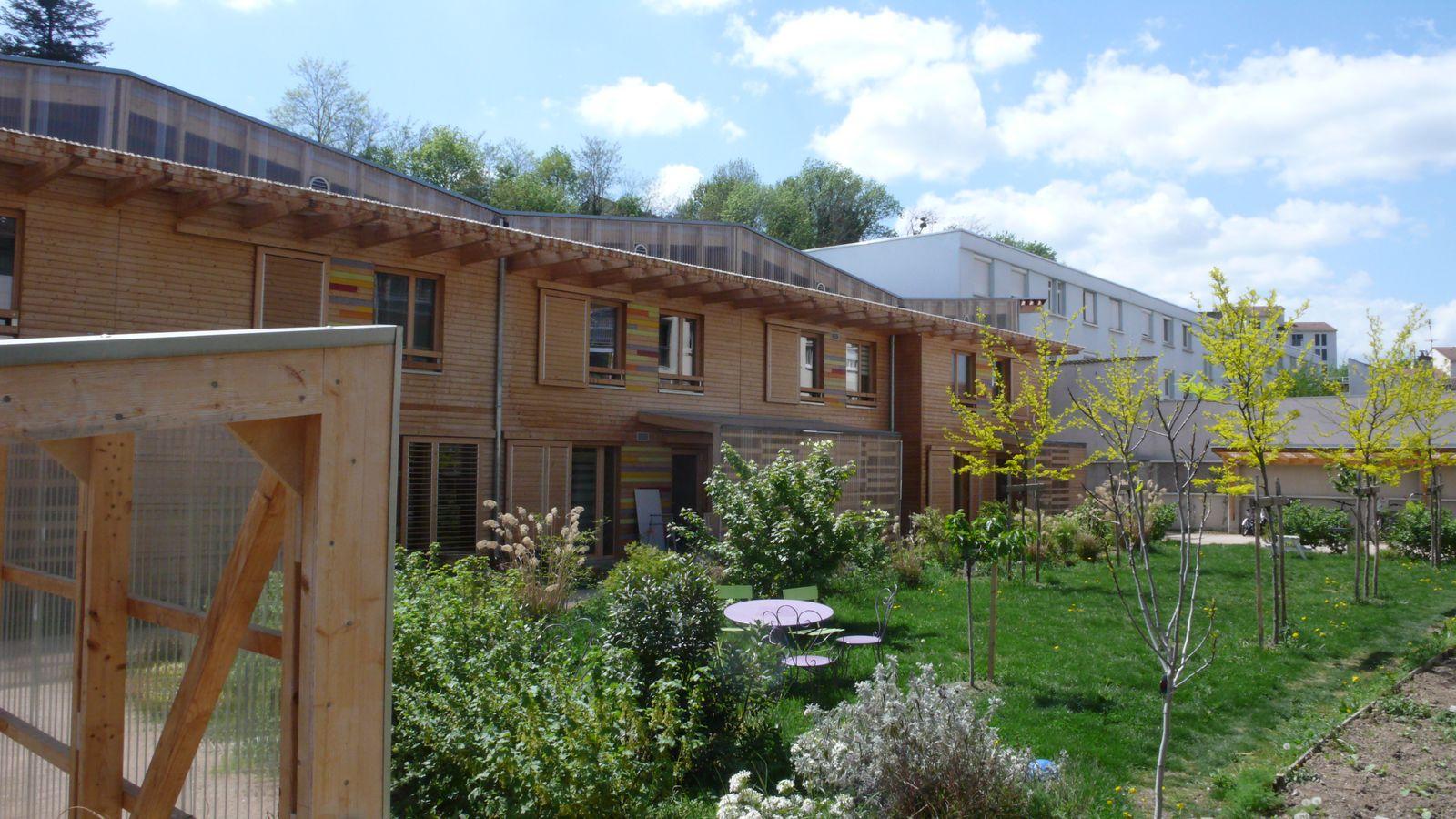
Eco-district Desjoyaux (2018)
Department of Urban Development and Regeneration, City of Saint-Etienne, retrieved 08/15/2018 from Anne Valtat
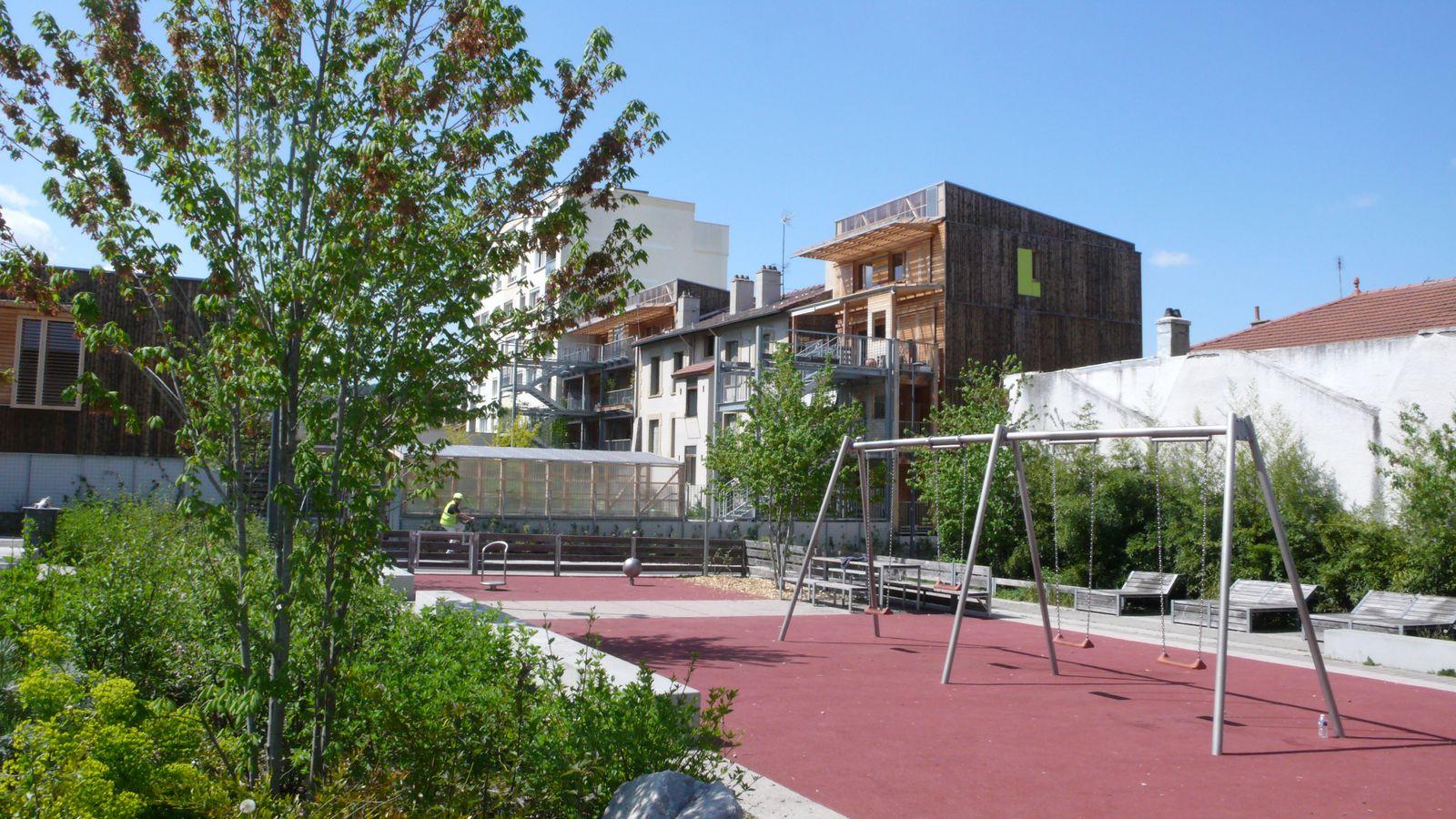
Eco-district Desjoyaux (2018)
Department of Urban Development and Regeneration, City of Saint-Etienne, retrieved 08/15/2018 from Anne Valtat