

Last updated: October 2021
Urban gardening developed in Rome as a reaction to the unequal distribution of available green spaces in densely populated areas of the city, and to the lack of care for the already existing ones. Since 2006, a large number of associations and informal citizen groups have started to engage in collective gardening by performing both Guerrilla Gardening-style actions and long-lasting community gardens projects run by local associations. This social and spatial transformation is turning most of its urban voids and interstitial spaces into places for collective enjoyment thanks to the spontaneous engagement of local dwellers. [1]
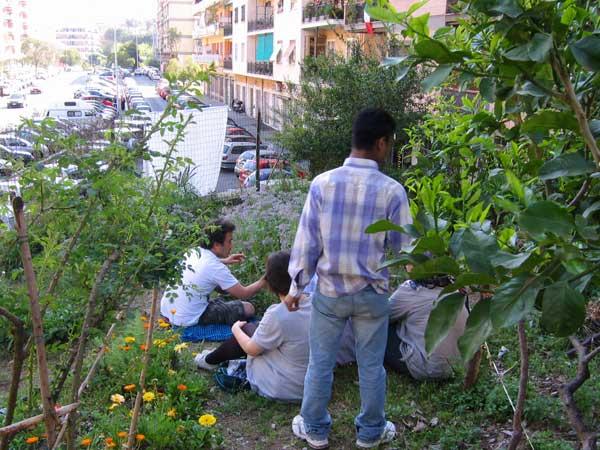
http://www.zappataromana.net/foto/
Overview
Nature-based solution
- Community gardens and allotments
- Allotments
- Community gardens
Key challenges
- Green space, habitats and biodiversity (SDG 15)
- Green space creation and/or management
- Social justice, cohesion and equity (SDG 10)
- Social justice and equity
- Social interaction
- Health and well-being (SDG 3)
- Creation of opportunities for recreation
Focus
Creation of new green areas, Transformation of previously derelict areas, Knowledge creation and awareness raising
Project objectives
The aim of urban gardening by local dwellers in Rome is:
- provide the city with a larger number of accessible and interactive public gardens. [1]
- contra balance the unequal distribution of available green spaces in densely populated areas of the city. [1]
- create spaces for recreation that also promote social interaction and place attachment among local dwellers. [1]
- reclaim derelict areas to be restored as green public space [1]
Implementation activities
Since 2006, a large number of associations and informal citizens groups have started to engage in collective gardening, and the movement is rapidly growing, by performing both Guerrilla Gardening-style actions and long-lasting community gardens projects run by local associations. [1]
Main beneficiaries
- Citizens or community groups
- Marginalized groups: Socio-economically disadvantaged populations (e.g. low-income households, unemployed)
Governance
Management set-up
- Led by non-government actors
Type of initiating organisation
- Citizens or community group
Participatory approaches/ community involvement
- Co-planning (e.g. stakeholder workshops, focus groups, participatory mapping)
- Crowd-sourcing/Crowd-funding/Participatory budget
- Joint implementation (e.g. tree planting)
- Co-management/Joint management
Details on the roles of the organisations involved in the project
Associations and informal citizens groups have started to engage in collective gardening, with Guerrilla Gardening-style actions and long-lasting community gardens projects run by local associations. (1)
Project implemented in response to ...
... an EU policy or strategy?
Unknown
... a national policy or strategy?
Unknown
... a local policy or strategy?
Yes
(The first Regulation for Allotments and Community Gardens (“Regolamento orti urbani e giardini condivisi” in Italian) was approved in July 2015. The regulation represents the response of the local public administration to the growing relevance of urban gardening and agriculture in Rome. [3])
Financing
Total cost
Unknown
Source(s) of funding
- Crowdfunding
Type of funding
- Donations
Non-financial contribution
Type of non-financial contribution
- Provision of land
- Provision of goods
- Provision of labour
- Provision of expertise
- Exchange of services
Who provided the non-financial contribution?
- Public authorities (e.g. land, utility services)
- Citizens (e.g. volunteering)
Impacts and Monitoring
Environmental impacts
- Green space and habitat
- Increased green space area
- Restoration of derelict areas
Economic impacts
- Unknown
Socio-cultural impacts
- Social justice and cohesion
- Improved social cohesion
- Increased opportunities for social interaction
- Increased access to healthy/affordable food
- Cultural heritage and sense of place
- Increased sense of place identity, memory and belonging
Type of reported impacts
Expected impacts, Achieved impacts
Presence of formal monitoring system
Unknown
Presence of indicators used in reporting
No evidence in public records
Presence of monitoring/ evaluation reports
No evidence in public records
Availability of a web-based monitoring tool
No evidence in public records
References
[1] Certoma Chiara, ‘A New Season for Planning’: Urban Gardening as Informal Planning in Rome (2016) Attached document
[2] Zappata Romana (2018). Zappata Romana, Available at Source link (Accessed 17-10-2020)
[3] Urban Gardening in Rome (2016). Sustainable Communities. Retrieved 08/30/2018 from Source link (Website not available in 2020)
[4] Cavallo, A., Di Donato, B. and Marino, D., 2016. Mapping and assessing urban agriculture in Rome. Agriculture and agricultural science procedia, 8, Source link, Available at Source link (Accessed 17-10-2020)
[2] Zappata Romana (2018). Zappata Romana, Available at Source link (Accessed 17-10-2020)
[3] Urban Gardening in Rome (2016). Sustainable Communities. Retrieved 08/30/2018 from Source link (Website not available in 2020)
[4] Cavallo, A., Di Donato, B. and Marino, D., 2016. Mapping and assessing urban agriculture in Rome. Agriculture and agricultural science procedia, 8, Source link, Available at Source link (Accessed 17-10-2020)
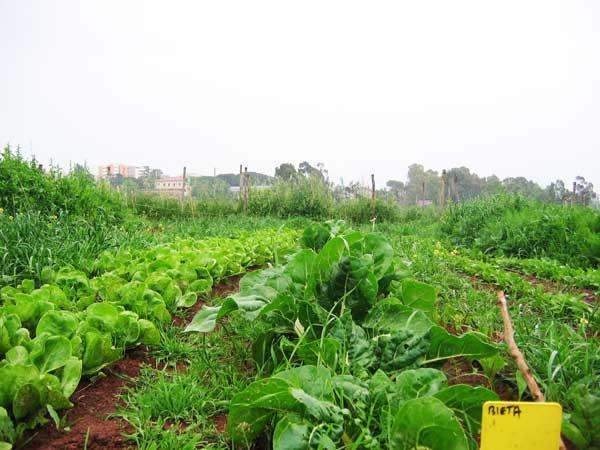
http://www.zappataromana.net/foto/