

Last updated: October 2021
Offord Road community garden is a place for the residents of West Reading (i.e. those who live, work, go to school in the area). Reading Borough Council set up the community garden (i.e. the green space) at the Oxford Road end of Western Elms Avenue through a grant called ‘Section 106’ (thus giving the site back to the community in 1996). (Ref. 1, 2, 7)
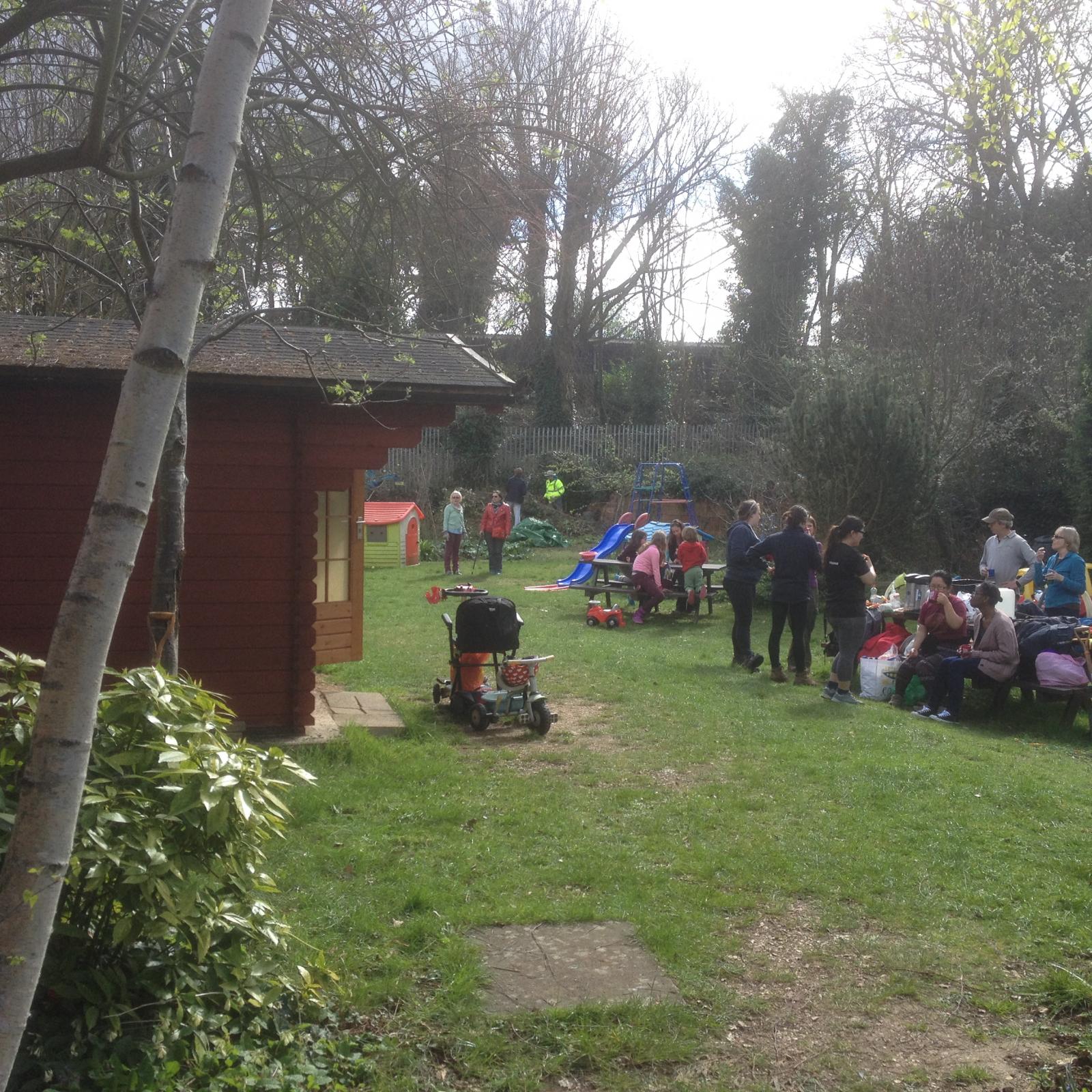
Oxford Road Community Garden in Reading (2017)
Ricky Josey (Chair of the Oxford Road Community Garden), retrieved 08/10/2018
Overview
Nature-based solution
- Parks and urban forests
- Other
- Community gardens and allotments
- Allotments
- Blue infrastructure
- Lakes/ponds
Key challenges
- Green space, habitats and biodiversity (SDG 15)
- Green space creation and/or management
- Regeneration, land-use and urban development
- Conversion of former industrial areas
- Inclusive and effective governance (SDG 16)
- Effective management
- Social justice, cohesion and equity (SDG 10)
- Environmental education
- Social interaction
- Health and well-being (SDG 3)
- Enabling opportunities for physical activity
- Creation of opportunities for recreation
- Economic development and employment (SDG 8)
- Economic development: agriculture
- Sustainable consumption and production (SDG 12)
- Sustainable production
Focus
Creation of new green areas
Project objectives
Turning the site into the ‘green oasis’ it is today for the local residents, workers and schools in West Reading to use. (Ref. 1, 3) The garden was created to provide more green space in the Oxford Road area and to provide a range of facilities including allotment plots for vegetable growing. (Ref. 7)
Implementation activities
Work has been going on since 1996, e.g. members of the Battle Globe group and local residents built a pond and started the site with shrubs and laying of the vegetable plots. (Ref. 1)
Thus: a pond, a wildlife area, open lawn space, shaded corners and some small allotments make up the majority of the garden. (Ref. 3)
The ORCG (community) group maintains and promotes a community garden for the benefit of local residents, with a programme of events and activities. They regularly organise activities as part of the annual Rescue event and encourage local participation. In 2010, grants enabled the group to plant trees and shrubs as part of RESCUE 2010 event. (Ref. 4)
Main beneficiaries
- Public sector institution (e.g. school or hospital)
- Citizens or community groups
Governance
Management set-up
- Co-governance with government and non-government actors
Type of initiating organisation
- Local government/municipality
- Citizens or community group
Participatory approaches/ community involvement
- Dissemination of information and education
- Joint implementation (e.g. tree planting)
Details on the roles of the organisations involved in the project
Reading Borough Council set up the community garden; the site was given back to the community under a grant called "Section 106". (Ref. 1, 2) The site was developed over the years by members of the Battle GLOBE group and local residents. The newly formed constitution of "Friends of Oxford Road Community Garden" which still remains within the group called GLOBE as part of the alliance TREGA, continues the work in the site. (Ref. 1)
Project implemented in response to ...
... an EU policy or strategy?
Unknown
... a national policy or strategy?
Unknown
... a local policy or strategy?
Yes
(The site was transformed into a green space (e.g. holding allotment plots) in response to a grant called ‘section 106’ (Planning Obligations for new development) in 1996. (Ref. 1, 2, 7) )
Financing
Total cost
€10,000 - €50,000
Source(s) of funding
- Public local authority budget
- Other
Type of funding
- Earmarked public budget
- Membership or entrance fees
Non-financial contribution
Type of non-financial contribution
- Provision of labour
Who provided the non-financial contribution?
- Citizens (e.g. volunteering)
Impacts and Monitoring
Environmental impacts
- Green space and habitat
- Increased green space area
- Increased number of species present
- Enhanced support of pollination
- Restoration of derelict areas
Economic impacts
- Increase in agricultural production (for profit or not)
Socio-cultural impacts
- Social justice and cohesion
- Improved social cohesion
- Improved access to urban green space
- Increased opportunities for social interaction
- Increased access to healthy/affordable food
- Health and wellbeing
- Gain in activities for recreation and exercise
- Education
- Increased knowledge of locals about local nature
Type of reported impacts
Achieved impacts
Presence of formal monitoring system
No
Presence of indicators used in reporting
No
Presence of monitoring/ evaluation reports
Yes
Availability of a web-based monitoring tool
No
References
Ref. 1. ORCG (n.d.) History. Oxford Road Community Garden. Available at: Source link. Accessed on 13th September, 2020.
Ref. 2. Get Reading (2013) Oxford Road Community Garden barbecue. Reading Borough Council. Local News. Available at: Source link. Accessed on 13th September, 2020.
Ref. 3. RVA (n.d.) Oxford Road Community Garden (ORCG). Organisations. Reading Voluntary Acion. Available at: Source link. Accessed on 13th September, 2020. .
Ref. 4. Reading Council (2006) The Reading Biodiversity action plan. 2005-2015. Available at: Source link. Accessed on 13th September, 2020.
Ref. 5. RNN (n.d.) Climate Change campaign. Reading Neighbourhood Network. Available at: Source link. Accessed on 13th September, 2020.
Ref. 6. ORCG (n.d.) Membership - the rules. Oxford Road Community Garden. Available at: Source link. Accessed on 13th September, 2020.
Ref. 2. Get Reading (2013) Oxford Road Community Garden barbecue. Reading Borough Council. Local News. Available at: Source link. Accessed on 13th September, 2020.
Ref. 3. RVA (n.d.) Oxford Road Community Garden (ORCG). Organisations. Reading Voluntary Acion. Available at: Source link. Accessed on 13th September, 2020. .
Ref. 4. Reading Council (2006) The Reading Biodiversity action plan. 2005-2015. Available at: Source link. Accessed on 13th September, 2020.
Ref. 5. RNN (n.d.) Climate Change campaign. Reading Neighbourhood Network. Available at: Source link. Accessed on 13th September, 2020.
Ref. 6. ORCG (n.d.) Membership - the rules. Oxford Road Community Garden. Available at: Source link. Accessed on 13th September, 2020.