

Last updated: June 2024
Fobney Island in Reading (which is an area by the River Kennet in Berkshire county) was transformed through a restoration project in order to e.g. attract wildlife (birds; bats; water voles; otters). This partnership project (with work being carried out by the Environment Agency, Reading Borough Council, Thames Water and the Thames Rivers Restoration Trust), includes restoring the river and creating wetlands. (Ref. 1-3)
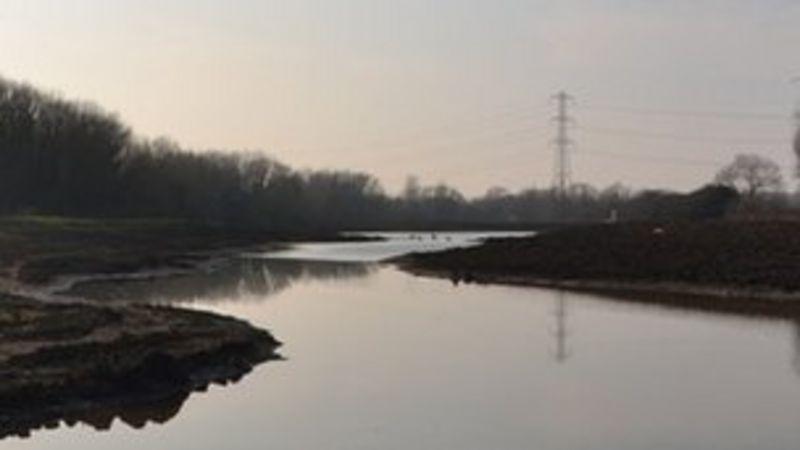
Fobney Island project
Source: Ref. 1
Overview
Nature-based solution
- Blue infrastructure
- Lakes/ponds
- Rivers/streams/canals/estuaries
- In-land wetlands, peatlands, swamps, and moors
Key challenges
- Green space, habitats and biodiversity (SDG 15)
- Habitat and biodiversity restoration
- Habitat and biodiversity conservation
- Green space creation and/or management
- Water management (SDG 6)
- Flood protection
- Health and well-being (SDG 3)
- Improving mental health
- Creation of opportunities for recreation
Focus
Management and improved protection of rivers and other blue areas, Ecological restoration of ecosystems, Protection of natural ecosystems
Project objectives
The aim of the project is to "enhance the habitat of Fobney Island for wildlife and increase its value for recreational use". This includes objectives such as:
(1) delivering restoration of river channel (straightening the River Kennet and creating a new channel with a double meander);
(2) increasing flood storage capacity in an area prone to flooding;
(3) creating a combination of ephemeral scrapes and a more permanent wetland; improving habitats for fish and the sustainability of fish stocks; (4) helping people of diverse backgrounds enjoy nature, the countryside and water-related recreation;
(5) providing access to open space;
(6) providing social benefits focusing on the enjoyment of angling and wildlife close to a large urban centre;
(7) addressing current anti-social behaviour on the land. (Ref. 1)
Implementation activities
The area has been transformed into "a wetland haven for wildlife" (to attract e.g. birds; bats; water voles and otters). "It now boasts wetland, a wildflower meadow, hay meadow and reed bed habitats, new ponds and river features". "The new wetland nature reserve will provide an excellent resource for learning about local nature, as well as providing a tranquil leisure facility for the people of Reading" (Ref. 2). During the first phase of the project, contractors lowered the land to create wetland features that, at certain times of the year, will be in connection with the river. This will improve the site for birds, bats, fish, reptiles and amphibians. The river itself has been restored to a more natural state through the introduction of two new rifle features. Five whole trees have also been dropped into the river channel to create ‘woody debris’ features. These features will create more diverse flows within the river and provide refuge habitat for juvenile fish. A new footpath has also been installed on the site, and two bird hides have been erected to provide views across the new wetland features. (Ref. 4)
Biodiversity conservation or restoration-focused activities
Biodiversity conservation:
- Protect and enhance urban habitats
- Preserve and strengthen existing habitats and ecosystems
- Promote environmentally-sound development in and around protected areas
- Protect species
- Undertake specific measures to protect species
- Undertake specific measures to protect native species
- Undertake specific measures to protect valued species
Biodiversity restoration:
- Rehabilitate and restore damaged or destroyed ecosystems
Main beneficiaries
- Local government/Municipality
- Citizens or community groups
Governance
Management set-up
- Co-governance with government and non-government actors
Type of initiating organisation
- National government
- Local government/municipality
- Non-government organisation/civil society
- Private sector/corporate actor/company
Participatory approaches/ community involvement
- Dissemination of information and education
- Consultation (e.g. workshop, surveys, community meetings, town halls)
Details on the roles of the organisations involved in the project
This was a partnership project with work being done by the Environment Agency, Reading Borough Council (as landowners), Thames Water Utilities Ltd and the Thames Rivers Restoration Trust. “Berkshire Ornithological Club and Reading and District Angling Association provided specialist advice throughout the project.” (Ref. 1, 2, 4) Also, The Council was already responsible for maintaining the island and will continue to do so upon completion of the project. (Ref. 1)
Project implemented in response to ...
... an EU policy or strategy?
Unknown
... a national policy or strategy?
Unknown
... a local policy or strategy?
Yes
(The Council’s Cultural Strategy; Open Spaces Strategy (2007); City 2020 Vision. (Ref. 1) With the Council’s Cultural Strategy as a key corporate document where, within the Environmental Sustainability implications, one of its aims is to deliver specific activities that improve Reading’s environment. The open spaces, woodlands, waterways and parks are, therefore, a vital asset in ensuring the environmental sustainability of Reading. (Ref. 1) The City 2020 Vision sees Reading as the premier centre for the performing arts, leisure and sport in the Thames Valley, and providing the highest range of leisure, educational, cultural and sporting facilities for all its residents, businesses and visitors. A new wetland habitat will contribute significantly to this vision. The Open Spaces Strategy commits the Council to protecting and enhancing open space. (Ref. 1) )
Financing
Total cost
€500,000 - €2,000,000
Source(s) of funding
- Public local authority budget
- Public national budget
- Funds provided by non-governmental organization (NGO)
Type of funding
- Direct funding (grants, subsidies, or self-financed projects by private entities)
- Other
Non-financial contribution
Type of non-financial contribution
- Provision of labour
Who provided the non-financial contribution?
- Citizens (e.g. volunteering)
Impacts and Monitoring
Environmental impacts
- Water management and blue areas
- Increased protection against flooding
- Improved stormwater management
- Enhanced protection and restoration of freshwater ecosystems
- Green space and habitat
- Increased green space area
- Increased conservation or restoration of ecosystems
- Reduced biodiversity loss
- Increased number of species present
Economic impacts
- Unknown
Socio-cultural impacts
- Health and wellbeing
- Improved mental health
- Gain in activities for recreation and exercise
- Education
- Increased support for education and scientific research
- Increased knowledge of locals about local nature
Type of reported impacts
Expected impacts, Achieved impacts
Presence of formal monitoring system
Unknown
Presence of indicators used in reporting
No evidence in public records
Presence of monitoring/ evaluation reports
Yes
Availability of a web-based monitoring tool
No
References
Ref. 1. Reading Council (2020) STRATEGIC ENVIRONMENT, PLANNING AND TRANSPORT COMMITTEE
16 MARCH 2020. Available at: Source link. Accessed on 11th September, 2020.
Ref. 2. BBC News (2013) Fobney Island in Reading transformed in conservation project. Berkshire. Available at: Source link. Accessed on 11th September, 2020.
Ref. 3. BBC News (2011) Fobney Island restoration begins in Reading. England. Available at: Source link. Accessed on 11th September, 2020.
Ref. 4. The RRC (2013) Fobney Island wetland creation and river restoration project. Outputs Presentations. The River Restoration Centre. Available at: Source link. Accessed on 11th September, 2020.
Ref. 5. OA Library. Champness, Carl (2011) Fobney Island, Reading, Berkshire. Project Report. Oxford Archaeological Unit Ltd. Available at: Source link. Accessed on 11th September, 2020.
16 MARCH 2020. Available at: Source link. Accessed on 11th September, 2020.
Ref. 2. BBC News (2013) Fobney Island in Reading transformed in conservation project. Berkshire. Available at: Source link. Accessed on 11th September, 2020.
Ref. 3. BBC News (2011) Fobney Island restoration begins in Reading. England. Available at: Source link. Accessed on 11th September, 2020.
Ref. 4. The RRC (2013) Fobney Island wetland creation and river restoration project. Outputs Presentations. The River Restoration Centre. Available at: Source link. Accessed on 11th September, 2020.
Ref. 5. OA Library. Champness, Carl (2011) Fobney Island, Reading, Berkshire. Project Report. Oxford Archaeological Unit Ltd. Available at: Source link. Accessed on 11th September, 2020.