

Last updated: June 2024
Quelimane is a port city in Mozambique. It lies below sea level right alongside the Good Signs river (Rio Bons Sinais), and just a few kilometres from the coast. The frequent extreme weather phenomena such as rain and marine flooding render the city extremely vulnerable to climate risks. In 2013, the municipality concluded that one solution involves restoring large areas of mangroves, which act as a nature-based solution against flooding, helping to stem the tide by preventing soil erosion. In the past mangroves were cut down by the locals for building and cooking but now with the help of the municipality and local communities, the trees are restored and used as the first line of defence against climate change (1).
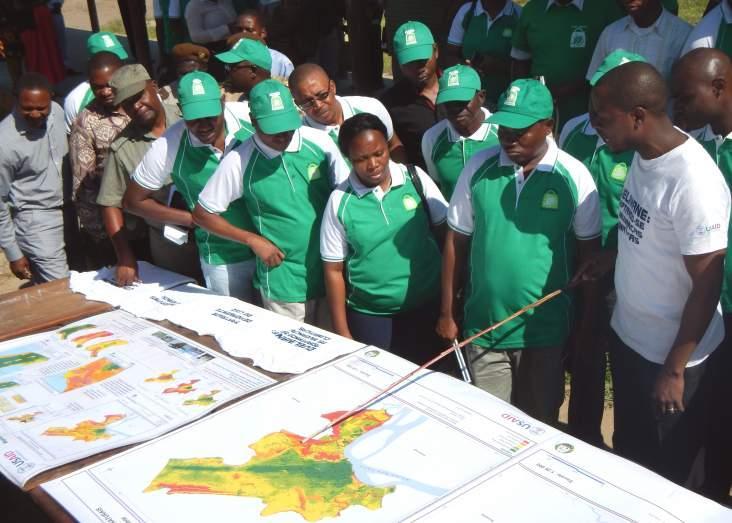
Discussion with the local community
https://www.climatelinks.org/blog/mozambique-cities-adapt-climate-change-one-tree-and-one-text-message-time
Overview
Nature-based solution
- Blue infrastructure
- Coastlines
- Coastal wetland, mangroves and salt marshes
Key challenges
- Climate action for adaptation, resilience and mitigation (SDG 13)
- Climate change adaptation
- Coastal resilience and marine protection (SDG 14)
- Coastal protection / hazard mitigation
- Marine and coastal biodiversity protection
- Green space, habitats and biodiversity (SDG 15)
- Habitat and biodiversity restoration
- Water management (SDG 6)
- Flood protection
- Inclusive and effective governance (SDG 16)
- Inclusive governance
- Social justice, cohesion and equity (SDG 10)
- Environmental education
- Economic development and employment (SDG 8)
- Employment/job creation
Focus
Creation of new green areas, Coastal landscape management or protection, Ecological restoration of ecosystems, Transformation of previously derelict areas
Project objectives
The project aimed to restore the mangroves that had protected the city of Quelimane by repopulating the bare mangrove fields. The main goals are:
1. To take proactive steps to adapt to climate change and prevent these devastating effects - to strengthen Mozambique’s ability to build resilience to climate change challenges, especially in vulnerable coastal communities;
2. To involve the local community and to raise awareness of the practicality of nature-based solutions;
3. To adhere through the initiative to the CCAP (Coastal City Adaptation Project of USAID);
4. To promote the economic benefits of mangroves, such as the trees’ role in honey production and improved fisheries;
5. To increase marine biodiversity in the region and avoid coastal erosion;
6. To put out a conservation message in the local language via radio;
7. To plant seedlings of Avicennia marina, the most common mangrove species in the area (1,2,3,4).
Implementation activities
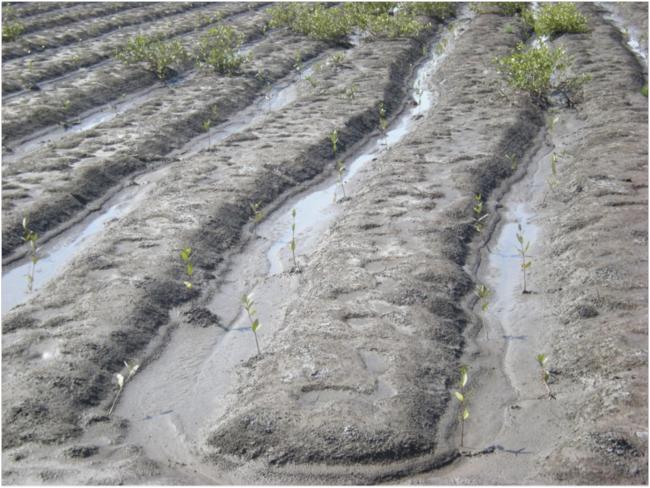
The methodology was to repopulate the bare mangrove fields with new mangroves and to involve the communities in this work, which included preparing seedbeds, ridging and sowing. Both seedlings and propagules were planted and sown in both edges of a ridge of 3 meters in width, separated 2 meters from one ridge to other. Parallel to replanting the mangroves, 12 resilient model houses were constructed using local materials, but without using mangroves. Local artisans were trained to build the houses so that they could then transfer this know-how to their peers. The project started in 2013 and ended in 2018, focusing in stages on different communities and areas of Quelimane.
Climate-focused activities
Climate change adaptation:
- Implement measures that prevent/manage desertification, soil erosion and landslides
- Protect coastal and freshwater ecosystems to prevent coastal erosion and pollution
- Restore wetlands and/or coastal ecosystems to dissipate the effects of flooding and/or storms
Biodiversity conservation or restoration-focused activities
Biodiversity restoration:
- Rehabilitate and restore damaged or destroyed ecosystems
- Restore species (native, endangered, or unspecified)
- Restore native species
- Restore valued species
- Public engagement
Main beneficiaries
- Local government/Municipality
- Citizens or community groups
- Marginalized groups: Socio-economically disadvantaged populations (e.g. low-income households, unemployed)
Governance
Management set-up
- Co-governance with government and non-government actors
Type of initiating organisation
- Local government/municipality
- EU body
- Multilateral organisation
Participatory approaches/ community involvement
- Dissemination of information and education
- Consultation (e.g. workshop, surveys, community meetings, town halls)
- Joint implementation (e.g. tree planting)
- Citizen oversight (e.g. boards, advisory)
Details on the roles of the organisations involved in the project
The initiative has been led by the municipality of Quelimane alongside USAID, UN Habitat, the EU, and local communities. The municipality implemented the action alongside the local community and the other non-governmental actors financed it. Regarding capacity-building a local university alongside the Christian Council of Mozambique was involved(2)
Project implemented in response to ...
... an EU policy or strategy?
No
... a national policy or strategy?
Yes
(In response to the country’s climate change challenges, the government of Mozambique approved The National Climate Change Adaptation and Mitigation Strategy (NCCAMS) at the end of 2012. The NCCAMS aimed to increase resilience and reduce climate risk at the national and community levels. (5))
... a local policy or strategy?
Yes
(The intervention was not based on a local plan or strategy however it was part of a USAID initiative called the Coastal City Adaptation Project (CCAP). From 2013 onwards CCAP worked with municipal governments, such as Quelimane, to increase understanding of urban adaptation issues and increase the application of management options for urban adaptation, particularly for the most vulnerable communities. (5))
Financing
Total cost
More than €4,000,000
Source(s) of funding
- EU funds
- Multilateral funds/international funding
Type of funding
- Unknown
Non-financial contribution
Type of non-financial contribution
- Provision of land
- Provision of labour
- Provision of expertise
Who provided the non-financial contribution?
- Public authorities (e.g. land, utility services)
- Citizens (e.g. volunteering)
Impacts and Monitoring
Environmental impacts
- Climate change
- Strengthened capacity to address climate hazards/natural disasters
- Water management and blue areas
- Increased protection against flooding
- Green space and habitat
- Increased green space area
- Enhanced support of pollination
Economic impacts
- Increase of green jobs (e.g. paid employment positions)
- Stimulate development in deprived areas
Socio-cultural impacts
- Social justice and cohesion
- Fair distribution of social, environmental and economic benefits of the NBS project
- Improved liveability
- Increased involvement of locals in the management of green spaces
- Education
- Increased knowledge of locals about local nature
- Safety
- Increased perception of safety
Type of reported impacts
Expected impacts, Achieved impacts
Presence of formal monitoring system
Yes
Presence of indicators used in reporting
Yes
Presence of monitoring/ evaluation reports
Yes
Availability of a web-based monitoring tool
No evidence in public records
References
1. Reuters (2018), Mangroves and mapping help Mozambique tackle climate change, available at Source link (accessed 24-9-2021)
2. Initiatives Climate (2018), Mangrove Restoration / Restauration des zones de mangroves, available at Source link (accessed 24-9-2021)
3. Climate Links (2016), Mozambique Cities Adapt to Climate Change One Tree and One Text Message at a Time, available at Source link (accessed 24-9-2021)
4. Bruce Byers Consulting (2018), Restoring Mangroves in Mozambique in an Era of Climate Change, available at Source link, (accessed 24-9-2021)
5. USAID (2018), MOZAMBIQUE COASTAL CITY ADAPTATION PROJECT -FINAL REPORT, available at Source link (accessed 24-9-2021)
6. USAID (2017), Strengthening adaptation planning in Mozambican coastal cities, available at Source link (accessed 24-9-2021)
2. Initiatives Climate (2018), Mangrove Restoration / Restauration des zones de mangroves, available at Source link (accessed 24-9-2021)
3. Climate Links (2016), Mozambique Cities Adapt to Climate Change One Tree and One Text Message at a Time, available at Source link (accessed 24-9-2021)
4. Bruce Byers Consulting (2018), Restoring Mangroves in Mozambique in an Era of Climate Change, available at Source link, (accessed 24-9-2021)
5. USAID (2018), MOZAMBIQUE COASTAL CITY ADAPTATION PROJECT -FINAL REPORT, available at Source link (accessed 24-9-2021)
6. USAID (2017), Strengthening adaptation planning in Mozambican coastal cities, available at Source link (accessed 24-9-2021)
http://www.brucebyersconsulting.com/restoring-mangroves-in-mozambique-in-an-era-of-climate-change/
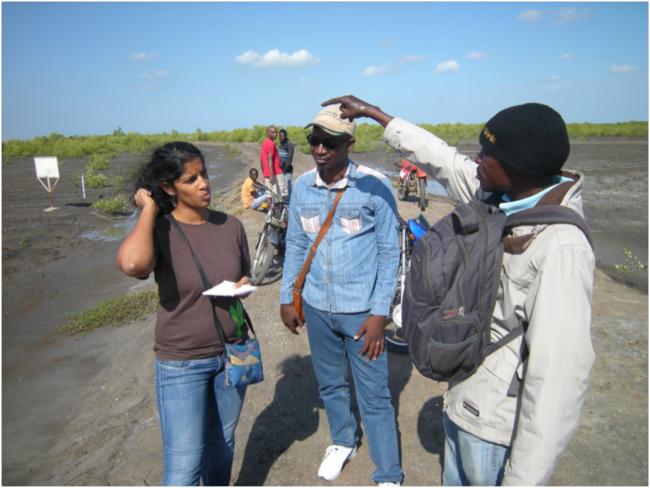
Restoring Mangroves - Consultations
http://www.brucebyersconsulting.com/restoring-mangroves-in-mozambique-in-an-era-of-climate-change/
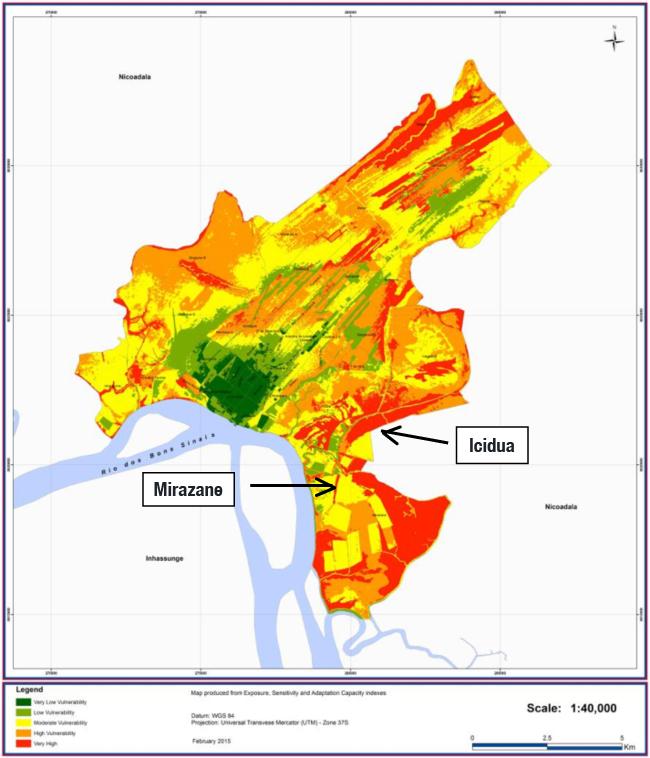
Map of the area
http://www.brucebyersconsulting.com/restoring-mangroves-in-mozambique-in-an-era-of-climate-change/
Information about this nature-based solution was collected as part of the UNA global extension project funded by the British Academy.