

Last updated: November 2021
A modern office building in Poznan and a headquarter of a large company was designed to include multiple environmentally friendly solutions like cycling facilities, energy-efficient appliances in the building, roof gardens, the use of rainwater in the sanitary facilities, waste segregation system and the overall energy-efficient design of the building façade to let in as much natural light as possible [1].
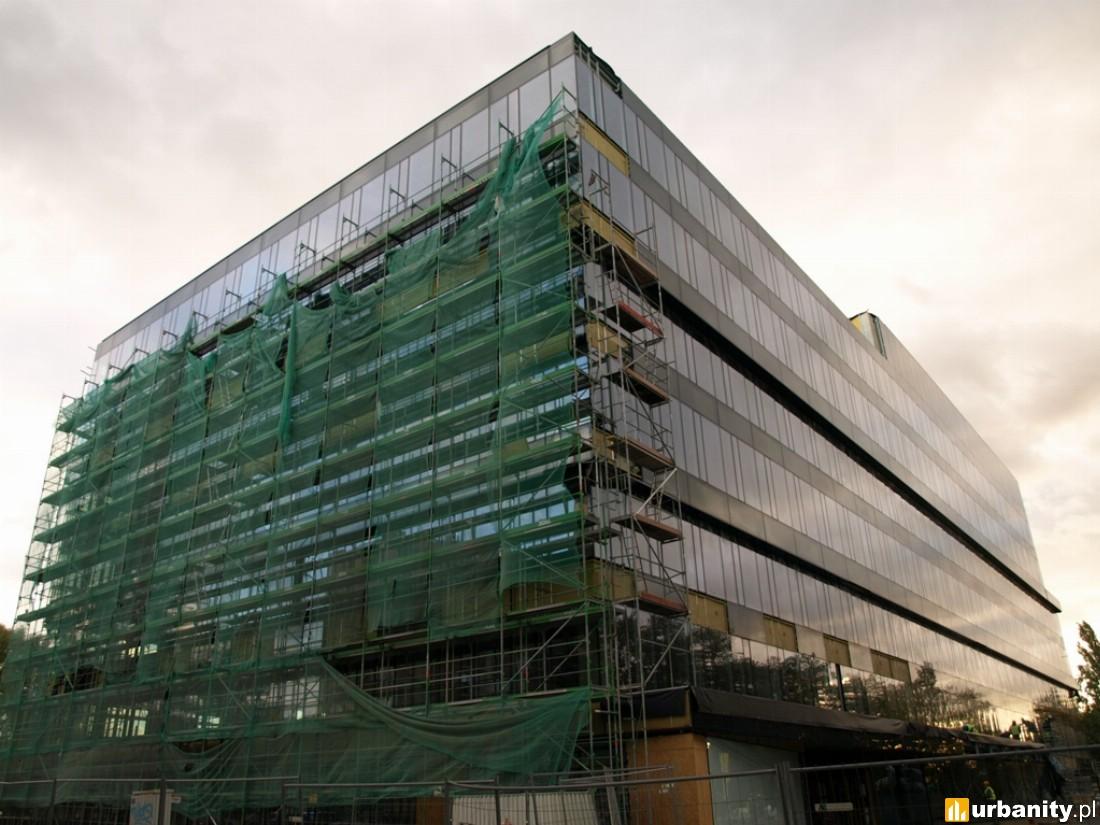
Construction of the Office Park Pixel
Piotr Malina (www.urbanity.pl), retrieved 08/31/2018
Overview
Nature-based solution
- Nature on buildings (external)
- Green roofs
- Grey infrastructure featuring greens
- Institutional green space
- Green areas for water management
- Sustainable urban drainage systems
Key challenges
- Climate action for adaptation, resilience and mitigation (SDG 13)
- Climate change mitigation
- Water management (SDG 6)
- Stormwater and rainfall management and storage
- Environmental quality
- Waste management
- Regeneration, land-use and urban development
- Regulation of built environment
- Promote natural styles of landscape design for urban development
- Health and well-being (SDG 3)
- Creation of opportunities for recreation
- Economic development and employment (SDG 8)
- Economic development: service sectors
Focus
Creation of new green areas
Project objectives
To build a modern office building which utilizes innovation and environmentally friendly solutions [1]
Implementation activities
The project is completed and meets all of the set criteria. A modern, ecologically friendly building was built (total surface 33000 m2 with green roofs and rainwater sanitary system, consisting of 7 overground and 3 underground floors) [1,2]
Climate-focused activities
Climate change mitigation:
- Install vertical or horizontal artificial surfaces that help with carbon storage and cooling
- Raise public awareness of behaviours, lifestyle and cultural changes with mitigation potential
Main beneficiaries
- Private sector/Corporate/Company
Governance
Management set-up
- Led by non-government actors
Type of initiating organisation
- Private sector/corporate actor/company
Participatory approaches/ community involvement
- Unknown
Details on the roles of the organisations involved in the project
Globe Trade Center was the project's investor, the building was designed by the JEMS Architects' studio and Budimex from Warsaw is the general contractor for the project [1,2]
Project implemented in response to ...
... an EU policy or strategy?
Unknown
... a national policy or strategy?
Unknown
... a local policy or strategy?
Unknown
Financing
Total cost
More than €4,000,000
Source(s) of funding
- Corporate investment
Type of funding
- Unknown
Non-financial contribution
Unknown
Impacts and Monitoring
Environmental impacts
- Climate change
- Reduced emissions
- Environmental quality
- Improved waste management
- Water management and blue areas
- Improved stormwater management
- Green space and habitat
- Increased green space area
Economic impacts
- Reduce financial cost for urban management
- Attraction of business and investment
Socio-cultural impacts
- Health and wellbeing
- Gain in activities for recreation and exercise
- Education
- Increased awareness of NBS and their benefits
Type of reported impacts
Achieved impacts
Presence of formal monitoring system
Unknown
Presence of indicators used in reporting
No evidence in public records
Presence of monitoring/ evaluation reports
No evidence in public records
Availability of a web-based monitoring tool
No evidence in public records
References
1. Zabawny, Z. (2015), 'Nagroda J.B. Quadro 2012: PIXEL najpiękniejszy' ('Award J.B. Quadro 2012: PIXEL the most beautiful'), online article, Source link, Source link (Accessed: 26 September 2020).
2. Project's profile on the Internet portal Source link, Source link (Accessed: 26 September 2020).
2. Project's profile on the Internet portal Source link, Source link (Accessed: 26 September 2020).
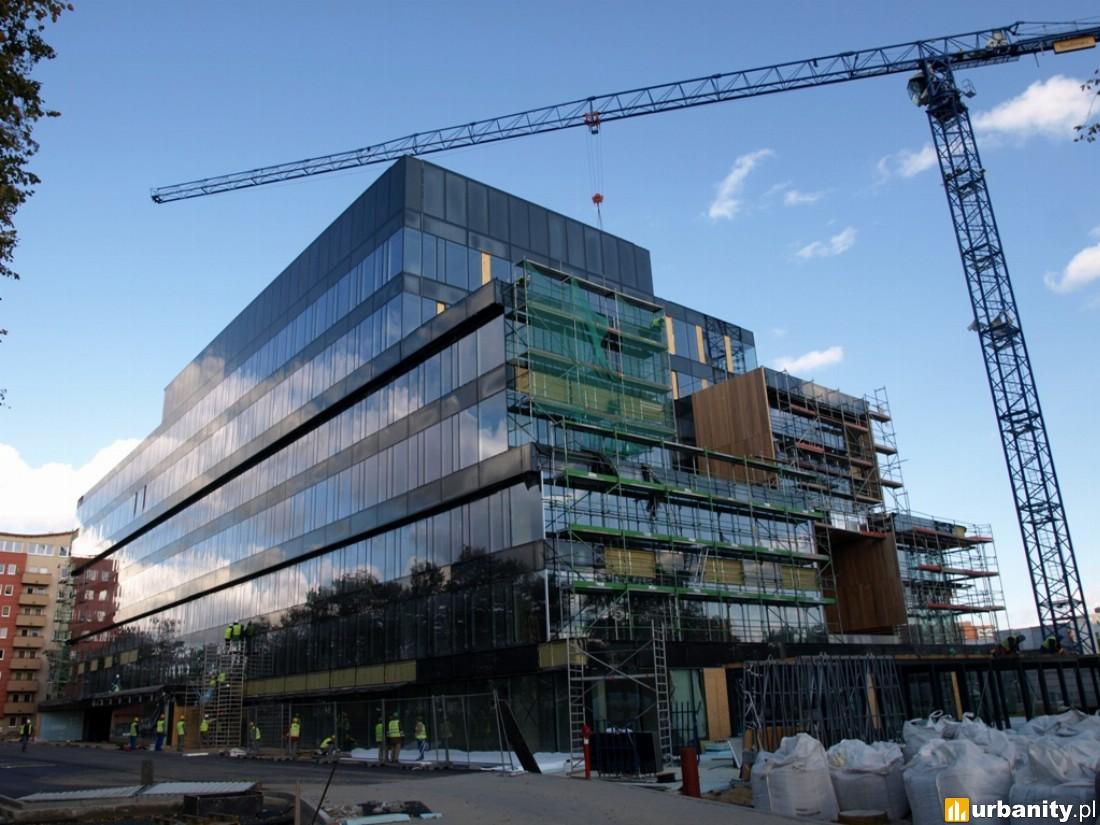
Construction of the Office Park Pixel
Piotr Malina (www.urbanity.pl), retrieved 08/31/2018