

Last updated: October 2021
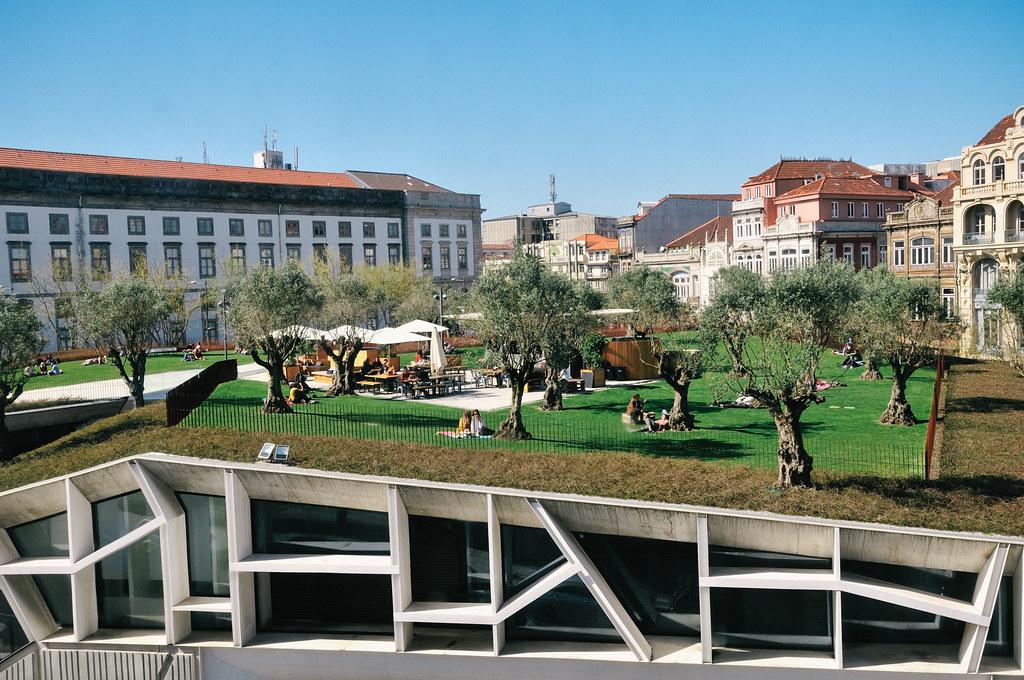
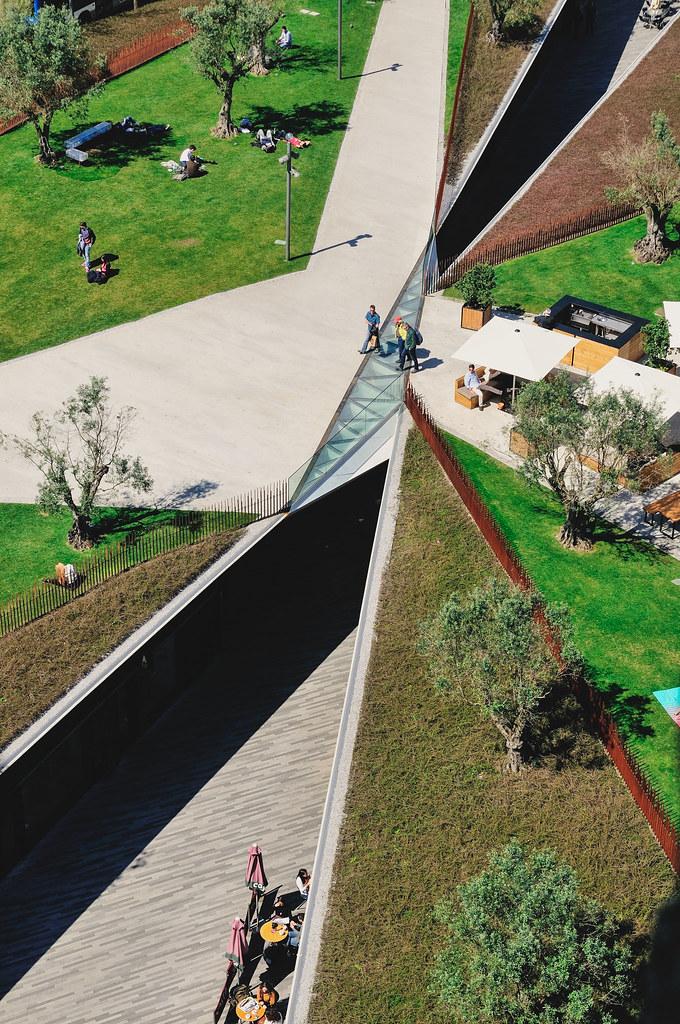
This NBS is Porto’s largest green roof, sometimes referred as the "Fifth Façade Urban Rooftop Garden", the "Olive Trees Garden" is an oasis of 50 olive trees and lush grass on top of a semi-open gallery of shops, restaurants, and cafés with an underground parking garage. It’s an urban park escape for city workers, tourists, and university students. Located on top of "Praça de Lisboa" (Lisbon square), this is a fantastic concept of urban planning done right: green space co-existing with commerce and vehicles below street level. This project was completed in 2013 as an effort to improve an area in decline in the middle of the cultural centre of Porto by creating a green space for the community (Ref. 1, 2).
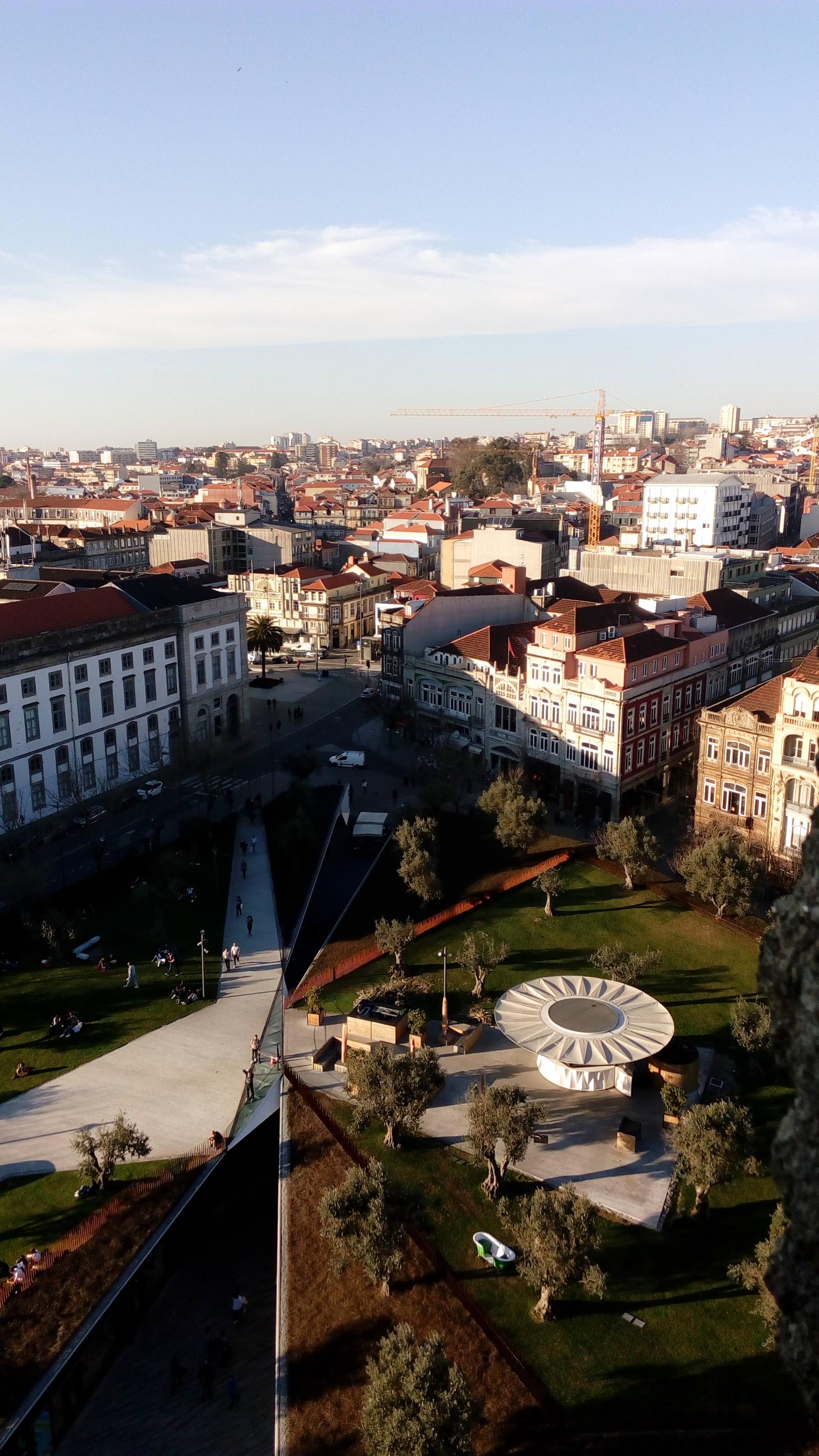
Jardim das oliveiras
Photo provided to the project
Overview
Nature-based solution
- Nature on buildings (external)
- Green roofs
- Parks and urban forests
- Pocket parks/neighbourhood green spaces
- Green areas for water management
- Sustainable urban drainage systems
Key challenges
- Climate action for adaptation, resilience and mitigation (SDG 13)
- Climate change adaptation
- Climate change mitigation
- Water management (SDG 6)
- Flood protection
- Stormwater and rainfall management and storage
- Green space, habitats and biodiversity (SDG 15)
- Green space creation and/or management
- Environmental quality
- Air quality improvement
- Regeneration, land-use and urban development
- Promote natural styles of landscape design for urban development
- Health and well-being (SDG 3)
- Creation of opportunities for recreation
- Economic development and employment (SDG 8)
- Tourism support
- Real estate development
- Cultural heritage and cultural diversity
- Protection of historic and cultural landscape/infrastructure
Focus
Creation of new green areas
Project objectives
1. Enhancing sustainable urbanization;
2. Restoring ecosystems and their functions;
3. Developing climate change mitigation;
4. Developing climate change adaptation; improving risk management and resilience;
5. Nature-based solutions for increasing the sustainable use of matter and Energy;
6. Green roofs can add value to urban environments when part of cities’ green structure;
7. Precipitation retention, peak flood delay, the creation of biodiversity niches, carbon dioxide uptake and oxygen production, associated with the improvement of the urban landscape and valorisation of buildings, are just a few of the benefits (Ref. 1).
Implementation activities
This project was completed as an effort to improve an area in decline in the middle of Porto by creating a space for the community. It is an urban regeneration project of a 5,000 m2 area, the structure includes three levels, with its top-most level consisting of a green roof planted with olive trees referencing the "Porta do Oliva". The middle level is dedicated to commercial use, and the ground level provides room for a refined parking lot and pedestrian spaces. (1)
In order to achieve the objectives mentioned above, the project adopted a methodology that includes the participation of research groups from different national institutions of high education, as well as interaction with foreign cities, community associations and the project of a green roof for three municipal buildings. To find the best strategy for Porto many studies are currently being developed within the PQAP project, such as the potential of the city buildings to receive green roofs(1)
Climate-focused activities
Climate change adaptation:
- Increase or improve urban vegetation cover to help reduce outdoor temperature
- Implement green walls or roofs to lower indoor temperature and provide insulation
Climate change mitigation:
- Install vertical or horizontal artificial surfaces that help with carbon storage and cooling
Main beneficiaries
- Local government/Municipality
- Citizens or community groups
- Marginalized groups: Elderly people
- Young people and children
Governance
Management set-up
- Co-governance with government and non-government actors
Type of initiating organisation
- Local government/municipality
- Private sector/corporate actor/company
Participatory approaches/ community involvement
- Consultation (e.g. workshop, surveys, community meetings, town halls)
Details on the roles of the organisations involved in the project
The “Fifth Façade Project” (PQAP) was developed in response to this gap as a partnership between the Portuguese Association for Green Roofs (ANCV) and the Porto City Council (CMPorto). The main objective of this innovative consultancy project is to define which models the Porto City Council should follow in order to include GI, in particular green roofs, into the urban planning, environmental and green spaces strategy of the city. (1)
Project implemented in response to ...
... an EU policy or strategy?
Unknown
(According to the e-mail conversation with Paulo Palha (one of the initiators), it is unknown if there was an EU Directive behind the NBS since it wasn't mentioned. (see interview attached))
... a national policy or strategy?
Unknown
(According to the e-mail conversation with Paulo Palha (one of the initiators), this NBS was not part of a national or local environmental strategy plan. (see interview attached) )
... a local policy or strategy?
Unknown
(According to the e-mail conversation with Paulo Palha (one of the initiators), this NBS was not part of a national or local environmental strategy plan. (see interview attached) )
Financing
Total cost
Unknown
Source(s) of funding
- Public local authority budget
Type of funding
- Earmarked public budget
Non-financial contribution
No
Impacts and Monitoring
Environmental impacts
- Climate change
- Lowered local temperature
- Enhanced carbon sequestration
- Environmental quality
- Improved air quality
- Reduced noise exposure
- Water management and blue areas
- Increased protection against flooding
- Improved stormwater management
- Green space and habitat
- Increased green space area
Economic impacts
- Unknown
Socio-cultural impacts
- Social justice and cohesion
- Improved access to urban green space
- Health and wellbeing
- Gain in activities for recreation and exercise
Type of reported impacts
Expected impacts, Achieved impacts
Presence of formal monitoring system
Yes
Presence of indicators used in reporting
Yes
Presence of monitoring/ evaluation reports
Yes
Availability of a web-based monitoring tool
No evidence in public records
References
1. Oppla (2013), Case studies, Porto: Fifth Façade project Jardim Das Oliveiras: Porto’s Urban Rooftop Garden, Available at Source link (Accessed 22-6-2020)
2. Gail at Large (2016), JARDIM DAS OLIVEIRAS: PORTO’S URBAN ROOFTOP GARDEN, Available at Source link (Accessed 22-6-2020)
3. Complex (2013), "Praca de Lisboa" Brings a New Public Space to Porto, Portugal, Available at Source link (Accessed 22-6-2020)
4. Castiglione, B. (2017), The current development of Green Roof Policies in Porto – What lessons from London?, (Website not available in 2020)
5. Ferreira Gomes Vieira e Sousa, M (2017), Metodologia para a Inventariação de Coberturas Verdes Potenciais e Proposta de Coberturas Verdes Modelo, no Âmbito do Projeto Quinto Alçado do Porto, Available at Source link, (Accessed 28-7-2020)
2. Gail at Large (2016), JARDIM DAS OLIVEIRAS: PORTO’S URBAN ROOFTOP GARDEN, Available at Source link (Accessed 22-6-2020)
3. Complex (2013), "Praca de Lisboa" Brings a New Public Space to Porto, Portugal, Available at Source link (Accessed 22-6-2020)
4. Castiglione, B. (2017), The current development of Green Roof Policies in Porto – What lessons from London?, (Website not available in 2020)
5. Ferreira Gomes Vieira e Sousa, M (2017), Metodologia para a Inventariação de Coberturas Verdes Potenciais e Proposta de Coberturas Verdes Modelo, no Âmbito do Projeto Quinto Alçado do Porto, Available at Source link, (Accessed 28-7-2020)
Jardim das oliveiras
Source: https://gailatlarge.com/blog/2016/04/08/43033
Jardim das oliveiras
Source: https://gailatlarge.com/blog/2016/04/08/43033