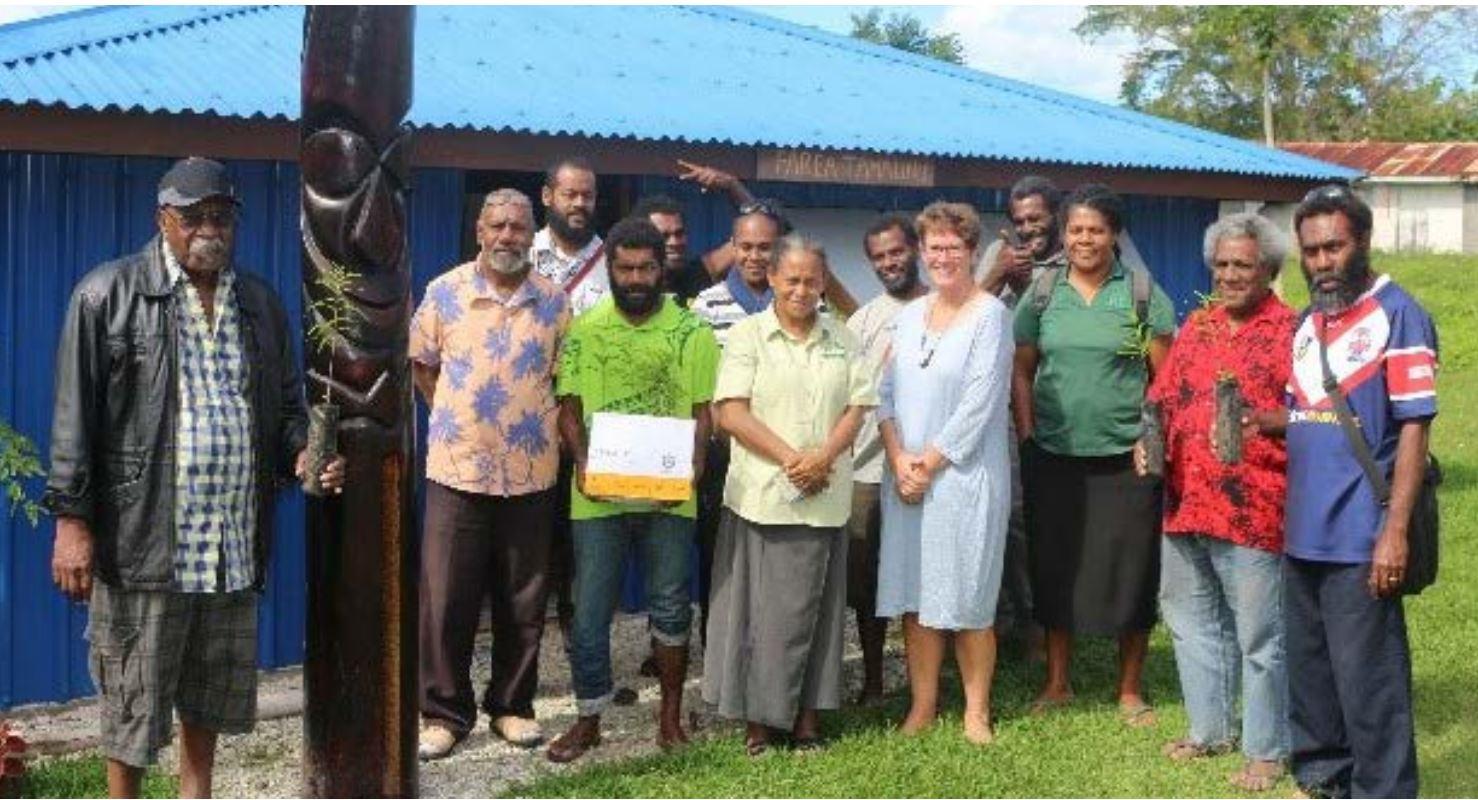
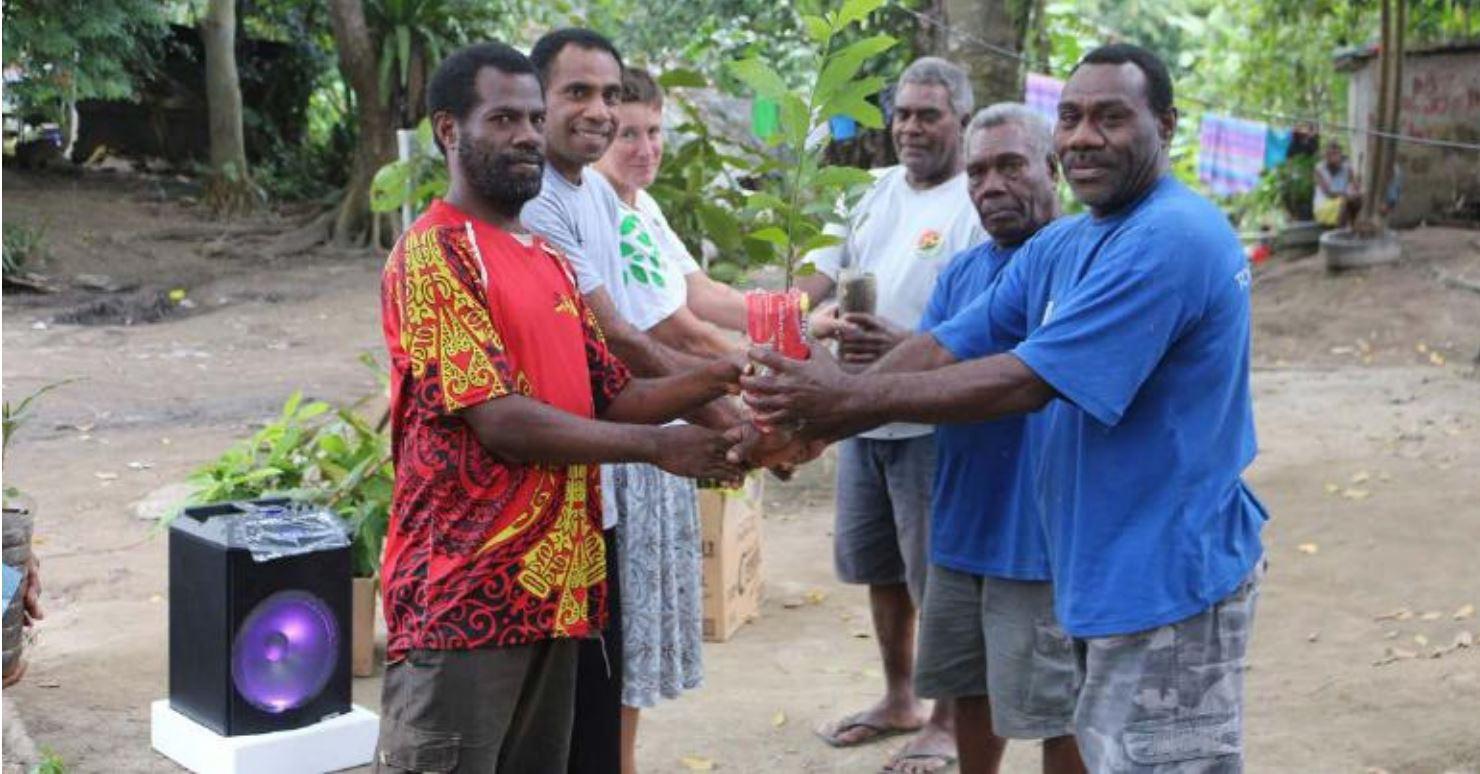
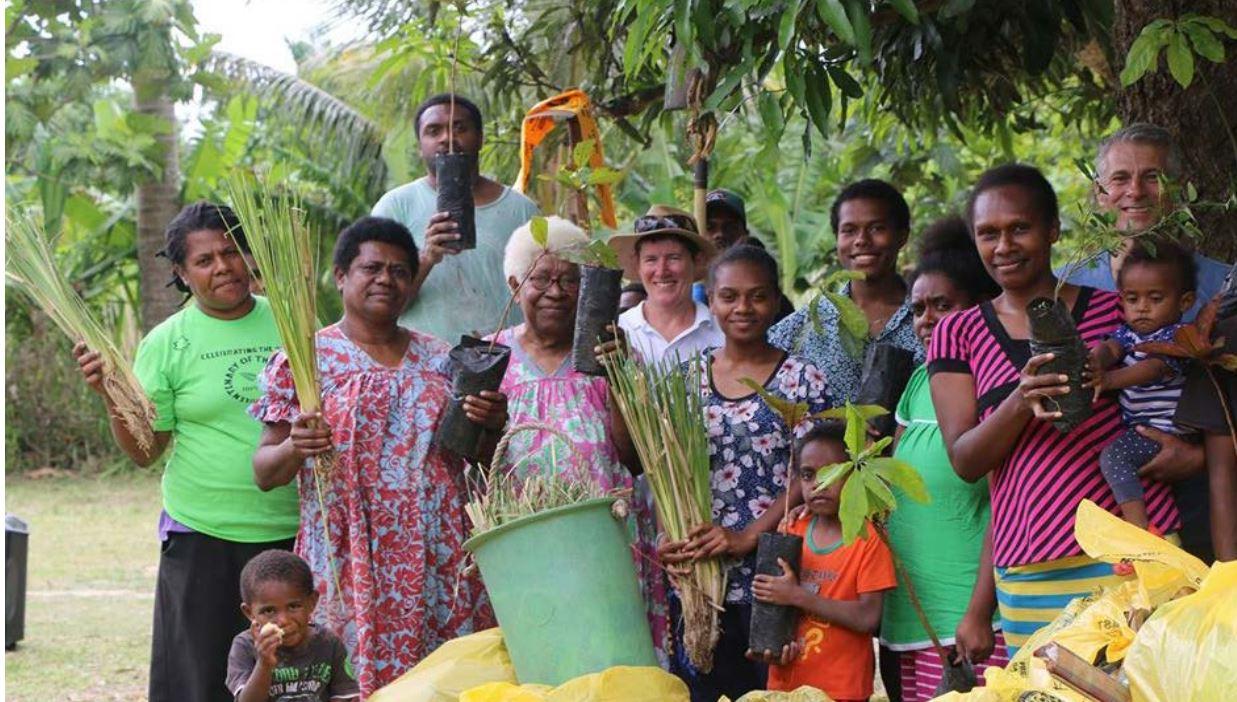
The Tagabe Riparian Corridor Regeneration Project is an integrated catchment project ‘designed to build resilience into the riparian system to safeguard human wellbeing in the face of current and future climate change challenges and key population/ resources demands’ (Ref. 4). The project is focused on the ‘riparian margins of mid to lower catchment streams in the Tagabe catchment’ (Ref. 4,5). Activities consist of ‘riparian revegetation and stream bank protection; sustainable land management of adjacent farmlands; and point source pollution prevention and remediation’ through a series of 5-year management periods (Ref. 4,5). The project was part of the larger PEBACC (Pacific Ecosystem-based Adaptation to Climate Change) project and is now supported by the Vanuatu Government and various other initiatives like the Pacific R2R – Ridge to Reef programme (Ref. 8,9).
Overview
Nature-based solution
- Grey infrastructure featuring greens
- Blue infrastructure
- Riverbank/Lakeside greens
- Rivers/streams/canals/estuaries
Key challenges
- Climate action for adaptation, resilience and mitigation (SDG 13)
- Climate change adaptation
- Water management (SDG 6)
- Flood protection
- Improvements to water quality
- Green space, habitats and biodiversity (SDG 15)
- Habitat and biodiversity restoration
Focus
Project objectives
Implementation activities
Climate-focused activities
Climate change adaptation:
- Renaturalization of rivers and other water bodies
Biodiversity conservation or restoration-focused activities
Biodiversity restoration:
- Rehabilitate and restore damaged or destroyed ecosystems
- Public engagement
Main beneficiaries
- National-level government
- Citizens or community groups
Governance
Management set-up
- Co-governance with government and non-government actors
Type of initiating organisation
- National government
- Regional government
- Transnational network
Participatory approaches/ community involvement
- Consultation (e.g. workshop, surveys, community meetings, town halls)
- Joint implementation (e.g. tree planting)
Details on the roles of the organisations involved in the project
Project implemented in response to ...
Financing
Total cost
Source(s) of funding
- Public regional budget
- Multilateral funds/international funding
Type of funding
- Earmarked public budget
- Direct funding (grants, subsidies, or self-financed projects by private entities)
Non-financial contribution
- Provision of labour
- Citizens (e.g. volunteering)
Impacts and Monitoring
Environmental impacts
- Environmental quality
- Improved waste management
- Water management and blue areas
- Enhanced protection and restoration of freshwater ecosystems
- Green space and habitat
- Increased green space area
- Increased conservation or restoration of ecosystems
- Increased number of species present
Economic impacts
- Unknown
Socio-cultural impacts
- Social justice and cohesion
- Increased involvement of locals in the management of green spaces
- Education
- Increased knowledge of locals about local nature
Type of reported impacts
Presence of formal monitoring system
Presence of indicators used in reporting
Presence of monitoring/ evaluation reports
Availability of a web-based monitoring tool
References
2. SPREP. (2021). Project Publications and Reports. SPREP. Available at: Source link [Accessed: 18 September 2021].
3. Blaschke, P.M. and Timmermans, H. (2018). Ecosystem-based adaptation in Port Vila, Vanuatu. Panel discussion on Front-Line Islands and Cities: building resilient island communities. ICLEI 9th Global Forum on Urban Resilience and Adaptation. Retrieved from: Source link [Document provided].
4. SPREP. (2018). Planning for ecosystem-based adaptation in Port Vila, Vanuatu: Synthesis report. Apia: Secretariat of the Pacific Regional Environment Programme. Retrieved from: Source link [Document provided].
5. Zari, M.B., Blaschke, P., Livesey, C., Martinez-Almoyna, C., Weaver, S., Archie, K.M., Jackson, B., Komugabe, A., Maxwell, D., Rastandeh, A., and Renwick, J. (2017). Ecosystem-based Adaptation (EbA) Project Implementation Plans, Port Vila, Vanuatu. Victoria University of Wellington. Retrieved from: Source link [Document provided].
6. PEBACC. (2019). Newsletter: Issue 8, December 2019. PEBACC. Retrieved from: Source link [Document provided].
7. PEBACC. (2020). Newsletter: Issue 9, Jan-May 2020. PEBACC. Retrieved from: Source link [Document provided].
8. PEBACC. (2020). Newsletter: Issue 10, August 2020. PEBACC. Retrieved from: Source link [Document provided].
9. Mangisi-Mafileo, I. (2020). Restoring Tagabe River, Now and Beyond. Pacific R2R – Ridge to Reef. Available at: Source link [Accessed: 18 September 2021].
10. SPREP. (2021).Pacific Ecosystem-Based Adaptation to Climate Source link. Available at: Source link [Accessed: 18 September 2021].