

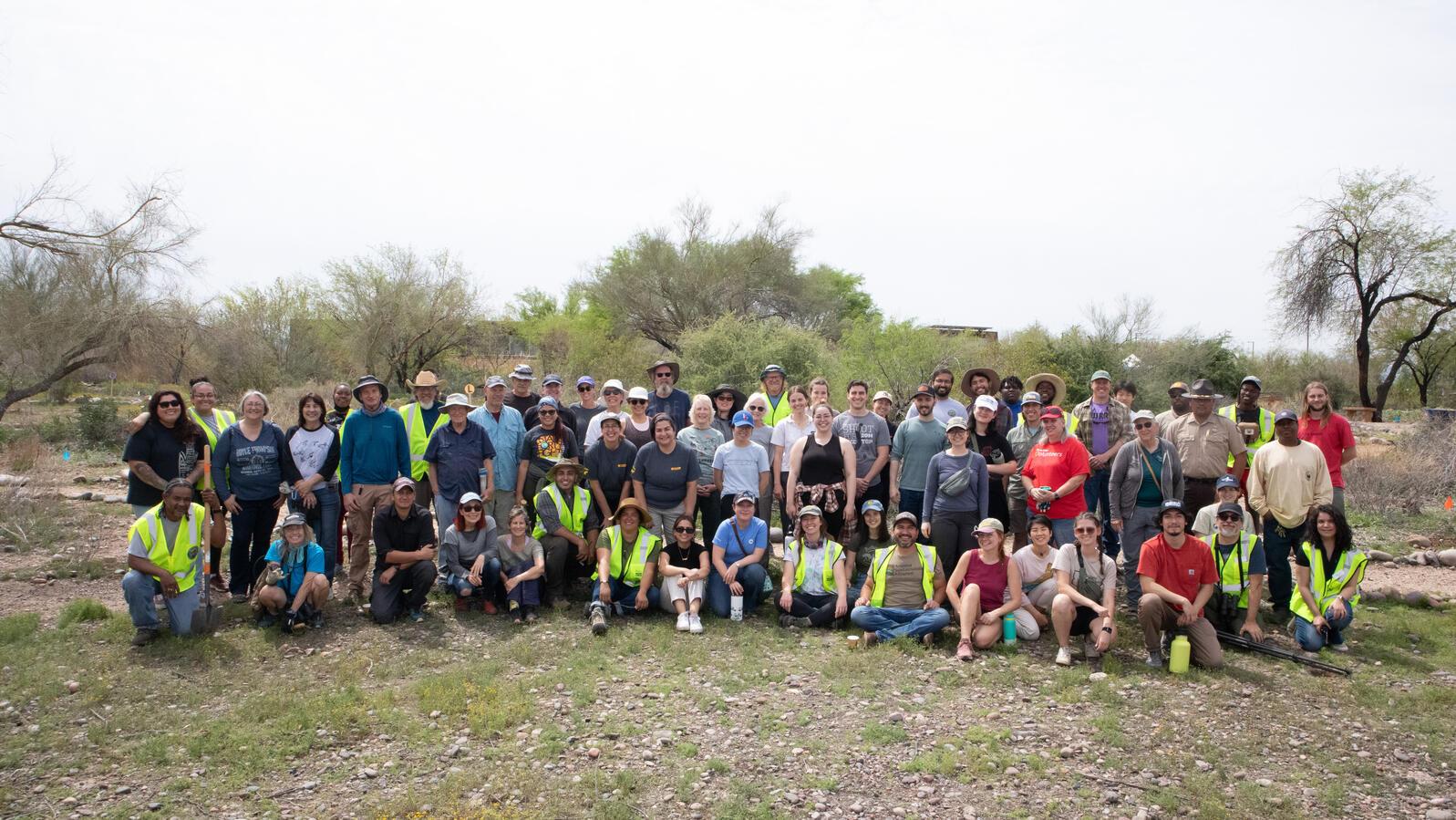
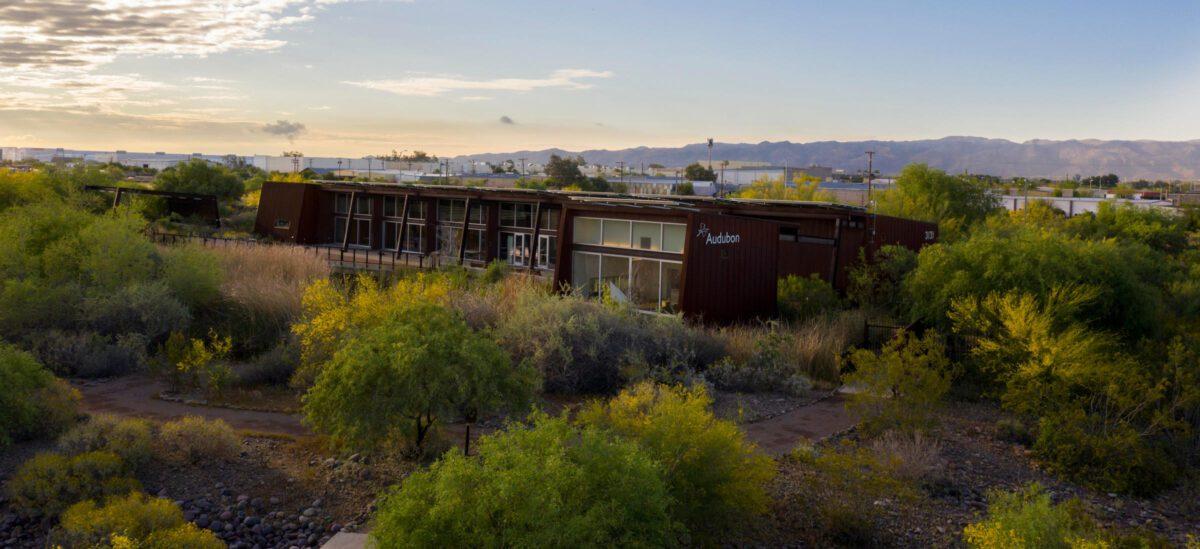
Pollinators—including bees, butterflies, moths, hummingbirds, sunbirds, and bats, all found in the Sonoran Desert—play a vital role in plant reproduction, contributing to the production of fruits, vegetables, and seeds. However, these essential species face growing challenges, such as habitat loss, pesticide use, and climate change. In 2023, the Rio Reimagined project, a two-year regional river revitalization initiative, received a grant from the Society for Ecological Restoration’s Standards-based Restoration in Action program, in collaboration with Microsoft. This grant is funding the creation of a riparian pollinator garden designed by ASU students at the Nina Mason Pulliam Rio Salado Audubon Center, situated on the banks of the Salt River in Phoenix. With strong support from the City of Phoenix, Microsoft’s Community Environmental Sustainability (CES) program, and planting expertise from the Tiger Mountain Foundation, a one-acre garden was restored in 2024 to establish a thriving pollinator habitat. This restored garden includes interpretive signage and programming designed to educate visitors on the importance of riparian ecosystems. More than one hundred volunteers planted native species along the Rio Salado to attract and support pollinators such as bees, butterflies, and birds. The garden is specifically designed to be climate-resilient and drought-tolerant, enhancing the biodiversity of the Salt River. This initiative not only revitalizes the Rio Salado Audubon Center but also cultivates native plants, supports pollinator populations, and benefits the broader community through increased environmental awareness and sustainability. (1-3)

Overview
Nature-based solution
- Blue infrastructure
- Riverbank/Lakeside greens
- Parks and urban forests
- Other
Key challenges
- Climate action for adaptation, resilience and mitigation (SDG 13)
- Climate change adaptation
- Environmental quality
- Soil quality improvement
- Green space, habitats and biodiversity (SDG 15)
- Green space creation and/or management
- Habitat and biodiversity restoration
- Health and well-being (SDG 3)
- Creation of opportunities for recreation
- Social justice, cohesion and equity (SDG 10)
- Environmental education
- Sense of community and community engagement
Principal problems in Functional Urban Area (FUA)
- Environmental Degradation
- Biodiversity loss
Key priorities
Focus
Project objectives
Implementation activities
Climate-focused activities
Climate change adaptation:
- Increase urban vegetation cover to reduce urban heat island effect
- Increase the use of or more efficient agroforestry practices (e.g. soil moisture, reduce evaporation) or drought-resistant species for agriculture
Specification of climate or environmentally vulnerable communities
Biodiversity conservation or restoration-focused activities
Biodiversity restoration:
- Restore species (native, endangered, or unspecified)
- Restore native species
- Restore valued species
- Clear and control invasive alien species
Main beneficiaries
- Citizens or community groups
Governance
Management set-up
- Co-governance with government and non-government actors
Type of initiating organisation
- Non-government organisation/civil society
Participatory approaches/ community involvement
- Co-planning (e.g. stakeholder workshops, focus groups, participatory mapping)
- Dissemination of information and education
- Joint implementation (e.g. tree planting)
- Co-management/Joint management
Details on the roles of the organisations involved in the project
Project implemented in response to ...
Type of enablers
Financing
Total cost
Source(s) of funding
- Public regional budget
- Corporate investment
Type of funding
- Earmarked public budget
- Direct funding (grants, subsidies, or self-financed projects by private entities)
Non-financial contribution
- Provision of labour
- Citizens (e.g. volunteering)
Impacts and Monitoring
Environmental impacts
- Climate change
- Lowered local temperature
- Expected lowered local temperature
- Environmental quality
- Improved soil quality
- Achieved improved soil quality
- Water management and blue areas
- Reduced risk of damages by drought
- Achieved reduced risk of damages by drought
- Green space and habitat
- Increased green space area
- Achieved increased green space area
- Increased conservation or restoration of ecosystems
- Achieved increased conservation or restoration of ecosystems
- Improved prevention or control of invasive alien species
- Achieved improved prevention or control of invasive alien species
- Enhanced support of pollination
- Achieved enhanced support of pollination
Economic impacts
- Generation of other type of work opportunities (e.g. voluntary, work for rehabilitation)
- Achieved generation of other type of work opportunities (e.g. voluntary, work for rehabilitation)
Socio-cultural impacts
- Social justice and cohesion
- Improved access to urban green space
- Achieved improved access to urban green space
- Increased visibility and opportunity for marginalised groups or indigenous peoples
- Achieved increased visibility and opportunity for marginalised groups or indigenous peoples
- Increased involvement of locals in the management of green spaces
- Achieved increased involvement of locals in the management of green spaces
- Education
- Increased knowledge of locals about local nature
- Achieved increased knowledge of locals about local nature
Type of reported impacts
Presence of formal monitoring system
Presence of indicators used in reporting
Presence of monitoring/ evaluation reports
Availability of a web-based monitoring tool
Potential risks of implementation and trade-offs
References


 Information about this nature-based solution was collected as part of the Naturescapes project funded by the European Union under Grant Agreement No 101084341.