

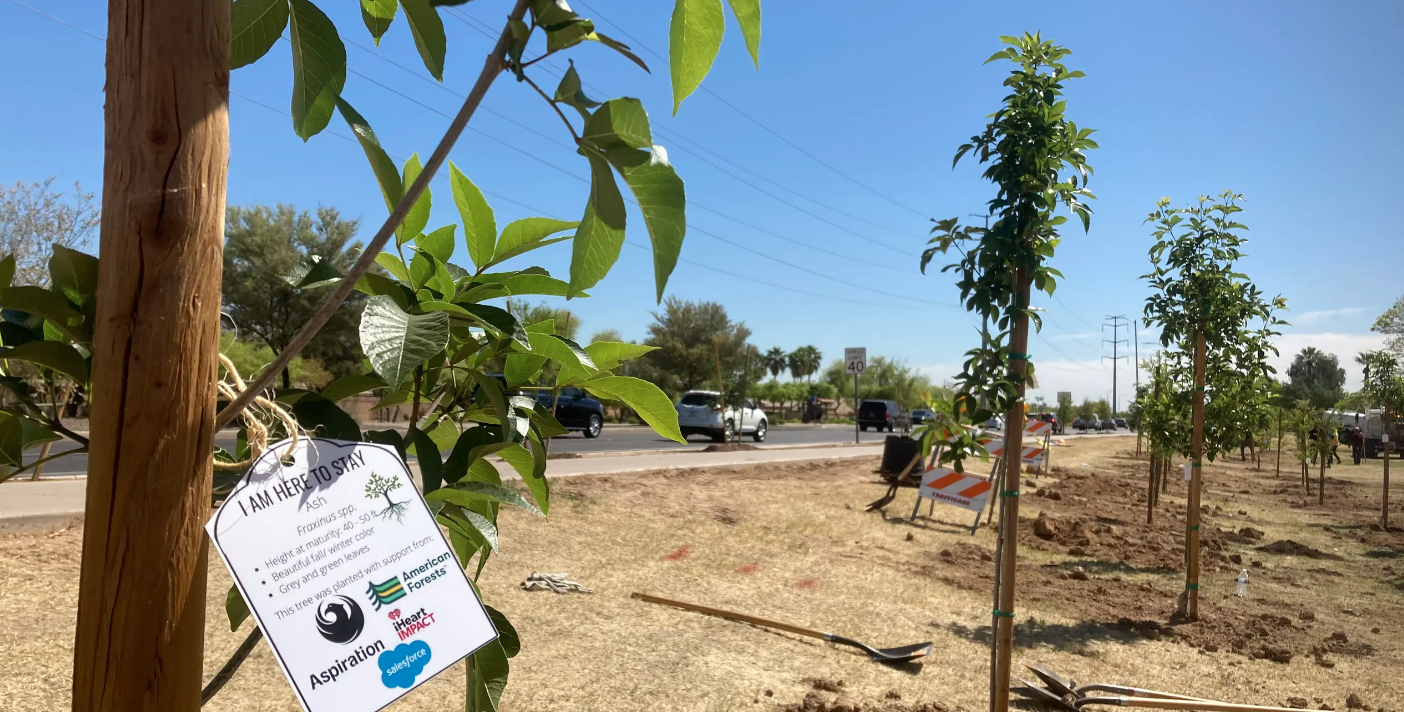
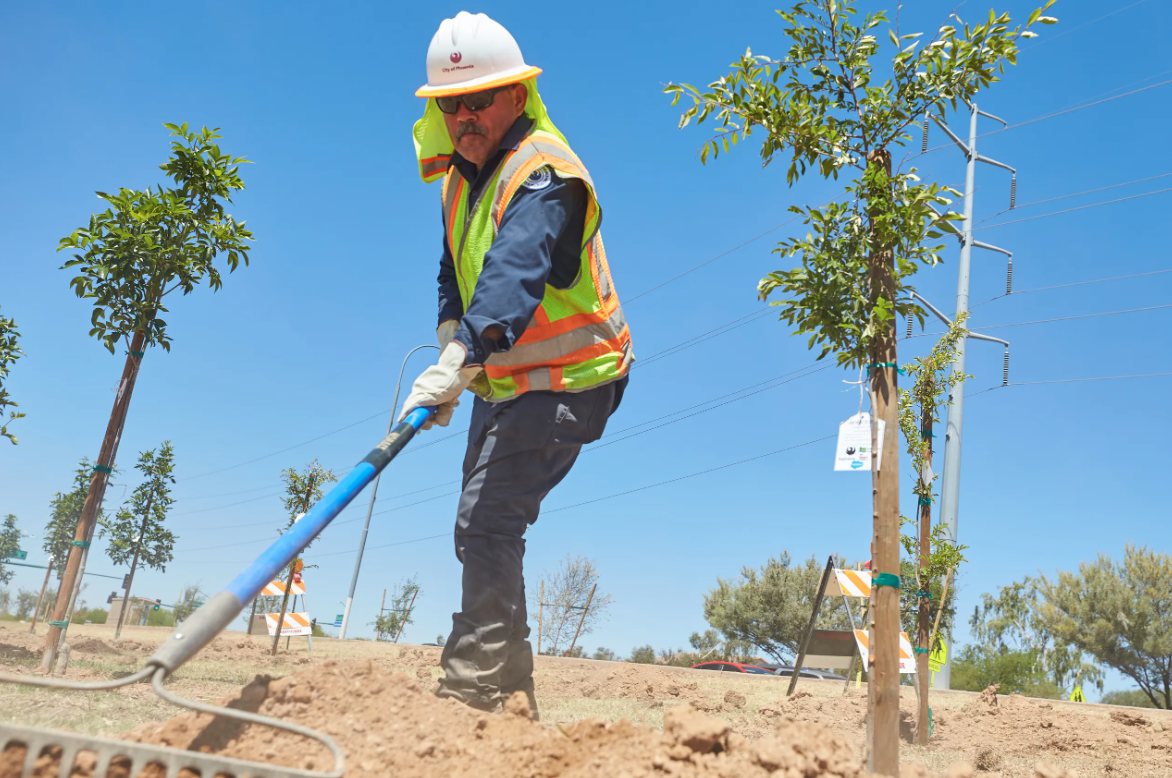
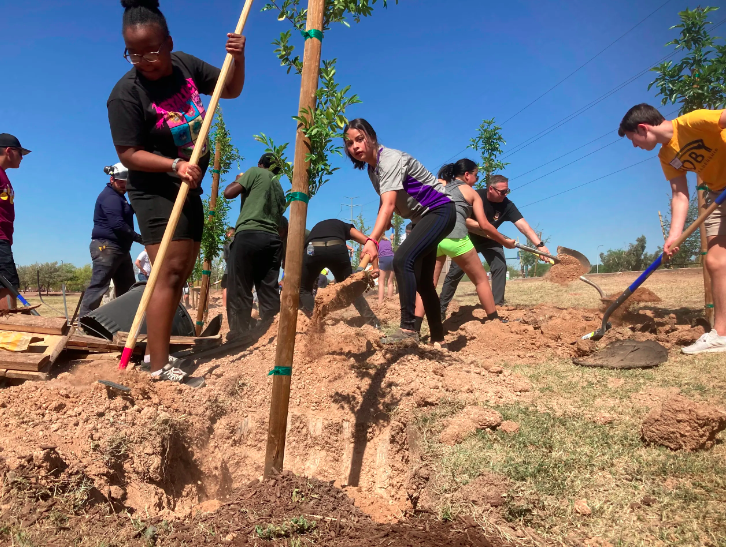
Minimizing heat stress is a critical priority for Phoenix, the hottest major city in the U.S., where heat-related deaths reached at least 359 across Maricopa County last year. The city's expansive urban layout and infrastructure exacerbate the urban heat island effect, making an already scorching climate even more hazardous. In addition, heat impacts communities unequally, with some neighborhoods up to 10 degrees hotter than others. Lower-income and predominantly Hispanic neighborhoods often have less canopy cover and fewer resources to combat rising temperatures, making them more vulnerable to extreme heat. To address this, the City of Phoenix launched the Cool Corridors Program in 2020, a key initiative in its broader climate resilience strategy. This program, a partnership with American Forests and the Phoenix Street Transportation Department, aims to establish a network of shaded pathways that connect communities across the city. These corridors enable residents to travel safely to schools, public transit, and other city hubs, promoting environmental sustainability and public health. The program prioritizes investment in low-income, heat-sensitive neighborhoods to improve tree equity and create green spaces where they’re most needed. The first Cool Corridor was developed in 2022 at Cesar Chavez Park, where over 250 trees were planted with the support of more than 100 volunteers, setting a strong example for future initiatives. By 2030, Phoenix plans to complete 100 Cool Corridors citywide, building a more resilient and livable urban environment for all residents. (1-5, 7-8, 10)
Overview
Nature-based solution
- Grey infrastructure featuring greens
- Alley or street trees and other street vegetation
- Parks and urban forests
- Pocket parks/neighbourhood green spaces
Key challenges
- Climate action for adaptation, resilience and mitigation (SDG 13)
- Climate change adaptation
- Green space, habitats and biodiversity (SDG 15)
- Green space creation and/or management
- Health and well-being (SDG 3)
- Improving physical health
- Social justice, cohesion and equity (SDG 10)
- Social justice and equity
- Environmental and climate justice
- Sense of community and community engagement
Principal problems in Functional Urban Area (FUA)
- Climate-Related Hazards
- Heat stress & Extreme temperatures
- Health, Well-being and Social cohesion
- Physical health harm (from pollution, wildfire, extreme temperature)
Key priorities
Focus
Project objectives
Implementation activities
Climate-focused activities
Climate change adaptation:
- Increase urban vegetation cover to reduce urban heat island effect
Specification of climate or environmentally vulnerable communities
Main beneficiaries
- Citizens or community groups
- Young people and children
- Marginalized groups: Children, young people or youth groups , Socio-economically disadvantaged populations (e.g. low-income households, unemployed), Disadvantaged ethnic or racial groups
Governance
Management set-up
- Co-governance with government and non-government actors
Type of initiating organisation
- Local government/municipality
Participatory approaches/ community involvement
- Co-planning (e.g. stakeholder workshops, focus groups, participatory mapping)
- Joint implementation (e.g. tree planting)
Details on the roles of the organisations involved in the project
Project implemented in response to ...
Type of enablers
Financing
Total cost
Source(s) of funding
- Public local authority budget
- Corporate investment
Type of funding
- Earmarked public budget
- Direct funding (grants, subsidies, or self-financed projects by private entities)
Non-financial contribution
- Provision of labour
- Citizens (e.g. volunteering)
Impacts and Monitoring
Environmental impacts
- Climate change
- Lowered local temperature
- Expected lowered local temperature
- Green space and habitat
- Increased green space area
- Achieved increased green space area
- Increased number of species present
- Achieved increased number of species present
Economic impacts
- Generation of other type of work opportunities (e.g. voluntary, work for rehabilitation)
- Achieved generation of other type of work opportunities (e.g. voluntary, work for rehabilitation)
Socio-cultural impacts
- Social justice and cohesion
- Improved liveability
- Expected improved liveability
- Improved access to urban green space
- Achieved improved access to urban green space
- Health and wellbeing
- Improved physical health
- Expected improved physical health
- Safety
- Improved community safety to climate-related hazards
- Expected improved community safety to climate-related hazards
Type of reported impacts
Presence of formal monitoring system
Presence of indicators used in reporting
Presence of monitoring/ evaluation reports
Availability of a web-based monitoring tool
Potential risks of implementation and trade-offs
References
 Information about this nature-based solution was collected as part of the Naturescapes project funded by the European Union under Grant Agreement No 101084341.