

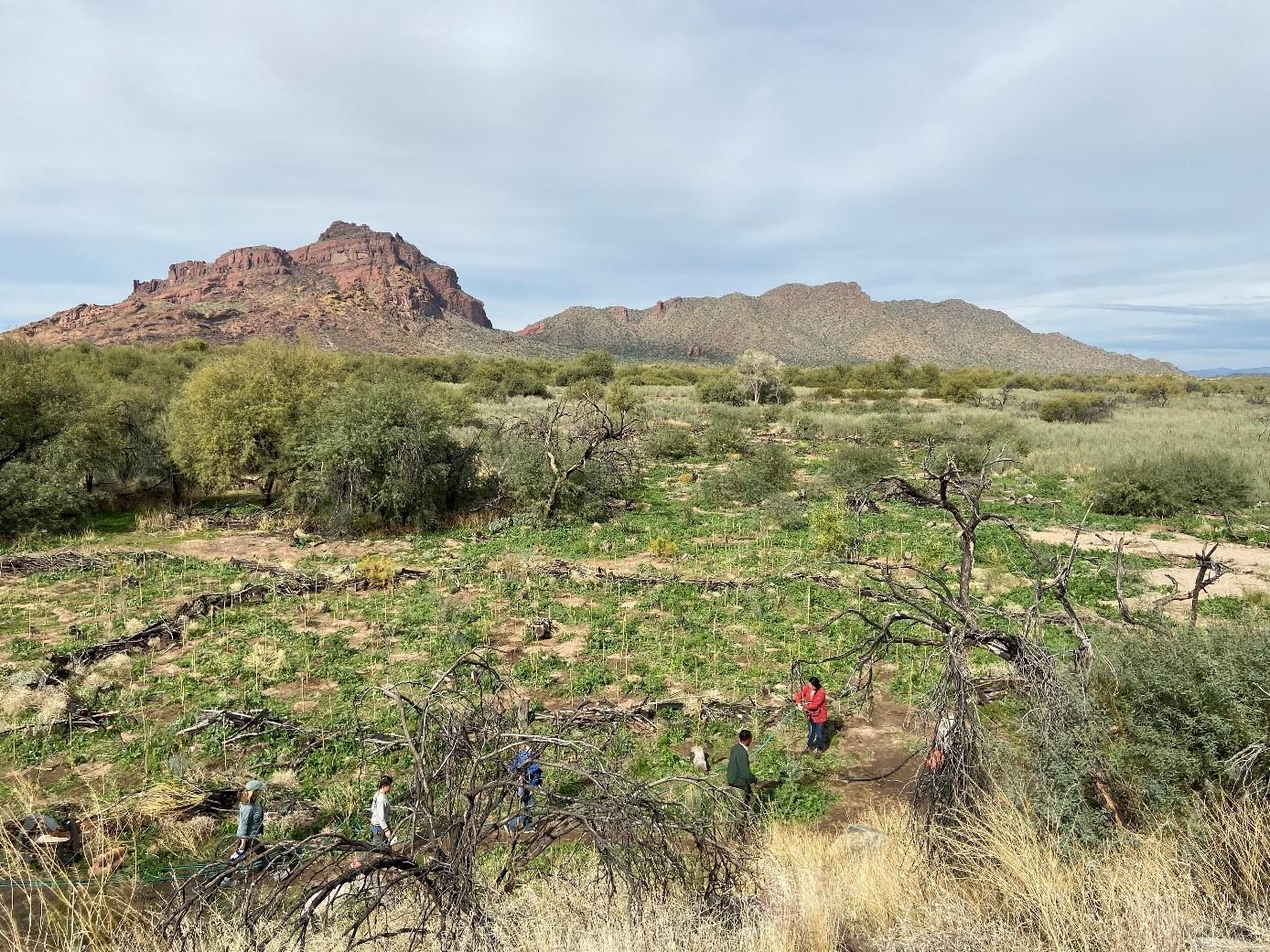
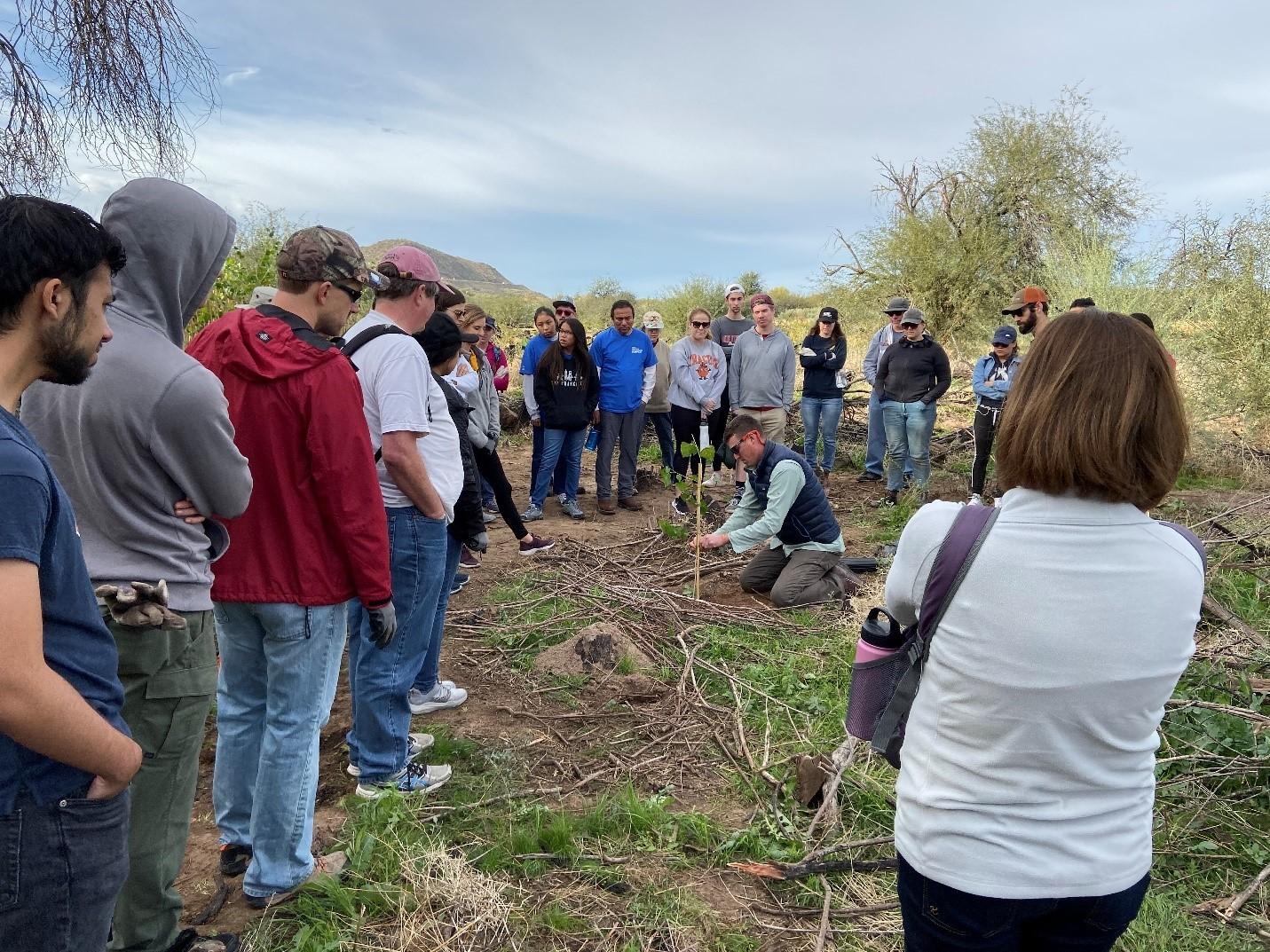
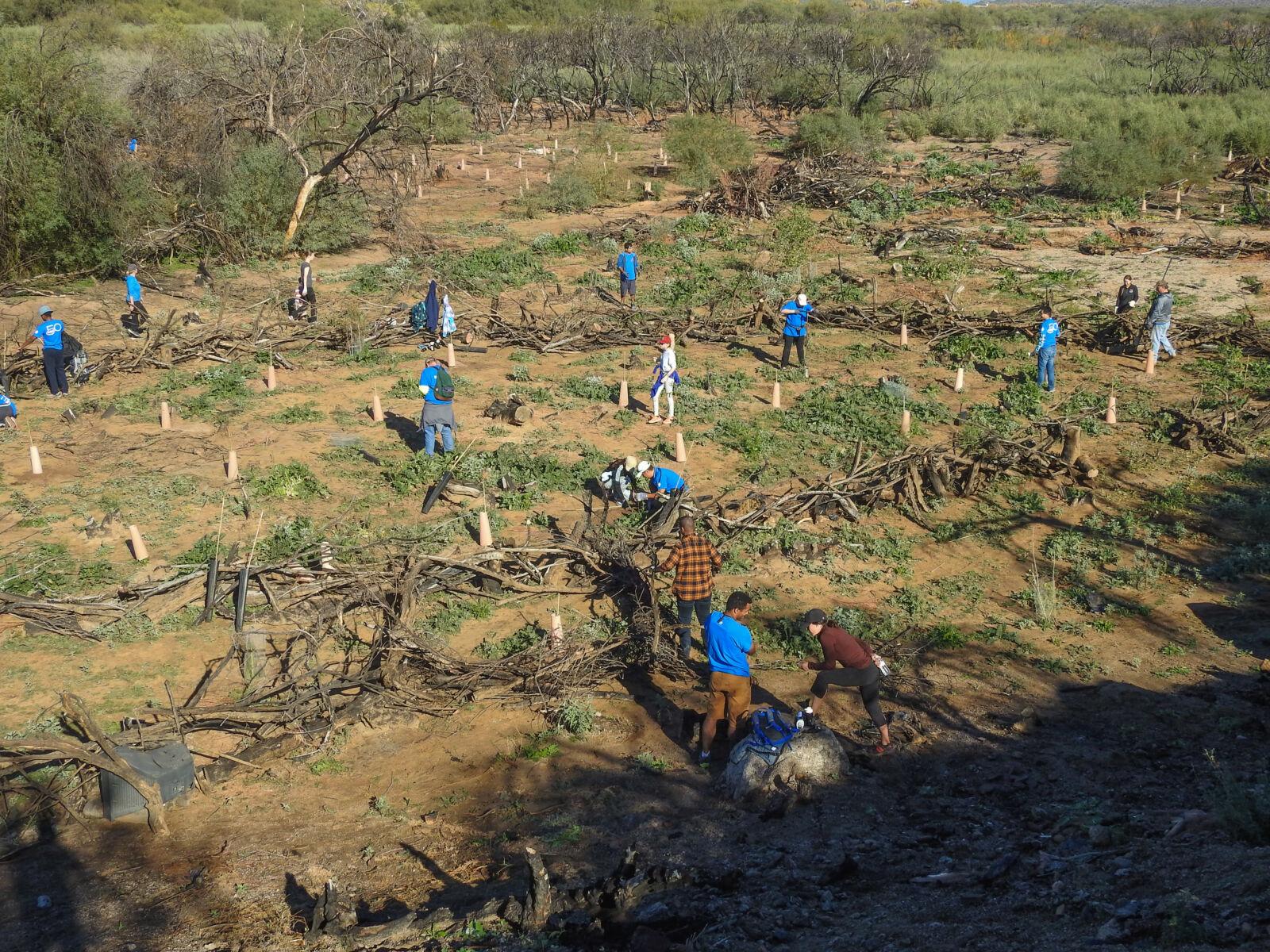
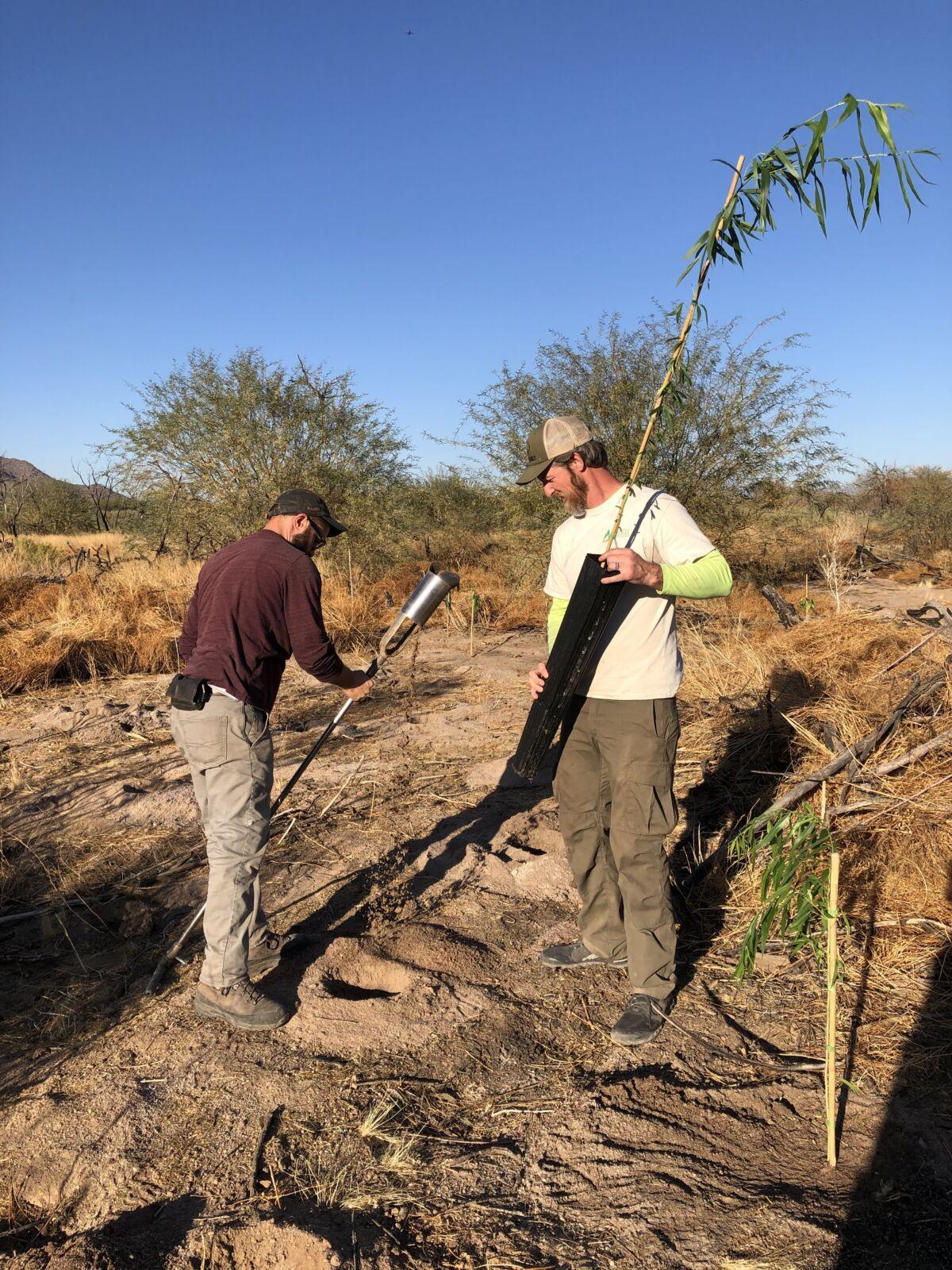
The Lower Salt River Restoration Project (LSRRP) is a riparian restoration initiative located along the Lower Salt River within the Mesa Ranger District of the Tonto National Forest. This collaborative project seeks to restore a section of the Lower Salt River Recreation Area that was severely impacted by the 2017 Cactus Fire. The Cactus Fire was a significant wildfire that caused extensive damage to vegetation and habitat in the area, highlighting the need for targeted restoration efforts to rebuild the ecosystem and mitigate future fire risks. The LSRRP’s primary activities focus on removing invasive tamarisk trees, which are highly flammable and contribute to the intensity of wildfires, and planting native seedlings to reestablish local flora. By removing tamarisk trees, the project aims to create a landscape that is more resistant to fire, reducing the wildfire risk for the region. Additionally, the project supports the abundance and diversity of native plant species by removing invasive plants and planting thousands of native riparian tree species. The restoration efforts also aim to enhance the riparian habitat by expanding two critical vegetation communities—the mesquite bosque and the cottonwood-willow gallery forest. These communities support rich biodiversity and offer essential habitats for local wildlife. Beyond ecological restoration, the project emphasizes community involvement and awareness. It provides opportunities for the local community to participate in the project through environmental education events for K-12 students and ongoing volunteer involvement in monitoring and maintaining restored areas. Overall, the Lower Salt River Restoration Project is a proactive effort to protect and revitalize the Lower Salt River Recreation Area, enhancing its ecological resilience and engaging the community in long-term conservation. (2-4, 6, 8, 11)
Overview
Nature-based solution
- Blue infrastructure
- Rivers/streams/canals/estuaries
Key challenges
- Climate action for adaptation, resilience and mitigation (SDG 13)
- Climate change adaptation
- Green space, habitats and biodiversity (SDG 15)
- Green space creation and/or management
- Habitat and biodiversity restoration
- Water management (SDG 6)
- Flood protection
- Cultural heritage and cultural diversity
- Preservation of natural heritage
- Inclusive and effective governance (SDG 16)
- Effective management
- Disaster-risk reduction
- Social justice, cohesion and equity (SDG 10)
- Environmental education
- Sense of community and community engagement
Principal problems in Functional Urban Area (FUA)
- Climate-Related Hazards
- River flooding
- Heat stress & Extreme temperatures
- Forest fires and wildfires
- Environmental Degradation
- Biodiversity loss
- Invasive alien species
- Health, Well-being and Social cohesion
- Poor community engagement
Key priorities
Focus
Project objectives
Implementation activities
Climate-focused activities
Climate change adaptation:
- Restore rivers and other fresh water bodies to reduce flood or drought risk
- Improved forest management to reduce severity and spread of wildfires and super-fires
Specification of climate or environmentally vulnerable communities
Biodiversity conservation or restoration-focused activities
Biodiversity restoration:
- Rehabilitate and restore damaged or destroyed ecosystems
- Restore species (native, endangered, or unspecified)
- Restore native species
- Clear and control invasive alien species
Main beneficiaries
- Citizens or community groups
Governance
Management set-up
- Co-governance with government and non-government actors
Type of initiating organisation
- National government
- Regional government
Participatory approaches/ community involvement
- Dissemination of information and education
- Joint implementation (e.g. tree planting)
- Co-management/Joint management
- Citizen monitoring and review
Details on the roles of the organisations involved in the project
Project implemented in response to ...
Type of enablers
Financing
Total cost
Source(s) of funding
- Public national budget
- Funds provided by non-governmental organization (NGO)
Type of funding
- Earmarked public budget
- Direct funding (grants, subsidies, or self-financed projects by private entities)
Non-financial contribution
- Provision of labour
- Provision of expertise
- Citizens (e.g. volunteering)
Impacts and Monitoring
Environmental impacts
- Climate change
- Strengthened capacity to address climate hazards/natural disasters
- Achieved strengthened capacity to address climate hazards/natural disasters
- Water management and blue areas
- Increased protection against flooding
- Achieved increased protection against flooding
- Enhanced protection and restoration of freshwater ecosystems
- Achieved enhanced protection and restoration of freshwater ecosystems
- Green space and habitat
- Increased green space area
- Achieved increased green space area
- Increased conservation or restoration of ecosystems
- Achieved increased conservation or restoration of ecosystems
- Increased number of species present
- Achieved increased number of species present
- Increased presence and recovery of wild species
- Expected increased presence and recovery of wild species
- Improved prevention or control of invasive alien species
- Achieved improved prevention or control of invasive alien species
- Increased spread of native/heirloom/open-pollinated seed
- Achieved increased spread of native/heirloom/open-pollinated seed
Economic impacts
- Increase of green jobs (e.g. paid employment positions)
- Achieved increase of green jobs (e.g. paid employment positions)
- Generation of other type of work opportunities (e.g. voluntary, work for rehabilitation)
- Achieved generation of other type of work opportunities (e.g. voluntary, work for rehabilitation)
Socio-cultural impacts
- Social justice and cohesion
- Increased involvement of locals in the management of green spaces
- Expected increased involvement of locals in the management of green spaces
- Cultural heritage and sense of place
- Improvement in people’s connection to nature
- Expected improvement in people’s connection to nature
- Education
- Increased support for education and scientific research
- Achieved increased support for education and scientific research
- Increased knowledge of locals about local nature
- Achieved increased knowledge of locals about local nature
- Safety
- Improved community safety to climate-related hazards
- Expected improved community safety to climate-related hazards
Type of reported impacts
Presence of formal monitoring system
Presence of indicators used in reporting
Presence of monitoring/ evaluation reports
Availability of a web-based monitoring tool
Potential risks of implementation and trade-offs
References
 Information about this nature-based solution was collected as part of the Naturescapes project funded by the European Union under Grant Agreement No 101084341.