

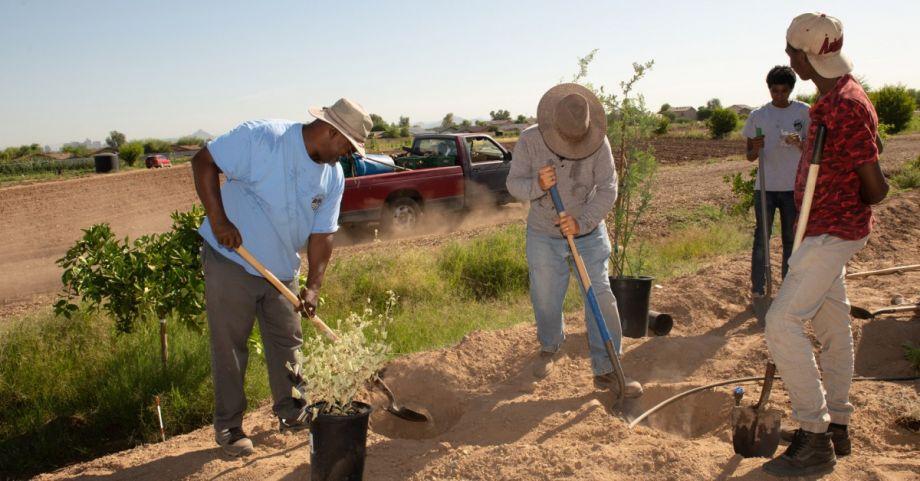
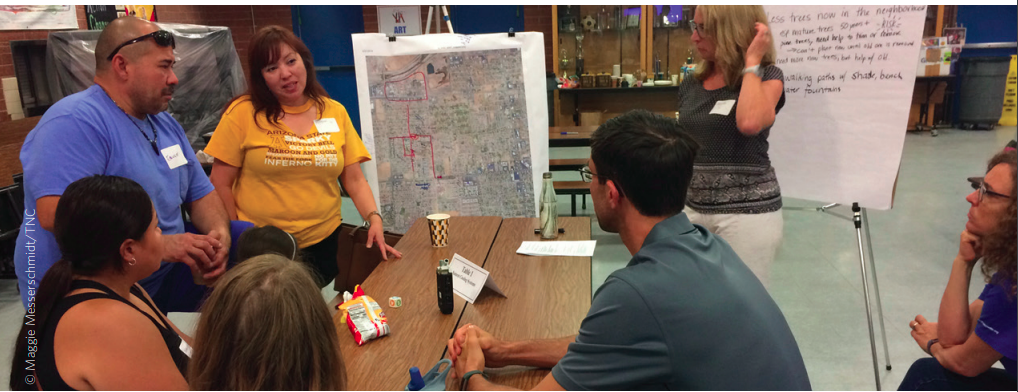
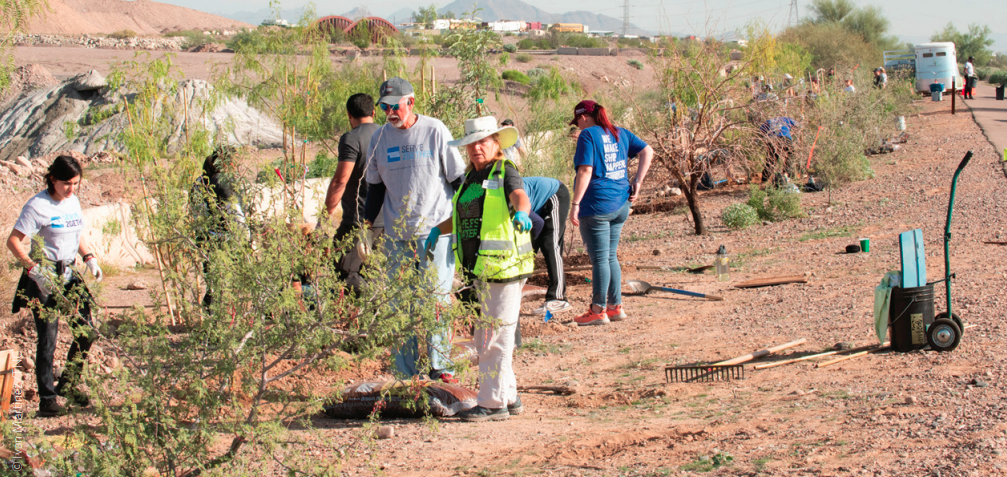
The Heat Action Planning project in the Lindo Park-Roesley Park Neighborhood in Phoenix, Arizona, specifically addresses the heat-related challenges residents face in this area. Phoenix is particularly vulnerable to extreme heat events, and this project aims to provide both mitigation and adaptation strategies to reduce the direct impacts of heat and help residents cope more effectively with these conditions. As part of the city’s broader Heat Action Plan, the Lindo Park-Roesley Park initiative is one of three target areas, including Edison-Eastlake, just east of downtown Phoenix, and the Water Tower Improvement District in the City of Mesa. The project focuses on heat hazards such as extreme temperature events and the urban heat island effect, which disproportionately affect vulnerable populations. This project is a collaborative effort, uniting a range of stakeholders including The Nature Conservancy, Maricopa County Department of Public Health, the Central Arizona Conservation Alliance, the Urban Resilience to Extremes Sustainability Research Network, Arizona State University’s Urban Climate Research Center, and the local residents. Together, these partners are working to develop comprehensive heat mitigation and adaptation strategies that address social equity and strengthen community engagement. Furthermore, the Heat Action Planning process was designed to serve as a model for future heat resilience efforts and create a local, contextual, and culturally appropriate vision of a safer, healthier future. The iterative planning and engagement method used by the project team strengthened relationships within and between neighborhoods, community-based organizations, decision-makers, and the core team, and it combined storytelling wisdom and scientific evidence to better understand current and future challenges residents face during extreme heat events.The ultimate aim is to foster a more resilient and equitable neighborhood (1-7).
Overview
Nature-based solution
- Parks and urban forests
- Pocket parks/neighbourhood green spaces
Key challenges
- Climate action for adaptation, resilience and mitigation (SDG 13)
- Climate change adaptation
- Environmental quality
- Air quality improvement
- Green space, habitats and biodiversity (SDG 15)
- Green space creation and/or management
- Water management (SDG 6)
- Stormwater and rainfall management and storage
- Water security
- Health and well-being (SDG 3)
- Creation of opportunities for recreation
- Improving physical health
- Inclusive and effective governance (SDG 16)
- Inclusive governance
- Social justice, cohesion and equity (SDG 10)
- Social justice and equity
- Environmental education
- Sense of community and community engagement
Principal problems in Functional Urban Area (FUA)
- Climate-Related Hazards
- Heat stress & Extreme temperatures
- Health, Well-being and Social cohesion
- Physical health harm (from pollution, wildfire, extreme temperature)
- Inadequate access to recreational opportunities
Key priorities
Focus
Project objectives
Implementation activities
Climate-focused activities
Climate change adaptation:
- Increase urban vegetation cover to reduce urban heat island effect
- Reducing socio-economic vulnerability to climate impacts (e.g. awareness raising)
Specification of climate or environmentally vulnerable communities
Main beneficiaries
- Citizens or community groups
- Young people and children
- Marginalized groups: Children, young people or youth groups , Socio-economically disadvantaged populations (e.g. low-income households, unemployed), Disadvantaged ethnic or racial groups, Vulnerable populations in disaster-prone areas
Governance
Management set-up
- Co-governance with government and non-government actors
Type of initiating organisation
- Non-government organisation/civil society
Participatory approaches/ community involvement
- Co-planning (e.g. stakeholder workshops, focus groups, participatory mapping)
- Dissemination of information and education
- Consultation (e.g. workshop, surveys, community meetings, town halls)
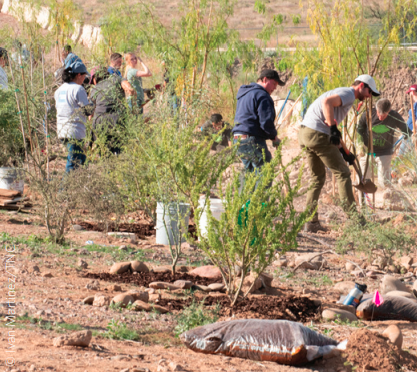
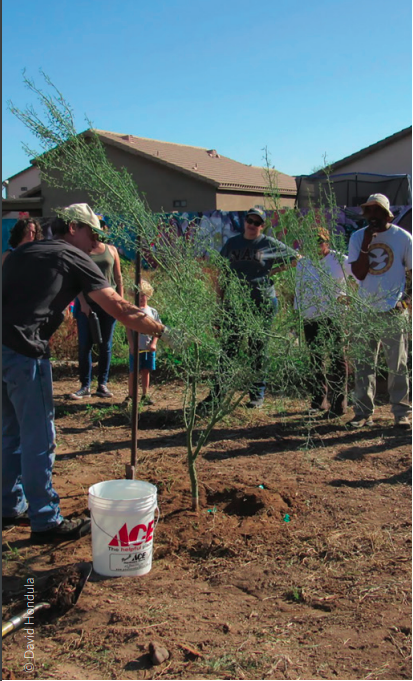
- Joint implementation (e.g. tree planting)
Details on the roles of the organisations involved in the project
Project implemented in response to ...
Type of enablers
Financing
Total cost
Source(s) of funding
- Funds provided by non-governmental organization (NGO)
Type of funding
- Direct funding (grants, subsidies, or self-financed projects by private entities)
Non-financial contribution
- Provision of labour
- Provision of expertise
- Citizens (e.g. volunteering)
Impacts and Monitoring
Environmental impacts
- Climate change
- Lowered local temperature
- Expected lowered local temperature
- Prevent the frequency and/or intensity of heatwaves
- Expected prevent the frequency and/or intensity of heatwaves
- Environmental quality
- Improved air quality
- Expected improved air quality
- Water management and blue areas
- Improved stormwater management
- Achieved improved stormwater management
- Green space and habitat
- Increased number of species present
- Achieved increased number of species present
Economic impacts
- Unknown
Socio-cultural impacts
- Social justice and cohesion
- Improved liveability
- Expected improved liveability
- Health and wellbeing
- Improved physical health
- Expected improved physical health
- Reduced risk of heatstroke and/or dehydration
- Expected reduced risk of heatstroke and/or dehydration
- Cultural heritage and sense of place
- Improvement in people’s connection to nature
- Expected improvement in people’s connection to nature
- Increased sense of place identity, memory and belonging
- Expected increased sense of place identity, memory and belonging
- Increased awareness of flora and fauna as culturally and historically meaningful
- Expected increased awareness of flora and fauna as culturally and historically meaningful
- Safety
- Improved community safety to climate-related hazards
- Expected improved community safety to climate-related hazards
Type of reported impacts
Presence of formal monitoring system
Presence of indicators used in reporting
Presence of monitoring/ evaluation reports
Availability of a web-based monitoring tool
Potential risks of implementation and trade-offs
References
 Information about this nature-based solution was collected as part of the Naturescapes project funded by the European Union under Grant Agreement No 101084341.