

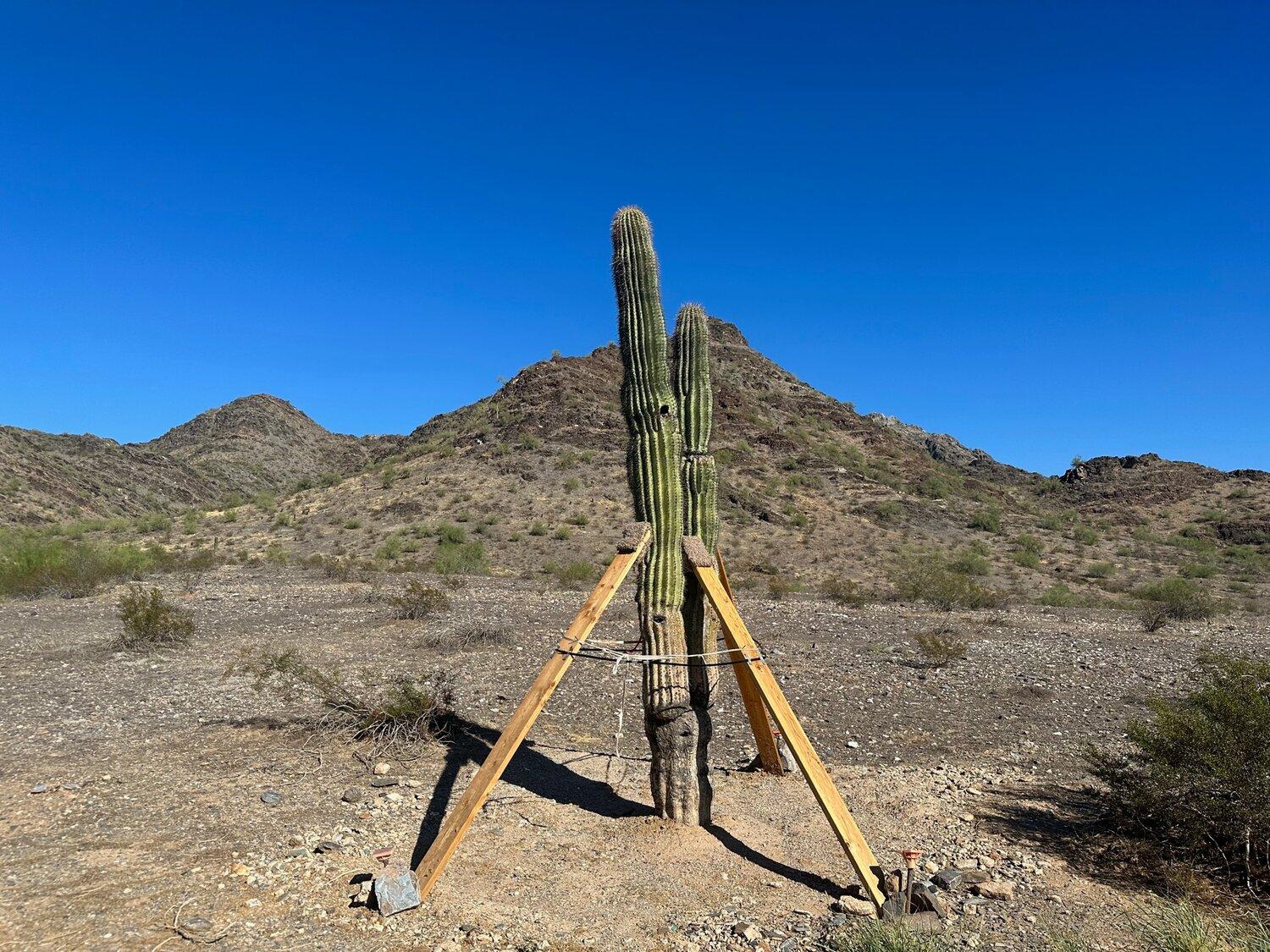
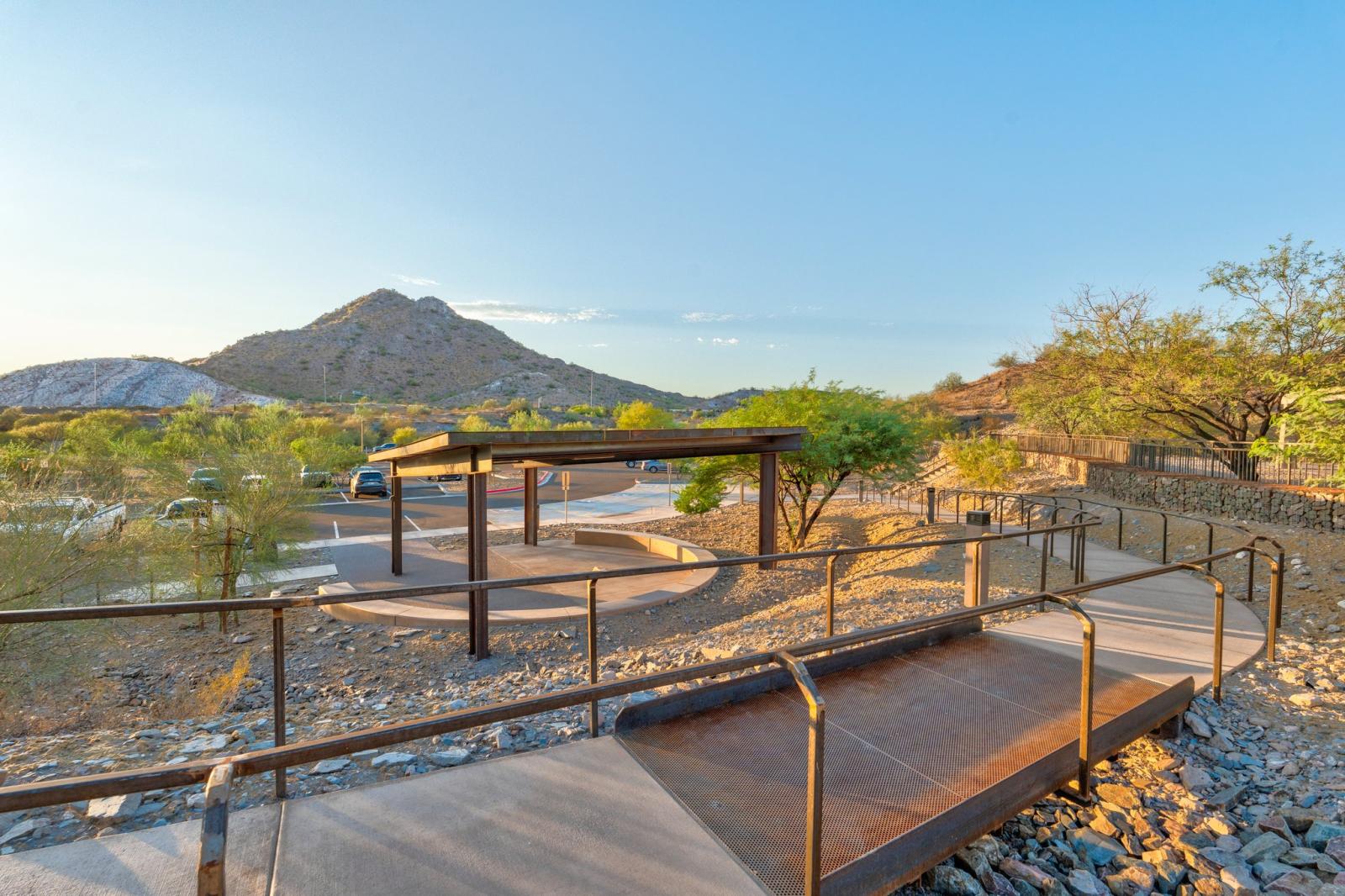
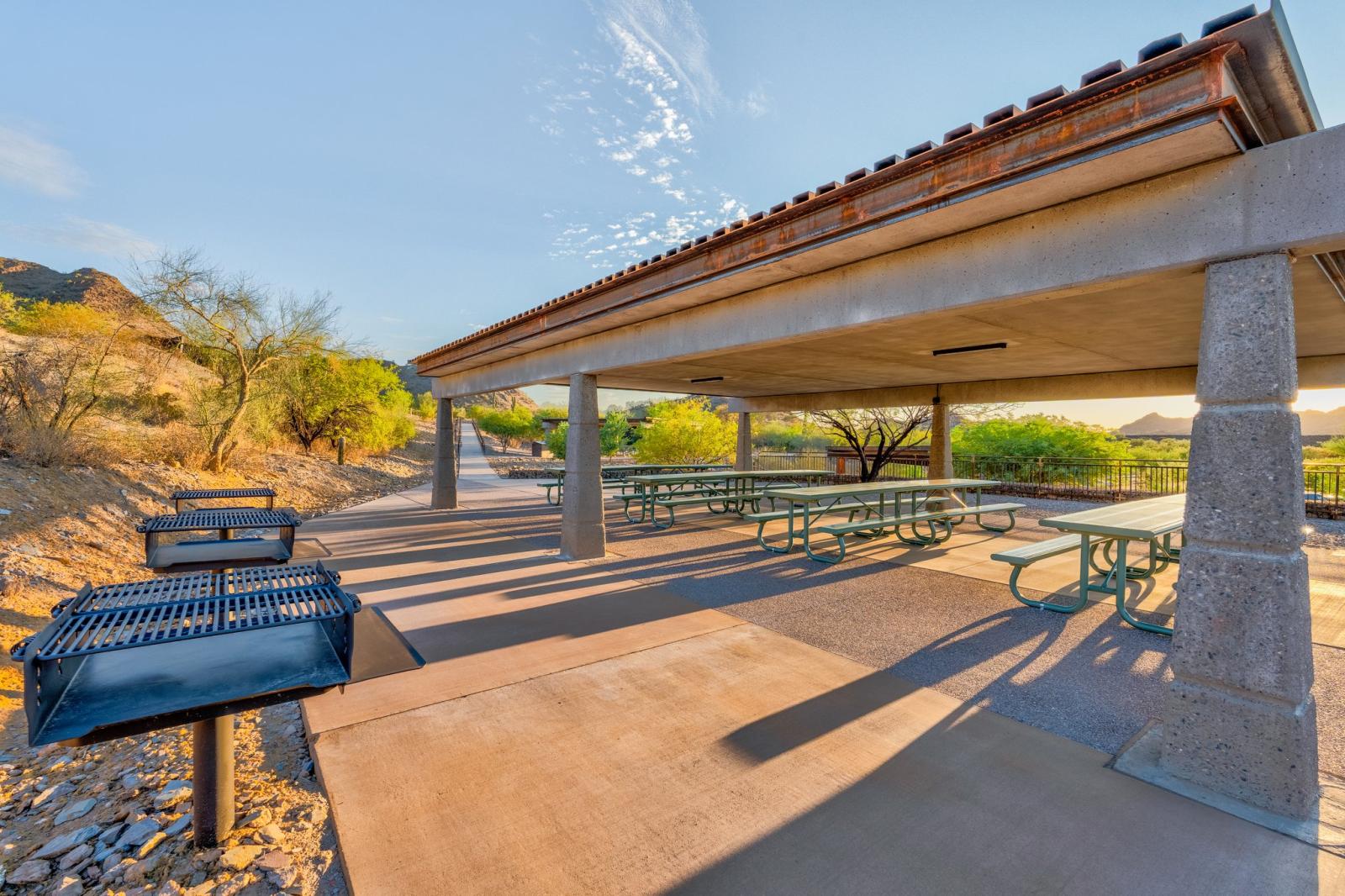
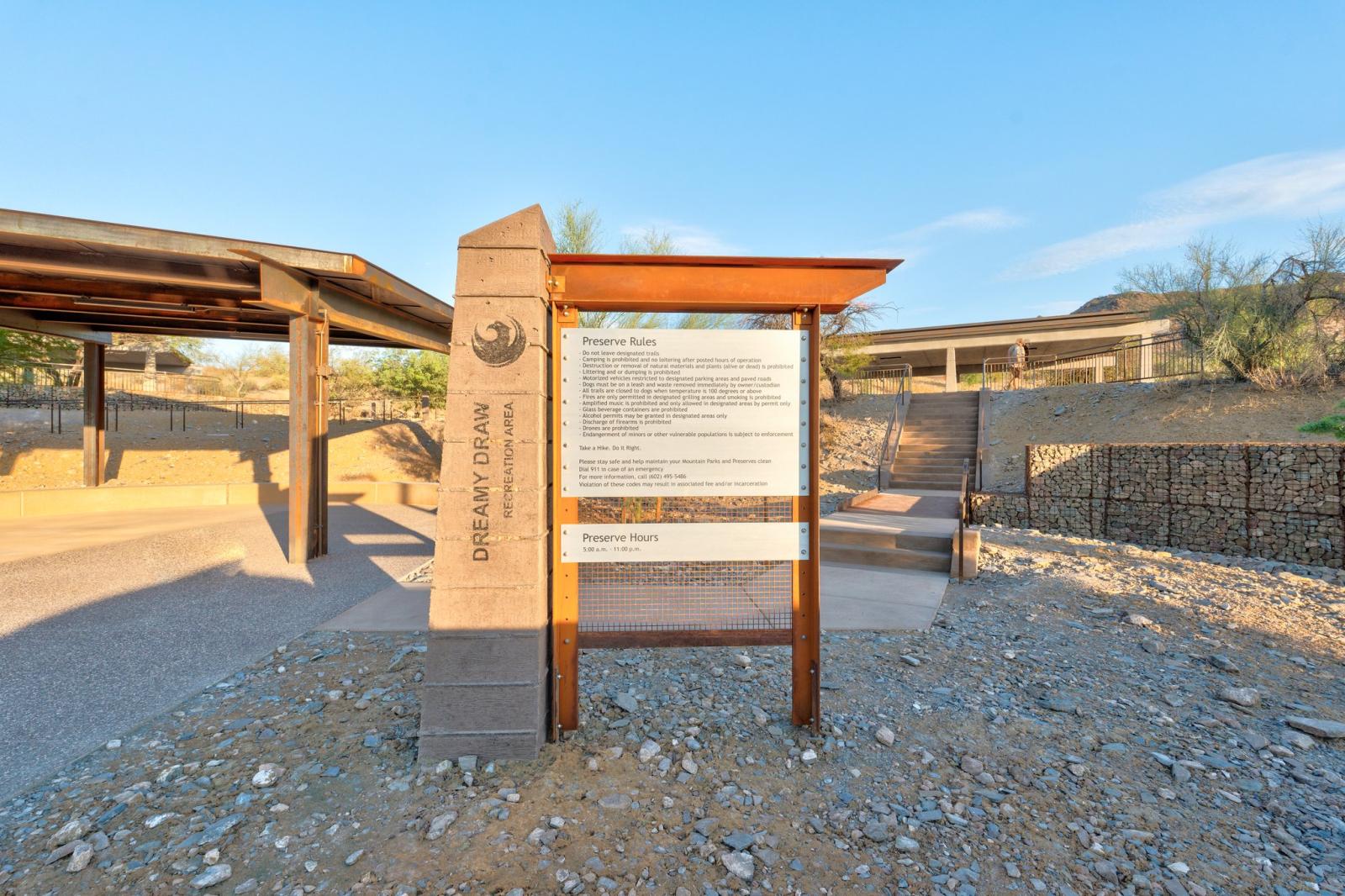
The Dreamy Draw Recreation Area is located in Phoenix, Arizona. It is situated near the Phoenix Mountains Preserve and provides access to various hiking and biking trails, as well as scenic desert landscapes. The Dreamy Draw Recreation Area project is a comprehensive initiative aimed at enhancing an existing park space. Key improvements include infrastructure upgrades, trail enhancements, and ecological restoration efforts. Through the construction of new ramadas, expanded parking, and increased accessibility features, the project seeks to create a more welcoming and inclusive environment for all visitors. This endeavor was launched as part of the City's Drought Pipeline Project. One important component of the project is revegetation, which includes the planting of native saguaros to support ecological restoration and improve the park's visual appeal. The project addresses several longstanding challenges, such as limited parking, outdated facilities, and the need for improved trail conditions. By adding more parking spaces, installing modern restrooms, and constructing accessible pathways, the enhancements contribute to a safer and more enjoyable experience for visitors. Additionally, the revegetation efforts help restore natural habitats and mitigate the ecological impacts of urbanization on the local environment. In total, more than two dozen mature saguaros were replanted in the newly reopened Dreamy Draw Recreation Area, creating an “immediate visual impact,” particularly along Route 51. The Mountain Parks and Preserves Committee held a meeting on Monday evening to review the revegetation work completed over the summer, with the area reopening on September 7. Of the 58 cacti planted in this project, 27 saguaros—referred to as "reclamation saguaros" by Wayne Colebank, a landscape architect on the project—were previously stored by Phoenix Water Services at the 24th Street Water Treatment Plant near Lincoln Drive and 24th Street. (1-11)
Overview
Nature-based solution
- Parks and urban forests
- Large urban parks or forests
Key challenges
- Green space, habitats and biodiversity (SDG 15)
- Green space creation and/or management
- Habitat and biodiversity restoration
- Cultural heritage and cultural diversity
- Protection of historic and cultural landscape/infrastructure
- Promotion of cultural diversity
- Health and well-being (SDG 3)
- Creation of opportunities for recreation
- Enabling opportunities for physical activity
- Social justice, cohesion and equity (SDG 10)
- Social justice and equity
Principal problems in Functional Urban Area (FUA)
- Environmental Degradation
- Biodiversity loss
- Health, Well-being and Social cohesion
- Inadequate access to recreational opportunities
- Poor community engagement
Key priorities
Focus
Project objectives
Implementation activities
Specification of climate or environmentally vulnerable communities
Biodiversity conservation or restoration-focused activities
Biodiversity restoration:
- Restore species (native, endangered, or unspecified)
- Restore native species
- Restore endangered species
Main beneficiaries
- Local government/Municipality
- Citizens or community groups
- Marginalized groups: People with functional diversities, Indigenous communities
Governance
Management set-up
- Government-led
Type of initiating organisation
- Local government/municipality
Participatory approaches/ community involvement
- Co-planning (e.g. stakeholder workshops, focus groups, participatory mapping)
- Joint implementation (e.g. tree planting)
Details on the roles of the organisations involved in the project
Project implemented in response to ...
Type of enablers
Financing
Total cost
Source(s) of funding
- Public local authority budget
Type of funding
- Earmarked public budget
Non-financial contribution
Impacts and Monitoring
Environmental impacts
- Water management and blue areas
- Reduced risk of damages by drought
- Achieved reduced risk of damages by drought
- Green space and habitat
- Increased green space area
- Expected increased green space area
- Increased conversion of degraded land or soil
- Achieved increased conversion of degraded land or soil
- Reduced biodiversity loss
- Achieved reduced biodiversity loss
- Increased number of species present
- Achieved increased number of species present
- Increased protection of threatened species
- Achieved increased protection of threatened species
- Increased spread of native/heirloom/open-pollinated seed
- Achieved increased spread of native/heirloom/open-pollinated seed
Economic impacts
- Unknown
Socio-cultural impacts
- Social justice and cohesion
- Improved access to urban green space
- Achieved improved access to urban green space
- Increased visibility and opportunity for marginalised groups or indigenous peoples
- Achieved increased visibility and opportunity for marginalised groups or indigenous peoples
- Increased opportunities for social interaction
- Expected increased opportunities for social interaction
- Health and wellbeing
- Gain in activities for recreation and exercise
- Achieved gain in activities for recreation and exercise
- Cultural heritage and sense of place
- Protection of natural heritage
- Achieved protection of natural heritage
- Preserved spiritual and religious values
- Expected preserved spiritual and religious values
- Increased sense of place identity, memory and belonging
- Expected increased sense of place identity, memory and belonging
Type of reported impacts
Presence of formal monitoring system
Presence of indicators used in reporting
Presence of monitoring/ evaluation reports
Availability of a web-based monitoring tool
Potential risks of implementation and trade-offs
References



 Information about this nature-based solution was collected as part of the Naturescapes project funded by the European Union under Grant Agreement No 101084341.