

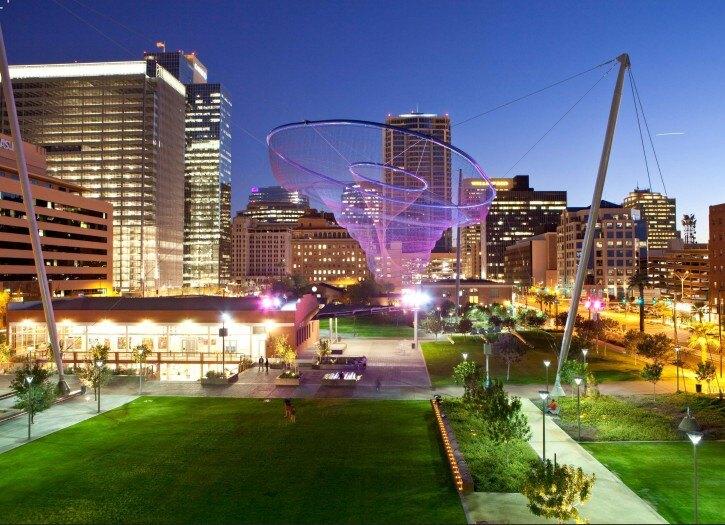
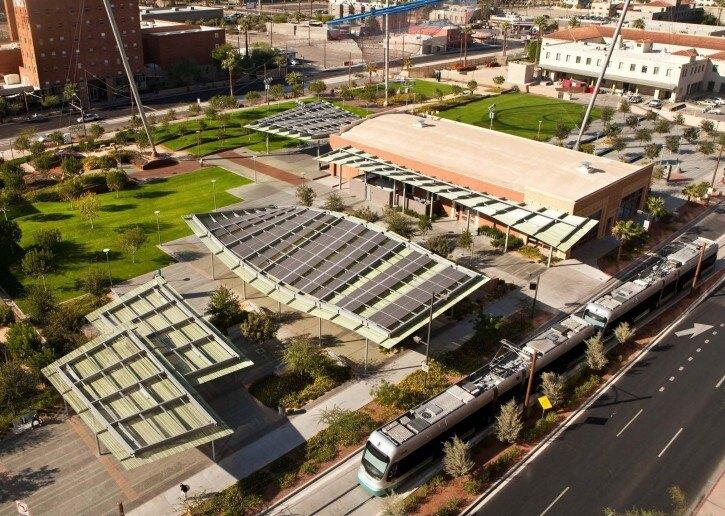
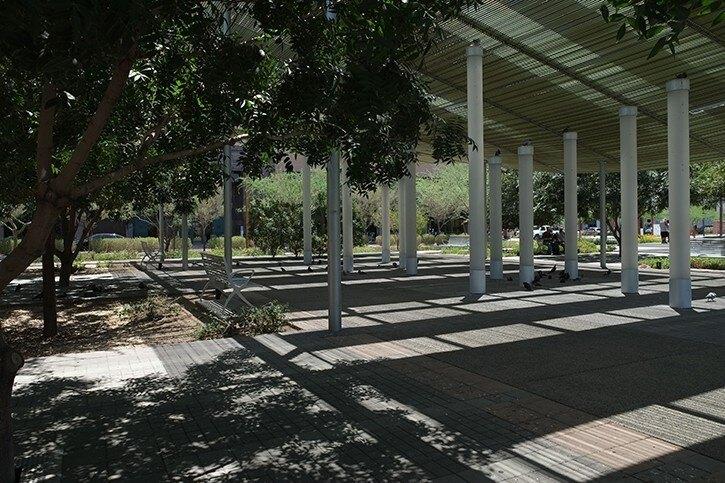
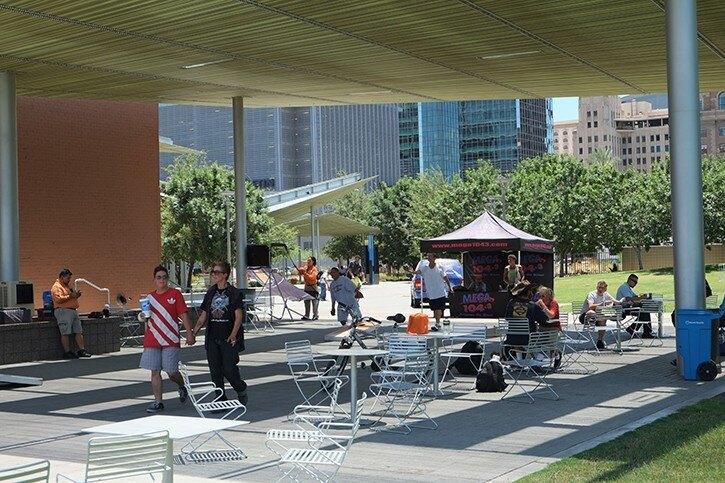
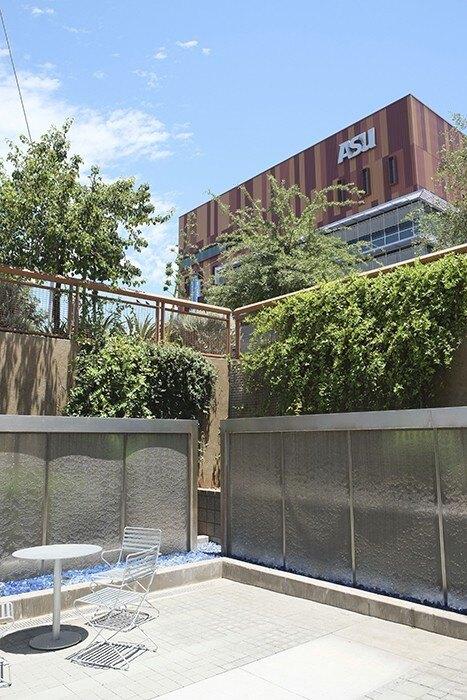
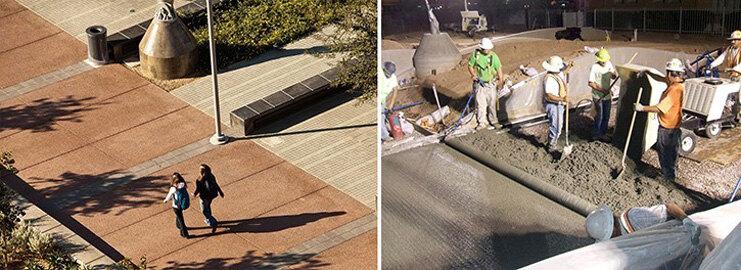
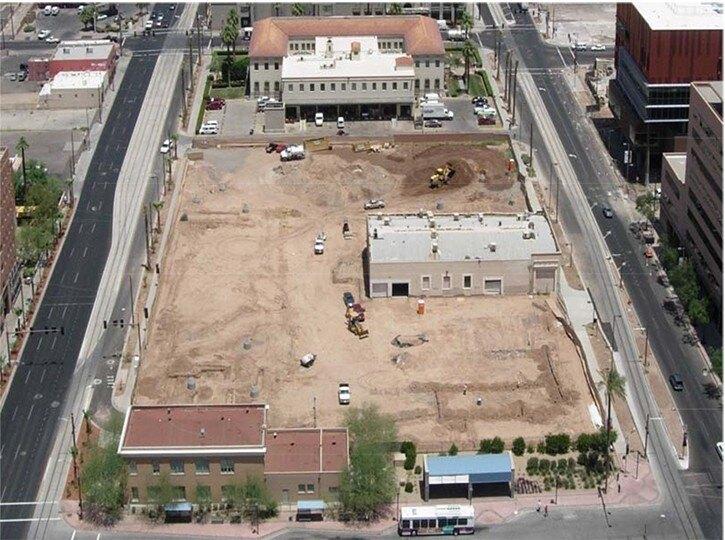
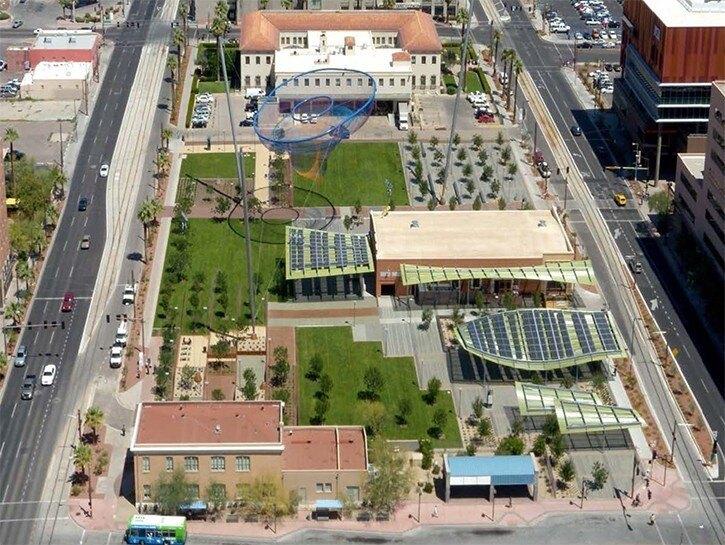
Civic Space Park, located in the heart of Phoenix, Arizona, is a notable example of urban design aimed at addressing the region’s increasing urban heat. In Phoenix, rising temperatures affect health, safety, comfort, and economic growth, and this impact is expected to worsen over time. In response, the park was developed to transform an underused site into a vibrant public space that prioritizes community engagement, sustainability, and urban revitalization. The project was realized through a public-private partnership between the City of Phoenix and Arizona State University, with strong community involvement shaping its development. This collaboration led to the “Urban Weave” concept, a design that embodies the identity and values of the local community. Civic Space Park was designed with several goals in mind. Increasing the tree canopy was essential to help reduce the urban heat island effect and improve air quality. Creating a welcoming area for social interaction, recreation, and relaxation was equally important to enhance community well-being. Water conservation was also prioritized, achieved through innovative stormwater management techniques such as permeable paving and underground infiltration. The park incorporates renewable energy generation as well, with on-site solar power helping to reduce energy consumption. One of the park’s unique features is its extensive use of pervious concrete paving, designed to allow stormwater to permeate directly into the subsurface. However, during installation, it became clear that placing the material over highly compacted soil limited water infiltration. To improve its effectiveness, future designs could include a plastic vapor barrier beneath the permeable paving to capture water and direct it to planting beds. This adjustment would enable the paving to act as a collection and storage system, gradually releasing water into the surrounding vegetation. (1-6)
Overview
Nature-based solution
- Green areas for water management
- Sustainable urban drainage systems
- Parks and urban forests
- Pocket parks/neighbourhood green spaces
Key challenges
- Climate action for adaptation, resilience and mitigation (SDG 13)
- Climate change adaptation
- Climate change mitigation
- Environmental quality
- Air quality improvement
- Green space, habitats and biodiversity (SDG 15)
- Green space creation and/or management
- Regeneration, land-use and urban development
- Promote natural styles of landscape design for urban development
- Water management (SDG 6)
- Stormwater and rainfall management and storage
- Water security
- Health and well-being (SDG 3)
- Creation of opportunities for recreation
- Inclusive and effective governance (SDG 16)
- Inclusive governance
- Social justice, cohesion and equity (SDG 10)
- Social interaction
- Sense of community and community engagement
- Economic development and employment (SDG 8)
- Economic development: service sectors
Principal problems in Functional Urban Area (FUA)
- Climate-Related Hazards
- Drought
- Heat stress & Extreme temperatures
- Environmental Degradation
- Air pollution
- Physical water retention and availability
- Desertification
- Health, Well-being and Social cohesion
- Physical health harm (from pollution, wildfire, extreme temperature)
- Mental health issues (stress, anxiety)
- Inadequate access to recreational opportunities
- Social fragmentation and isolation
- Poor community engagement
Key priorities
Focus
Project objectives
Implementation activities
Climate-focused activities
Climate change adaptation:
- Increase urban vegetation cover to reduce urban heat island effect
- Implement sustainable urban drainage schemes to manage stormwater
Climate change mitigation:
- Other
Specification of climate or environmentally vulnerable communities
Main beneficiaries
- Citizens or community groups
- Young people and children
- Marginalized groups: Children, young people or youth groups , Elderly people, Disadvantaged ethnic or racial groups
Governance
Management set-up
- Co-governance with government and non-government actors
Type of initiating organisation
- Local government/municipality
Participatory approaches/ community involvement
- Co-planning (e.g. stakeholder workshops, focus groups, participatory mapping)
- Dissemination of information and education
- Consultation (e.g. workshop, surveys, community meetings, town halls)
Details on the roles of the organisations involved in the project
Project implemented in response to ...
Type of enablers
Financing
Total cost
Source(s) of funding
- Public local authority budget
Type of funding
- Earmarked public budget
Non-financial contribution
- Provision of labour
- Provision of expertise
- Citizens (e.g. volunteering)
Impacts and Monitoring
Environmental impacts
- Climate change
- Lowered local temperature
- Achieved lowered local temperature
- Water management and blue areas
- Improved stormwater management
- Achieved improved stormwater management
- Green space and habitat
- Increased green space area
- Achieved increased green space area
- Increased conversion of degraded land or soil
- Achieved increased conversion of degraded land or soil
- Increased number of species present
- Achieved increased number of species present
- Restoration of derelict areas
- Achieved restoration of derelict areas
Economic impacts
- Stimulate development in deprived areas
- Expected stimulate development in deprived areas
Socio-cultural impacts
- Social justice and cohesion
- Improved social cohesion
- Expected improved social cohesion
- Improved access to urban green space
- Achieved improved access to urban green space
- Increased opportunities for social interaction
- Achieved increased opportunities for social interaction
- Health and wellbeing
- Gain in activities for recreation and exercise
- Achieved gain in activities for recreation and exercise
- Improved physical health
- Expected improved physical health
- Enhanced cognitive restoration, relaxation and stress relief
- Expected enhanced cognitive restoration, relaxation and stress relief
- Cultural heritage and sense of place
- Promotion of cultural diversity
- Achieved promotion of cultural diversity
- Protection of historic and cultural landscape / infrastructure
- Achieved protection of historic and cultural landscape / infrastructure
Type of reported impacts
Presence of formal monitoring system
Presence of indicators used in reporting
Presence of monitoring/ evaluation reports
Availability of a web-based monitoring tool
Potential risks of implementation and trade-offs
References
 Information about this nature-based solution was collected as part of the Naturescapes project funded by the European Union under Grant Agreement No 101084341.