

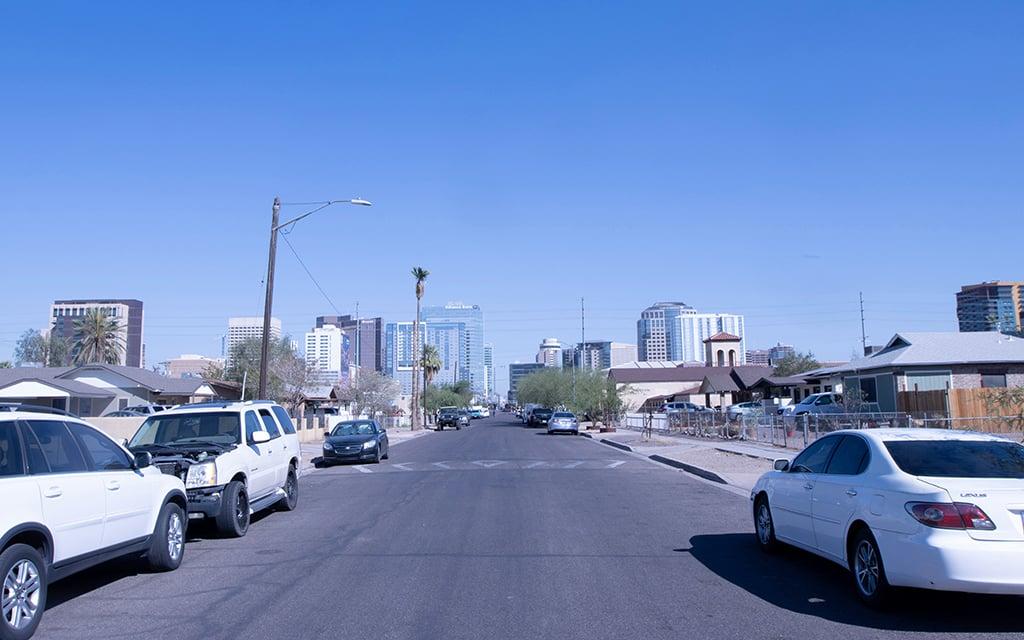
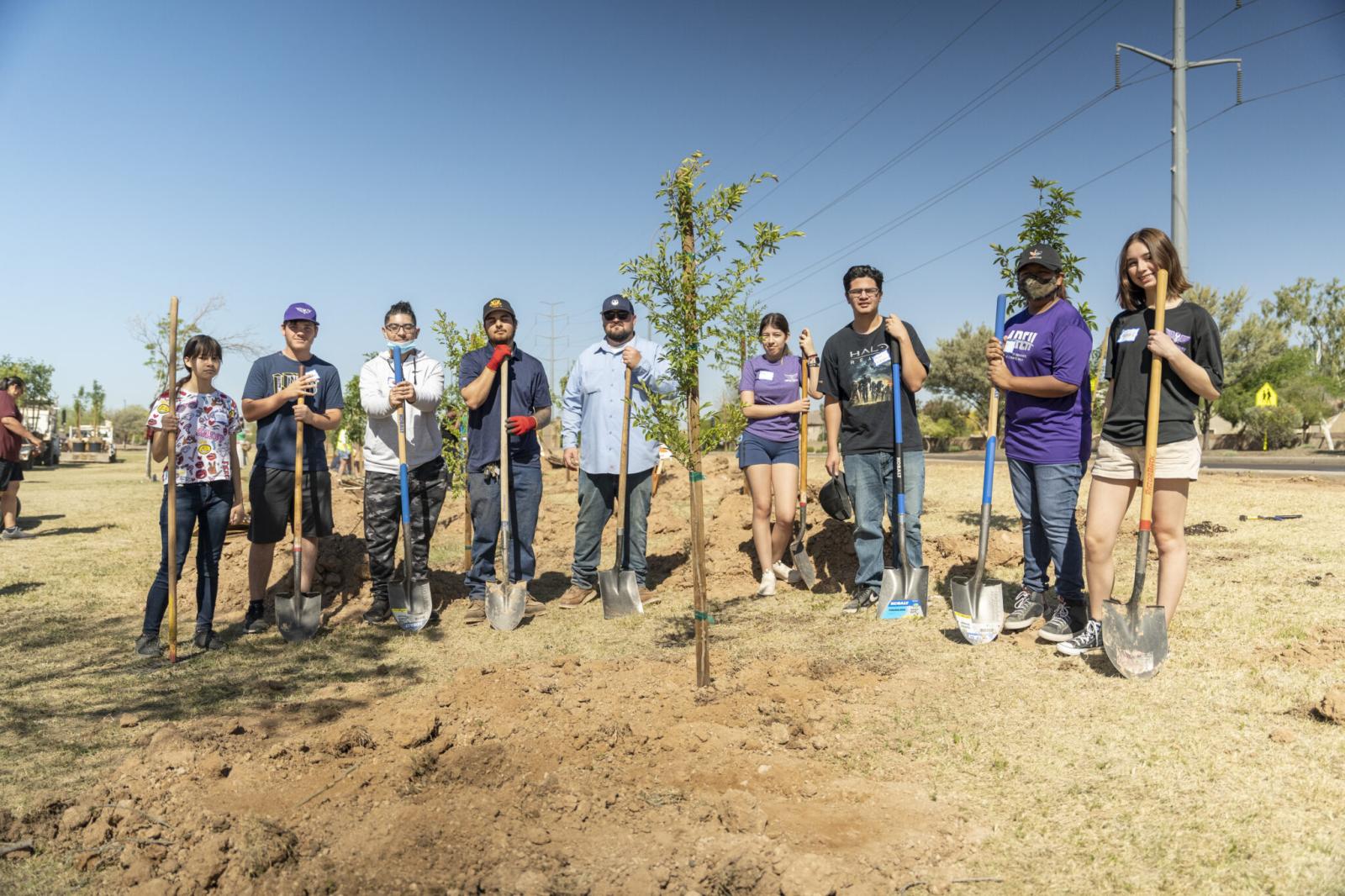
Phoenix faces substantial challenges related to extreme heat, air quality, and social inequity (1-11). The Phoenix Tree Equity Pledge, launched in 2021, is a comprehensive city-wide initiative focused on addressing urban tree inequity and reducing the effects of extreme heat, especially in communities most vulnerable to these conditions (1-12). Partnering with American Forests, the country’s oldest conservation nonprofit, the initiative aims to achieve “tree equity” by 2030, ensuring all neighborhoods receive the benefits trees offer (1). To reach this goal, the city will focus on enhancing tree coverage in underserved neighborhoods through the development of a Residential Tree Equity Accelerator, which plans to plant 20,000 trees across 25 neighborhoods by 2030 (1-12). By utilizing the Tree Equity Score developed by American Forests, the city can monitor progress, identify areas of need, and measure the impact of these projects (2-4, 9, 11). To foster public engagement, the initiative will collaborate with residents, businesses, and local organizations to support tree-related projects, raise awareness of the benefits of trees, and promote tree stewardship (1, 4, 15). Additionally, the project aims to create green opportunities within the community by establishing supportive policies and regulations for tree planting and care and by creating pathways to green jobs (1, 7-9, 13-14). Recognizing that heat affects communities unequally, the Tree Equity Pledge seeks to increase canopy coverage in targeted neighborhoods, improving air quality, reducing the urban heat island effect, and enhancing overall community health (1, 7-9, 13-14).
Overview
Nature-based solution
- Grey infrastructure featuring greens
- Alley or street trees and other street vegetation
- Railroad bank and track greens
- Green parking lots
- Green playgrounds and school grounds
Key challenges
- Climate action for adaptation, resilience and mitigation (SDG 13)
- Climate change adaptation
- Climate change mitigation
- Environmental quality
- Air quality improvement
- Green space, habitats and biodiversity (SDG 15)
- Green space creation and/or management
- Regeneration, land-use and urban development
- Regulation of built environment
- Health and well-being (SDG 3)
- Improving physical health
- Inclusive and effective governance (SDG 16)
- Inclusive governance
- Effective management
- Social justice, cohesion and equity (SDG 10)
- Social justice and equity
- Sense of community and community engagement
- Economic development and employment (SDG 8)
- Employment/job creation
Principal problems in Functional Urban Area (FUA)
- Climate-Related Hazards
- Heat stress & Extreme temperatures
- Environmental Degradation
- Air pollution
- Land use and Socio-economic change
- Unequal availability and access to public green spaces
- Health, Well-being and Social cohesion
- Physical health harm (from pollution, wildfire, extreme temperature)
Key priorities
Focus
Project objectives
Implementation activities
Climate-focused activities
Climate change adaptation:
- Increase urban vegetation cover to reduce urban heat island effect
- Reducing socio-economic vulnerability to climate impacts (e.g. awareness raising)
Climate change mitigation:
- Increase the availability of green urban space for carbon storage (street tree cover)
Specification of climate or environmentally vulnerable communities
Main beneficiaries
- Local government/Municipality
- Public sector institution (e.g. school or hospital)
- Citizens or community groups
- Young people and children
- Marginalized groups: Children, young people or youth groups , Socio-economically disadvantaged populations (e.g. low-income households, unemployed), Disadvantaged ethnic or racial groups
Governance
Management set-up
- Co-governance with government and non-government actors
Type of initiating organisation
- Local government/municipality
Participatory approaches/ community involvement
- Co-planning (e.g. stakeholder workshops, focus groups, participatory mapping)
- Consultation (e.g. workshop, surveys, community meetings, town halls)
- Joint implementation (e.g. tree planting)
- Citizen oversight (e.g. boards, advisory)
Details on the roles of the organisations involved in the project
Project implemented in response to ...
Type of enablers
Financing
Total cost
Source(s) of funding
- Public local authority budget
- Public national budget
- Public regional budget
- Corporate investment
- Funds provided by non-governmental organization (NGO)
- Commercial banks
Type of funding
- Earmarked public budget
- Direct funding (grants, subsidies, or self-financed projects by private entities)
- Donations
Non-financial contribution
- Provision of labour
- Provision of expertise
- Citizens (e.g. volunteering)
Impacts and Monitoring
Environmental impacts
- Climate change
- Lowered local temperature
- Expected lowered local temperature
- Enhanced carbon sequestration
- Expected enhanced carbon sequestration
- Energy efficiency improvements
- Expected energy efficiency improvements
- Prevent the frequency and/or intensity of heatwaves
- Expected prevent the frequency and/or intensity of heatwaves
- Water management and blue areas
- Increased protection against flooding
- Expected increased protection against flooding
- Green space and habitat
- Increased ecological connectivity across regeneration sites and scales
- Expected increased ecological connectivity across regeneration sites and scales
- Increased number of species present
- Expected increased number of species present
Economic impacts
- Increase of green jobs (e.g. paid employment positions)
- Expected increase of green jobs (e.g. paid employment positions)
Socio-cultural impacts
- Social justice and cohesion
- Improved liveability
- Expected improved liveability
- Improved access to urban green space
- Expected improved access to urban green space
- Increased visibility and opportunity for marginalised groups or indigenous peoples
- Expected increased visibility and opportunity for marginalised groups or indigenous peoples
- Increased involvement of locals in the management of green spaces
- Expected increased involvement of locals in the management of green spaces
- Health and wellbeing
- Improved physical health
- Expected improved physical health
- Education
- Increased knowledge of locals about local nature
- Expected increased knowledge of locals about local nature
- Other
Type of reported impacts
Presence of formal monitoring system
Presence of indicators used in reporting
Presence of monitoring/ evaluation reports
Availability of a web-based monitoring tool
Potential risks of implementation and trade-offs
References


 Information about this nature-based solution was collected as part of the Naturescapes project funded by the European Union under Grant Agreement No 101084341.