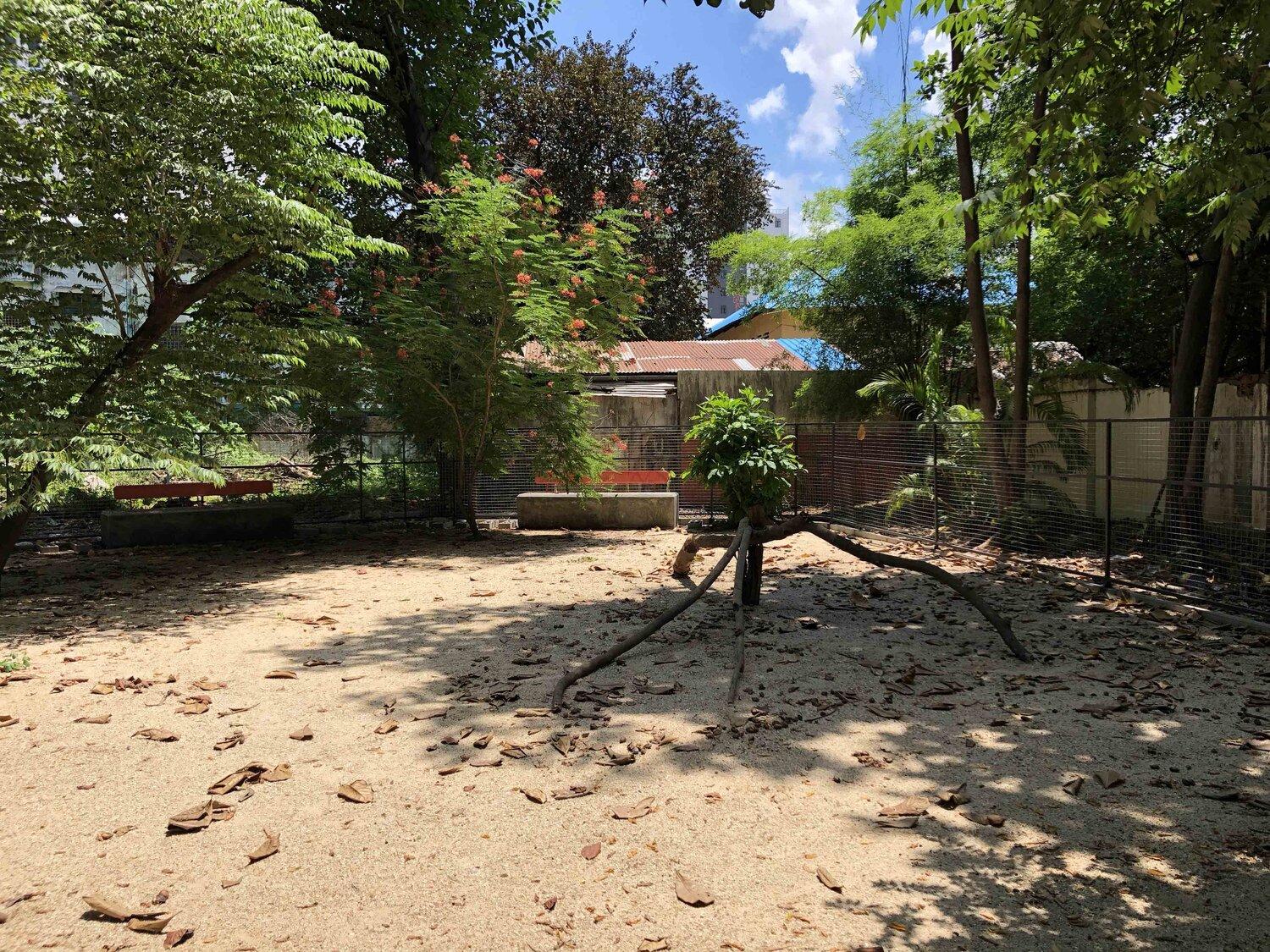
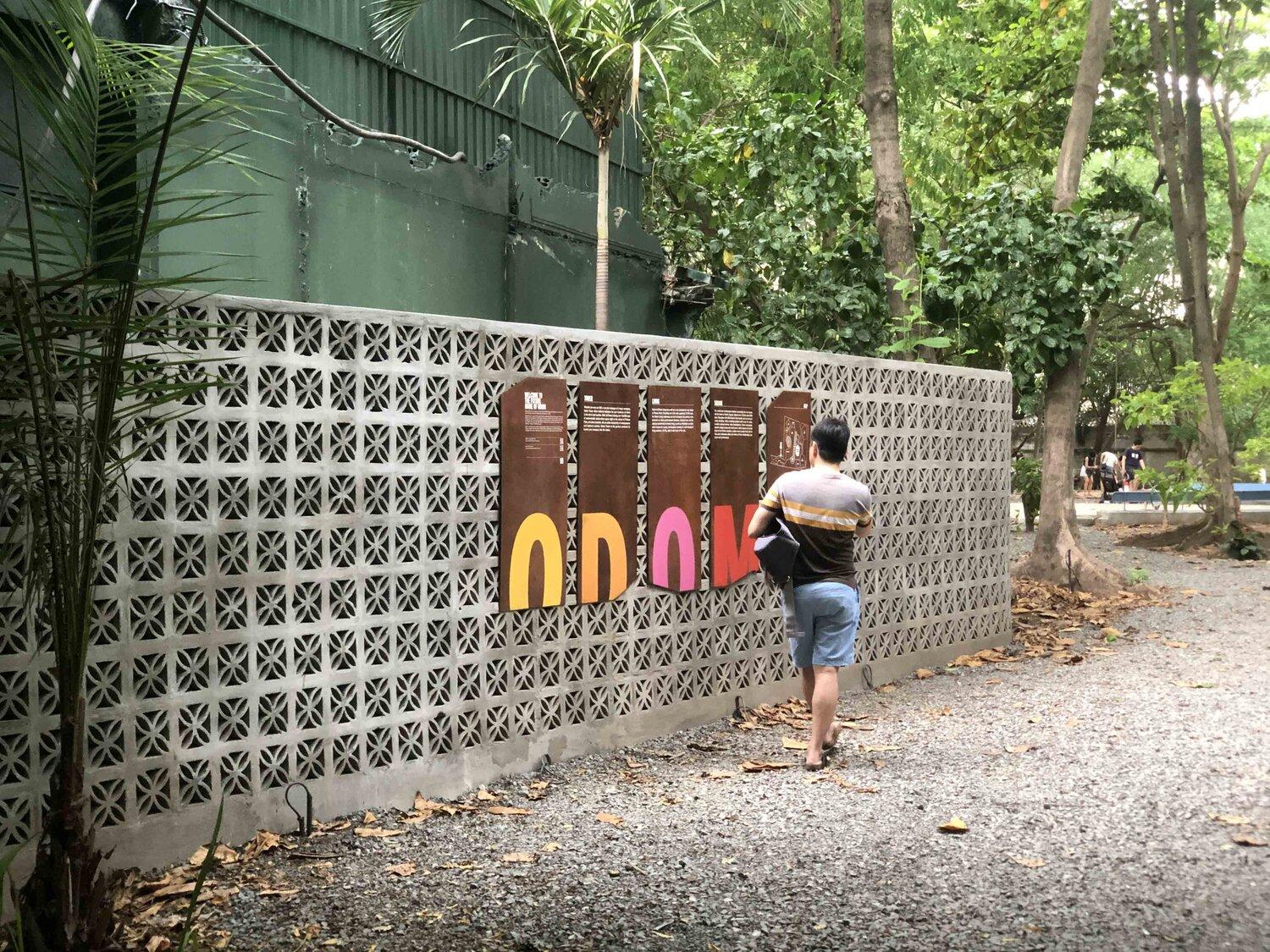
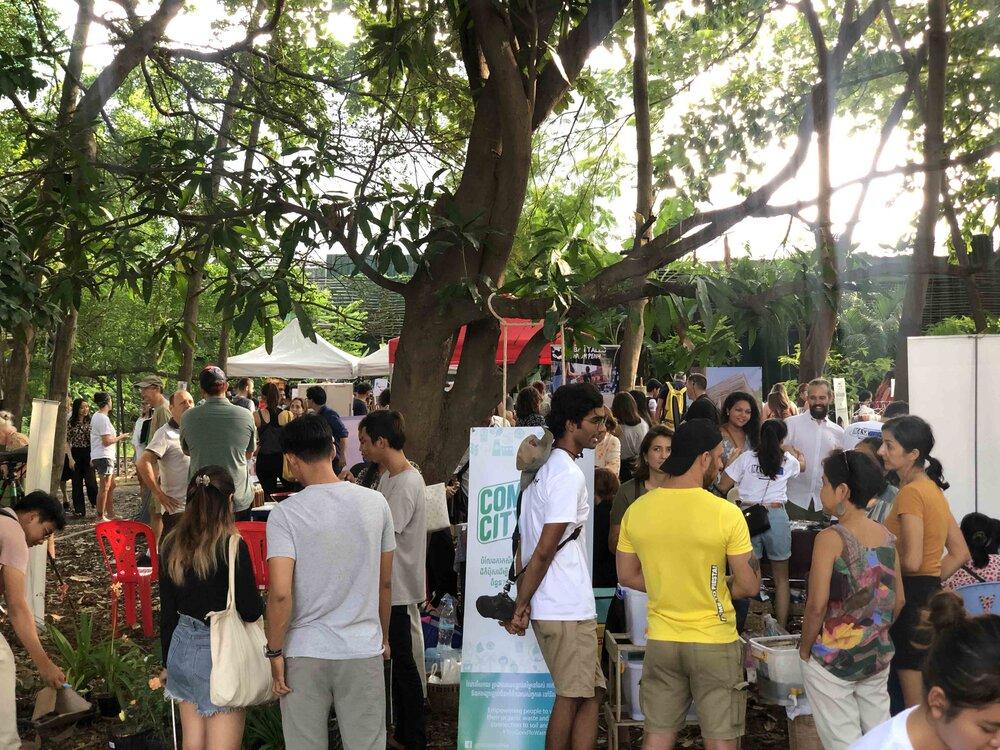
Odom Garden is a unique temporary pop-up public garden developed as a part of an ongoing real estate project (Ref 1). The garden was developed in 2020 to provide a green public space for people to connect with nature and with other citizens in a prime real-estate planned area for further construction in 2023 (Ref 1). Spread across 4000 sqm, the garden is developed by employing and upcycling the garden's native elements, such as large branches being converted into balancing paths and swing holders (Ref 3). The garden is a very popular green space in the city with Phnom Penh’s first dog park, a Japanese-inspired foot bath, and a central food and beverage area, as well as a children’s playground (Ref 2, 3). This green space has become a meeting place for families with opportunities for relaxation and recreation. The park has been functioning since 2020 as a temporary site for the future Odom project. The area will be redeveloped to include a residential and commercial complex that includes a five-story layered park (Ref 1, 2). The project, when complete, is expected to increase the total green space area to 7000 sqm, i.e., 126% of the current Odom Garden. Of this, 80% of the green space will be accessible to the public. The Odom garden can thus be interpreted as a demonstration intervention, where the goal was to create s community-focused space and in which Phnom Penhers can experience the sense of community envisioned for the future completed project (Ref 1, 2). As of January of 2023, it has been announced that the Odom Garden is closing for the pre-construction of ODOM, with a "heartfelt: See You Soon" (Ref. 5).

Overview
Nature-based solution
- Parks and urban forests
- Pocket parks/neighbourhood green spaces
Key challenges
- Green space, habitats and biodiversity (SDG 15)
- Green space creation and/or management
- Regeneration, land-use and urban development
- Promote natural styles of landscape design for urban development
- Health and well-being (SDG 3)
- Enabling opportunities for physical activity
- Creation of opportunities for recreation
- Social justice, cohesion and equity (SDG 10)
- Social cohesion
- Social interaction
- Economic development and employment (SDG 8)
- Real estate development
Focus
Project objectives
Implementation activities
Main beneficiaries
- Private sector/Corporate/Company
- Citizens or community groups
Governance
Management set-up
- Led by non-government actors
Type of initiating organisation
- Private sector/corporate actor/company
Participatory approaches/ community involvement
- Unknown
Details on the roles of the organisations involved in the project
Project implemented in response to ...
Financing
Total cost
Source(s) of funding
- Corporate investment
Type of funding
- Direct funding (grants, subsidies, or self-financed projects by private entities)
Non-financial contribution
Impacts and Monitoring
Environmental impacts
- Green space and habitat
- Promotion of naturalistic styles of landscape design for urban development
- Increased green space area
- Restoration of derelict areas
Economic impacts
- Attraction of business and investment
Socio-cultural impacts
- Social justice and cohesion
- Improved liveability
- Improved access to urban green space
- Increased opportunities for social interaction
- Health and wellbeing
- Improved mental health
- Gain in activities for recreation and exercise
- Safety
- Increased perception of safety
Type of reported impacts
Presence of formal monitoring system
Presence of indicators used in reporting
Presence of monitoring/ evaluation reports
Availability of a web-based monitoring tool
References
(2) Odom(2023), Welcome to ODOM, available at Source link (accessed 25-03-2023)
(3) Native Landscape Design (2023), Odom Garden, available at Source link (accessed 25-03-2023)
(4) Sochieata R, 2020, Odom Garden Park, hidden oasis for stress relief with furry friends in Phnom Penh, 9 December, viewed on 25 March 2023, Source link (accessed 25-03-2023)
(5) Odom Garden Facebook (2023) Odom Garden, available at Source link (accessed 11-04-2023)