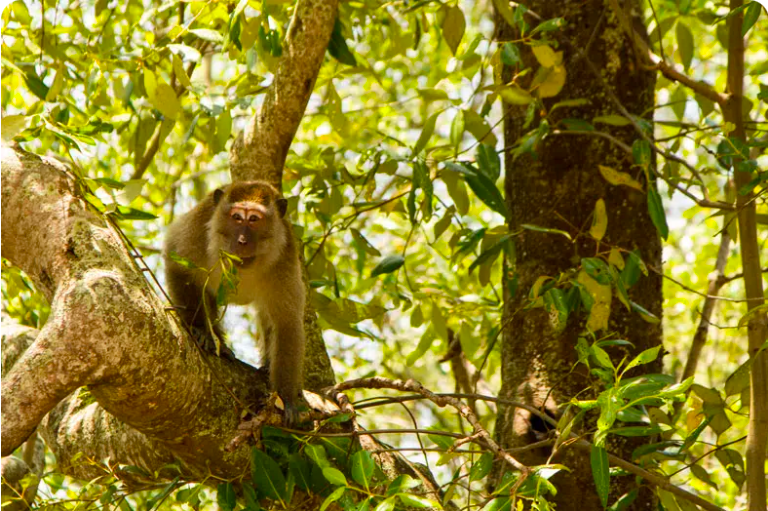
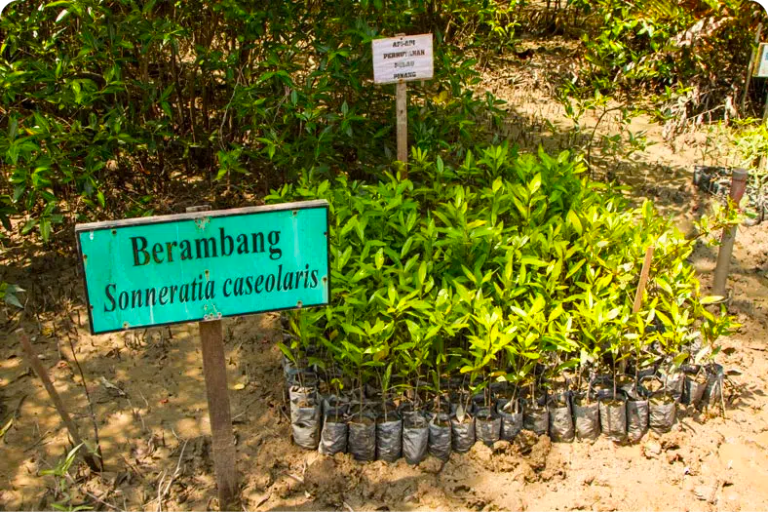
In order to prevent the damage to mangrove forests that occurred over the last few decades or more, a project was started in the Penang region aiming to raise public awareness regarding the importance of mangroves for their continued conservation and protection through active community participation (community resilience) (1). The project closely relates to the GEF Focal Area on Biodiversity Conservation operational programme (OP) 2 on Coastal, Marine and Fresh Water Ecosystems and is led by the Penang Inshore Fisherman Welfare Association (PIFWA). The project aimed to regenerate mangrove forests by planting up to 11,000 saplings in order to rehabilitate the once degraded mangroves as they are able to ultimately improve the wetland ecosystem and its biodiversity and thus sustain the livelihood of fisher communities (1). Mangrove forests are an important part of the Malaysian coastline. Besides their contributions to the biodiversity of the Malaysian coast, mangroves also help greatly with protecting the coastal strip from erosion and providing a means of living for the communities located close to the forests. Stabilising the shoreline and reducing soil erosion, mangroves are also home to myriad species of plants and animals, they provide timber and non-timber forest products, and they support fisheries (1,2). Due to their importance, their disappearance is greatly noticed. From 2000, within a period of 15 years, 25,500 hectares of mangrove forests disappeared, mostly due to industrial-scale logging, clearance for shrimp farming, tourism or firewood (5).
Overview
Nature-based solution
- Blue infrastructure
- Coastlines
- Coastal wetland, mangroves and salt marshes
Key challenges
- Climate action for adaptation, resilience and mitigation (SDG 13)
- Climate change adaptation
- Climate change mitigation
- Coastal resilience and marine protection (SDG 14)
- Coastal protection / hazard mitigation
- Marine and coastal biodiversity protection
- Green space, habitats and biodiversity (SDG 15)
- Habitat and biodiversity restoration
- Habitat and biodiversity conservation
- Green space creation and/or management
- Water management (SDG 6)
- Flood protection
- Social justice, cohesion and equity (SDG 10)
- Environmental education
Focus
Project objectives
Implementation activities
Climate-focused activities
Climate change adaptation:
- Protect coastal and freshwater ecosystems to prevent coastal erosion and pollution
Climate change mitigation:
- Improve carbon sequestration through selection of more adaptable species
- Raise public awareness of behaviours, lifestyle and cultural changes with mitigation potential
Biodiversity conservation or restoration-focused activities
Biodiversity conservation:
- Protect and enhance urban habitats
- Preserve and strengthen existing habitats and ecosystems
- Create new habitats
- Protect species
- Undertake specific measures to protect native species
- Means for conservation governance
- Raise public awareness
- Public engagement
Biodiversity restoration:
- Rehabilitate and restore damaged or destroyed ecosystems
- Restore species (native, endangered, or unspecified)
- Public engagement
Main beneficiaries
- Non-government organisation/Civil Society
- Citizens or community groups
- Food producers and cultivators (i.e. farmers, gardeners)
- Young people and children
Governance
Management set-up
- Led by non-government actors
Type of initiating organisation
- Non-government organisation/civil society
- Multilateral organisation
Participatory approaches/ community involvement
- Co-planning (e.g. stakeholder workshops, focus groups, participatory mapping)
- Dissemination of information and education
- Consultation (e.g. workshop, surveys, community meetings, town halls)
- Joint implementation (e.g. tree planting)
- Co-management/Joint management
- Citizen science
Details on the roles of the organisations involved in the project
Project implemented in response to ...
Financing
Total cost
Source(s) of funding
- Corporate investment
- Funds provided by non-governmental organization (NGO)
- Multilateral funds/international funding
Type of funding
- Direct funding (grants, subsidies, or self-financed projects by private entities)
Non-financial contribution
- Provision of land
- Provision of goods
- Provision of labour
- Provision of expertise
- Provision of other services
- Citizens (e.g. volunteering)
- Private sector (businesses, financial institution)
Impacts and Monitoring
Environmental impacts
- Climate change
- Enhanced carbon sequestration
- Water management and blue areas
- Increased protection against flooding
- Enhanced protection and restoration of coastal and marine ecosystems
- Green space and habitat
- Increased green space area
- Increased number of species present
Economic impacts
- Generation of income from NBS
Socio-cultural impacts
- Social justice and cohesion
- Increased involvement of locals in the management of green spaces
- Education
- Increased knowledge of locals about local nature
- Increased awareness of NBS and their benefits
Type of reported impacts
Presence of formal monitoring system
Presence of indicators used in reporting
Presence of monitoring/ evaluation reports
Availability of a web-based monitoring tool
References
2. Friends of the Earth International (2021), Fisherfolk who plant trees: Turning the tide on mangrove deforestation, available at Source link (accessed 1-2-2023)
3. TenderNews International (no date), available at Source link (accessed 1-2-2023)
4. Friends of the Earth International, Institute for Policy Studies (2015), Getting Climate Finance Right: Successful Examples for the Green Climate Fund from around the World (A Working Draft), available at Source link (accessed 1-2-2023)
5. The Kingfisher, Northern Borneo’s mangrove forests are disappearing, along with our blue carbon stocks, available at Source link (accessed 15-03-2023)