

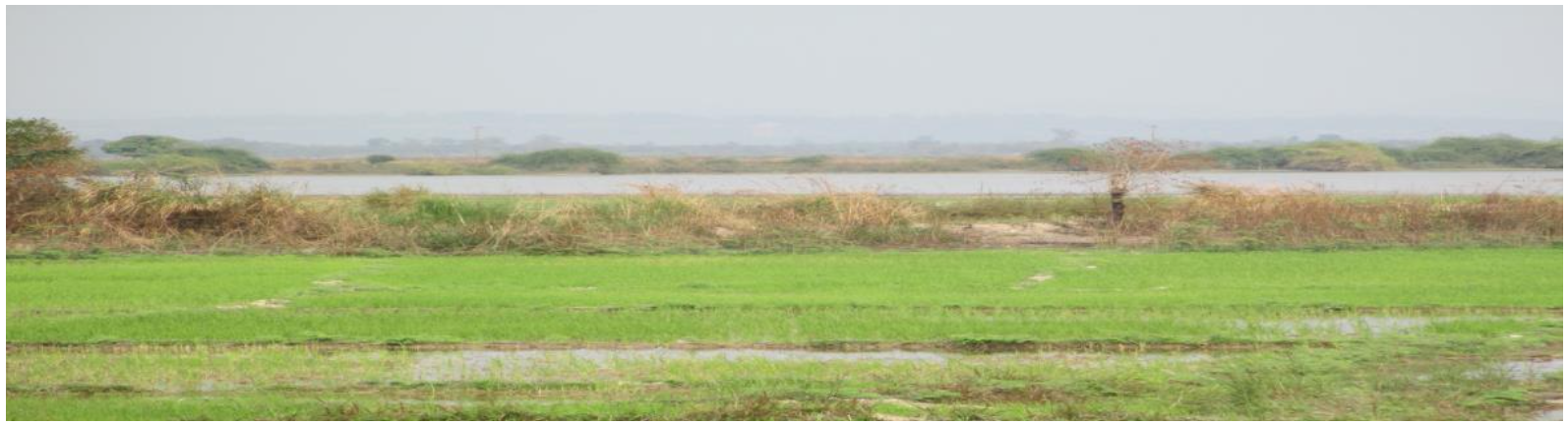
The frequent and severe floods that many cities in Lao PDR have been experiencing are causing a significant impact on the livelihood of local and vulnerable communities. To address the issues of flood and climate events, the Green Climate Fund has provided funding for the Lao DPR government to initiate the 'Build Resilience of Urban Populations with Ecosystem-Based Solutions in Lao DPR' project. The Ministry of Natural Resource and Environment of Lao, in collaboration with other related departments, universities, and provincial governments, is leading this project. The funding was approved in 2019, and the project is set to conclude by 2025. The project consists of four sub-projects, which will be implemented in four cities, including Paksan, Vientiane, Savannakhet, and Pakse. One of the sub-projects involves rehabilitating the Nong Peung wetland in Paksan city, which currently has no management plan and is negatively impacted by human activities and has been degraded in certain aspects. Natural vegetation has been lost in parts of the wetland, invasive alien plants are encroaching, and the natural water flow has been disrupted in places. The objective of this project is to develop a comprehensive management plan for Nong Peung wetland and implement various nature-based solutions to improve the ecosystem. This will involve removing invasive alien plant species, eliminating human-made barriers that obstruct natural flow, and planting appropriate native species. Currently, the project is in the planning stage with relevant stakeholders to determine the physical implementation site. (Ref.1,2,3)
Overview
Nature-based solution
- Blue infrastructure
- Rivers/streams/canals/estuaries
- In-land wetlands, peatlands, swamps, and moors
- Green areas for water management
- Sustainable urban drainage systems
Key challenges
- Climate action for adaptation, resilience and mitigation (SDG 13)
- Climate change adaptation
- Green space, habitats and biodiversity (SDG 15)
- Habitat and biodiversity restoration
- Habitat and biodiversity conservation
- Water management (SDG 6)
- Flood protection
- Stormwater and rainfall management and storage
- Inclusive and effective governance (SDG 16)
- Inclusive governance
- Effective management
Focus
Project objectives
Implementation activities
Climate-focused activities
Climate change adaptation:
- Restore wetlands and/or coastal ecosystems to dissipate the effects of flooding and/or storms
- Implement sustainable urban drainage infrastructure (e.g. to make space for water)
Biodiversity conservation or restoration-focused activities
Biodiversity conservation:
- Protect and enhance urban habitats
- Preserve and strengthen existing habitats and ecosystems
- Promote environmentally-sound development in and around protected areas
- Reduce negative impacts and avoid the alteration/damage of ecosystem
- Protect species
- Undertake specific measures to protect species
- Control and clean invasive alien species
- Means for conservation governance
- Manage biological resources for conservation and sustainable use
- Create and use scientific knowledge for conservation
- Capacity building
Biodiversity restoration:
- Rehabilitate and restore damaged or destroyed ecosystems
- Restore native species
- Clear and control invasive alien species
Main beneficiaries
- National-level government
- Local government/Municipality
- Citizens or community groups
Governance
Management set-up
- Government-led
Type of initiating organisation
- National government
- Regional government
- Local government/municipality
- Researchers/university
Participatory approaches/ community involvement
- Taskforce groups
Details on the roles of the organisations involved in the project
Project implemented in response to ...
Financing
Total cost
Source(s) of funding
- Public national budget
- Multilateral funds/international funding
Type of funding
- Earmarked public budget
- Direct funding (grants, subsidies, or self-financed projects by private entities)
Non-financial contribution
Impacts and Monitoring
Environmental impacts
- Water management and blue areas
- Increased protection against flooding
- Improved stormwater management
- Enhanced protection and restoration of freshwater ecosystems
- Green space and habitat
- Increased conservation or restoration of ecosystems
- Increased number of species present
- Improved prevention or control of invasive alien species
Economic impacts
- Reduce financial cost for urban management
- Other
Socio-cultural impacts
- Social justice and cohesion
- Improved liveability
- Increased involvement of locals in the management of green spaces
- Education
- Increased support for education and scientific research
- Increased awareness of NBS and their benefits
- Safety
- Improved community safety to climate-related hazards
Type of reported impacts
Presence of formal monitoring system
Presence of indicators used in reporting
Presence of monitoring/ evaluation reports
Availability of a web-based monitoring tool
References
2. UNEP(2019), Building resilience of urban populations with ecosystem- based solutions in Lao PDR Funding Proposal, Available at Source link (Accessed 14-03-2023)
3. UNEP(2022), Building resilience of urban populations with ecosystem-based solutions in Lao PDR Annual Performance Report CY2021, Available at Source link (Accessed 15-03-2023)
4. UNEP(2021), Building resilience of urban populations to climate change with ecosystem-based adaptation in Lao PDR, Available at Source link (Accessed 16-03-2023)
5. UNEP(2021), Building resilience of urban populations with ecosystem-based solutions in Lao PDR Annual Performance Report CY2020, Available at Source link (Accessed 04-04-2023)
6. Miller, J., Baumgartner,L. Homsoumbath, K., Phommavong,T. (2017), Changes in the role and management of wetland commons in the Lao PDR: Elder perspectives from Pak Peung wetland, IASC Conference; 10-15July 2017, Utrecht, The Netherlands, Available at Source link (Accessed 16-03-2023)